Find Your Perfect Sofa Comfort Match
1 What is your primary use for the sofa?
I sit upright most of the time
I stretch out and relax deeply
Multiple people sit together
You sit down after a long day, expecting relief. Instead, your back stiffens, or you sink so deep into the seat that standing up feels like climbing out of a hole. Sound familiar? Comfort is subjective, but it isn't random. It comes down to physics, materials, and how your body interacts with them. If you want to know what type of sofa is most comfortable, you have to look past the pretty fabric and examine what’s underneath.
The Foundation: Why the Frame Matters More Than You Think
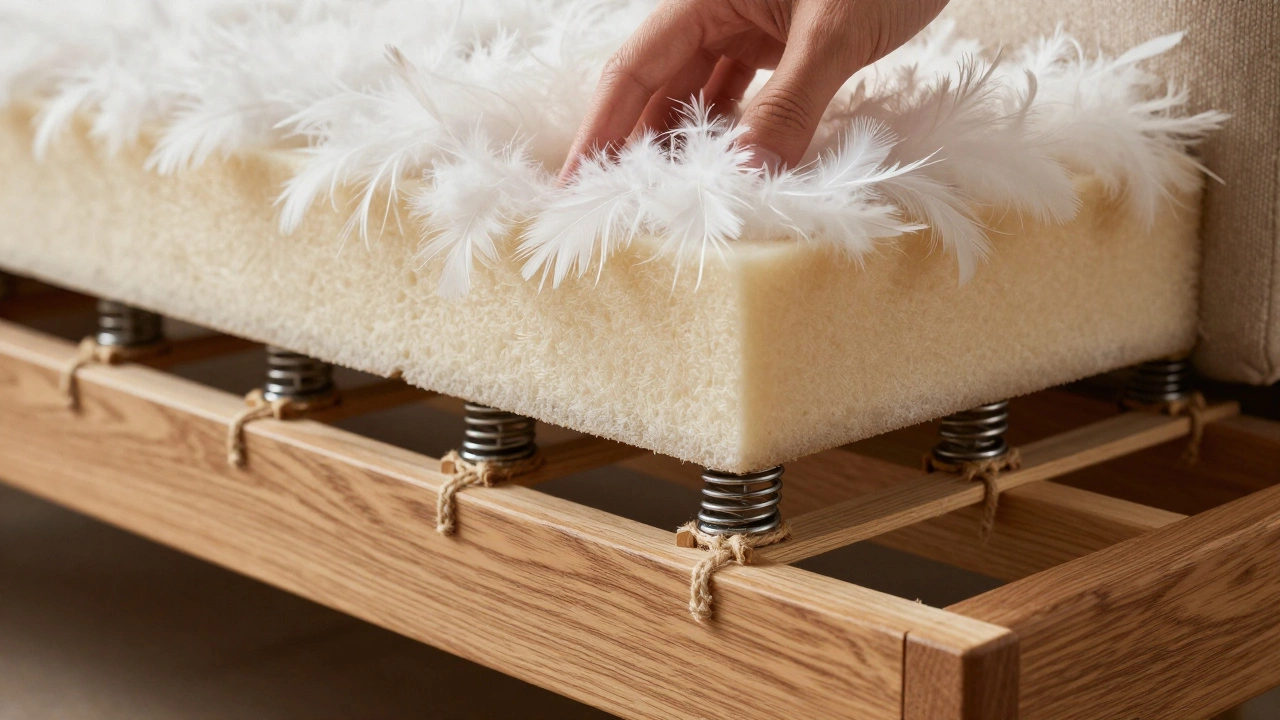
Before we talk about softness, let's talk about support. A sofa is only as good as its skeleton. If the frame sags, even the best cushions will feel uneven and unstable. The most comfortable sofas start with a solid hardwood frame. Woods like kiln-dried oak, ash, or maple are industry standards because they resist warping over time.
Avoid particleboard or MDF (medium-density fiberboard) if longevity is part of your comfort equation. These engineered woods can hold weight initially, but they often bow under the stress of daily use. Look for corner blocks reinforced with screws and glue-not just staples. This construction method ensures the frame stays rigid, providing a stable base for the cushioning layers above.
Is a wooden frame better than metal?
For traditional comfort, yes. Wood absorbs shock and vibration better than metal, which can feel rigid or transmit creaking noises. However, metal frames are excellent for modern, minimalist designs where thin profiles are needed, provided they are thick-gauge steel.
Cushion Fillings: The Heart of Comfort
This is where preferences diverge wildly. There is no single "best" filling, but there are clear winners depending on how you use your sofa. Let’s break down the three main contenders: High-Resilience (HR) Foam, Down Feathers, and Hybrid fills.
High-Resilience (HR) Foam
If you want a sofa that looks crisp and offers firm support, HR foam is your best bet. Unlike cheap polyurethane foam that flattens after six months, HR foam has a higher density and spring-back capability. It contours slightly to your body but pushes back enough to keep your spine aligned. This is ideal for people who sit upright to read or watch TV, or those who suffer from lower back pain and need lumbar support.
High-Resilience Foam is a dense, durable cushioning material known for its ability to return to its original shape quickly after compression. It typically has a density of at least 1.8 lbs per cubic foot, compared to standard foam which might be 1.5 lbs or less.Down Feathers
Down is the ultimate in luxury sinking. It molds perfectly to every curve of your body, offering a cloud-like experience. However, pure down cushions require maintenance. You need to fluff them daily to maintain their shape, and they offer very little structural support. If you tend to slouch or curl up, down might feel amazing for twenty minutes before you realize you’re stuck in a puddle of feathers. It’s also not hypoallergenic, so it’s risky for allergy sufferers.
Hybrid Fills (The Sweet Spot)
Many experts argue that the most versatile comfort comes from a hybrid approach. Imagine a core of high-density foam wrapped in a layer of down or microfiber. This gives you the initial softness of down when you first sit down, followed by the supportive bounce of the foam core. It prevents the "bottoming out" feeling while still offering that plush embrace. This is often found in premium "cloud" sofas or designer pieces.
Sprung vs. Webbing: How Seats Support Weight
Beneath the cushions lies the suspension system. This determines how the sofa handles your weight distribution.
- Eight-Way Hand-Tied Springs: Considered the gold standard. Each spring is individually tied to the frame, allowing independent movement. If one person sits on the left and another on the right, the springs adjust independently without transferring too much motion. This provides superior durability and a responsive feel.
- Sinuous Springs: These are continuous S-shaped wires that run across the frame. They are cheaper to manufacture and common in mid-range sofas. While decent, they can create pressure points if the gauge of the wire is too thin.
- Elastic Webbing: Straps stretched across the frame. Common in budget-friendly or modern flat-pack sofas. They offer minimal bounce and can sag significantly over time, leading to an uncomfortable dip in the center of the seat.
For maximum comfort, especially if multiple people share the sofa, eight-way hand-tied springs are worth the investment. They distribute weight evenly, reducing strain on specific areas of your back and hips.

Seat Depth and Height: Ergonomics Matter
Even the best materials fail if the dimensions don’t match your body. Seat depth is crucial. A standard sofa has a seat depth of 20 to 22 inches. This allows your knees to bend comfortably with your feet flat on the floor.
However, "lounging" sofas often feature depths of 24 to 26 inches or more. These are fantastic for stretching out but terrible for sitting upright. If your thighs hang off the edge, you lose support. If your calves press against the front, you restrict blood flow. Measure your thigh length from knee to buttock. Add two inches for comfort. That’s your ideal minimum seat depth.
Seat height is equally important. The average seat height is 18 inches. If you have short legs, a lower seat (16-17 inches) makes getting up easier. For taller individuals, a higher seat (19-20 inches) prevents the feeling of being trapped in a low chair. Always test the rise-and-sit motion. Can you stand up without using your hands? If not, the sofa might be too low or too deep for your physique.
Fabric Texture and Temperature Regulation
Comfort isn’t just about support; it’s about touch and temperature. A sticky, hot fabric can ruin the experience of a well-cushioned sofa.
| Fabric Type | Tactile Feel | Temperature Control | Durability |
|---|---|---|---|
| Performance Velvet | Soft, smooth, directional sheen | Cool to the touch initially, warms up | High (stain-resistant) |
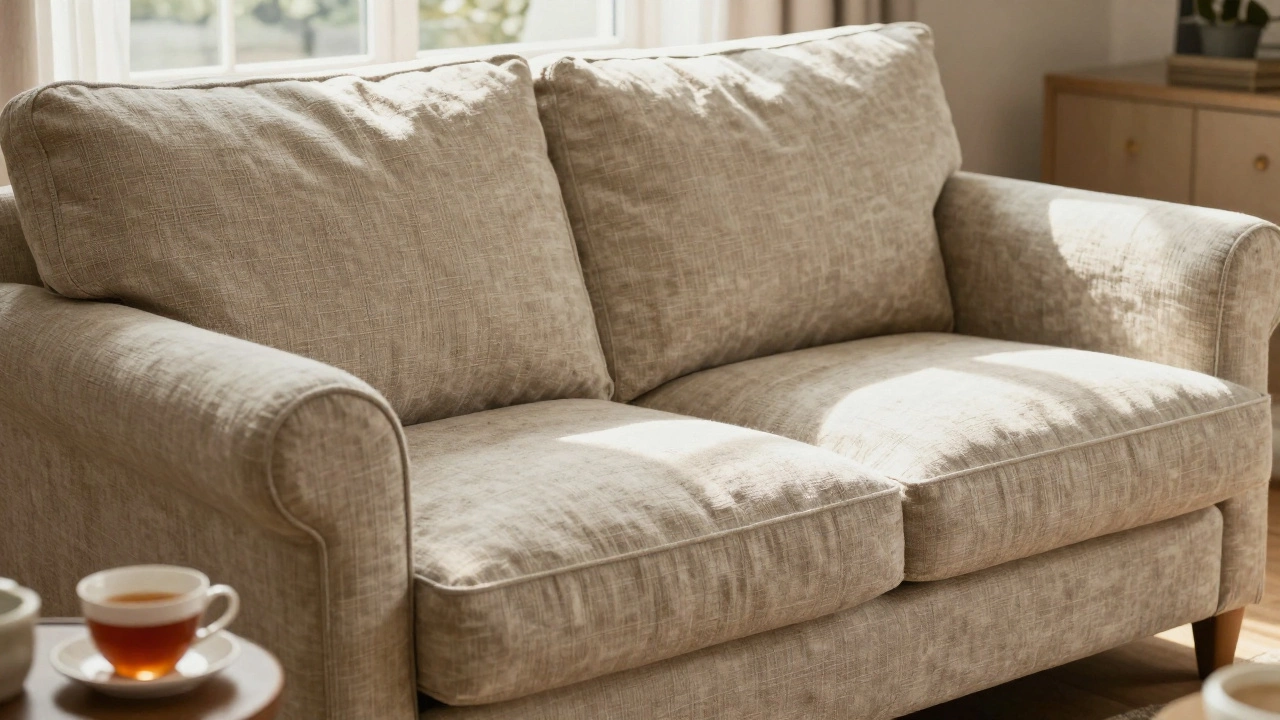
| Linen Blend | Textured, breathable, slightly rough | Excellent airflow, stays cool | Medium (prone to wrinkling) |
| Microfiber | Suede-like, soft | Can retain heat | Very High |
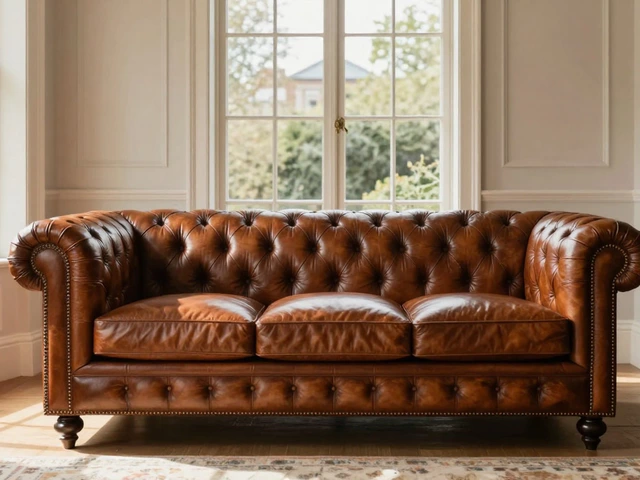
| Leather | Smooth, firm | Adapts to body temperature | High (if full-grain) |
If you live in a warm climate, avoid heavy velvets or synthetic microfibers that trap heat. Linen blends or performance fabrics with moisture-wicking properties are better choices. In colder regions, the warmth of wool blends or leather can add to the cozy factor. Remember, the fabric should invite you to touch it, not repel you.
Armrests and Backrests: The Hidden Comfort Factors
We often ignore arms until we try to rest our elbows on them. Hard, narrow armrests cause shoulder tension. Look for arms that are wide enough to rest your forearm comfortably, ideally matching the height of the seat cushion. Rolled arms offer a softer landing than track arms, which are often firmer and more angular.
The backrest angle is another critical detail. A straight 90-degree back is formal and tiring for long sessions. A recline angle of 100 to 105 degrees is ergonomically superior for relaxation, taking pressure off the lumbar spine. Some sofas feature adjustable headrests or lumbar pillows. These aren’t just accessories; they are functional tools for customizing comfort to your specific spinal needs.
How to Test a Sofa Before You Buy
Don’t just sit for ten seconds. Here is a practical checklist for testing comfort in-store:
- The Three-Minute Rule: Sit down and stay. Watch a video or read a book. Does the cushion compress too much? Do you find yourself shifting position frequently?
- The Lie-Down Test: If you plan to nap, lie down fully. Check if your heels touch the bottom of the sofa and if your head has adequate support.
- The Stand-Up Check: Rise without pushing off the arms. If you struggle, the seat may be too low or the cushion too soft.
- The Multi-Person Simulation: Bring a friend. Sit next to each other. Does the sofa bridge the gap uncomfortably? Do you feel their movement? Good suspension isolates motion.
Maintaining Long-Term Comfort
Comfort degrades if you don’t care for your sofa. Rotate cushions monthly to prevent uneven wear. Vacuum crevices regularly to remove dust mites that can degrade foam integrity. For down cushions, fluff them weekly. For foam, consider adding a topper if the original cushion loses resilience after five years. Investing in removable, washable covers extends the life of the fabric, keeping the tactile experience fresh.
Finding Your Perfect Match
So, what type of sofa is most comfortable? There is no universal answer, but there is a personal one. If you value support and posture, choose a high-resilience foam sofa with a hardwood frame and eight-way hand-tied springs. If you prioritize relaxation and sinking in, opt for a hybrid fill with a deeper seat. By understanding the mechanics of comfort-frame, suspension, filling, and dimension-you can move beyond marketing buzzwords and find a sofa that truly supports your lifestyle.
Are memory foam sofas comfortable?
Memory foam sofas contour closely to the body, which some find comforting for pressure relief. However, they can retain body heat and may feel too soft or restrictive for those who prefer a bouncier, more supportive seat. They are best used in hybrid combinations rather than as the sole cushioning material.
What is the difference between high-resilience foam and regular foam?
High-resilience (HR) foam has a higher density and elasticity than regular polyurethane foam. It resists permanent indentation, meaning it bounces back to its original shape faster and lasts longer. Regular foam tends to flatten and develop body impressions within a year or two.
Is a sectional sofa more comfortable than a standard sofa?
Sectionals offer more space for lounging and socializing, which can enhance comfort for groups. However, individual seat sections in sectionals sometimes have shallower depths or less robust framing due to modular design constraints. Always check the seat depth and frame quality of each module separately.
How do I know if a sofa is too soft?
A sofa is too soft if you cannot easily stand up without using your arms, if your spine feels unsupported, or if you sink so deeply that your legs dangle. Overly soft sofas can lead to poor posture and back pain during extended sitting periods.
Does the color of the sofa affect comfort?
Indirectly, yes. Darker colors absorb more heat, potentially making the surface warmer to the touch. Lighter colors reflect light and may feel cooler. Psychologically, certain colors can influence mood, but physically, the fabric material and weave density have a far greater impact on thermal comfort than dye color.