Mirror Value & Cost Estimator
Use this tool to estimate a fair market price for your next mirror purchase. Adjust the specifications below to see how materials and features impact the final cost.
Cost Breakdown
Quality Assessment
*Installation estimate assumes professional mounting for mirrors >30lbs or complex setups. DIY saves this cost but requires proper anchors.
You walk into a store or scroll through an online retailer and see two mirrors that look nearly identical. One is $45. The other is $450. You might think the expensive one is just overpriced branding, but here is the uncomfortable truth: cheap mirrors often distort your reflection, peel at the edges within a year, and can even warp if the backing isn't sealed properly. If you are wondering how much does a good quality mirror cost, the answer depends entirely on what "good" means to you. Are you looking for a clear reflection that lasts decades, or just something to check your hair before leaving the house?
In 2026, the market has shifted. Supply chain issues from previous years have settled, but raw material costs for silver and glass remain volatile. This article breaks down exactly where your money goes when you buy a mirror, what separates a $50 piece of glass from a $500 investment, and how to spot a dud before you hand over your credit card.
The Real Price Tiers for Mirrors
Most people assume mirror prices scale linearly with size. They don't. A small, thick, beveled mirror can cost more than a large, thin, frameless slab because of the labor involved in cutting and polishing. Here is how the pricing generally shakes out in the current market:
| Tier | Price Range (USD/NZD equivalent) | Typical Materials | Lifespan Expectation |
|---|---|---|---|
| Budget / Mass Market | $30 - $120 | Thin float glass, aluminum coating, particle board frame | 2-5 years (risk of black edge corrosion) |
| Mid-Range / Retail | $150 - $400 | Thicker glass, silver coating, solid wood or metal frame | 10+ years with proper care |
| Premium / Designer | $500 - $1,500+ | Low-iron glass, heavy-duty backing, custom framing | 20+ years, heirloom quality |
| Custom / Artisanal | $1,000 - $5,000+ | Hand-blown glass, antique finish, bespoke installation | Lifetime |
Notice the jump between Budget and Mid-Range? That gap exists because of the coating. Cheap mirrors use aluminum, which reflects about 85% of light. It’s functional but dull. Mid-range and premium mirrors use silver nitrate, reflecting over 90% of light and providing that crisp, bright clarity you expect from a bathroom vanity. If you want true color accuracy-crucial if you’re doing makeup-the extra cost for silver-backed glass is non-negotiable.
Why Size Isn't the Only Factor
When you ask "how much," you’re probably thinking about square footage. But thickness matters more than most sellers admit. Standard residential mirrors are usually 3mm or 4mm thick. Anything thinner than 3mm is prone to wavy reflections, especially if mounted on an uneven wall. This distortion makes you look like you’re standing in front of a funhouse mirror.
For a standard 24x36 inch bathroom mirror, you should expect to pay around $150-$250 for a quality unit. If it’s under $80, it’s likely 2mm thick aluminum-backed glass. For a full-length leaning mirror, which requires structural integrity so it doesn’t bow in the middle, you’re looking at $300-$600. Why? Because these need to be at least 5mm or 6mm thick to stay flat without a rigid frame holding them up.
Frame complexity also drives up the price significantly. A simple black metal frame adds maybe $20-$40 to the cost. An ornate, hand-carved wooden frame? That’s labor-intensive craftsmanship. You aren’t paying for the glass; you’re paying for the hours spent shaping the wood. If you want to save money, buy a high-quality unframed mirror and add a simple DIY frame later. You’ll get better glass for less cash.
Hidden Costs: Installation and Maintenance
The sticker price is rarely the final price. Large mirrors, especially those over 4 feet tall, require professional installation. If you try to mount a 50-pound mirror on drywall anchors meant for picture frames, it will fall. And it will shatter.
- Professional Mounting: In major cities, hiring a handyman to install a large mirror typically costs $75-$150 per hour. For complex setups involving multiple panels or LED integration, this can double.
- Delivery Fees: Shipping a fragile, oversized item isn’t cheap. Online retailers often charge $50-$100 for freight shipping on mirrors larger than 40 inches. Local pickup saves this, but only if you have a vehicle that fits the box.
- Cleaning Supplies: Cheap cleaners leave streaks. To keep a premium mirror looking new, you need ammonia-free cleaner and microfiber cloths. Skip the paper towels-they scratch the surface over time.
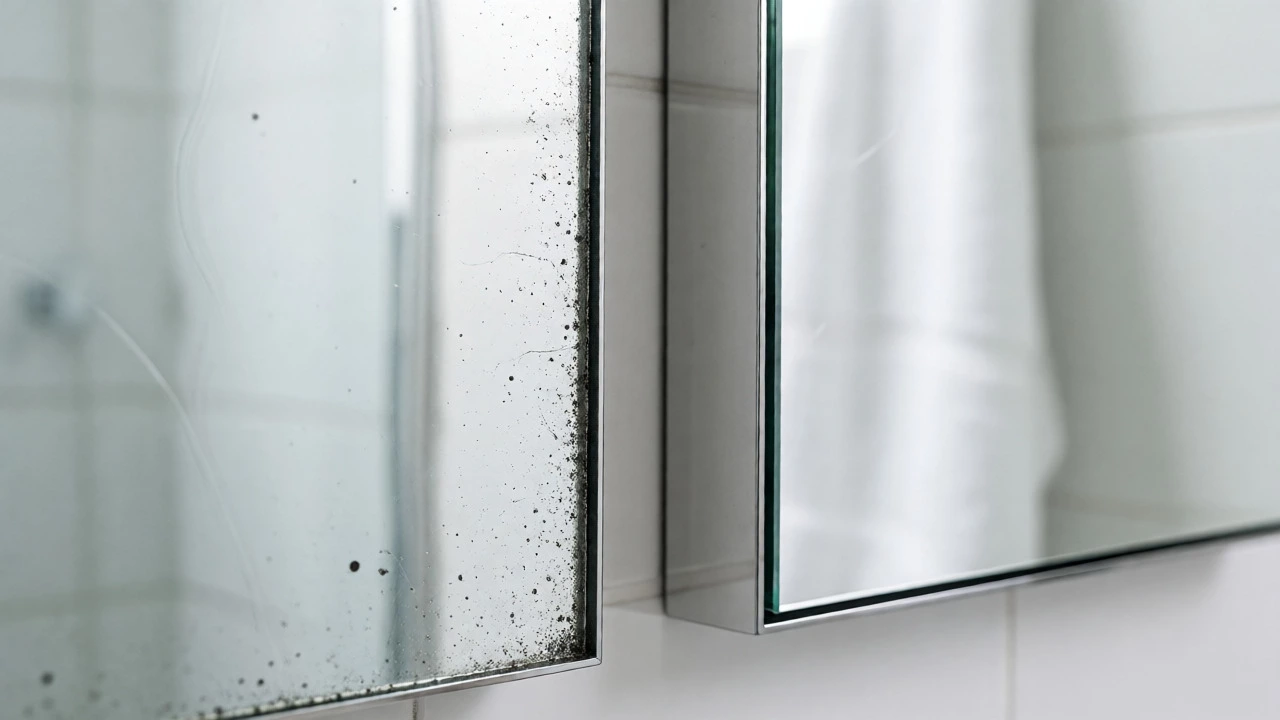
Also, consider the environment. Bathrooms are humid zones. If you buy a budget mirror with poor edge sealing, moisture gets behind the glass. Within six months, you’ll see black spots creeping in from the edges. This is called "desilvering." Once it starts, it spreads fast. Replacing a desilvered mirror costs the same as buying a new one, so investing in a sealed-edge, silver-backed mirror upfront actually saves money long-term.
How to Spot a Low-Quality Mirror Before Buying
Sellers won’t always tell you the specs. So, how do you know if you’re getting a bargain or a bust? Use these three checks in-store or via detailed product photos:
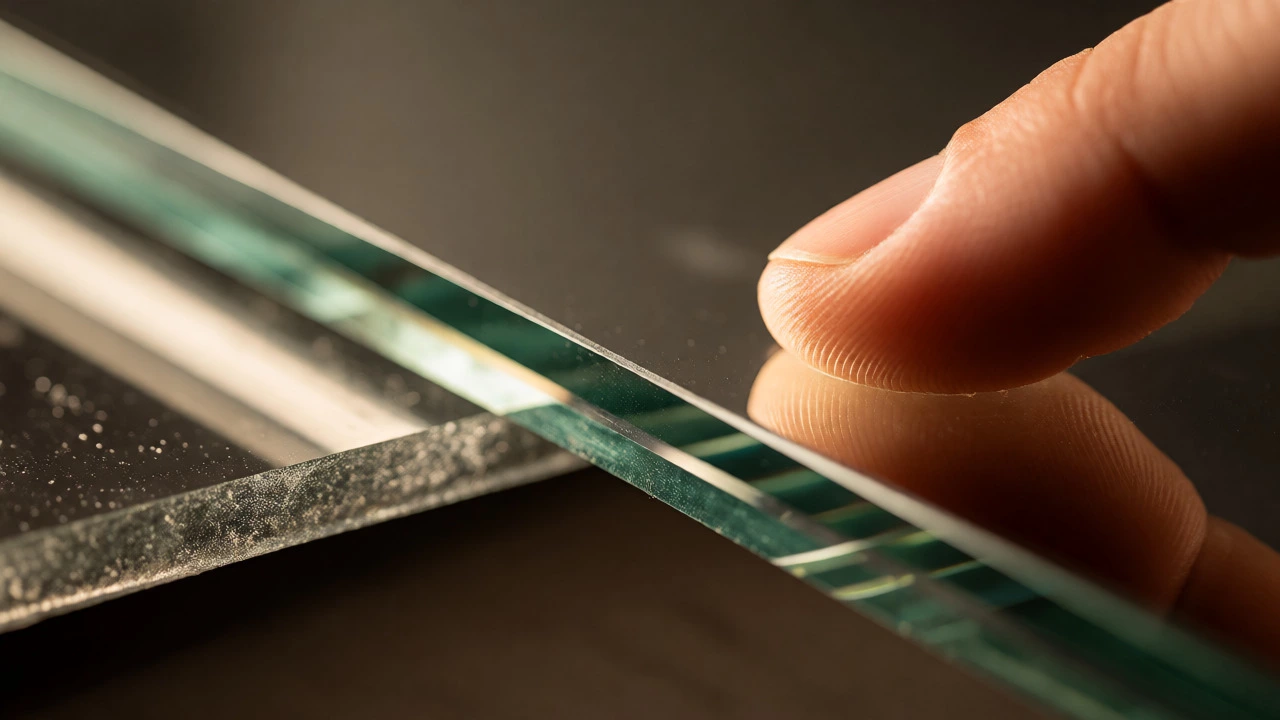
- The Coin Test: Place a coin against the glass. In a high-quality mirror, there should be no gap between the coin and its reflection. If you see a gap, the reflective coating is on the back surface of the glass, not the very back layer. This creates a "double image" effect and lowers clarity. True first-surface mirrors are rare and expensive, but standard second-surface mirrors should still have minimal parallax error.
- Check the Edges: Look closely at the cut edges. Are they polished smooth, or rough and sharp? Polished edges indicate higher manufacturing standards and reduce the risk of chipping during handling. Rough edges also suggest the mirror wasn’t inspected carefully.
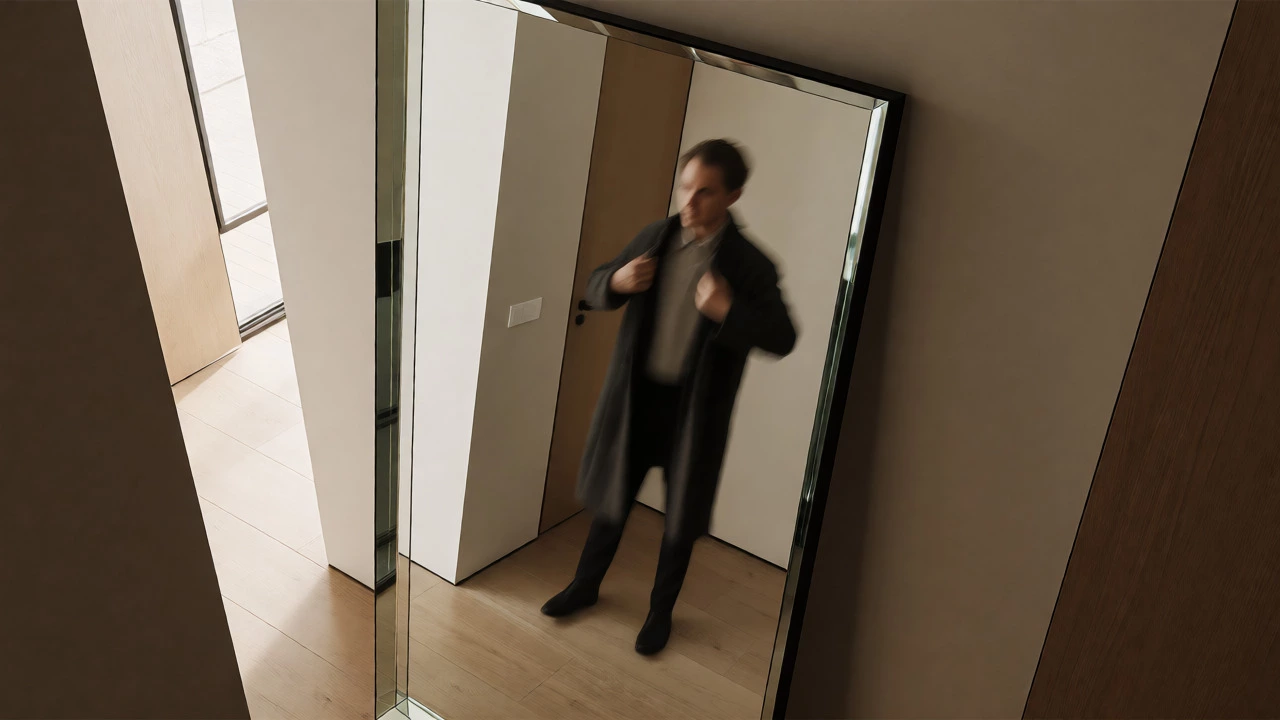
- Look for Distortion: Stand at an angle and look at straight lines reflected in the mirror, like doorframes or tiles. Do they curve? Wavy reflections mean the glass is too thin or was annealed poorly during manufacturing. Walk away.
Smart Ways to Save Without Sacrificing Quality
You don’t need to spend thousands to get a mirror that looks expensive. Here’s how savvy buyers stretch their budget:
Buy Unframed: As mentioned earlier, frames mark up the price disproportionately. Purchase a high-quality, framed-less mirror from a glass specialist or industrial supplier. Then, add a simple trim yourself. You control the aesthetic and save 30-50% compared to pre-framed retail options.
Consider Aluminum for Dry Areas: If the mirror is for a hallway or bedroom-not a steamy bathroom-you can safely opt for aluminum-backed glass. It’s cheaper and lighter. Just ensure it’s at least 4mm thick to prevent waviness. Reserve silver-backed glass for wet rooms.
Shop End-of-Line Sales: Home decor stores frequently discontinue styles. A mirror with a discontinued frame style is often discounted by 40-60%. The glass inside is identical to the current season’s model. Check clearance sections online and in-store regularly.
DIY Lighting: Integrated LED mirrors command a premium ($300+). Instead, buy a standard mirror and add adhesive LED strips behind it. You can achieve the same halo effect for under $50 total. Plus, if the LEDs fail, you replace a $10 strip, not the whole mirror.
Final Verdict: What Should You Pay?
If you want a mirror that won’t annoy you in two years, set aside at least $150 for a small vanity mirror and $350 for a full-length one. Below that threshold, you’re gambling on durability. Above $800, you’re mostly paying for brand name or artistic design, not necessarily better function.
Remember, a mirror is one of the few household items you interact with daily. Skimping on clarity affects how you see yourself every morning. Invest in the glass quality, skip the fancy frame, and hire a pro to hang it securely. Your future self-and your reflection-will thank you.
Is a silver-backed mirror really worth the extra cost over aluminum?
Yes, especially for bathrooms and bedrooms where lighting matters. Silver coatings reflect approximately 95% of visible light, while aluminum reflects only about 85%. This results in brighter, truer colors and less eye strain. Additionally, silver-backed mirrors tend to resist oxidation better if the edges are properly sealed, extending their lifespan significantly in humid environments.
Why are some mirrors so cheap if they look the same as expensive ones?
Cheap mirrors often use thinner glass (2mm vs 4mm), lower-grade aluminum coatings, and unpolished edges. They may also lack protective backing layers, making them susceptible to moisture damage and black edge corrosion. Visually, they might look fine in a showroom, but they often distort reflections slightly and degrade quickly in real-world conditions.
Can I install a large mirror myself to save money?
You can, but it’s risky for mirrors over 30 pounds. You need appropriate anchors rated for the weight and the ability to locate studs. If you miss a stud and rely solely on drywall, the mirror could pull out. For safety and alignment precision, many homeowners prefer hiring a professional for large pieces, costing roughly $75-$150 depending on location.
What causes the black spots on old mirrors?
This phenomenon is called desilvering. It happens when moisture seeps behind the mirror’s protective paint layer, causing the metallic coating to oxidize and flake off. It usually starts at the edges where the seal is weakest. Using harsh ammonia-based cleaners can accelerate this process by breaking down the backing paint.
Do LED mirrors cost more to maintain?
The electricity cost is negligible since modern LEDs consume very little power. However, maintenance can be trickier. If the built-in lights fail, you may need to remove the entire mirror to access the wiring or transformer. Adding external LED strips to a standard mirror is often easier to repair and replace than integrated systems.