Storage Cost Calculator
How much are you really paying for storage?
Calculate your monthly costs, compare to alternatives, and see how clutter affects your mental health.
Results will appear here
It’s November 2025, and you’re staring at a closet that won’t close. Or maybe your garage looks like a thrift store exploded. You’ve thought about storage-renting a unit, using a pod, even that weird basement space your cousin offered. But then you stop. Is it really worth it?
Storage isn’t just about space-it’s about money, time, and stress
People think storage is a fix for clutter. It’s not. It’s a delay. You’re not solving the problem-you’re just moving it to a different room you don’t own. And that room costs you $150 to $400 a month in Wellington, depending on size and location. That’s not a one-time fee. That’s $1,800 to $4,800 a year. For the same price, you could buy a new sofa, replace your mattress, or pay off a credit card. What are you really paying for? The illusion of having more room.
Think about what’s actually in storage. Half of it? Things you haven’t touched in three years. A broken toaster from 2021. Your college textbooks. That dress you wore once. The holiday decorations you swore you’d use every year but never do. The average person uses less than 15% of what they store. That’s not nostalgia. That’s guilt.
What you’re really paying for: hidden costs you never think about
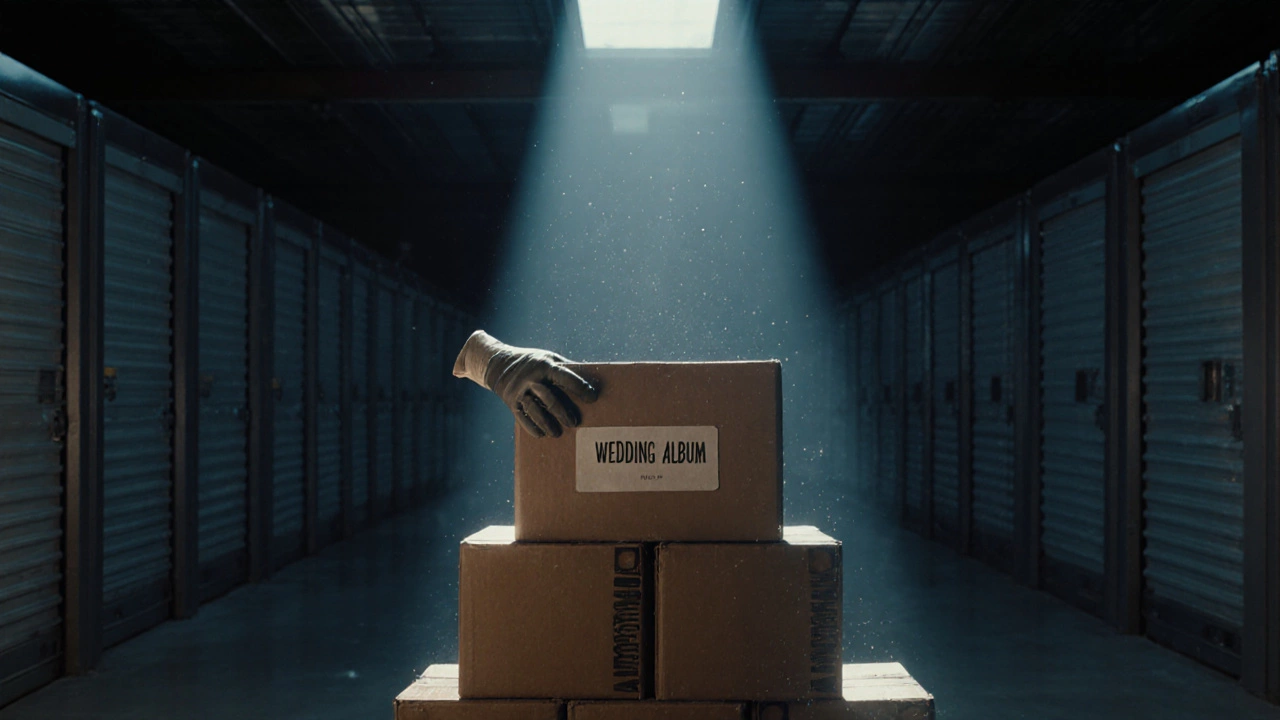
Storage fees are just the start. There’s the drive to the unit. The time it takes to pack, label, and organize. The time it takes to dig through boxes when you finally need something-like that one tool for the leaky faucet you’ve been ignoring. You’ll spend hours on a Saturday afternoon, sweating in a dusty warehouse, trying to find your own wedding album because you didn’t label the box properly.
Then there’s insurance. Most storage facilities don’t cover your stuff. You need to buy separate coverage. That’s another $5 to $15 a month. And if something gets damaged? Good luck proving it was the facility’s fault. Moisture, pests, or even a broken lock can ruin things you can’t replace.
And don’t forget taxes. In New Zealand, storage units are considered a personal expense. No tax deductions. No credits. Just money disappearing into a concrete box.
What’s in your storage? A real inventory of regrets
Let’s get specific. If you’re thinking about storage, here’s what’s probably in your future unit:
- Seasonal clothing you’ll never wear again (you’ve changed size, style, or priorities)
- Old electronics you’re saving for ‘parts’ (they’re dead)
- Gifts you didn’t like but felt guilty returning
- Boxes of photos you haven’t looked at since 2018
- That treadmill you bought during lockdown
- Books you meant to read but never opened
These aren’t treasures. They’re emotional baggage. And you’re paying to carry it around.
Here’s a test: take one item you’re thinking of storing. Ask yourself: if I lost this tomorrow, would I replace it? If the answer is no, why are you spending money to keep it?
Storage vs. selling, donating, or just letting go
Instead of storage, try this:
- Take everything you’re considering storing and lay it out in your living room.
- Sort into three piles: Keep, Sell/Donate, Toss.
- For the Keep pile-only what you use at least once every 6 months.
- For Sell/Donate-list it on Trade Me, give it to Salvation Army, or drop it at a local reuse center.
- For Toss-broken, stained, outdated, or useless. Recycle what you can.
Most people find 60-70% of their ‘storage candidates’ can go. And guess what? You’ll feel lighter. Not just physically-mentally too.
One woman in Porirua cleared out 12 boxes she’d stored for five years. She sold half for $800. Donated the rest. The rest? She didn’t miss it. She said, ‘I didn’t realize how much space I was wasting-both in the unit and in my head.’
When storage actually makes sense
Okay, let’s be fair. There are times storage is the right move.
- You’re moving overseas for 6-12 months and can’t take everything.
- You’re renovating your home and need to protect heirlooms from dust or construction.
- You have seasonal equipment like kayaks, snowboards, or camping gear you use only twice a year.
- You’re holding onto something with real sentimental or legal value-like family documents or a child’s baby clothes you plan to pass down.
Even then, be smart. Rent a small unit. Pay monthly. Don’t sign a 12-month contract. Use climate-controlled storage if you’re keeping wood, leather, or electronics. And label everything clearly. Use a digital inventory app-take photos of each box and name it. You’ll thank yourself later.
What storage does to your mindset
Here’s the quietest cost of all: your brain. Every time you walk past a closet full of boxes you haven’t opened, your brain registers it as unfinished business. It’s a low-grade stressor. Like a notification you keep ignoring. It adds up.
Studies show clutter in your environment increases cortisol levels. Storage doesn’t fix clutter-it just hides it. And hiding stress doesn’t make it go away. It just makes you pay for it.
Think about your ideal home. Is it full of memories you rarely see? Or is it calm, clean, and full of things you actually love?

What to do next: a simple 7-day plan
If you’re on the fence, try this:
- Day 1: Pick one room. Not the whole house. Just one.
- Day 2: Empty everything out. Yes, everything. Floor to ceiling.
- Day 3: Sort into Keep, Sell, Donate, Toss. Be ruthless.
- Day 4: List items on Trade Me or book a free pickup with Salvation Army.
- Day 5: Clean the space. Wipe shelves, vacuum, air it out.
- Day 6: Put back only what you truly use and love.
- Day 7: Celebrate. You just freed up space, time, and mental energy.
After seven days, you’ll know: storage isn’t the answer. Clarity is.
Storage isn’t the solution-it’s the symptom
Storage units aren’t bad. They’re just not the fix. They’re what you turn to when you’re overwhelmed, tired, or avoiding a hard decision. But you don’t need more space. You need better habits.
Every dollar you spend on storage is a dollar you’re spending to avoid living fully in your own home. The real question isn’t ‘Is storage worth it?’
It’s: ‘What am I avoiding by keeping this stuff?’
Is it cheaper to store things or just replace them later?
Usually, it’s cheaper to replace. A box of old winter coats might cost $300 a year to store. New ones? $150. A broken toaster stored for five years? Replacing it costs $60. Storage adds up fast. If you haven’t used it in two years, you probably won’t miss it when it’s gone.
Can I store items in my garage or shed instead?
You can, but it’s risky. Garages and sheds in New Zealand often get damp, especially in winter. Moisture ruins fabrics, wood, and electronics. If you must store there, use sealed plastic bins, elevate them off the floor, and add silica gel packs. Still, it’s not ideal for anything valuable or sentimental.
What’s the best way to pack for storage?
Use uniform plastic bins with lids-they stack better and protect against moisture. Label each box with contents and the room it came from. Take a photo of each box before storing it. Use bubble wrap for fragile items. Avoid cardboard boxes-they attract pests and tear easily. And never store food, chemicals, or flammable items.
How often should I check on my stored items?
At least once a year. Open a few boxes. Look for mold, pests, or dampness. Air out clothes. Rotate seasonal items. If you haven’t looked at something in two years, ask yourself if you really need to keep it. Storage is a habit, not a permanent solution.
Are climate-controlled units worth the extra cost?
Only if you’re storing wood furniture, leather, artwork, vinyl records, or electronics. In Wellington’s damp climate, humidity can warp wood and mildew fabrics. For clothes, books, or plastic items, standard units are fine. Pay extra only for what needs protection.
What happens if I stop paying for storage?
Facilities can auction off your belongings after 30-90 days of non-payment, depending on the contract. You’ll lose everything, and it could hurt your credit if they send the debt to collections. Never let it get that far. If you can’t pay, call them. Many will let you move items out early or pause payments temporarily.
Should I store family heirlooms?
If they’re irreplaceable-yes, but only in climate-controlled, secure storage. Photograph them first. Write down their stories. Consider giving one item per generation to keep them alive, not locked away. Heirlooms should be seen, not stored.
Final thought: Your home should feel like yours-not a museum of what you used to own
Storage isn’t the enemy. Clutter is. And clutter isn’t just stuff. It’s the weight of decisions you’ve avoided. The guilt of gifts you didn’t want. The fear of letting go.
Real freedom isn’t having more space. It’s having less to manage. Less to worry about. Less to carry.
You don’t need a storage unit. You need courage. And maybe, just maybe, a trash bag.