Mirror Quality Analyzer
Mirror Quality Assessment Tool
Assess mirror quality based on key factors from the article. Select your mirror's features to see how well it compares to premium standards.
Glass Quality
Backing Material
Frame Type
Warranty
Quality Assessment Result
Ever stared into a mirror and felt like something was off? Maybe your face looked stretched, or the reflection was just a little dimmer than it should be. That’s not your imagination. There’s a real difference between cheap and expensive mirrors-and it’s not just about how they look on the wall. The glass, the backing, the frame, even how it’s mounted all add up to something you can feel, not just see.
It Starts with the Glass
Not all mirror glass is made the same. Cheap mirrors often use lower-grade float glass. It’s thinner, less consistent, and sometimes has tiny bubbles or impurities. When light hits it, those flaws scatter the reflection. You get a slightly warped image, especially around the edges. It’s why you might look taller on one side and shorter on the other. Expensive mirrors use optical-grade glass. It’s thicker, more uniform, and polished to near-perfect flatness. The result? A reflection that’s true to life. No distortion. No ghosting. Just you, exactly as you are.Some budget mirrors even skip the silvering layer entirely and use aluminum. It’s cheaper to produce, but aluminum tarnishes faster. After a year or two, you’ll notice cloudy patches near the edges. High-end mirrors stick with pure silver. It reflects 95% of visible light. Aluminum? More like 85%. That 10% difference isn’t just technical-it’s the difference between a bright, crisp morning look and a dull, grayish one.
The Backing Matters More Than You Think
The protective layer behind the mirror is what keeps it from degrading. Cheap mirrors use a basic paint or plastic coating. It’s fine for a bathroom that’s dry and well-ventilated. But if you live in a humid climate-like Wellington, where damp air rolls in off the harbor-it’ll start to peel. You’ll see black spots forming. That’s the silver underneath oxidizing. Once it starts, there’s no fixing it. You need a whole new mirror.Expensive mirrors use copper-backed or multi-layered protective coatings. Some even have a sealant that blocks moisture before it even reaches the silver. These are the mirrors you’ll find in hotels, spas, and high-end salons. They last 20 years without a single spot. And yes, they cost more upfront-but you’re not paying for the frame. You’re paying for durability.
Frames Aren’t Just for Looks
A cheap mirror often has a plastic or MDF frame. It’s lightweight, sure. But it warps with humidity. It cracks with temperature changes. I’ve seen mirrors in rental apartments where the frame curled like a potato chip after just one winter. The mirror itself was fine, but the frame pulled it out of alignment. Suddenly, your reflection was tilted. It’s disorienting.Expensive mirrors use solid wood, brass, or aluminum frames. They’re heavier. They’re built to last. A solid wood frame doesn’t just look better-it holds its shape. It doesn’t shift. It doesn’t crack. And if it does get scratched? You can sand it down and refinish it. A plastic frame? You throw it out.
Reflection Quality Is Physical, Not Magical
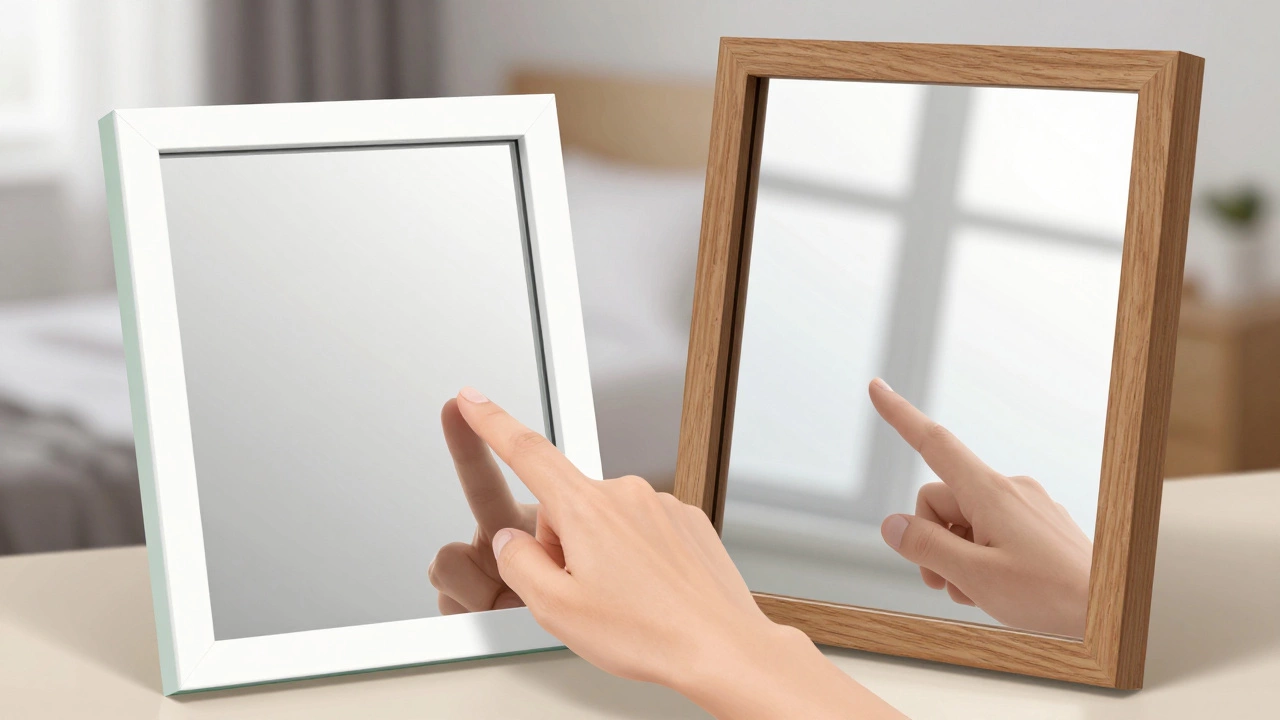
You know how some mirrors make your skin look smoother? That’s not a filter. That’s physics. Cheap mirrors have uneven backing or warped glass. Light bounces off at odd angles. Shadows fall differently. Skin tones look off. Eyes look tired. Teeth look yellow. It’s not you-it’s the mirror.High-quality mirrors reflect light evenly across the entire surface. That means colors are truer. Shadows are sharper. You see your face the way it really looks-no flattering tricks, no hidden distortions. That’s why professional makeup artists and photographers insist on premium mirrors. They need accuracy. And so do you, if you’re getting dressed, applying skincare, or just checking if you’ve got spinach in your teeth.
Installation and Weight
Cheap mirrors are light. That sounds good, right? But here’s the catch: they’re often mounted with adhesive strips or tiny nails. I’ve seen three mirrors fall off walls in the last year alone. One cracked into three pieces. Another took out a chunk of drywall. The damage cost more than a decent mirror would have.Expensive mirrors are heavier. They come with proper mounting hardware-steel brackets, wall anchors, sometimes even French cleats. They’re designed to be installed by a professional. That means they stay put. For years. No sudden crashes. No repair bills. It’s not just about safety. It’s about peace of mind.

When Does It Matter?
Let’s be honest: you don’t need a $500 mirror in your laundry room. But if you’re putting a mirror in your bathroom, bedroom, or entryway-places you see yourself every day-you’re better off investing. Think about it: you spend hours staring at your reflection. A cheap mirror makes that time frustrating. An expensive one makes it effortless.Here’s a rule of thumb: if you’ll use it daily, spend more. If it’s for a guest bathroom or a closet, go cheap. But if it’s the mirror you check before a job interview, a date, or a Zoom call-don’t cut corners. The difference isn’t just visual. It’s emotional. A good mirror doesn’t just reflect your face. It reflects your standards.
What to Look For When Buying
- Check the glass: Look at the edge. Is it thick and clear? Or thin and cloudy? A thick edge means better glass.
- Tap it: A high-quality mirror gives a solid, low-pitched ring. A cheap one sounds hollow.
- Look for the backing: If you can see the back, it should have a dark, even coating-not streaky paint.
- Ask about the frame: Solid wood? Brass? Avoid MDF or plastic unless it’s for a dry, low-use space.
- Check the warranty: A company that stands behind its mirror will offer at least a 10-year guarantee on the reflective layer.
There’s no shame in choosing a budget mirror for a utility space. But if you’re putting it where you see yourself every morning-don’t settle for less than clear, true, lasting reflection.
Do expensive mirrors really last longer?
Yes, and it’s not just marketing. High-end mirrors use silver-coated optical glass with moisture-resistant backing, which can last 20 to 30 years without clouding or peeling. Cheap mirrors, especially those with aluminum backing or basic paint coatings, often start to degrade in 2 to 5 years, especially in humid environments. The difference isn’t just in cost-it’s in materials science.
Can a cheap mirror damage your skin or make you look worse?
Not directly, but it can trick you. Low-quality mirrors distort color and light, making skin tones look dull or uneven. They can make shadows look harsher, which makes dark circles more noticeable. They can also warp your reflection slightly, so you think your posture is straight when it’s not. Over time, this can affect how you groom, style, or even carry yourself. A true reflection helps you make better decisions.
Are all mirrors with wood frames expensive?
No. Many cheap mirrors use MDF (medium-density fiberboard) painted to look like wood. Real solid wood frames are heavier, more expensive, and often hand-finished. Look for grain patterns that continue across corners-fake wood has printed patterns that stop at edges. Solid wood won’t warp or crack over time like MDF does.
Is it worth buying a mirror with a built-in light?
Only if you’re using it for precision tasks like applying makeup, shaving, or checking skin conditions. Built-in LED lighting on a high-quality mirror can improve visibility by 40% compared to ambient room lighting. But if the mirror itself is cheap, the light won’t fix the distortion. Always prioritize mirror quality first, then add lighting as a bonus.
Why do some mirrors have a green tint?
That green tint comes from iron impurities in low-grade glass. Premium mirrors use low-iron glass, which is nearly colorless and reflects truer white light. If your mirror looks slightly green, especially near the edges, it’s a sign of cheap materials. It’s not a design choice-it’s a compromise.