Rug Value & Quality Estimator
Use this tool to determine if you are getting a good deal or paying for genuine craftsmanship. Enter the details from your inspection below.
You walk into a shop, or maybe you're scrolling through an online marketplace, and you see two rugs that look almost identical. One costs $200. The other costs $5,000. What’s the difference? Is it just branding, or is there actual substance behind that price tag? Most people guess based on how thick the pile feels or how shiny the fibers look. But here’s the truth: thickness can be faked with foam backings, and shine often comes from chemical treatments that wash away after the first cleaning.
Knowing how to tell if a rug is expensive isn’t about being snobbish. It’s about protecting your wallet and ensuring you get durability for your money. An expensive rug should last decades, not seasons. If you can spot the markers of quality, you’ll never overpay for a mass-produced item disguised as luxury again.
The Knot Count Test: Density Matters
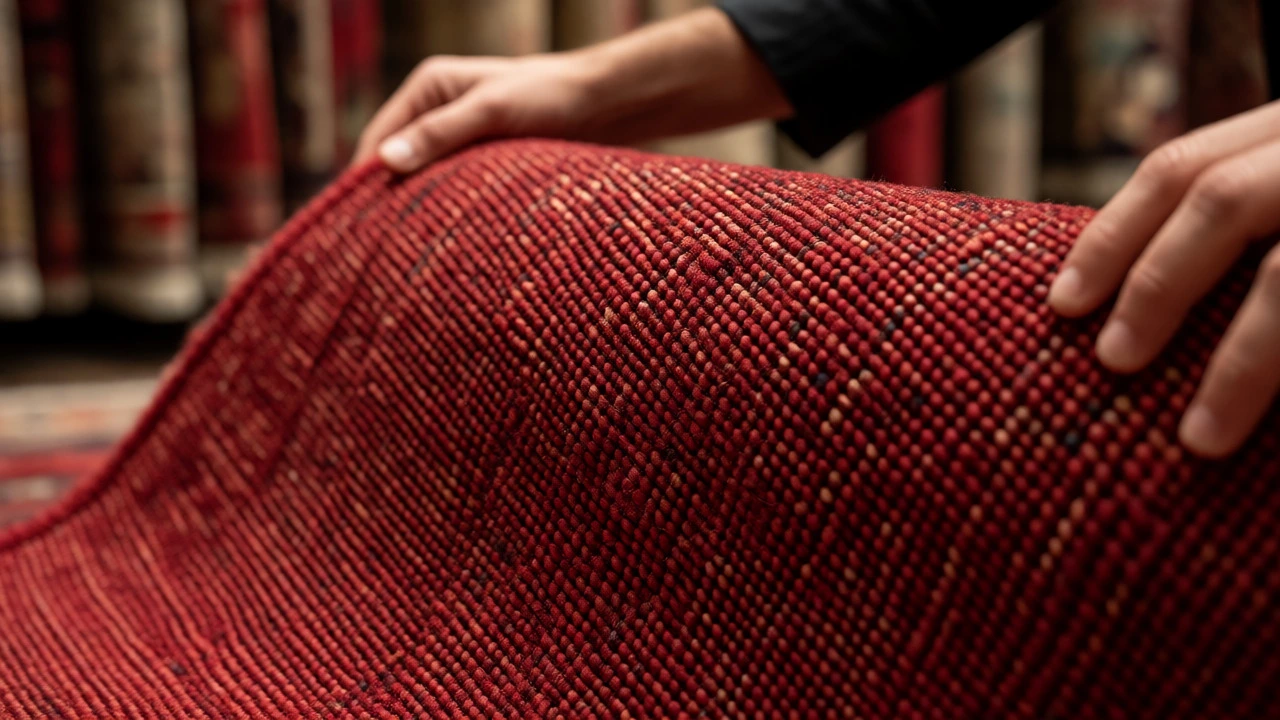
If you only check one thing, make it this. Flip the rug over. Look at the back. You’re looking for knots-tiny loops where the yarn is tied around the warp threads. This is the heartbeat of a handmade rug. High-end rugs have high knot density. Why? Because more knots mean finer detail in the pattern and a tighter structure that resists wear.
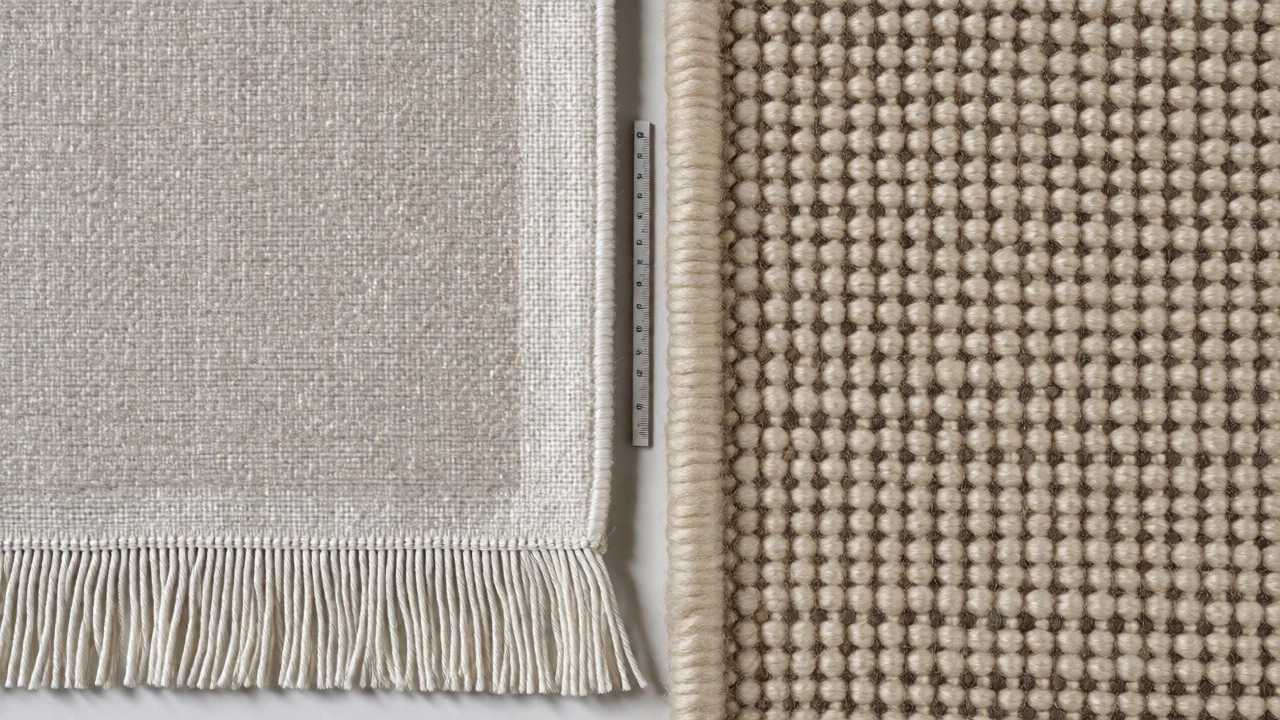
But don’t just count them randomly. Measure a specific area. Take a ruler and measure one inch by one inch on the back of the rug. Count the vertical and horizontal knots within that square. Multiply those two numbers. That’s your Knots Per Square Inch (KPSI).
- Under 100 KPSI: Usually low-quality or coarse wool. Often found in budget tribal weaves.
- 100-200 KPSI: Decent quality. Common in mid-range Persian-style reproductions or village weaves.
- 300-600 KPSI: High quality. These are fine city rugs like Tabriz or Kashan. They feel smooth, almost like silk, and hold intricate designs.
- Over 800 KPSI: Museum grade. Think silk from Hereke or ultra-fine Isfahan. These are investments, not just floor coverings.
A cheap machine-made rug will have a uniform, printed-looking backing. A real hand-knotted rug will show slight irregularities. Those imperfections are proof of human hands, not flaws.
Material Authenticity: Natural vs. Synthetic
Expensive rugs use natural fibers. Period. The big three are wool, silk, and cotton. Sometimes you’ll see bamboo silk (viscose), but true luxury leans heavily on wool and silk.
Wool is the gold standard for durability. It naturally repels dirt, resists fire, and springs back after furniture sits on it. But not all wool is equal. New Zealand wool is soft and lustrous. Tibetan wool has longer staples, making it incredibly strong and resistant to shedding. When you touch a high-end wool rug, it should feel resilient, not mushy. If it feels overly soft and fluffy, it might be synthetic polyester trying to mimic wool.
| Material | Tactile Feel | Durability | Price Indicator |
|---|---|---|---|
| Hand-Knotted Wool | Resilient, slightly lanolin scent | High (decades) | $-$$$ |
| Silk | Cool, smooth, changes color with light | Moderate (best for low traffic) | $$$$$ |
| Bamboo Silk (Viscose) | Glossy, slippery when wet | Low (stains easily) | $$-$$$ (often mislabeled as silk) |
| Polyester/Acrylic | Uniform, plastic-like sheen | Medium (pills over time) | $ (Machine-made) |
Silk is tricky. Real silk has a subtle, shifting luster. Move the rug under different lights. Does the color change? Real silk does. Viscose (bamboo silk) looks shiny but doesn’t shift hue dramatically. Also, viscose stains terribly. If a seller claims a rug is "silk" but it’s cheap, ask for a burn test sample. Real silk smells like burning hair; viscose smells like burnt paper.
Construction Method: Hand-Knotted vs. Tufted vs. Machine-Made
This is where most buyers get burned. Sellers love using vague terms like "handmade." But "handmade" can mean tufted, which is far less valuable than hand-knotted.
Hand-Knotted: Each knot is tied individually by hand. The back shows the pattern clearly because the knots form the design. No glue holds the pile down. These are the most expensive and durable.
Hand-Tufted: Yarn is pushed through a canvas backing with a gun, then glued down. Flip it over. If you see a solid layer of latex or glue holding the pile, it’s tufted. The back won’t show the pattern clearly; it’ll look blurry or covered. These are cheaper, faster to make, and less durable. Expect them to shed and lose shape within 5-10 years.
Machine-Made: Produced on power looms. The edges are usually serged or bound perfectly straight. The pile is uniform. There’s no variation in tension. These are the least expensive options. Great for rentals or high-traffic areas, but they lack soul and longevity.
Check the fringe. On a hand-knotted rug, the fringe is part of the warp threads-it’s continuous with the rug body. Pull gently on a few strands. If they come out easily, the fringe was added later, a common trick in lower-quality rugs. On a machine-made rug, the fringe is often sewn on separately.
Dye Quality: Vegetable vs. Chemical
Color tells a story. Cheap rugs use acid dyes. They’re bright, harsh, and uniform. Over time, they fade unevenly, turning muddy or yellowing.
Expensive rugs often use vegetable dyes or high-quality chrome dyes. Vegetable dyes age beautifully. They develop a patina-a gentle mellowing that makes the rug look richer. Look for "abrash," a term used to describe slight variations in color tone across a single band of dye. In hand-dyed rugs, abrash happens because each batch of wool absorbs dye differently. It’s a sign of authenticity. In machine-made rugs, colors are perfectly flat and consistent, which actually looks artificial up close.
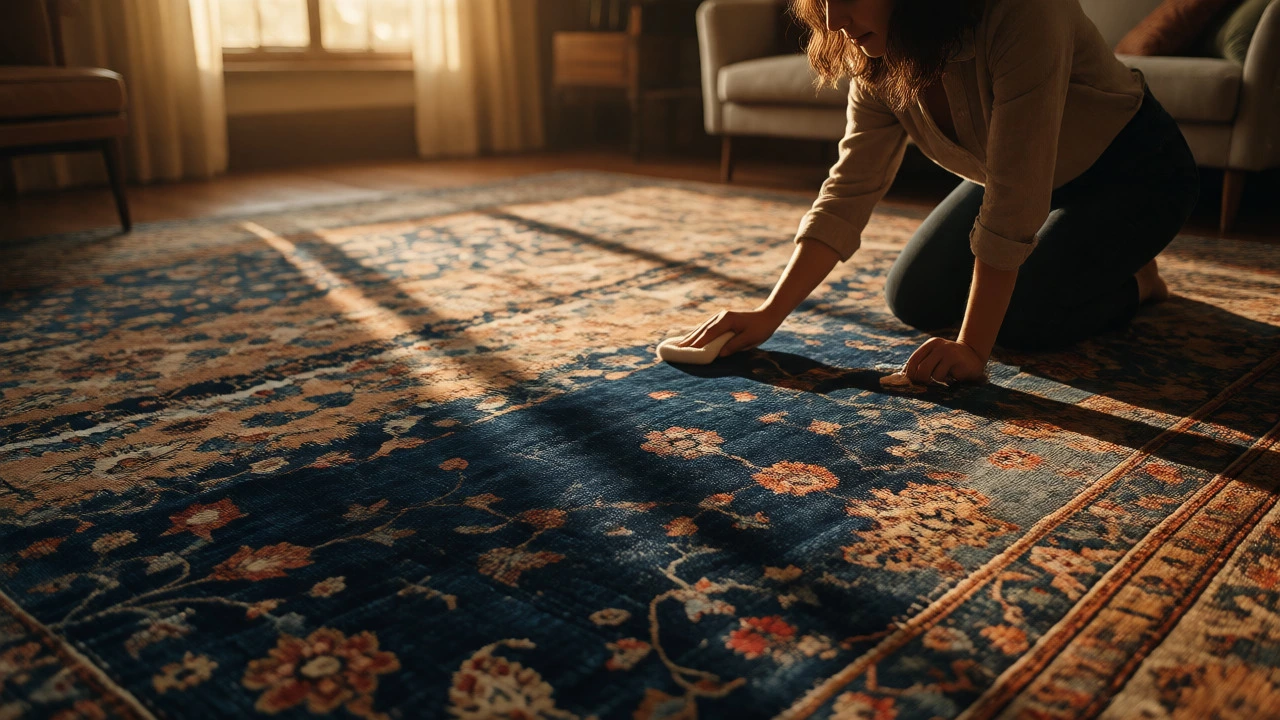
Test for colorfastness. Dampen a white cloth and rub it vigorously on a dark section of the rug. If color transfers, the dye job is poor. High-end rugs should pass this test easily.
Design Complexity and Symmetry
Look closely at the patterns. Are the motifs symmetrical? In hand-knotted rugs, perfect symmetry is rare. Small asymmetries are charming and indicate human creation. However, major errors-like a border that doesn’t align or a medallion that’s off-center-can lower value unless it’s a known regional style quirk.
Complexity matters too. Intricate floral patterns require high knot counts. If a rug has tiny, detailed flowers but a low knot count, the details will look blocky or pixelated. High-value rugs render complex designs smoothly. Also, check the borders. Do they match up at the corners? Poor alignment suggests rushed manufacturing.
Brand Provenance and Origin Labels
Where is it from? Certain regions command higher prices due to reputation. Persia (Iran), Turkey (Hereke), India (Agra/Kashmir), and Pakistan (Lahore) are major hubs. But not all rugs from these places are equal.
Look for labels or tags. Reputable dealers provide provenance. Who wove it? When? What materials were used? If a rug is labeled "Persian," verify it. Many Indian rugs are sold as "Persian-style." That’s fine, but you shouldn’t pay Persian prices for Indian production. Kashmiri silk rugs are top-tier. Pakistani wool rugs offer great value but rarely reach the fine knot densities of Iranian city rugs.
Be wary of brands that sell everything under one name without specifying origin. Transparency is a hallmark of expensive, trustworthy sellers.
Smell and Sound Tests
Your nose knows. Fresh wool has a faint, earthy smell-some call it lanolin. It fades over time. A strong chemical odor indicates synthetic backing or harsh processing. Mold or mildew smells mean the rug was stored poorly, which damages fibers permanently.
Sound matters too. Drop a coin on the rug. A dense, high-quality rug will produce a dull thud. A thin, low-density rug will sound hollow or clicky. This indicates insufficient padding or loose weaving.
Final Checklist Before Buying
Before you swipe your card, run through this quick audit:
- Flip it: Can you see the pattern clearly on the back? Good.
- Count knots: Is it over 150 KPSI for decent quality? Better if over 300.
- Touch the pile: Does it spring back? Avoid mushy synthetics.
- Check fringe: Is it integral to the weave? Yes?
- Rub for dye: Any bleeding? No?
- Inspect edges: Are selvedges (side bindings) tight and even?
If you hit these marks, you’re likely looking at a piece with genuine value. Remember, an expensive rug isn’t just decoration; it’s functional art. Paying for quality means paying for craftsmanship, natural materials, and timelessness. Don’t let flashy marketing fool you. Trust your eyes, your hands, and your basic knowledge of construction.
Does a thicker rug always mean it is more expensive?
No. Thickness can be achieved with foam backings or long, loose piles that mat down quickly. High-end rugs often have shorter, denser piles because high knot counts create a flat, smooth surface. Always check density (knot count) rather than just height.
What is the difference between hand-tufted and hand-knotted rugs?
Hand-knotted rugs are made by tying individual knots around warp threads, creating a durable, reversible structure. Hand-tufted rugs involve pushing yarn through a backing with a tool and gluing it down. Hand-knotted rugs last decades and hold value; hand-tufted rugs are cheaper, less durable, and typically last 5-10 years.
How do I know if my rug is real silk?
Real silk has a distinctive luster that changes depending on the angle of light. It feels cool to the touch. Perform a burn test on a hidden fringe strand: real silk burns slowly, smells like burning hair, and leaves a crushable black ash. Bamboo silk (viscose) burns quickly, smells like burnt paper, and leaves hard beads.
Is a higher knot count always better?
Generally, yes, for fine detail and durability. However, extremely high knot counts (over 1,000 KPSI) are fragile and best for wall hangings or low-traffic areas. For living rooms, 300-600 KPSI offers the best balance of beauty and resilience. Very low knot counts can still be beautiful in rustic styles but won't command high prices.
Why do some expensive rugs have irregular colors?
This is called "abrash" and is common in hand-dyed rugs. It occurs because different batches of wool absorb vegetable dyes slightly differently. It creates subtle tonal shifts within a color band. Far from being a defect, collectors often prize abrash as proof of authentic, traditional dyeing methods.