Curtain Color Visualizer
💡 Light colors reflect light and create visual space. Select your wall color and room lighting to see which curtain shades work best for making small rooms feel bigger.
Recommended Colors
Want your small room to feel wider, taller, and more open? The answer isn’t always new furniture or a paint job. Sometimes, it’s just the curtains you didn’t think mattered. The right color can trick your eyes into seeing more space than there actually is. It’s not magic-it’s optics, psychology, and a little bit of design science.
Why curtain color matters more than you think
Most people pick curtains based on style or pattern, but color has the biggest impact on how big a room feels. Light colors reflect light. Dark colors absorb it. That simple difference changes how your brain processes the size of the space. A dark curtain pulls the walls inward visually. A light one lets the light bounce around, making the room feel like it stretches further.
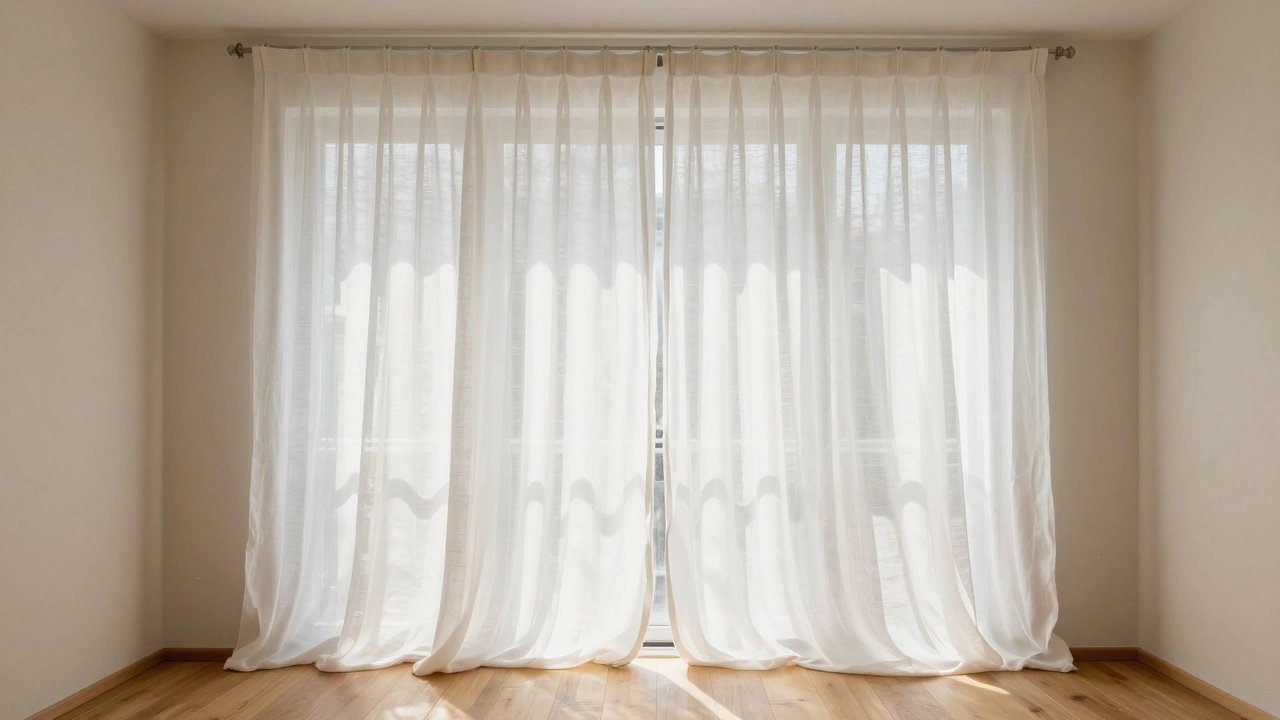
Think about it: when you walk into a room with floor-to-ceiling white curtains and natural light streaming through, does it feel airy? Or does a heavy navy panel make the room feel closed in, even if the windows are the same size? That’s not your imagination. It’s how light and color interact with perception.
The top 5 curtain colors that make rooms look bigger
Not all light colors work the same. Some create a sense of openness better than others. Here are the five most effective shades, ranked by real-world results.
- White - The classic choice for a reason. White reflects nearly all light, creating a clean, bright backdrop. It doesn’t compete with walls or furniture. In a small bedroom or living area, white curtains make the window feel like part of the wall, not a break in it.
- Soft beige - A warmer alternative to white. Beige blends with most wall colors and adds subtle texture without weight. It’s ideal if white feels too cold or sterile. In homes with wooden floors or natural materials, beige curtains feel cozy but still open.
- Light gray - Modern and neutral. Light gray has less glare than white but still reflects plenty of light. It works especially well in urban apartments where you want a calm, uncluttered vibe. It also hides dust better than white.
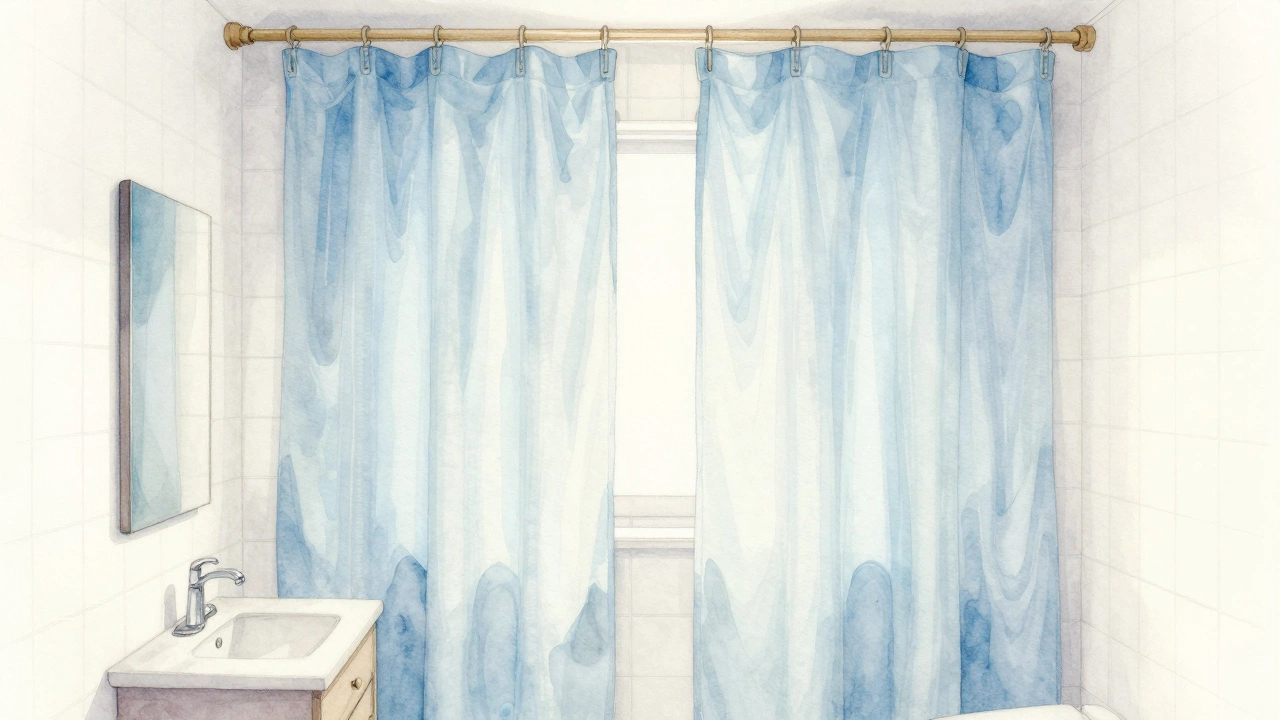
- Pale blue - A surprising winner. Pale blue mimics the sky, which our brains associate with openness. In rooms with limited natural light, this color can trick the eye into thinking there’s more air above. It’s perfect for bathrooms, home offices, or bedrooms where you want calm.
- Off-white with a hint of cream - Slightly warmer than pure white, cream avoids the hospital look while keeping the light-reflecting power. It’s the most forgiving shade for rooms with imperfect lighting or uneven walls.
These colors work best when they match or are slightly lighter than your walls. If your walls are off-white, go for white curtains. If your walls are beige, stick with beige or cream. The goal is continuity-no sharp contrast that cuts the room in half.
What colors to avoid
Dark curtains don’t just look heavy-they make the ceiling feel lower and the walls closer. Black, navy, deep green, and charcoal may look stylish in photos, but in real life, they shrink space. Even medium-toned colors like burgundy or forest green can make a small room feel cramped.
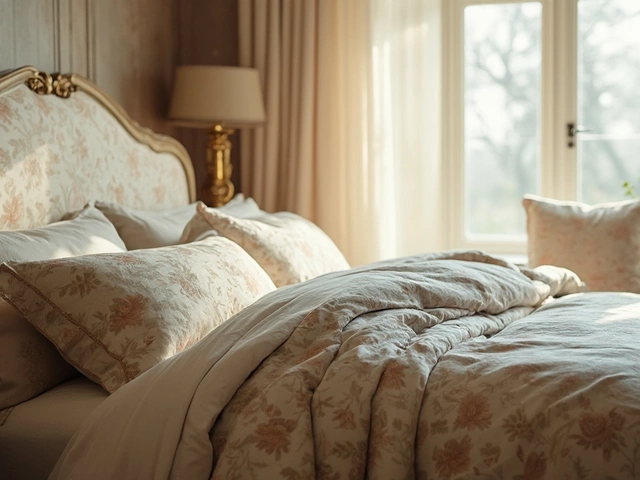
Patterned curtains are another trap. Busy florals, bold stripes, or large prints draw the eye to the window as a separate object, not part of the room’s flow. If you love patterns, keep them small and subtle-like a fine geometric line in a light base color.
And don’t forget the trim. Dark rods, heavy tassels, or contrasting valances can break the illusion. Keep hardware minimal. Stick to thin metal or wood in neutral tones.
How to install curtains for maximum space illusion
Color isn’t everything. Installation matters just as much.
- Hang them high - Install the rod as close to the ceiling as possible. Even if your window is low, raising the rod tricks the eye into seeing more wall above. That extra vertical space makes the room feel taller.
- Hang them wide - Extend the rod 6 to 12 inches beyond each side of the window frame. When open, the curtains disappear into the wall, making the window look bigger. That tricks your brain into thinking the room extends further.
- Go floor-length - Curtains that drag slightly on the floor create a clean vertical line. This draws the eye down, making ceilings feel higher. Avoid puddling-just let them kiss the floor. Too short? They chop the wall in half, which makes the room feel smaller.
- Use sheer or lightweight fabric - Linen, cotton voile, or thin polyester let light pass through. Heavy velvet or blackout fabrics block light and add visual weight. Even if you need privacy, layer sheers behind a light liner instead of going thick.
These four steps work together. High + wide + long + light = maximum illusion. You don’t need expensive curtains. Even a $30 pair from a discount store can transform a room if installed right.
Real examples: Before and after
In a 10x12-foot studio apartment in Wellington, the owner had dark brown curtains and a low rod. The room felt like a box. She swapped them for floor-to-ceiling white linen curtains, mounted the rod 4 inches below the ceiling and extended it 8 inches past each side. The room didn’t grow in size-but it felt 30% larger. She said it stopped feeling like a closet and started feeling like a home.
Another case: a tiny bathroom with a single window. The original curtains were navy with gold trim. After switching to pale blue cotton voile with a white wooden rod, the space felt airy enough to add a small vanity without feeling crowded.
These aren’t design magazine tricks. They’re fixes anyone can do in an afternoon for under $50.
What about blackout curtains?
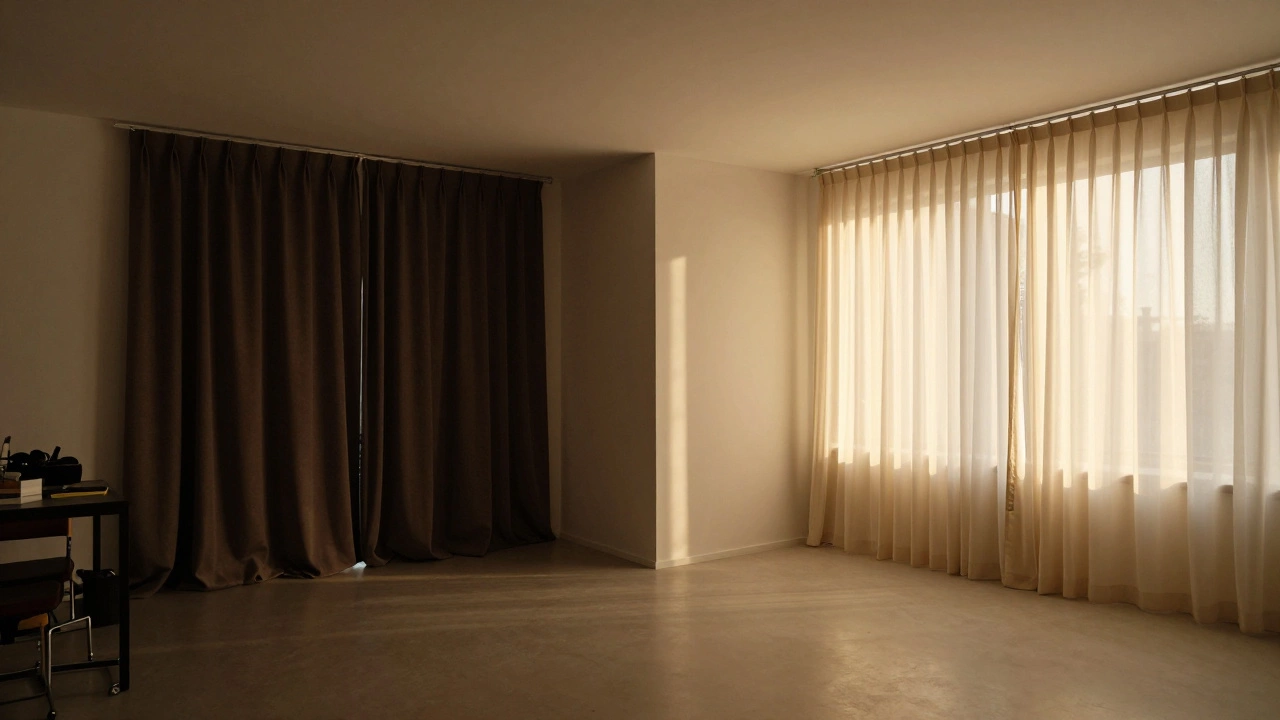
If you need total darkness-like for shift workers or light-sensitive sleepers-you still have options. Look for blackout liners in white or light gray that attach behind sheer curtains. You get the privacy and light control without sacrificing the illusion. Or choose a light-colored blackout fabric with a matte finish. Avoid shiny or textured blackouts-they catch the eye and feel heavy.
Final tip: Match your curtains to your lighting
North-facing rooms get cool, gray light. Warm whites and creams help balance that. South-facing rooms get bright, yellow light. True white or pale blue works best there. If you’re using artificial light, choose curtain colors that look good under LED bulbs. Avoid anything that turns yellow under warm lighting.
Test your color choice by holding fabric swatches up to the window at different times of day. See how the light changes it. What looks bright in the morning might look dull at night. Pick the shade that stays light and fresh all day.
Bottom line
You don’t need to move walls or knock down partitions to make a small room feel bigger. Sometimes, it’s just about what hangs in the window. White, beige, light gray, pale blue, and cream-when hung high, wide, and long-can turn a cramped space into something open and inviting. Skip the dark tones. Skip the busy prints. Keep it simple. Let the light in. And watch how much more room you suddenly have.
Do dark curtains always make a room look smaller?
Not always, but they almost always reduce the feeling of space. Dark curtains absorb light, which makes walls feel closer and ceilings lower. In a large room with plenty of natural light, a dark curtain can add drama without shrinking the space. But in small rooms, especially those with limited windows, dark curtains work against you. For maximum openness, stick to light colors.
Can patterned curtains still make a room look bigger?
Only if the pattern is very subtle. Fine vertical stripes in a light color can actually enhance height, but only if they’re narrow and match the wall tone. Large florals, bold geometrics, or high-contrast prints draw attention to the window as a separate element, breaking the flow of the room. For small spaces, solid or barely-there patterns are safest.
Should curtains match the wall color exactly?
Not exactly-but they should be the same tone or lighter. If your walls are a warm beige, go for a slightly lighter beige or cream. If your walls are white, white curtains work best. A curtain that’s darker than the wall creates a visual break that makes the room feel divided. The goal is harmony, not contrast.
Is it better to have curtains that go to the floor or just above the window?
Floor-length curtains always win for making rooms look bigger. Curtains that end above the window sill chop the wall into sections, making the ceiling feel lower. Floor-length curtains create a continuous vertical line that draws the eye upward. Even if your window is short, hanging curtains from ceiling to floor makes the whole wall feel taller.
What type of fabric works best for small rooms?
Light, breathable fabrics like cotton voile, linen, or thin polyester. These let natural light filter through, keeping the room bright. Heavy fabrics like velvet, brocade, or blackout materials block light and add visual weight. Even if you need privacy, use a sheer curtain as the main layer and add a lightweight liner behind it.
Do curtain rods matter for making a room look bigger?
Yes. Thin, simple rods in neutral colors like brushed nickel, matte black, or natural wood help maintain the illusion. Thick, ornate rods with heavy finials draw attention away from the window’s size. Also, make sure the rod extends beyond the window frame-this makes the window look wider, which tricks your brain into thinking the room is larger.