Disposable Tableware Identifier
Identify Your Disposable Tableware
Enter details about the item or select its recycling code to see material type and environmental impact.
No result yet
Select options to identify material
Ever picked up a plastic cup at a picnic and wondered, What’s this actually called? You’re not alone. Most people just say ‘plastic cups’ or ‘party plates,’ but there’s a whole system of names behind the stuff you throw away after one use. These aren’t just random items - they’re engineered products with specific materials, standards, and even legal classifications. Knowing what they’re really called helps you make smarter choices, whether you’re hosting a birthday party, running a food truck, or trying to cut down on waste.
The Two Big Types: Polystyrene and Polypropylene
Almost every disposable plastic cup or plate you’ve ever used falls into one of two material categories: polystyrene or polypropylene. These aren’t just brand names - they’re chemical formulas that define how the item behaves.
Polystyrene (often labeled as PS or #6 plastic) is what most foam cups and rigid plates are made from. You know the kind - lightweight, white, and slightly crumbly. It’s cheap to produce, which is why it’s everywhere at food fairs and takeout joints. But it’s also brittle. If you drop it, it cracks. If you put hot soup in it, it can soften. That’s because polystyrene has a low melting point. In New Zealand, it’s been banned in some cities for single-use food containers because it doesn’t break down easily and often ends up in waterways.
Polypropylene (PP or #5 plastic) is tougher. You’ll find it in clear plastic cups, reusable-looking partyware, and microwave-safe containers. It’s more flexible, handles heat better, and can be washed and reused a few times before it wears out. It’s also more recyclable than polystyrene in some areas, though recycling rates are still low. Many cafés in Wellington now use PP cups because they feel less flimsy and don’t leak when filled with hot coffee.
What’s the Official Term? Disposable Tableware
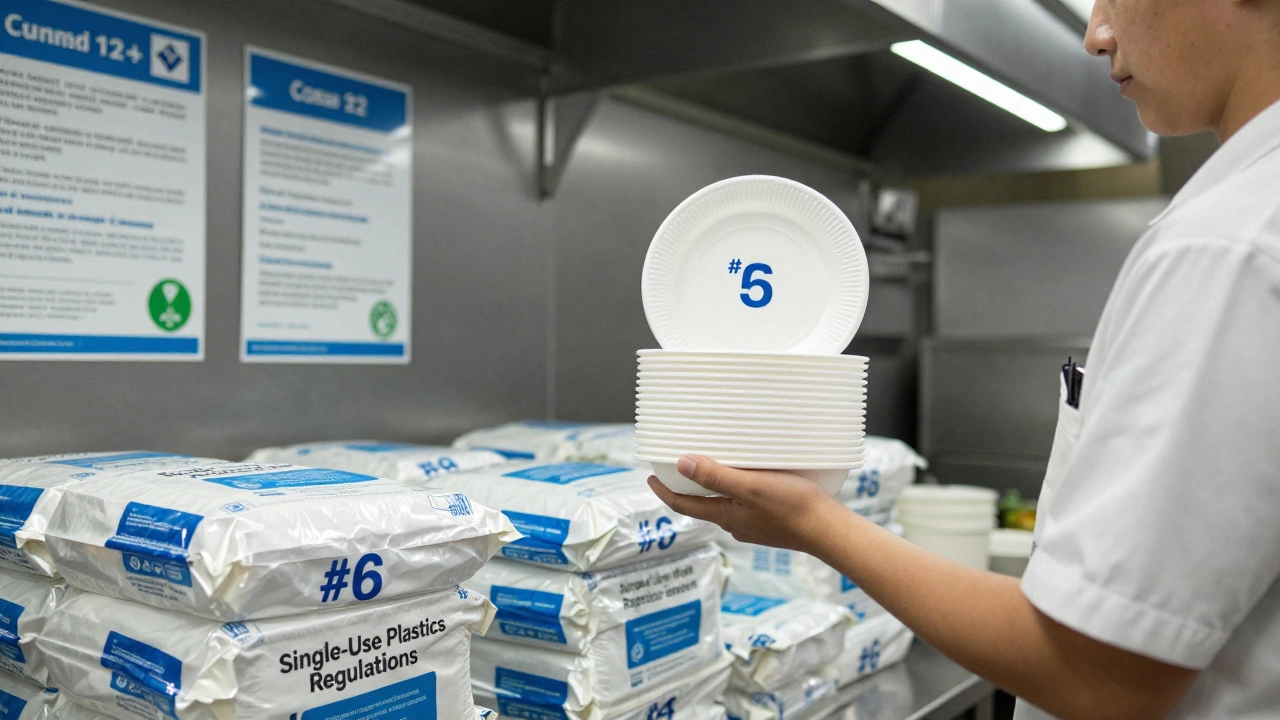
Professionals in catering, hospitality, and waste management call these items disposable tableware. That’s the umbrella term you’ll see on bulk packaging, supplier catalogs, and health inspection guidelines. It includes not just cups and plates, but also forks, knives, napkins, lids, and even stirrers - anything meant to be used once and tossed.
The term isn’t just technical - it’s regulatory. In New Zealand, the Ministry for the Environment classifies disposable tableware under the Single-Use Plastics Regulations, which restrict certain types based on material and function. For example, polystyrene foam plates are banned in commercial food service in Auckland and Wellington as of 2024. If you’re running a business, you need to know what’s allowed and what’s not.
Other Names You Might Hear
People use all kinds of slang depending on where they are or what they’re used to. Here’s what you might actually hear:
- Party ware - common in households for birthdays or holidays. Often made of polypropylene.
- Compostable plastic - misleading term. Many products labeled this way are actually petroleum-based plastics with additives that don’t make them truly compostable in home bins.
- Bioplastic - sometimes used for plant-based cups made from corn or sugarcane. These are different from traditional plastic and can break down in industrial composters, but not in your backyard.
- Disposable dinnerware - another formal synonym, often used in retail settings.
- Takeout containers - usually refers to the clamshell-style boxes, but sometimes includes plates and cups bundled with meals.
Be careful with terms like ‘eco-friendly plastic’ or ‘green disposable.’ These are marketing phrases, not technical ones. A cup made from polystyrene with a green tint is still polystyrene - and still harmful to the environment.
Why the Name Matters
It’s not just about being precise. Knowing what these items are called helps you make better decisions.
If you’re shopping for a backyard barbecue and see ‘biodegradable plates,’ check the fine print. If it says ‘made from polylactic acid (PLA),’ it’s plant-based and needs industrial composting. If it just says ‘plastic,’ it’s probably polypropylene or polystyrene - and won’t break down for hundreds of years.
Waste collectors don’t sort by what you think it is. They sort by resin codes - the little triangle with a number inside. #6 is polystyrene. #5 is polypropylene. #1 is PET bottles. If you don’t know the difference, you might accidentally contaminate a recycling stream. That’s why some councils in New Zealand now only accept #1 and #2 plastics in curbside bins.
Even restaurants have to label their disposables correctly. A café in Christchurch got fined last year for calling their polystyrene cups ‘compostable’ on their menu. The customer complained. The council checked. The label was wrong. The fine was $1,200.
What’s Replacing Them?
As bans tighten, businesses are switching. Here’s what’s trending in 2025:
- Paper cups with plant-based linings - no plastic coating, fully compostable in municipal systems.
- Bamboo fiber plates - made from fast-growing bamboo, durable, and home-compostable.
- Recycled paperboard containers - sturdy, printed with soy ink, and widely recyclable.
- Reusable systems - some cafes now charge a $2 deposit for a returnable cup, which gets cleaned and reused up to 100 times.
These aren’t just trends - they’re responses to real policy changes. New Zealand’s government plans to ban all non-recyclable single-use plastics by 2027. That means if you’re still using polystyrene plates in 2026, you’ll be breaking the law.
How to Identify Them in the Store
Here’s how to tell what you’re buying before you check out:
- Look for the recycling symbol - the triangle with a number inside.
- Check the material listed on the packaging: ‘polystyrene,’ ‘polypropylene,’ ‘PLA,’ or ‘paper.’
- Feel the texture. Foam = polystyrene. Rigid but flexible = polypropylene. Fibrous or paper-like = plant-based.
- Ask the supplier: ‘Is this certified compostable?’ If they say yes, ask for the certification number (like AS 5810 or EN 13432).
Don’t rely on color or branding. A blue cup isn’t eco-friendly just because it’s blue.
Final Thought: It’s Not About the Name - It’s About the Impact
Calling it ‘disposable tableware’ doesn’t change the fact that it ends up in landfills. But knowing what it’s made of? That changes everything. It lets you choose better. It lets you speak up when you’re sold something misleading. It lets you support businesses that are actually doing the right thing.
Next time you grab a cup, look at the bottom. See that little number? That’s the real name. And it tells you more than you think.