
Couch Cushion Thickness & Density Calculator
Please configure your settings to see the ideal cushion specifications.
You sink into your favorite spot on the sofa, expecting that perfect blend of support and softness. Instead, you hit the hard wood frame beneath. Or worse, you feel like you're sitting on a marshmallow that never bounces back. If this sounds familiar, the culprit is likely not just the type of foam, but how thick it actually is. Getting the couch cushion thickness right is the single most important factor in determining whether your sofa feels like a luxury lounge or a cheap rental.
There is no universal "magic number" because sofas vary wildly in design. However, industry standards exist for a reason. Most standard residential sofa cushions range from 4 to 6 inches in thickness. But simply knowing the number isn't enough. You need to understand how that thickness interacts with the seat pan (the wooden base), the foam density, and your own body weight. Let’s break down exactly what makes a cushion feel right, so you can stop guessing and start relaxing.
The Anatomy of a Sofa Seat: It’s Not Just Foam
To understand why thickness matters, you have to look at what’s underneath. A couch cushion doesn’t float in mid-air; it sits on a structure called the seat pan. This is usually a piece of plywood or hardwood attached to the sofa frame. The distance between the top of that wood and the bottom of the cushion is critical.
If your seat pan is high-meaning the wood frame is close to where you sit-you need thicker cushions to prevent that uncomfortable "bottoming out" sensation. Conversely, if your sofa has deep springs or a sagging webbing system, the seat pan might be lower, allowing for slightly thinner cushions without losing comfort.
| Sofa Style | Average Seat Pan Height | Recommended Cushion Thickness |
|---|---|---|
| Traditional / High-Back | 18-20 inches from floor | 5-7 inches |
| Modern / Mid-Century | 16-18 inches from floor | 4-5 inches |
| Deep-Seater / Lounge | 14-16 inches from floor | 3-4 inches |
Notice the trend? Lower seats generally require thinner cushions to maintain proper legroom and posture. If you put a 6-inch cushion on a low-slung modern sofa, your knees will be higher than your hips, which causes back pain over time. Always measure your existing seat height before buying new inserts.
Foam Density Matters More Than Thickness
Here is the secret furniture makers don’t always tell you: thickness is only half the equation. The other half is density. You can have a 6-inch cushion made of low-density foam, and it will feel flat within six months. You can have a 4-inch cushion made of high-resilience foam, and it will feel supportive for years.
Foam density is measured in pounds per cubic foot (PCF). For a durable sofa cushion, you want a minimum of 1.8 PCF. Anything below 1.5 PCF is considered "filler" quality-it’s cheap, it compresses quickly, and it loses its shape. When you combine high density with the correct thickness, you get longevity.
Consider this scenario: You buy a plush, thick-looking cushion. It feels amazing on day one. But because the foam is low-density, it crushes under your weight. After three months, that 6-inch cushion effectively becomes a 2-inch slab. Now you’re hitting the wood again. So, when evaluating thickness, always ask about the density rating. A 4-inch cushion at 2.0 PCF will often outperform a 6-inch cushion at 1.2 PCF.
Measuring Your Current Cushions: A Step-by-Step Guide
If you are replacing old cushions, do not guess. Measure. Here is how to get an accurate reading:
- Remove the cover: Take off the fabric slipcover. If the cushion has a piping edge, note that this adds width but not necessarily useful thickness.
- Flatten the foam: Press down firmly on the center of the cushion to remove any air pockets or loft. Measure from the very bottom of the foam core to the top surface.
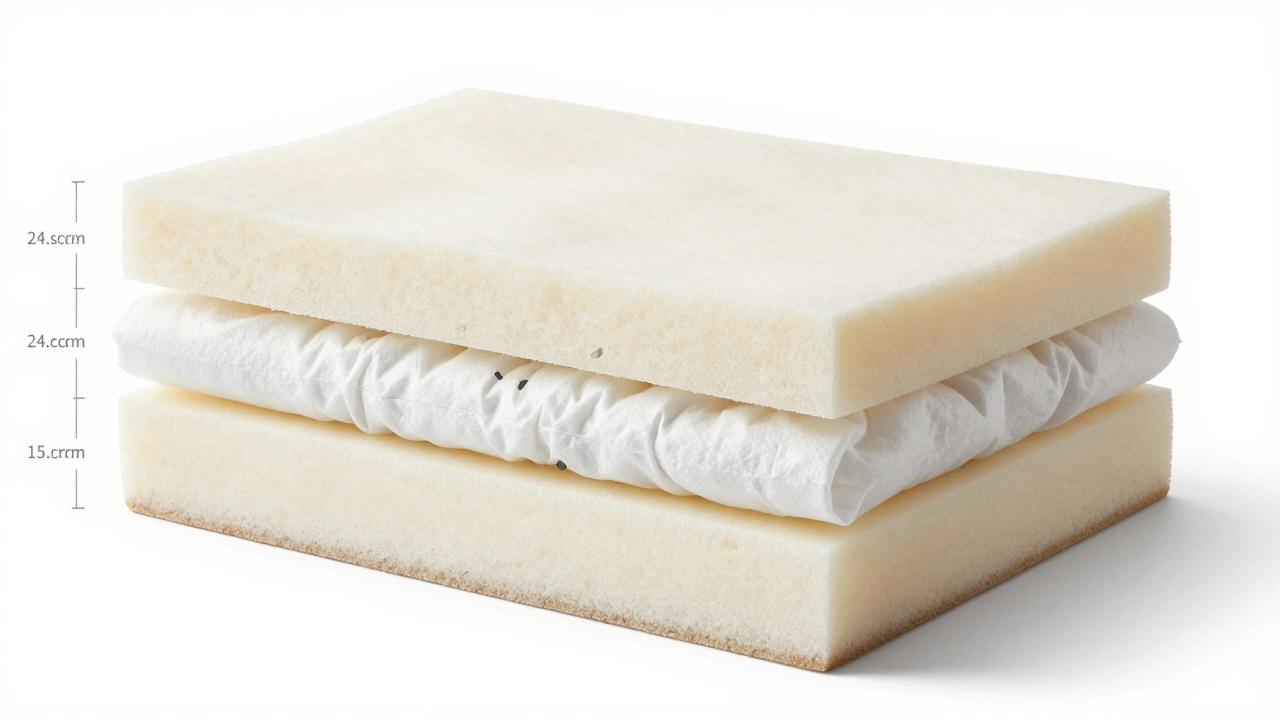
- Check for layers: Many premium cushions use layered construction. They might have a 3-inch base of high-density foam topped with 1 inch of soft polyurethane or fiber wrap. Measure the total stack height, not just the hard foam layer.
- Measure the seat pan depth: Place a ruler vertically into the seat frame. How much empty space is there? If you have 6 inches of space and your current cushion is 4 inches, you have room to go thicker. If you only have 3 inches of space, adding more thickness will make the cushion bulge awkwardly over the sides.
Pro tip: If your current cushions are sagging but fit perfectly in the frame, stick to the same external dimensions. Change the internal material, not the size. Changing the size requires altering the slipcovers, which is a whole other project.
Thickness by Usage: Who Are You Sitting For?
Not everyone uses their sofa the same way. Your ideal thickness depends heavily on how you interact with your furniture.
Heavy Daily Use is for families who watch TV, eat meals, and nap on the sofa every day. If your sofa is a workhorse, aim for 5 to 6 inches of high-density foam. Thicker cushions distribute weight more evenly, reducing pressure points on your hips and thighs. This is crucial for heavier individuals or those who spend long periods seated. Thin cushions concentrate pressure, leading to discomfort faster.
Occasional Seating is for formal living rooms or guest chairs used rarely. In these cases, aesthetics often trump ergonomics. A sleek, thin profile (3 to 4 inches) looks cleaner and more modern. Since you aren’t sitting in it for hours, the lack of deep support is less noticeable. These cushions often feature a firmer core to maintain their sharp lines.
Napping & Lounging is for sofas designed for reclining or lying down. If you plan to lie across the sofa, you need maximum thickness. Look for 6 to 8 inches. Standard 4-inch cushions will create a hard ridge under your spine when you lie down. Thicker cushions allow your body to sink in, creating a cradle effect that supports the natural curve of your back.
The Role of Wraps and Toppers
Raw foam is rarely comfortable on its own. It can feel too firm or even hot against the skin. That’s why manufacturers add wraps. These layers add to the overall thickness but serve different purposes.
- Polyester Fiber Wrap: Adds 1 to 2 inches of fluffiness. This gives the "cloud-like" initial feel. However, fiber compacts over time. A cushion with a heavy fiber wrap may start thick but shrink significantly after a year of use.
- Memory Foam Topper: Adds 1 to 2 inches of contouring comfort. Memory foam responds to heat and pressure, molding to your body. This is excellent for side-sitters but can retain heat, making it less ideal for warm climates like Wellington summers.
- Down Feather Blend: Adds 1 to 3 inches of luxurious loft. Down requires frequent fluffing to maintain its shape. It’s beautiful and soft but offers little structural support on its own. It must be paired with a dense foam base.
When calculating total thickness, remember that the foam core provides the support, while the wrap provides the feel. If you prefer a firmer seat, choose a thicker foam core with a minimal wrap. If you love sinking in, go for a moderate foam core with a generous fiber or down wrap.
Common Mistakes to Avoid
One of the biggest errors people make is assuming that thicker always means better. A 7-inch cushion on a small-frame sofa will look bloated and disproportionate. It will also slide around more easily because there’s less friction against the seat pan edges. Stability is key. A well-fitted 4-inch cushion that stays in place is far superior to a loose, overstuffed 6-inch one that requires constant repositioning.
Another mistake is ignoring the corner blocks. The wooden corners of your sofa frame determine how wide the cushion should be, but they also affect how thick it can be before it starts to wobble. Ensure the cushion fits snugly within the frame without being compressed sideways. If you have to squeeze it in, it’s too big. If it rocks side-to-side, it’s too small.
DIY Replacement Tips
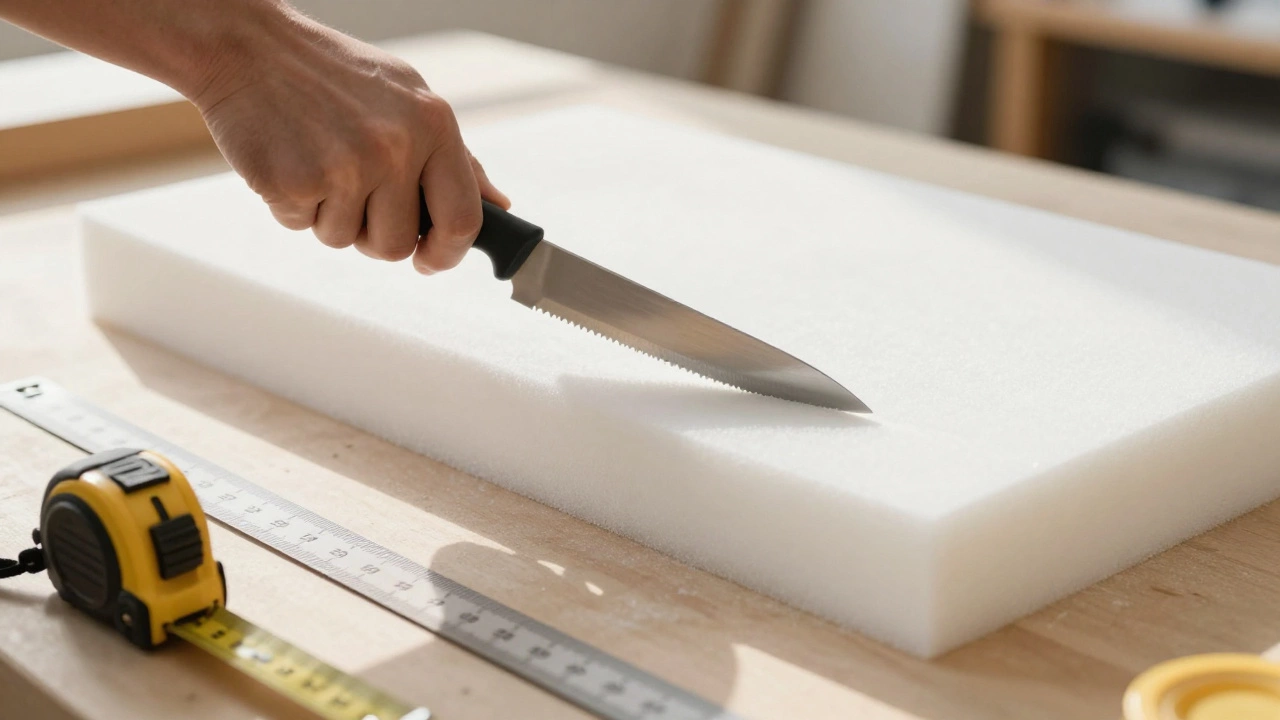
If you’re feeling adventurous, you can replace your own cushion cores. Start by measuring the existing foam as described earlier. Purchase high-density polyurethane foam online or from a local upholstery supply store. Cut it to size using a serrated bread knife-yes, really. A smooth blade tears foam; a serrated one slices cleanly.
Once cut, test the fit. Sit on it. Does it feel too hard? Add a layer of batting or a memory foam topper. Too soft? You’ll need to swap the core for a denser grade. Remember, you can always add layers, but you can’t subtract them without cutting. Start conservative with thickness, then build up comfort gradually.
What is the standard thickness for a sofa cushion?
The standard thickness for most residential sofa cushions ranges from 4 to 6 inches. Traditional high-back sofas often use 5 to 7 inches, while modern low-profile sofas typically use 3 to 5 inches. The exact measurement depends on the height of the seat pan and the desired level of comfort.
Are thicker couch cushions more comfortable?
Not necessarily. Comfort comes from a combination of thickness and foam density. A thick cushion made of low-density foam will flatten quickly and become uncomfortable. A thinner cushion made of high-density foam can provide superior support and longevity. For most people, a 4-5 inch cushion with high-density foam offers the best balance of comfort and durability.
How do I measure my couch cushion thickness accurately?
Remove the fabric cover and press down firmly on the foam to eliminate air pockets. Measure from the bottom of the foam core to the top surface using a ruler or tape measure. If the cushion has multiple layers (like foam plus fiber wrap), measure the total stack height. Also, check the depth of the seat pan to ensure there is enough room for the cushion without bulging.
What foam density should I look for in couch cushions?
For durable, long-lasting comfort, look for foam with a density of at least 1.8 pounds per cubic foot (PCF). High-end sofas often use foam rated between 2.0 and 2.5 PCF. Avoid foam below 1.5 PCF, as it is prone to rapid compression and sagging, especially with daily use.
Can I add thickness to my existing couch cushions?
Yes, you can add thickness by inserting a topper layer inside the existing slipcover. Common options include a sheet of memory foam, polyester fiberfill, or batting. However, be cautious not to overstuff the cover, as this can distort the shape and make the cushion difficult to insert or remove. Always check the seat pan depth first to ensure the added thickness won’t cause the cushion to bulge over the frame.