Kitchenware vs. Appliance Sorter
Drag the items into the correct category. Remember: Does it have a plug or a motor?
Quick Breakdown: The Main Differences
- Power Source: Kitchenware is manual; appliances usually need electricity or gas.
- Complexity: Kitchenware is often a single piece of material (like steel); appliances have motors, circuits, and buttons.
- Purpose: Kitchenware helps you prepare or serve; appliances often automate the cooking or preserving process.
Defining the Basics of Kitchenware
When we talk about Kitchenware is a broad term for the tools, utensils, and containers used in a kitchen for food preparation and serving. It's basically everything you use that doesn't have a plug. If you can drop it in a sink of soapy water without worrying about an electrical short, it's almost certainly kitchenware.
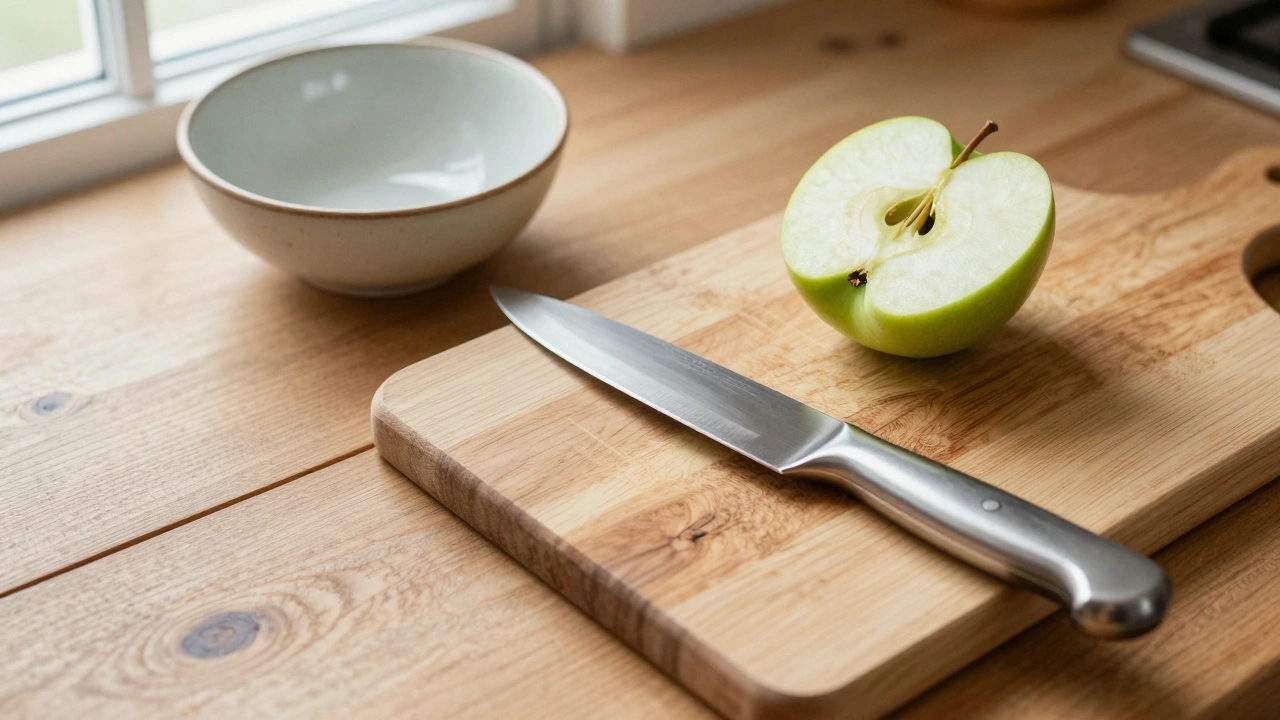
Think about your morning routine. The knife you use to slice an apple, the wooden board it sits on, and the bowl you put the slices in are all kitchenware. These items are defined by their material-usually stainless steel, silicone, glass, or wood-rather than their mechanical function. They are the "hands-on" part of cooking. You provide the energy; the tool provides the edge or the surface.
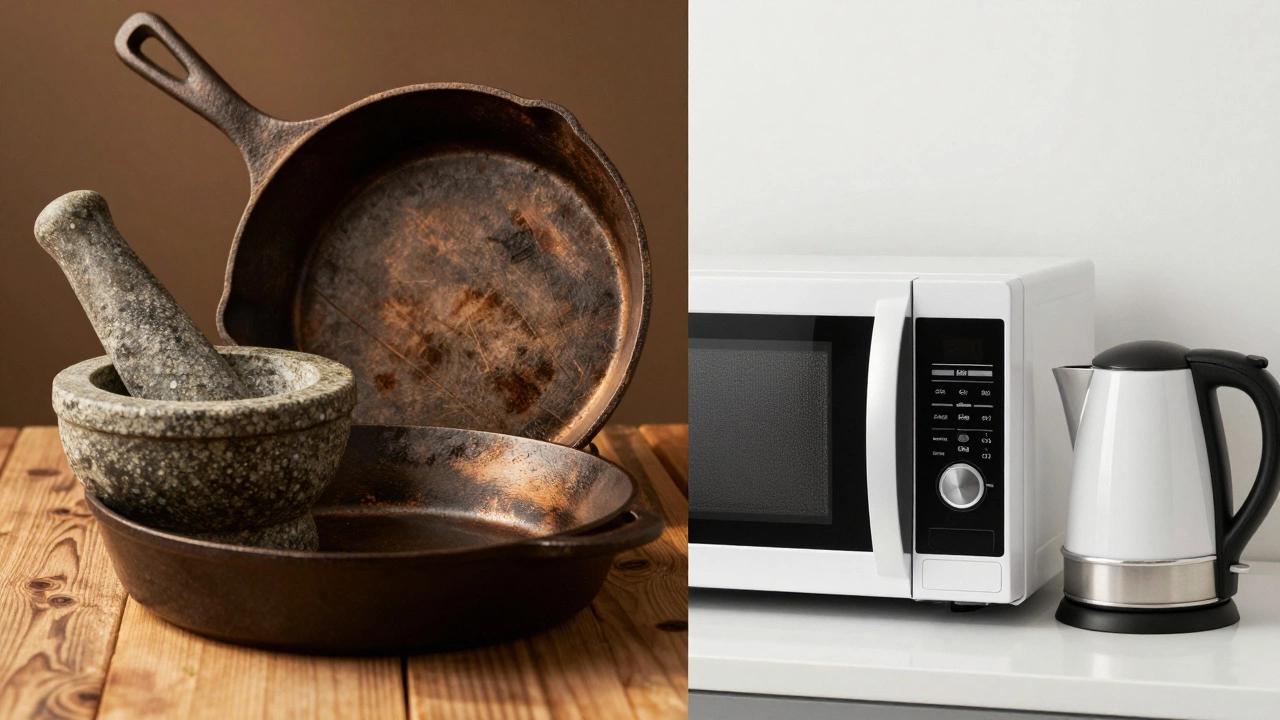
Kitchenware is often broken down into smaller categories. For instance, Cookware is a sub-type of kitchenware specifically designed for use on a heat source, like a cast-iron skillet or a ceramic pot. Then you have Bakeware, which is designed for the oven, such as cake tins or roasting trays. Finally, there are utensils-the whisks, peelers, and tongs that handle the ingredients.
What Exactly Are Kitchen Appliances?
Now, let's switch gears. Kitchen Appliances are electrical or mechanical machines designed to perform a specific task, often automating a process that would be tedious or impossible by hand. Unlike a pot, an appliance has a "brain" or a motor. It changes the state of food using controlled heat, centrifugal force, or refrigeration.
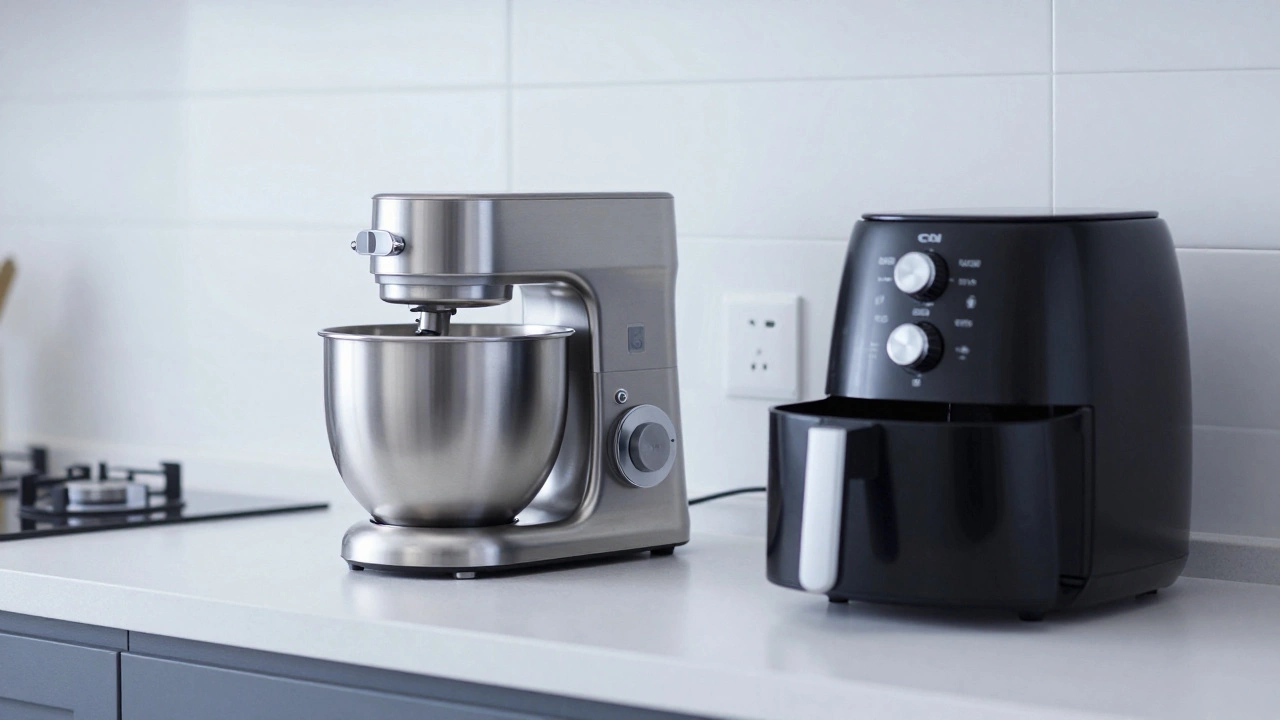
If you use a whisk, you're using kitchenware. If you flip a switch on a Stand Mixer and it whisks the cream for you, you're using an appliance. The primary value of an appliance is efficiency and consistency. You don't have to worry about your arm getting tired; the machine handles the repetitive motion.
Appliances are generally split into two worlds: major and small. Major appliances, often called "white goods," are the heavy hitters like the Refrigerator or the Dishwasher. These are usually permanent or semi-permanent fixtures in your home. Small appliances are the countertop residents-things like toasters, air fryers, and coffee makers. While they are smaller, they still fit the definition because they rely on external power to operate.
Comparing the Two: A Side-by-Side Look
To make this crystal clear, it helps to see how they stack up against each other in real-world usage. The biggest divider is always the "power" element.
| Feature | Kitchenware | Kitchen Appliances |
|---|---|---|
| Power Source | Human effort (Manual) | Electricity / Gas / Battery |
| Maintenance | Washing and drying | Cleaning, descaling, technical repair |
| Lifespan | Can last a lifetime (e.g., Cast Iron) | Limited by electronics/motor wear |
| Example | Chef's Knife, Colander, Frying Pan | Microwave, Blender, Oven |
| Storage | Drawers, Hooks, Cabinets | Countertops, Dedicated Nooks |
The Gray Areas: When the Line Blurs
You might be thinking, "Wait, what about a manual coffee press?" or "Is a slow cooker just a fancy pot?" This is where things get interesting. There are a few items that feel like they live in both worlds.
Take the French Press. It's used to make coffee, which is a task usually associated with a machine. However, since it has no plug and relies entirely on your hand to plunge the filter, it's technically kitchenware. On the flip side, an Electric Kettle does the exact same job of heating water as a stovetop pot, but because it has a heating element and a power cord, it's an appliance.
Another example is the mortar and pestle. It does the job of a food processor (grinding and crushing), but because it's just two pieces of stone or ceramic, it stays in the kitchenware category. The difference isn't what the tool does, but how it does it. If the energy comes from your muscles, it's ware. If the energy comes from the wall outlet, it's an appliance.

Why This Distinction Matters for Your Home
Why bother splitting these into two categories? It's not just for the sake of vocabulary. Understanding this helps you manage your kitchen more effectively. For one, your storage strategy changes. Kitchenware usually requires organizational tools like drawer dividers or hanging racks. Appliances require "zones" with easy access to power outlets.
Then there's the matter of investment and longevity. When you buy high-quality kitchenware, like a set of professional knives or a Le Creuset dutch oven, you are often buying something that can be passed down to your children. They don't have circuit boards that fry or motors that burn out. Appliances, however, are subject to planned obsolescence. Even a high-end Air Fryer will likely need replacing in five to ten years.
Finally, consider the cleaning and safety aspect. Kitchenware is generally low-risk. You might cut yourself with a knife, but you won't cause an electrical fire by putting a wooden spoon in water. With appliances, you have to deal with voltage, wattage, and the danger of liquids meeting electricity. Knowing which is which helps you set up a safer workspace.
Choosing What to Prioritize
If you're starting a kitchen from scratch, where should your money go? It's tempting to buy every gadget in the store, but a pro tip is to master your kitchenware first. You can make a world-class meal with just a sharp knife, a sturdy cutting board, and a few good pans. You can't, however, chop an onion with a microwave.
Start with the essentials: a versatile chef's knife, a stainless steel pot, and a non-stick skillet. Once those are in place, look for appliances that solve a specific problem. Don't buy a specialized appliance (like a pasta maker) if a piece of kitchenware (like a rolling pin) can do the job just as well. This keeps your counters clear and your budget intact.
Is a microwave considered kitchenware?
No, a microwave is a kitchen appliance. This is because it requires electricity to function and uses a complex internal mechanism (a magnetron) to heat food, rather than being a simple manual tool.
Are pots and pans called kitchenware or appliances?
Pots and pans are kitchenware. Specifically, they fall under the sub-category of "cookware." They do not have their own power source and instead rely on an external heat source like a stove.
What is the most common mistake when buying kitchen tools?
The most common mistake is buying "single-use" appliances. Many people buy a gadget that does only one thing (like a quesadilla maker) when a versatile piece of kitchenware (like a frying pan) could do the same job and ten other things too.
Does the term 'housewares' include both?
Yes, "housewares" is an umbrella term that covers both kitchenware and small appliances, as well as items for the bathroom and bedroom. It refers to any portable equipment used within the home.
Can a piece of kitchenware become an appliance?
Not exactly, but the function can be automated. For example, a manual whisk (kitchenware) is the ancestor of the electric hand mixer (appliance). The tool evolves from a manual object to a powered machine.