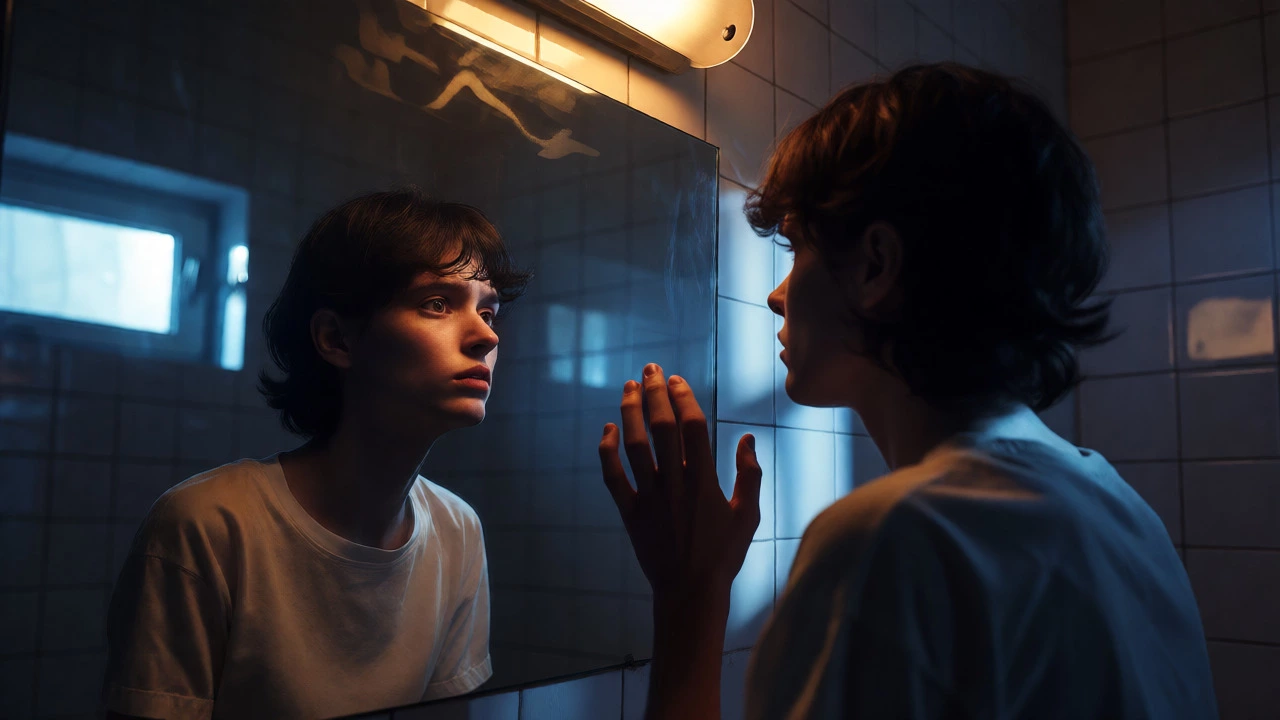
Mirror Anxiety Self-Assessment
This quick assessment helps you understand the root causes of your discomfort with mirrors. Answer honestly to receive personalized insights.
Your Mirror Profile
Fill out the questions and click "Analyze" to see your results.
You walk into a room, and for a split second, your brain short-circuits. It’s not the furniture. It’s not the lighting. It’s the reflection staring back at you. For most people, mirrors are mundane tools-quick checks before leaving the house or ways to make a small apartment feel bigger. But for others, that glass rectangle triggers a genuine sense of dread, discomfort, or even panic. If you’ve ever wondered why some people actively avoid mirrors, cover them up, or feel an irrational spike of anxiety when passing one, you’re not alone. This isn’t just vanity; it’s a complex mix of psychological phenomena, evolutionary biology, and sensory processing quirks.
The core entity driving this experience is often referred to as mirror anxiety, which is a psychological condition characterized by distress or avoidance behavior triggered by seeing one's own reflection. Unlike simple dissatisfaction with appearance, mirror anxiety involves a visceral reaction where the reflection feels alien, threatening, or distorted. While not always a standalone clinical diagnosis in the DSM-5, it frequently overlaps with conditions like body dysmorphic disorder (BDD), social anxiety, and specific phobias such as scopophobia (the fear of being watched) or spectrophobia (fear of mirrors).
The Brain on Glass: Why Reflections Feel Wrong
Here’s the thing about human perception: we don’t see ourselves the way others do. From childhood, you are accustomed to seeing your face in a mirror-a reversed image. You know your left eye is on the left side of the mirror. But when you see a photo of yourself, or worse, when you catch a glimpse of yourself in a shop window, the image is non-reversed. This subtle flip can create a cognitive dissonance known as the "mere exposure effect" gone wrong. Your brain prefers what is familiar. When the reflection doesn’t match the mental map you’ve built over decades, it registers as "wrong," triggering unease.
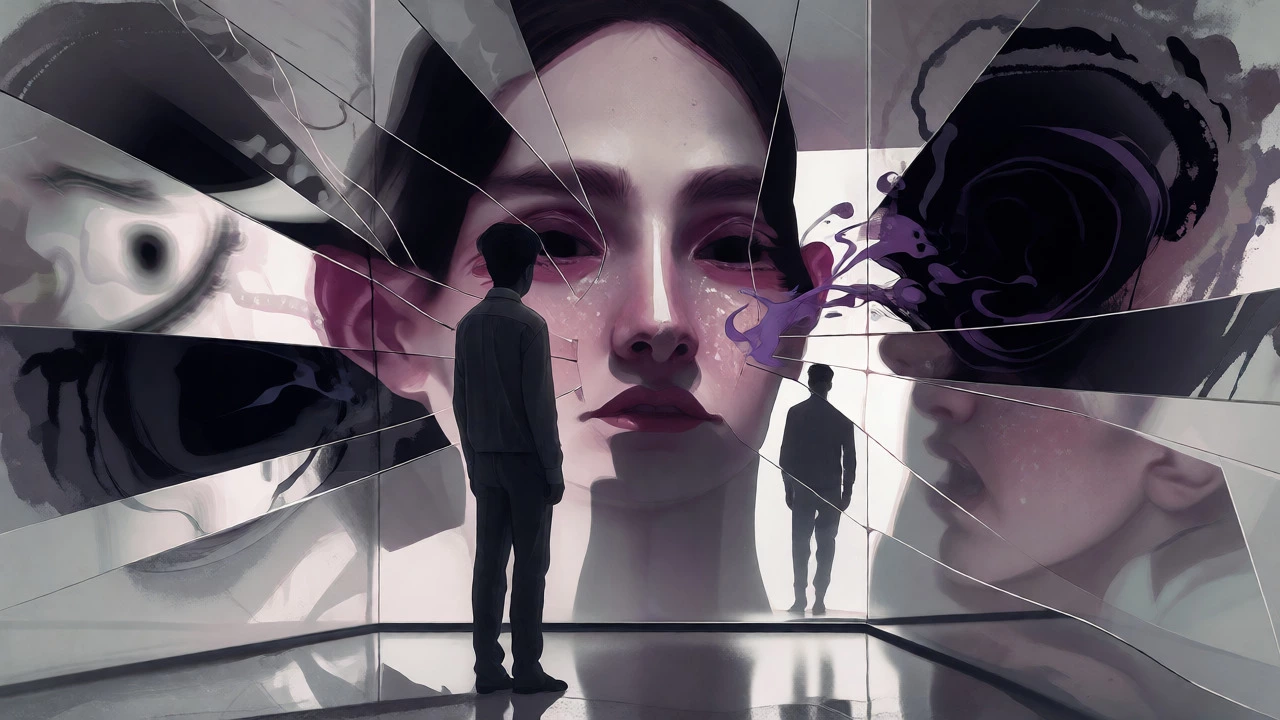
But for those who hate mirrors, the issue goes deeper than mere familiarity. Neuroscientists suggest that the fusiform gyrus, the part of the brain responsible for facial recognition, works overtime when interpreting reflections. In individuals with high anxiety or trauma histories, the brain may misinterpret the reflection as a separate entity rather than a self-image. This is sometimes called the "stranger in the mirror" phenomenon. It’s not that they don’t recognize themselves; it’s that the emotional context attached to the visual input is negative. The mirror becomes a trigger for intrusive thoughts, memories, or hyper-awareness of perceived flaws.
Trauma and the Mirror as a Trigger
For many, the hatred of mirrors is rooted in personal history. Think about the last time you looked in a mirror during a moment of intense vulnerability-after crying, during illness, or after a traumatic event. Did the reflection feel harsh? Now multiply that feeling by years of association. Survivors of abuse, bullying, or severe acne struggles often develop a conditioned response to mirrors. The object itself becomes neutral, but the neural pathway connecting "mirror" to "pain" remains strong.
Consider someone who spent their teenage years being teased for their nose. Every glance in the bathroom mirror reinforces that insecurity. Over time, the mirror stops being a tool for grooming and starts acting as a judge. Avoiding mirrors becomes a coping mechanism. By removing the visual stimulus, they remove the immediate source of distress. It’s a form of behavioral avoidance common in anxiety disorders. If looking causes pain, don’t look. Simple logic, powerful impact.
Cultural and Superstitious Roots
Not all mirror aversion is psychological. Some stems from deep-seated cultural beliefs and folklore. In many traditions, mirrors are seen as portals or soul traps. Breaking a mirror brings seven years of bad luck, sure, but covering mirrors during mourning is a widespread practice across Europe, Latin America, and parts of Asia. The belief? The soul might get trapped in the glass or be disturbed by its own reflection while trying to move on.
Even if you consider yourself rational, these stories linger in the subconscious. A person raised in a household where mirrors were covered during grief might associate uncovered mirrors with loss or spiritual danger. This creates a low-level background hum of discomfort whenever they enter a space with large, uncovered reflective surfaces. It’s less about fear of the glass and more about respecting an invisible boundary set by upbringing.
Sensory Processing and Autism Spectrum
Let’s talk about neurodiversity. For individuals on the autism spectrum or those with Sensory Processing Disorder (SPD), mirrors present unique challenges. Mirrors reflect light, movement, and depth in ways that can be visually overwhelming. A large wall mirror doesn’t just show you; it doubles the visual data in the room. For someone whose brain already struggles to filter sensory input, this doubling can lead to sensory overload.
Additionally, the uncanny valley effect can play a role here. Sometimes, the reflection moves slightly out of sync with your actual movements due to lighting or angle changes. For a neurotypical brain, this is negligible. For a brain highly attuned to precision and consistency, it feels glitchy and unsettling. These individuals might prefer matte surfaces or dimly lit rooms because they reduce the chaotic feedback loop that mirrors create.
Body Dysmorphia and the Magnifying Glass Effect
It’s impossible to discuss mirror hatred without addressing Body Dysmorphic Disorder (BDD). BDD is a mental health condition where a person obsesses over perceived defects in their appearance that others find minor or unnoticeable. For someone with BDD, a mirror isn’t just a surface; it’s a magnifying glass for their insecurities. They might spend hours scrutinizing pores, asymmetries, or scars, finding new flaws each time.
This leads to a paradoxical behavior: checking the mirror compulsively but hating every second of it. Or, conversely, avoiding mirrors entirely to stop the spiral. Studies indicate that mirror avoidance in BDD patients often worsens the condition long-term because it prevents habituation. However, the immediate relief of not seeing the "flaw" makes avoidance the default choice. It’s a cycle of scrutiny, distress, and retreat.
How to Coexist with Mirrors (If You Hate Them)
If you fall into the category of mirror-haters, you don’t necessarily need to undergo intense therapy to live comfortably. Small environmental tweaks can make a huge difference. Here is how to manage the space:
- Angle matters: Tilt mirrors slightly downward. This reduces the intensity of eye contact with your reflection and softens the view of the face.
- Framed vs. Frameless: Large frameless mirrors can feel invasive. Adding a thick, textured frame creates a psychological barrier, turning the mirror into a decorative object rather than a direct portal.
- Lighting control: Harsh overhead lighting casts shadows that exaggerate features. Use warm, diffused lighting near mirrors to create a softer, less critical image.
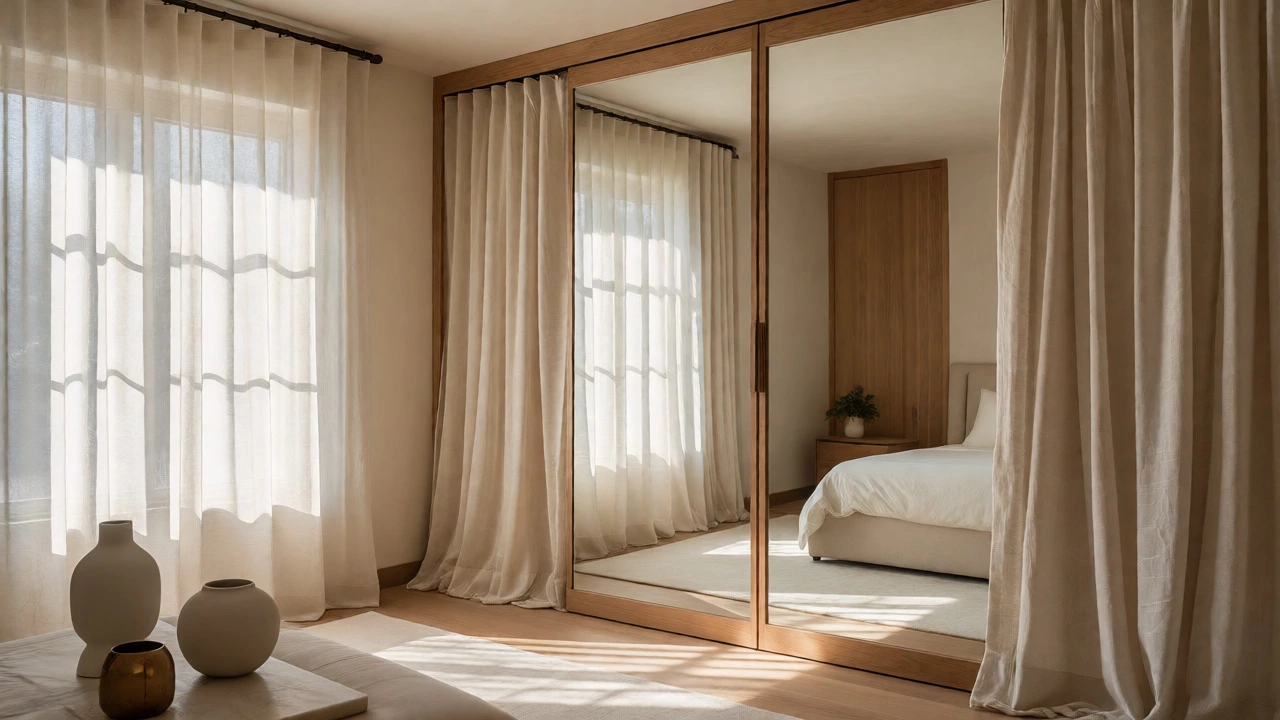
- Coverage: There is no shame in using curtains, shoji screens, or decorative cloths to cover mirrors in bedrooms or bathrooms when not in use. This gives you control over when you engage with your reflection.
| Reason Category | Primary Trigger | Typical Behavior |
|---|---|---|
| Psychological (Anxiety/BDD) | Perceived flaws, judgment | Avoidance, quick glances only |
| Trauma-Based | Association with past events | Covering mirrors, leaving room |
| Sensory (SPD/Autism) | Visual overload, flicker | Prefer matte surfaces, dim lights |
| Cultural/Superstitious | Folklore, religious beliefs | Ritualistic covering, specific placement |
Design Choices That Respect Mirror Phobia
If you are designing a home for someone who hates mirrors-or for yourself-think beyond functionality. Traditional advice says "use mirrors to open up a space." But if the mirror causes stress, does it really open up the space? Probably not. Instead, consider using other reflective materials that don’t act as literal mirrors. Polished metal accents, glossy tiles, or dark glass vases provide shine and depth without the confrontational aspect of a clear reflection.
In bedrooms, especially, keep mirrors away from the bed. Waking up to a sudden reflection can be startling for anyone, but for someone with mirror anxiety, it can induce a morning spike in cortisol. Place mirrors inside closet doors or behind cabinet panels. This allows access when needed but keeps them hidden during rest and relaxation. It’s about curating an environment that supports mental peace, not just aesthetic trends.
When to Seek Professional Help
There is a line between preference and pathology. If avoiding mirrors interferes with daily life-if you skip showers because you don’t want to see yourself, or if you refuse to go to places with large glass windows-it might be time to speak with a therapist. Cognitive Behavioral Therapy (CBT) has shown significant success in treating mirror anxiety and BDD. Exposure therapy, done gradually, helps retrain the brain to associate mirrors with neutrality rather than threat.
Remember, your relationship with your reflection is personal. There is no rulebook saying you must love looking at yourself. Understanding why you hate mirrors takes away some of the power they hold. Once you identify the root cause-whether it’s a bad memory, a sensory quirk, or a superstitious hang-up-you can decide whether to fix it, work around it, or simply accept it as part of who you are.
Is fearing mirrors a recognized phobia?
Yes, the specific fear of mirrors is known as spectrophobia. It is classified as a specific phobia in the DSM-5. It can manifest as a fear of seeing one's own reflection, fear of mirrors breaking, or fear of what might appear in the mirror.
Why do I feel weird when I look in the mirror at night?
This is often due to the Troxler effect or general fatigue. At night, peripheral vision fades, and prolonged staring can cause facial features to distort or blur. Additionally, lower energy levels can heighten emotional sensitivity, making the reflection feel more intrusive or strange.
Can covering mirrors help with anxiety?
For many people, yes. Covering mirrors removes the immediate visual trigger, reducing cognitive load and allowing the nervous system to relax. It is a valid coping strategy, though therapists may recommend gradual exposure if the avoidance becomes too restrictive.
Do people with autism dislike mirrors?
Many autistic individuals report discomfort with mirrors due to sensory issues. The double visual input, potential flickering from light sources, and the complexity of tracking movement in a reflection can contribute to sensory overload. Preference varies individually.
What is the connection between mirrors and body dysmorphia?
People with Body Dysmorphic Disorder (BDD) often have an obsessive-compulsive relationship with mirrors. They may check excessively to reassurance-check their appearance, leading to increased distress, or avoid them entirely to escape the perceived flaws. Both behaviors reinforce the disorder.