Pro Chef Egg Pan Selector
Select your preferred egg style and cooking priority to find out which pan professionals actually use.
Recommended Tool
Make your selections above to see which pan the pros use.
You crack an egg into a pan, and it sticks. You flip it, and the yolk breaks. It’s frustrating, especially when you see chefs on TV sliding perfect omelets out of pans that look like they’ve been through war. So, what is their secret? Is it magic? No. It’s mostly about choosing the right tool and knowing how to treat it.
Most home cooks assume professionals use high-end nonstick pans because they’re easy. But if you walk into a serious restaurant kitchen, you’ll rarely see Teflon-coated skillets being used for eggs. Why? Because nonstick coatings can’t handle the high heat of a commercial burner, and they degrade quickly under constant abuse. Instead, pros rely on materials that build flavor, last forever, and perform consistently at scale.
The Short Answer: Carbon Steel and Stainless Steel Rule
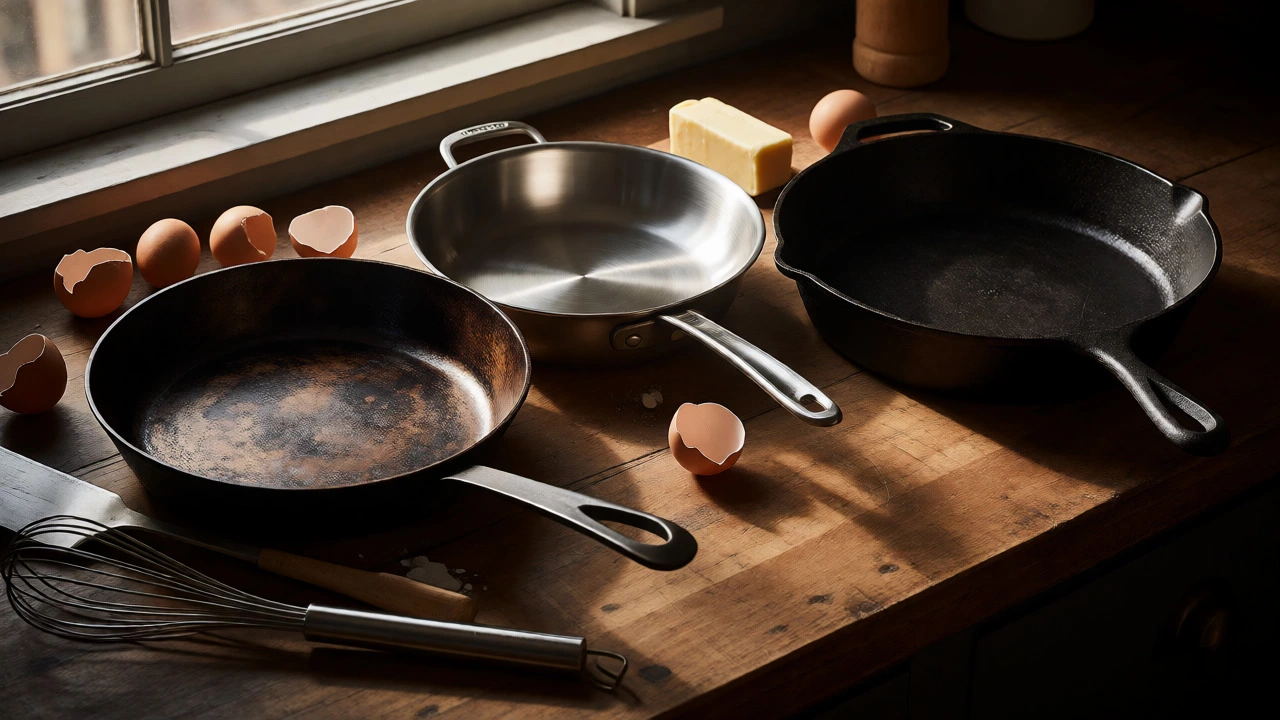
If you want to know what pan do professional chefs use for eggs, the answer usually splits into two camps depending on the style of egg. For scrambled eggs and soft omelets where control is key, many chefs prefer a well-seasoned carbon steel skillet. For fried eggs or crispy potatoes, a heavy-bottomed stainless steel pan is often the go-to. Cast iron is also common, but it’s slower to react.
Here’s why this choice matters more than brand names. Restaurant kitchens operate at temperatures way higher than your home stove. A standard gas range in a pro kitchen might hit 500°F (260°C) instantly. Nonstick pans start breaking down around 500°F and release toxic fumes above 570°F. That’s why you won’t find them on a line. Carbon steel and stainless steel are durable, safe at high heat, and develop natural non-stick properties over time.
Why Carbon Steel is the Chef’s Favorite for Omelets
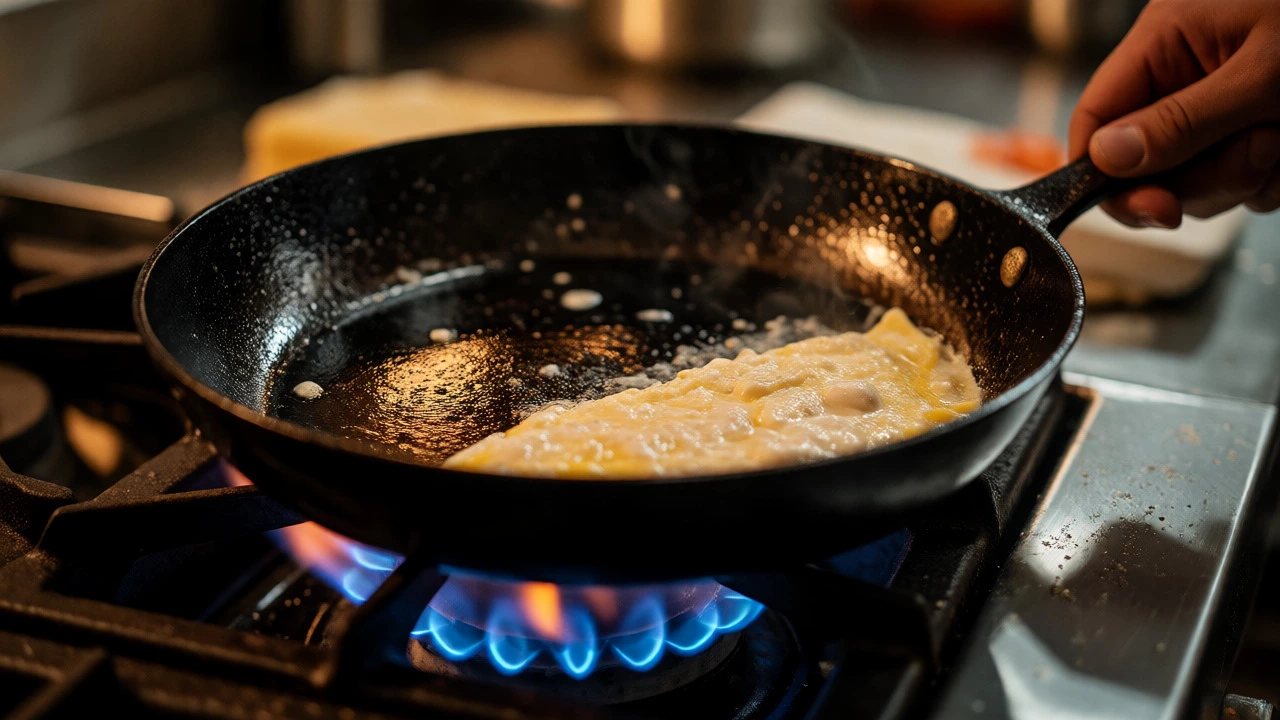
Carbon steel is essentially thinner cast iron. It heats up fast, cools down fast, and is lightweight enough to toss an omelet with one hand. This responsiveness is critical when cooking eggs, which go from liquid to rubbery in seconds.
Think of a carbon steel pan as a living surface. When new, it’s sticky. But after seasoning-coating it with oil and heating it repeatedly-it develops a polymerized layer that becomes naturally non-stick. This layer doesn’t just repel food; it adds flavor. Many chefs swear their best French omelets come from a blackened, seasoned carbon steel pan that has cooked thousands of eggs.
However, there’s a catch. You cannot wash carbon steel with soap and water aggressively, and you must dry it immediately to prevent rust. If you’re looking for a "set it and forget it" pan, this isn’t it. But if you want performance, it’s hard to beat.
Stainless Steel: The Workhorse for Fried Eggs and Crispy Textures
If you love fried eggs with crispy edges, stainless steel is your friend. Unlike carbon steel, stainless steel doesn’t need seasoning. It’s inert, meaning it won’t react with acidic foods or change the taste of your dish. But here’s the trick most people miss: how you use it.
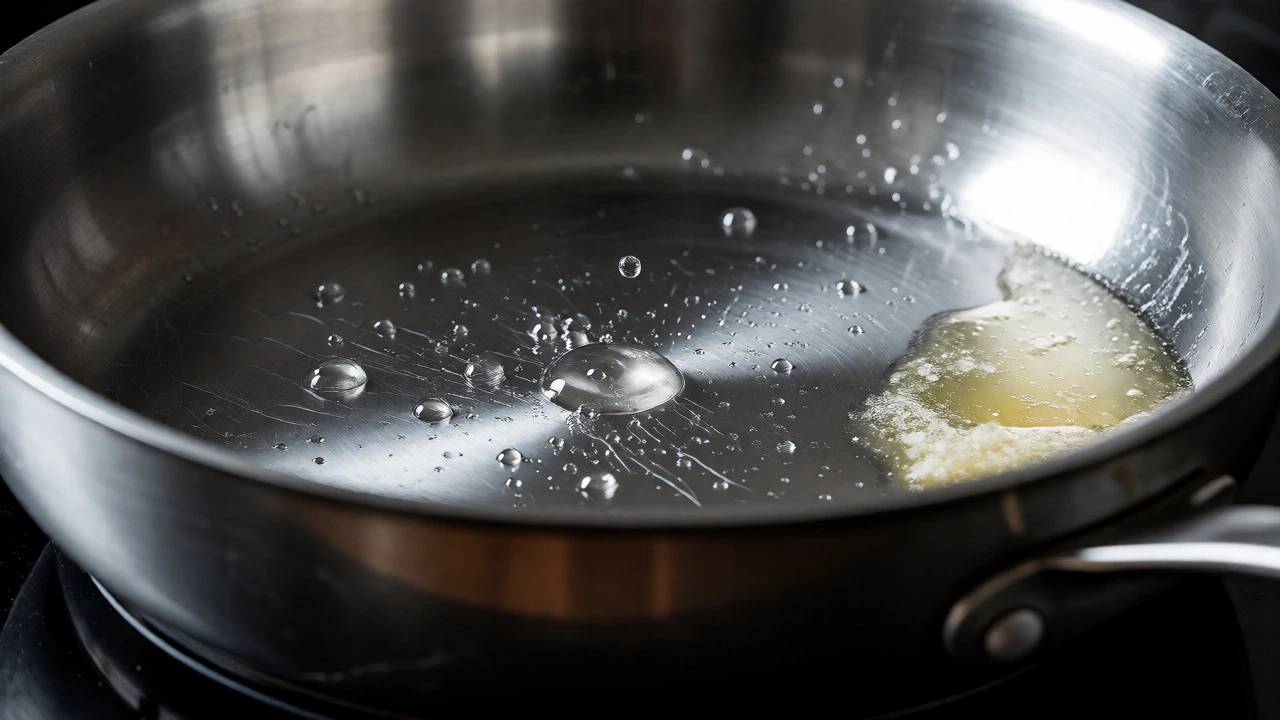
To cook eggs in stainless steel without sticking, you need to use the "Leidenfrost effect." Heat the empty pan until a drop of water sizzles and dances across the surface instead of evaporating instantly. Then add fat (butter or oil), let it get hot but not smoking, and then add the egg. The rapid expansion of moisture creates a tiny barrier between the egg and the metal. If you skip the pre-heating step, you’ll have a mess.
Chefs love stainless steel because it’s indestructible. You can scrub it with steel wool, throw it in the dishwasher, and put it directly from the stovetop into the oven. It’s the reliable backup when you don’t want to fuss with maintenance.
| Pan Type | Best For | Heat Response | Maintenance | Durability |
|---|---|---|---|---|
| Carbon Steel | Omelets, Scrambled Eggs | Fast | Seasoning required, no soap | High (lasts decades) |
| Stainless Steel | Fried Eggs, Crispy Edges | Moderate (needs preheat) | Low (dishwasher safe) | Very High |
| Cast Iron | Fried Eggs, Baking | Slow (holds heat) | Seasoning required | Extreme |
| Nonstick (Teflon) | Delicate Poaching (home only) | Fast | Hand wash, low heat | Low (1-3 years) |
What About Nonstick? Do Pros Ever Use It?
Yes, but rarely for breakfast service. Some high-end restaurants use ceramic-coated nonstick pans for specific dishes, like delicate crepes or poached eggs, where minimal fat is desired. However, these pans are treated as consumables. They replace them every year or two because the coating wears off.
In a busy brunch spot, speed is everything. A chef might grab a small nonstick pan just to crack an egg into, slide it onto a plate, and move on. But for the main course-like a steak with eggs-the pan needs to sear meat and hold sauce. Nonstick can’t deglaze properly because fond (the brown bits stuck to the bottom) doesn’t form. And fond is where the flavor lives.
If you’re cooking at home, nonstick is fine. It’s forgiving. But if you want to mimic the professional experience, try moving away from it for anything involving browning or high heat.
The Size Matters More Than You Think
You might be using the right material but the wrong size. Most home cooks use 10-inch or 12-inch pans for eggs. Too big. A large pan spreads the heat too thin, making it hard to control the temperature. By the time the edges set, the center is still runny, or vice versa.
Professional kitchens use smaller pans for eggs. An 8-inch carbon steel skillet is ideal for a single omelet or two eggs. It allows you to swirl the egg quickly, creating those creamy curds in scrambled eggs. For fried eggs, a 9-inch pan gives enough room for the white to crisp up without burning the yolk.
Consider buying a dedicated small skillet just for eggs. Keep it seasoned and ready. It’s a game-changer for consistency.
Technique Beats Equipment Every Time
Even the best pan will fail if your technique is off. Here are three rules pros follow:
- Preheat Properly: Never put cold eggs in a cold pan. Let the pan get hot first. For stainless steel, wait until the water droplet test passes. For carbon steel, ensure the surface is shimmering.
- Use Enough Fat: Butter is classic, but ghee or clarified butter has a higher smoke point. Don’t skimp. The fat acts as a buffer against sticking.
- Patience with Release: If an egg sticks, don’t force it. Wait. As the proteins set, they naturally release from the metal. Give it 10-15 seconds before trying to lift it.
Also, note the difference between scrambling and stirring. Pros scramble eggs by pushing them gently with a spatula, not whipping them violently. This keeps the curds large and creamy. Whipping incorporates air, leading to a foamy, dry texture.
Top Picks for Home Cooks Wanting Pro Results
If you’re ready to upgrade, here’s what to look for. You don’t need to spend $500. In fact, some of the best pans are cheap.
- De Buyer Mineral B: A classic French carbon steel pan. Thin, responsive, and affordable. It requires seasoning but performs like a dream once broken in.
- All-Clad D3: Tri-ply stainless steel. Excellent heat distribution. Great for fried eggs if you master the preheat technique. Expensive but lasts a lifetime.
- Lodge Cast Iron: Budget-friendly and rugged. Best for fried eggs with crispy edges. Heavier, so less ideal for tossing omelets.
- GreenPan Ceramic: If you insist on nonstick, choose a ceramic option. It’s safer than traditional Teflon and handles moderate heat better, though it still won’t last as long as metal.
Caring for Your Egg Pan
Your pan’s lifespan depends entirely on care. For carbon steel and cast iron, never soak them. Rinse with hot water, scrub with a brush (no soap needed if well-seasoned), dry on the stove, and rub with a drop of oil. This prevents rust and maintains the non-stick layer.
For stainless steel, avoid overheating empty pans for too long, as it can cause discoloration. If food sticks badly, boil water in the pan for a few minutes to loosen it, then wipe clean.
Remember, a little stickiness is normal at first. It means you’re building that protective layer. Don’t give up after one bad omelet. Practice makes perfect, and so does practice with your pan.
Why do chefs avoid nonstick pans for eggs?
Chefs avoid nonstick pans primarily because they cannot withstand the high heat of commercial stoves. Nonstick coatings degrade above 500°F (260°C) and can release harmful fumes. Additionally, nonstick surfaces prevent the formation of 'fond' (browned bits), which is essential for creating flavorful sauces and achieving proper browning on meats served alongside eggs.
Is carbon steel better than stainless steel for eggs?
It depends on the type of egg. Carbon steel is generally better for omelets and scrambled eggs because it heats up and cools down quickly, allowing for precise temperature control. Stainless steel is superior for fried eggs where you want crispy edges and easy cleanup, as it doesn't require seasoning and is more resistant to corrosion.
How do I stop eggs from sticking to stainless steel?
The key is preheating. Heat the empty stainless steel pan until a drop of water skitters across the surface (the Leidenfrost effect). Then add your fat (oil or butter) and let it get hot before adding the egg. This creates a temporary non-stick barrier. Also, ensure your eggs are fresh, as older eggs tend to stick more due to pH changes in the white.
Can I use cast iron for all types of eggs?
You can, but it's not always ideal. Cast iron retains heat very well, which is great for fried eggs with crispy bottoms. However, it heats up slowly and responds slowly to temperature changes, making it difficult to achieve the creamy, soft texture required for good scrambled eggs or delicate French omelets. It is also heavy, which makes tossing eggs harder.
Do professional chefs season their pans?
Yes, for carbon steel and cast iron. Seasoning involves applying a thin layer of oil and heating the pan repeatedly to create a polymerized coating. This coating provides natural non-stick properties and protects the metal from rust. Chefs maintain this seasoning daily by cleaning the pan carefully and re-oiling it after each use. Stainless steel pans do not require seasoning.