Find Your Perfect Sofa Material
Your Lifestyle Profile
Top Recommendation:
Why this fits you:
Ready to find your match?
Select your lifestyle options on the left to generate a personalized material recommendation.
Picture this: You’ve had a long day. You walk through the door, drop your keys, and collapse onto your living room sofa. Does it feel like a hug from a cloud, or does it feel like you’re sitting on a stiff board wrapped in plastic? The difference isn’t just about the cushioning inside; it’s largely about what’s on the outside. Choosing the right couch material is one of the most critical decisions you’ll make when buying a new sofa. It dictates not only how the seat feels against your skin but also how easy it is to clean, how it holds up over time, and whether it stays cool in summer or warm in winter.
There is no single "best" material for everyone. What feels luxurious to one person might feel sticky or scratchy to another. To find your perfect match, we need to look beyond marketing buzzwords and examine the actual properties of the top contenders: performance fabrics, genuine leather, microfiber, and velvet. Let’s break down exactly how these materials perform in real life.
The Rise of Performance Fabrics
If you have kids, pets, or a tendency to spill coffee while scrolling through your phone, performance fabric is likely your best friend. Unlike traditional cotton or linen, which absorb liquids instantly, performance fabrics are engineered at the fiber level to repel stains and resist wear. Brands like Sunbrella, Crypton, and Outdura dominate this space.
Sunbrella is a high-performance outdoor fabric that has become popular for indoor use due to its exceptional stain resistance and durability. Originally designed for marine environments, it handles spills with ease. If you drop a glass of red wine, it beads up on the surface rather than soaking in, giving you plenty of time to wipe it away without leaving a permanent mark.
The comfort factor here is often overlooked. Many people assume that because it’s "technical," it must feel plasticky. That’s outdated thinking. Modern performance fabrics can be woven to mimic the softness of linen or the warmth of wool. They breathe well, meaning they don’t trap heat against your back like some synthetic blends do. However, the texture can vary wildly. Some feel crisp and smooth, while others have a slight nap. Always run your hand across the swatch to check for any grittiness.
- Pros: Highly stain-resistant, durable, easy to clean, available in many textures.
- Cons: Can be more expensive upfront; some lower-quality versions may pill over time.
- Best For: Families with young children, pet owners, and anyone who entertains frequently.
Genuine Leather: The Temperature Regulator
Leather gets a bad rap for being cold or slippery, but that’s usually true only for cheap, thin hides. High-quality full-grain or top-grain leather offers a unique comfort experience that fabric simply cannot replicate. The secret lies in temperature regulation. Leather absorbs body heat initially, then radiates it back evenly. In the summer, it stays cooler than dark fabrics, and in the winter, it warms up quickly under your weight.
Comfort-wise, leather conforms to your body shape over time. Think of it like breaking in a pair of favorite jeans. After six months of daily use, your leather sofa will develop a personalized crease pattern that fits your specific posture. This "molding" effect provides deep support without feeling restrictive. Plus, if you suffer from allergies, leather is a winner. Dust mites and dander cannot penetrate the tight pores of quality leather, making it easier to vacuum off the surface.
Full-Grain Leather is the highest quality layer of hide, retaining the natural grain and offering superior durability and aging characteristics. It develops a patina over years, becoming softer and more beautiful with age. Avoid "bonded leather" or "genuine leather" labels that hide low-quality composites; these peel and crack within a few years, ruining both comfort and aesthetics.
The downside? Leather requires maintenance. It needs conditioning every 6-12 months to prevent drying out. Also, if you hate the feeling of "sitting on your clothes" (where fabric creates friction and keeps pants in place), leather might slide you forward slightly. Many people solve this by using throw pillows or a blanket for lap seating.
- Pros: Breathable, hypoallergenic, molds to body, ages beautifully, easy to wipe clean.
- Cons: Higher initial cost, requires periodic conditioning, can scratch if pets have sharp claws.
- Best For: Allergy sufferers, minimalists, those who want a timeless look, and people who dislike sticky fabrics.
Microfiber: The Softest Embrace
If pure, unadulterated softness is your priority, microfiber is hard to beat. Made from ultra-fine synthetic fibers (usually polyester or nylon), microfiber mimics the texture of suede but without the high maintenance. It feels incredibly plush and velvety to the touch. Sitting on a microfiber couch often feels like sinking into a pile of cashmere sweaters.
This material is exceptionally gentle on skin, making it ideal for people with sensitive skin or eczema. It doesn’t have the rough weave of some linens or the occasional stiffness of canvas. Microfiber is also naturally resistant to dust and dirt because the fibers are so tightly packed. A simple damp cloth can remove most surface grime.
However, there are trade-offs. Microfiber tends to hold heat more than leather or loose-weave cottons. On a hot July afternoon, a black microfiber couch can feel like a sauna. It also shows water spots easily. If you spill something, it might leave a temporary ring until it fully dries. Additionally, while it’s durable, it can attract lint and pet hair more readily than smoother fabrics, requiring frequent lint-rolling.
- Pros: Extremely soft, affordable, gentle on skin, good stain resistance.
- Cons: Retains heat, attracts lint/pet hair, can show water rings.
- Best For: People seeking maximum softness, budget-conscious buyers, and households without heavy shedding pets.
Velvet: Luxury with a Catch
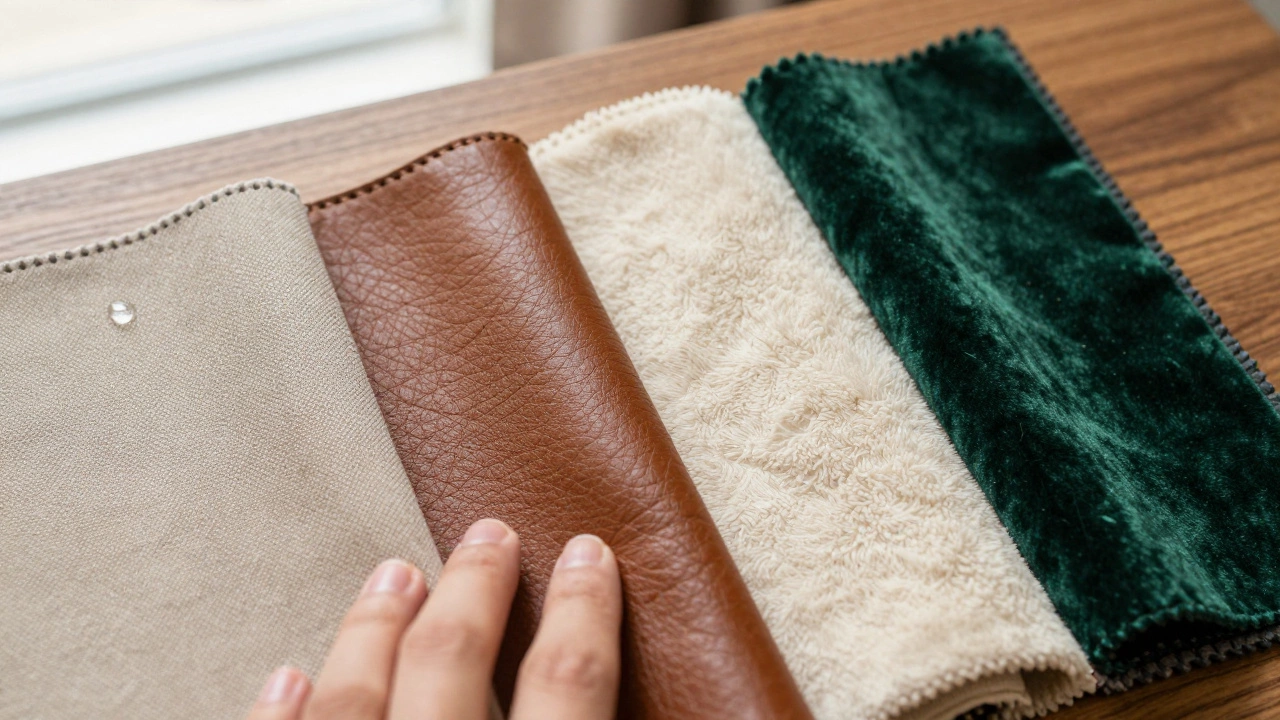
Velvet has made a massive comeback in interior design, and for good reason. It looks expensive and feels indulgent. The short, dense pile of velvet creates a smooth, cool-to-the-touch surface that slides effortlessly. Gliding into a velvet armchair feels distinctly luxurious compared to the grip of cotton or the slickness of leather.
Modern velvet is often made from synthetic fibers like polyester or rayon, which makes it far more resilient than historical silk velvets. These modern versions are crush-resistant and colorfast. Rayon velvet, in particular, has a rich, fluid drape that feels silky and cool. Polyester velvet is more durable and stain-resistant but can sometimes feel slightly less "fluid" to the touch.
The main issue with velvet is directionality. Velvet has a "nap," meaning the fibers lie in a specific direction. If you sit on it and rub against it, you might create light and dark patches (called shading). While this is often reversible by brushing the fabric gently, it can be annoying if you want a perfectly uniform look all day. Also, velvet can feel warm in summer, similar to microfiber.
- Pros: Luxurious aesthetic, smooth and cool touch, elegant appearance.
- Cons: Can show shading/creasing, may feel warm in hot weather, requires gentle cleaning.
- Best For: Accent chairs, formal living rooms, and those prioritizing aesthetics and smooth texture.
Cotton and Linen: The Natural Choice
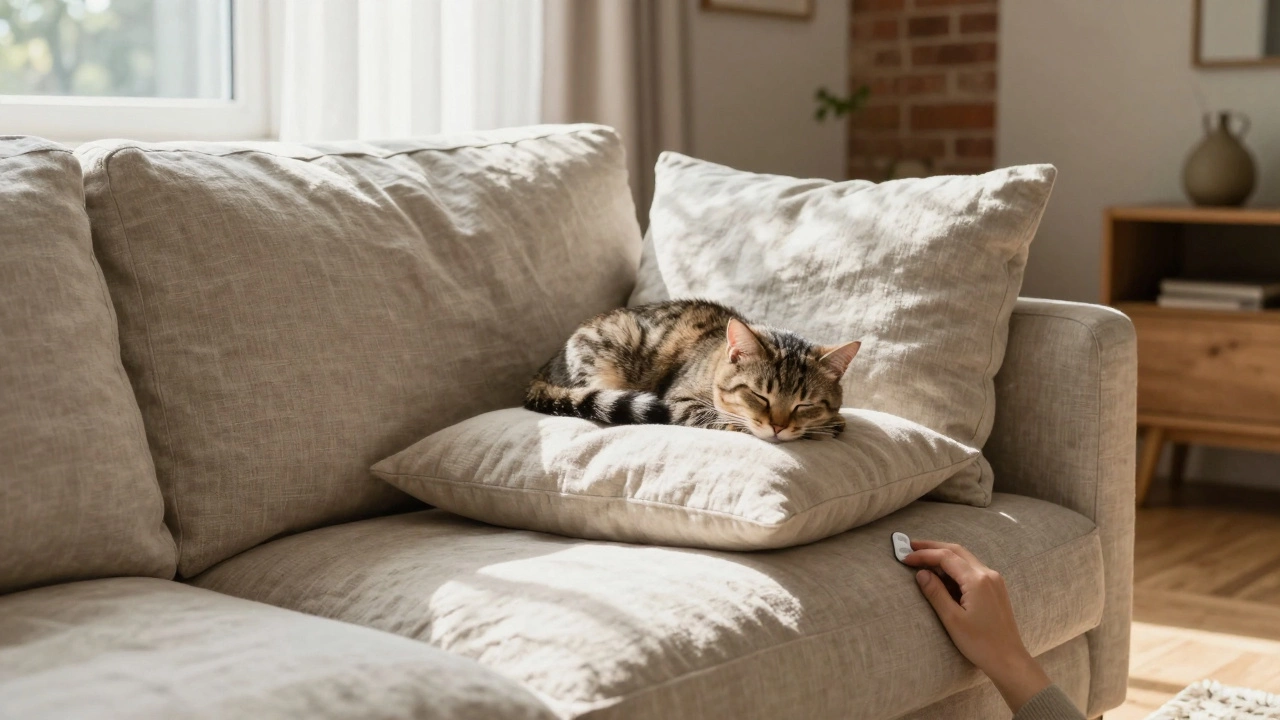
Natural fibers like cotton and linen offer breathability that synthetics struggle to match. They allow air to circulate, keeping you cool even during long movie marathons. Cotton is versatile; it can be woven tightly for durability or loosely for a rustic, relaxed feel. Linen is even more breathable and has a distinctive crumpled texture that adds character to a room.
However, comfort comes with a caveat: maintenance. Cotton and linen are porous. Spills soak in immediately unless treated with a protective spray (which can alter the feel of the fabric). They also wrinkle easily. A linen couch rarely looks "perfectly" smooth; it has a lived-in, casual vibe. If you prefer a pristine, hotel-like appearance, natural fibers might frustrate you. They also tend to fade faster in direct sunlight compared to solution-dyed performance fabrics.
- Pros: Highly breathable, eco-friendly, natural texture, cools the body.
- Cons: Stains easily, wrinkles readily, fades in sun, less durable than synthetics.
- Best For: Low-traffic areas, guests who value natural materials, and climates with hot summers.
Comparing Comfort Factors
To help you visualize the differences, let’s compare these materials across key comfort metrics. Remember, "comfort" is subjective, but these general trends hold true for most users.
| Material | Softness | Temperature Control | Ease of Cleaning | Durability |
|---|---|---|---|---|
| Performance Fabric | Medium-High | Good (Breathable) | Excellent | Very High |
| Genuine Leather | Medium (Molds over time) | Excellent (Regulates temp) | Easy (Wipeable) | High (if maintained) |
| Microfiber | Very High | Poor (Retains heat) | Good | Medium-High |
| Velvet | High (Smooth) | Moderate (Can get warm) | Moderate | Medium |
| Cotton/Linen | Medium | Excellent (Cool) | Poor (Absorbs stains) | Low-Medium |
How to Test for True Comfort
Don’t trust online photos alone. When you visit a showroom, spend at least five minutes on each sofa. Here’s a quick checklist to determine if a material works for you:
- The Sit Test: Sit down, stand up, and shift positions. Does the fabric pull awkwardly? Does it stick to your legs?
- The Touch Test: Run your hand firmly across the surface. Does it feel smooth, gritty, or fuzzy? Check for pilling by rubbing two fingers together vigorously on a hidden spot.
- The Heat Test: Place your palm flat on the seat for 30 seconds. Does it feel cool initially? Does it retain your body heat uncomfortably?
- The Light Test: Look at the fabric under bright showroom lights. Do you see a sheen that bothers you? Or does it have a matte finish that blends better with your decor?
Also, consider the construction beneath the fabric. A firm foam core with a down wrap often feels more supportive than a purely soft pillow-top, regardless of the material. The material is just the skin; the skeleton matters too.
FAQ
Is leather or fabric more comfortable for everyday use?
It depends on your climate and lifestyle. Leather is generally more comfortable in variable temperatures because it regulates heat and doesn't trap sweat. Fabric, particularly performance fabrics, offers a softer, cozier feel and is better if you like to lounge in pajamas or bare skin. Leather can feel slippery, while fabric provides grip.
What is the most durable couch material for pets?
Performance fabrics like Sunbrella or Crypton are top choices because they resist scratches and stains better than most other materials. Tight-weave microfiber is also excellent as it prevents claws from catching. Avoid loose weaves, chenille, or suede, as pet nails can snag and tear them easily.
Does velvet scratch easily?
Modern synthetic velvet is quite resilient, but it can still be damaged by sharp claws or jewelry. The main issue with velvet isn't scratching but rather "shading," where the pile gets pushed in different directions, creating light and dark spots. Regular brushing can fix this, but it requires maintenance.
Which sofa material stays coolest in the summer?
Light-colored linen and cotton are the coolest options due to their high breathability and ability to reflect heat. Light-colored leather is also a good choice as it doesn't absorb as much heat as dark fabrics. Avoid dark microfiber or velvet in hot climates, as they tend to retain body heat.
Can I clean a performance fabric couch with bleach?
No, never use bleach on performance fabrics. It can degrade the fibers and void warranties. Most performance fabrics can be cleaned with mild soap and water or specialized upholstery cleaners. Always check the manufacturer's care instructions first.