Dinner Set Size Calculator
How Many Dinnerware Pieces Do You Need?
Calculate the ideal dinner set size for your household and entertaining habits.
Recommended: Select your household size and entertaining frequency
We'll show you exactly what size set works best for your needs.
Ever sat down to dinner and wondered, "What do you actually call a full set of dishes?" It’s not just "plates and bowls." There’s a specific word for the whole collection you pull out for a holiday meal or everyday use. And if you’ve ever shopped for new dinnerware, you’ve probably seen terms like "china," "porcelain," or "ceramic dinner set" - but what do they really mean?
It’s Called a Dinner Set (or Dinner Service)
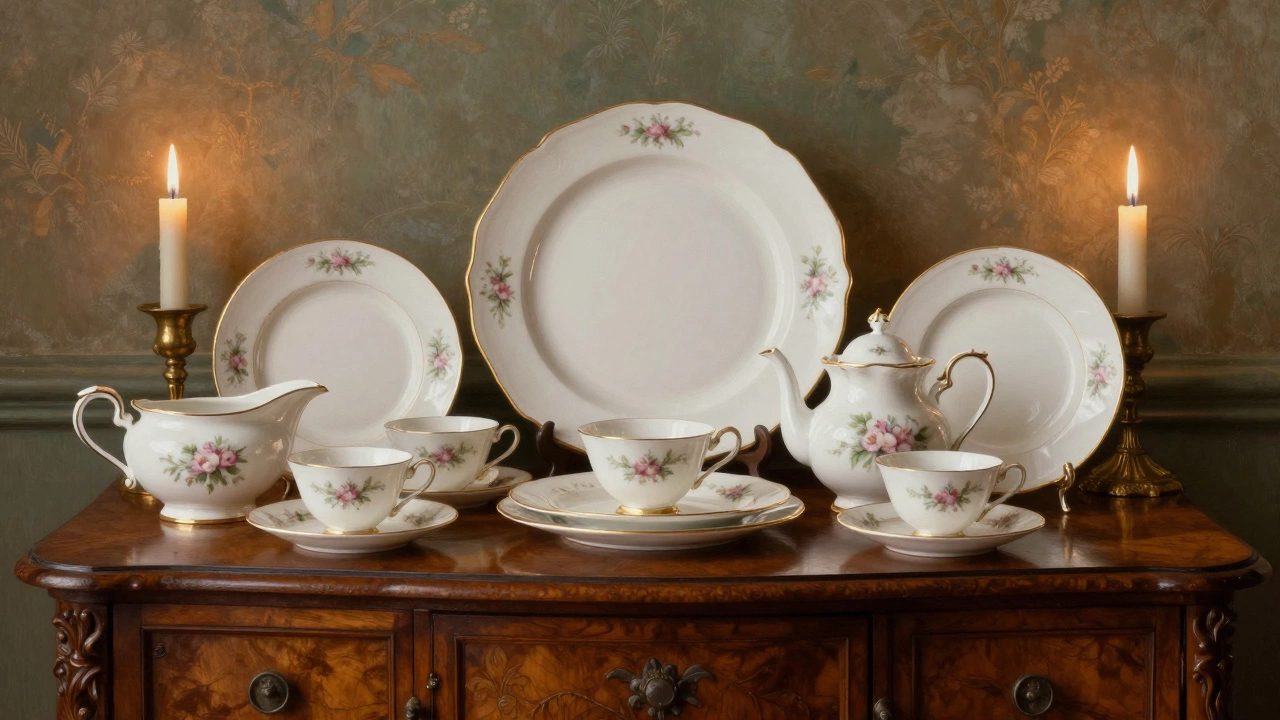
The most accurate, widely used term for a complete set of dishes is a dinner set. Sometimes you’ll hear it called a dinner service, especially in older or more formal contexts. This isn’t just a random collection of plates - it’s a coordinated group designed to work together at the table.
A standard dinner set includes:
- Dinner plates (the largest, used for main courses)
- Soup bowls or cereal bowls
- Salad plates (smaller than dinner plates)
- Coffee cups and saucers
- Dessert plates or dessert bowls
- Teacups (if included in the set)
- Occasionally, serving pieces like a platter or gravy boat
Not every set has all of these - some are minimalist, others are full formal services with 20+ pieces. But if you’re buying a "set," you’re getting pieces that match in pattern, material, and style.
China, Porcelain, Ceramic - What’s the Difference?
People often say "china" when they mean any fancy dinnerware. But "china" is actually a type of material - not the set itself. It comes from the country where it was first perfected: China. True china is made from kaolin clay and fired at very high temperatures, making it thin, translucent, and durable. It’s what you’d find at a wedding registry or a fine restaurant.
Porcelain is similar but often refers to a slightly denser, more durable version. In practice, most modern "china" is technically porcelain. The terms are used interchangeably in stores.
Ceramic is broader. It includes stoneware, earthenware, and even some porcelain. Ceramic dinnerware is thicker, more chip-resistant, and often more affordable. It’s perfect for everyday use - think mugs you can toss in the dishwasher without worry.
So when someone says "I bought a new china set," they usually mean a full dinner set made of porcelain or fine ceramic. The word "china" became shorthand for elegance, even if the material isn’t technically from China anymore.
What’s in a Typical Set? (Real-World Examples)
Let’s say you’re shopping online for a new dinner set. Here’s what you’ll actually find in common sizes:
- 4-piece set: 4 dinner plates - good for singles or small apartments.
- 16-piece set: 4 each of dinner plates, salad plates, soup bowls, and mugs - this is the most popular choice for families of four.
- 20-piece set: Adds dessert plates or teacups to the 16-piece set.
- 32-piece set: Includes serving dishes, a platter, a gravy boat, and sometimes a teapot - ideal for entertaining.
Brands like IKEA, Corelle, and Lenox sell these sets under names like "Everyday Dinnerware" or "Formal China Service." The number of pieces tells you how complete it is. You don’t need to buy a 32-piece set if you rarely host guests - but if you do, it’s worth it.
Why Does This Matter When Shopping?
Knowing the right term helps you find what you actually need. If you search "plates," you’ll get a mess of individual items. But if you search "16-piece dinner set," you’ll see curated collections designed to match.
Also, sets are often sold at a discount compared to buying pieces separately. A 16-piece set might cost $120, while buying four dinner plates alone could run $40 each. That’s $160 just for plates - and you still need bowls and mugs.
And here’s something people don’t always realize: you don’t have to match everything. Many modern homes mix ceramic, stoneware, and even wood. But if you want a clean, coordinated look - especially for guests - a matched dinner set still makes the biggest impact.
What About Serving Pieces?
A dinner set doesn’t always include serving dishes. A gravy boat, salad bowl, or bread plate are often sold separately. That’s why some sets are labeled "dinnerware" and others are "complete dinner service."
If you’re planning to serve meals family-style - say, a roast chicken or a big pasta dish - you’ll want at least one large platter. Many 32-piece sets include one. If not, you can buy one later. But it’s easier to match the style and color if you pick it from the same collection.
How Long Do Dinner Sets Last?
High-quality porcelain or stoneware can last decades - if you treat it right. Avoid stacking plates too tightly, use felt pads between them, and don’t toss them into the dishwasher if they’re labeled "hand wash only."
Many families pass down dinner sets. I’ve seen sets from the 1950s still in use - chipped here and there, but loved. That’s the real value: it’s not just dishes. It’s tradition, comfort, and routine.
What to Look for When Buying
- Material: Porcelain for elegance, ceramic for durability.
- Number of pieces: Match it to how many people you regularly serve.
- Dishwasher and microwave safe: Non-negotiable for daily use.
- Pattern: Solid colors are timeless; patterns add personality but can feel dated.
- Brand reputation: Brands like Villeroy & Boch, Fiestaware, or Royal Doulton have decades of testing.
Don’t be fooled by fancy packaging. A "luxury" set that chips after three washes isn’t worth it. Read reviews. Look for comments about durability - not just looks.
Final Thought: It’s Not Just Dishes - It’s Ritual
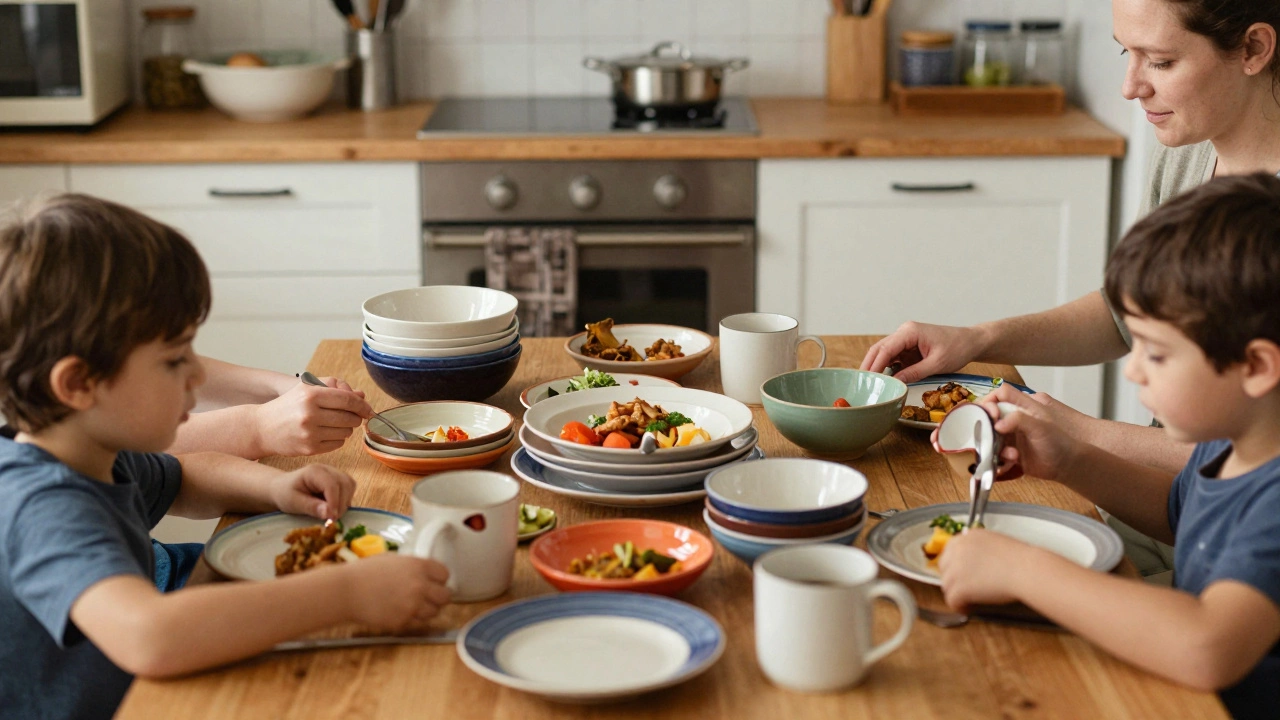
That set of dishes you use every night? It’s part of your daily rhythm. The clink of a spoon in a bowl. The warmth of a mug in your hands before coffee. The way your kids stack plates after dinner.
It’s not about having the most expensive set. It’s about having a set that works - that feels like yours. And yes, that’s called a dinner set. Simple as that.
What is the difference between a dinner set and a dinner service?
There’s little practical difference. "Dinner set" is the modern, everyday term used in stores and homes. "Dinner service" is a more formal or traditional term, often used in high-end retail or when referring to large, elaborate collections with serving pieces. In practice, they mean the same thing: a coordinated collection of plates, bowls, and cups for dining.
Can you mix and match pieces from different sets?
Absolutely. Many people today mix ceramic, stoneware, and even wooden plates for a more casual, layered look. But if you’re aiming for a clean, unified appearance - especially for guests - matching pieces create a more polished feel. Mixing works best when colors or textures are neutral, like white, gray, or earth tones.
Is porcelain better than ceramic for everyday use?
It depends. Porcelain is thinner and more elegant, but it chips more easily. Ceramic (especially stoneware) is thicker, more durable, and better for daily use. If you have kids, pets, or a busy household, ceramic is the smarter choice. Porcelain is great for special occasions or if you’re careful with your dishes.
How many pieces do I really need?
For a family of four, a 16-piece set (4 dinner plates, 4 salad plates, 4 bowls, 4 mugs) is the sweet spot. You can serve meals, snacks, and drinks without needing extra. If you rarely host, 12 pieces might be enough. If you entertain often, go for 20 or 32 pieces - including serving dishes. Don’t overbuy just because it’s on sale.
Do I need a matching coffee cup and saucer?
Not unless you want to. Many people buy mugs without saucers - they’re easier to wash and store. Saucers are mostly useful for formal tea service or if you’re worried about spills. For everyday coffee, a sturdy mug is all you need. Saucers are optional.