Clutter Balance Counter
Track Your Clutter Balance
Use the one in, one out rule to maintain balance in your space.
You look around your living room and see clothes piled on the couch, papers spilling off the kitchen table, toys buried under a blanket, and boxes you swore you’d open last year. You’ve tried cleaning before. You even bought those fancy bins. But within days, it’s back. And now, the thought of starting again makes your chest tighten. Clutter doesn’t just take up space-it takes up your peace. The good news? You don’t need to do it all at once. You don’t need to be a minimalist. You just need to start small, and keep going.
Start with one drawer, not the whole house
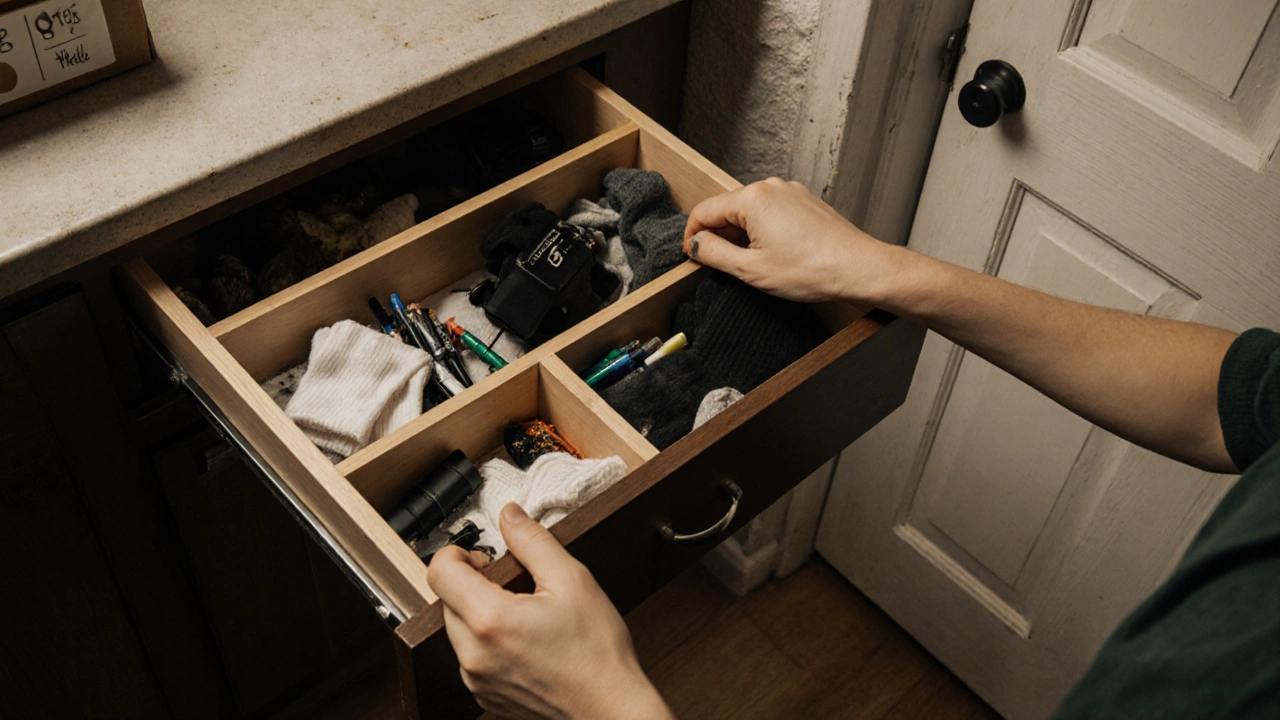
Most people try to tackle their closet or garage and quit by lunchtime. That’s because they’re trying to fix everything at once. Clutter doesn’t care about your intentions. It thrives on overwhelm. So forget the big picture for now. Pick one drawer. Any drawer. The one with the mismatched socks. The one with old receipts and pens that don’t work. Open it. Take everything out. Put it on the table. Now, sort it into three piles: keep, toss, relocate.
Keep: Things you use regularly or love enough to display. Toss: Broken, expired, or useless stuff. Relocate: Things that belong somewhere else-like that charger for your phone that’s been living in the kitchen drawer for six months. Put the keep pile back in the drawer. Toss goes straight to the bin. Relocate goes in a box labeled with its home. That box sits by the door. You’ll put those things away when you walk past the right spot.
Do this for one drawer. Five minutes. Done. You didn’t fix your whole life. But you proved to yourself that you can start. And that’s the real win.
Use the ‘one in, one out’ rule
Clutter builds slowly. You buy a new shirt. You don’t get rid of an old one. You get a new coffee mug. You keep the chipped one from college. Over time, that adds up. The ‘one in, one out’ rule stops that cycle before it starts.
Every time you bring something new into your home-whether it’s a gift, a sale item, or a replacement-you let go of something old. It doesn’t have to be the same category. If you buy a new pair of shoes, donate an old pair. If you get a new cookbook, give away one you never opened. This isn’t about being strict. It’s about balance. Your space has limits. Your stuff shouldn’t outgrow it.
Try this: Keep a small basket near your front door. When something new comes in, put the item you’re replacing in the basket. At the end of the week, drop it off at a donation center or put it in the recycling bin. You’ll be surprised how fast the pile shrinks.
Stop using ‘someday’ as a storage bin
That box labeled ‘someday’? It’s a lie. You’re not going to use those winter boots next summer. You’re not going to reassemble that bike from 2018. You’re not going to read those five magazines from 2022.
Here’s the hard truth: If you haven’t used it in the last 12 months, you probably won’t. That’s not a rule-it’s a pattern. Look around your home. How many things are sitting in boxes, under beds, or in the garage because you think you’ll need them ‘someday’? Now ask yourself: When was the last time you actually needed it? If the answer is ‘never’ or ‘I don’t remember,’ it’s time to let it go.
Take one box at a time. Open it. Hold each item. Ask: Would I buy this again today? If the answer isn’t a clear yes, thank it for its service and let it go. Donate it. Sell it. Recycle it. Your future self will thank you.
Design your space to make clutter hard to build
Clutter isn’t just about having too much stuff. It’s about having too many places to put it poorly. You have a junk drawer because there’s no better spot. You pile mail on the counter because there’s no inbox. You leave shoes by the door because there’s no bench with storage.
Fix the environment, not just the mess. Put a small tray by the front door for keys, wallets, and sunglasses. Buy a basket for blankets and put it next to the couch. Install a pegboard in the garage for tools. Get a filing box for bills and put it on your desk. Make the right thing the easy thing.
Storage solutions don’t need to be expensive. A shoebox with a label works. A wire basket from the supermarket works. A shelf you already own works. The goal isn’t perfection. It’s function. If something makes it easier to put things away, it’s a win.
Build a 5-minute daily habit
People think decluttering is a weekend project. It’s not. It’s a daily rhythm. Think of it like brushing your teeth. You don’t wait until your mouth is full of cavities to do it. You do it every day because it keeps things manageable.
Set a timer for five minutes every evening. When it goes off, walk through your home. Pick up anything that doesn’t belong where it is. Put clothes in the laundry basket. Put books on the shelf. Put dishes in the sink. Put mail in the tray. That’s it. No deep cleaning. No organizing. Just returning things to their home.
After a week, you’ll notice something: your home feels calmer. You don’t trip over things. You don’t stress about where to put your coffee cup. You don’t feel guilty walking into your own space. That’s not magic. That’s consistency.
Accept that some clutter is okay
There’s a myth that clutter-free means sterile. That your home should look like a showroom. That’s not real life. Real life has coffee mugs on the nightstand. Real life has kids’ drawings taped to the fridge. Real life has one sock missing from every pair.
Clutter isn’t the enemy. Feeling overwhelmed by your stuff is. So don’t aim for zero clutter. Aim for intentional clutter. Keep what brings you joy. Keep what you use. Let go of what weighs you down.
Look at your space. What’s the one thing that makes you sigh when you see it? That’s your target. Get rid of that first. Then the next. Slowly, your home will start to feel like yours-not a storage unit for things you forgot you owned.
What to do when you hit a wall
Some days, you’ll feel stuck. You’ll open a drawer and feel paralyzed. That’s normal. Clutter isn’t just physical. It’s emotional. Maybe that sweater reminds you of someone you lost. Maybe that pile of papers represents a project you never finished. That’s okay. You don’t have to fix everything at once.
On those days, just move one thing. Put one item in the donation box. Put one paper in the shredder. One small action breaks the paralysis. You don’t need motivation. You just need to start. Action creates momentum. Momentum creates change.
And if you need to take a break? That’s fine. Come back tomorrow. Or next week. Progress isn’t linear. It’s messy. And that’s okay.
| Clutter Trap | Why It Happens | Simple Fix |
|---|---|---|
| Mail pile on the counter | No designated spot to process it | Place a small tray near the door. Open and sort mail daily. Recycle junk immediately. |
| Clothes on chairs | No clean laundry basket nearby | Keep a basket in the bedroom. Put dirty clothes in it as you take them off. |
| Toy explosion in the living room | Too many bins, not enough visibility | Use one low, open bin per child. Label it with a picture. Put it where they play. |
| Unused kitchen gadgets | They were bought on impulse | Keep only what you use at least once a month. Donate the rest. |
| Boxes under the bed | ‘I’ll deal with it later’ mentality | Empty one box per week. If you haven’t opened it in 6 months, donate it. |
Frequently Asked Questions
What if I feel guilty about throwing things away?
Guilt often comes from thinking you’re wasting something. But holding onto unused items wastes space, energy, and peace. Ask yourself: Is this item helping me live better today? If not, it’s not a treasure-it’s a burden. Donating or recycling gives it a second life. That’s better than letting it rot in a box.
How do I stop buying more stuff?
Wait 48 hours before buying anything non-essential. If you still want it after two days, you might need it. If not, you just wanted it. Also, take a photo of your clutter before you shop. When you’re tempted to buy, look at the photo. It reminds you: you already have enough.
What if my family won’t help?
You can’t control them. But you can control your own space. Start by organizing your own area. When they see how calm it feels, they might ask how you did it. Don’t nag. Just live differently. Lead by example. Often, people follow when they see the benefit, not when they’re told to.
Is it better to declutter fast or slow?
Slow wins. Fast decluttering often leads to regret. You might toss something you later need. Or feel exhausted and quit. Decluttering is a practice, not a race. One drawer a day. One box a week. Consistency beats intensity every time.
Where should I donate my unwanted items?
Check local charities like Salvation Army, Goodwill, or community centers. Many accept clothes, books, toys, and small appliances. Some even offer free pickup. In Wellington, organizations like The Warehouse Donation Centre and Habitat for Humanity ReStore take gently used items. Always call first to confirm what they accept.
Next steps: Your 7-day clutter reset
Here’s a simple plan to build momentum:
- Day 1: Clear one drawer. Use the three-pile method.
- Day 2: Put one item in the donation box.
- Day 3: Set up a mail tray by the door.
- Day 4: Walk through your home and return five things to their homes.
- Day 5: Empty one box under the bed or in the garage.
- Day 6: Apply the ‘one in, one out’ rule to something you bought this week.
- Day 7: Sit quietly in your space for five minutes. Notice how it feels.
You don’t need to be perfect. You just need to begin. And you already did-by reading this. Now take one small step. Your future self is waiting.