Corner Sofa Space Calculator
Calculate if a corner sofa will work in your small room before you buy. Input your room and sofa measurements to get instant recommendations.
You love the look of a corner sofa-cozy, modern, and perfect for movie nights. But your living room is barely big enough to fit a single armchair. Should you risk it? The answer isn’t yes or no. It’s about how you use the space, what you prioritize, and which mistakes to avoid.
Corner sofas aren’t always space eaters
Most people assume a corner sofa takes up more room than a regular one. That’s not always true. A well-placed corner sofa can actually free up floor space. Why? Because it hugs two walls, turning unused corners into functional seating. A standard three-seater sofa with a side table and lamp might need 8 feet of open wall space. A corner sofa with the same seating capacity uses two walls and leaves the center of the room clear for movement.
In a 10x12 foot room, a corner sofa can be the only piece of furniture you need. No need for a separate loveseat or accent chair. You gain seating without clutter. I’ve seen small apartments in Wellington where a compact L-shaped sofa became the centerpiece-not because it was big, but because it fit the shape of the room.
Measure before you buy
Don’t guess. Measure your room. Then measure the sofa. Then measure again.
Start with the doorways and hallways. A sofa that fits in your living room might not make it through the front door. Most corner sofas come in two pieces. Check if yours does. If it doesn’t, you’re stuck.
Here’s what to measure:
- Width of the two walls where the sofa will sit
- Distance from the corner to any windows, vents, or radiators
- Clearance needed to walk past the sofa (at least 24 inches)
- Doorway width and turning radius
Most small corner sofas are 72 to 84 inches wide on the long side. If your room is less than 9 feet wide, go for the shorter end. A 72-inch corner sofa with a 60-inch return is often enough for two people and leaves breathing room.
Choose the right shape
Not all corner sofas are the same. The angle matters.
Most are 90 degrees-classic L-shape. But some are 120 degrees, which opens up the room visually. A 120-degree sofa feels less boxed in. It creates a more open flow, especially in narrow rooms. If your room is long and skinny, a 120-degree sofa lets you sit facing the TV without crowding the wall.
Also watch the depth. Some corner sofas are 38 inches deep. That’s fine if you’re tall. But if you’re under 5’8”, go for 32 to 34 inches. Deeper sofas make small rooms feel smaller. Shallow ones let you sit comfortably without your knees hitting the armrest.
Opt for light colors and clean lines
Dark, bulky sofas swallow light and make a room feel smaller. Light gray, beige, or soft white reflect natural light. In Wellington’s overcast winters, that matters. A light-colored corner sofa doesn’t just look bigger-it makes the whole room feel brighter.
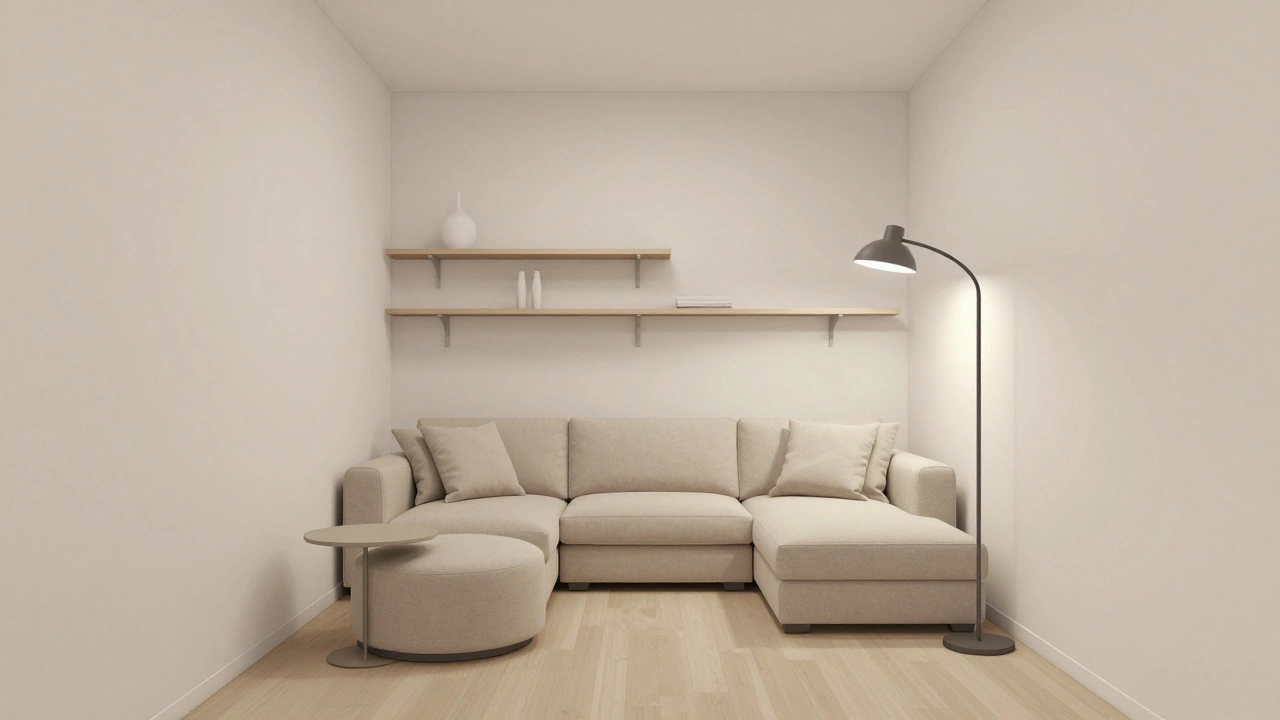
Also skip thick, ornate legs or heavy armrests. Look for low-profile designs. Slim metal or light wood legs lift the sofa visually. Floating sofas-those with no visible legs-can make the floor feel more open. It’s a trick used in Scandinavian design, and it works in small spaces too.
Think about function, not just form
A corner sofa isn’t just for sitting. Can it store things? Can it sleep someone?
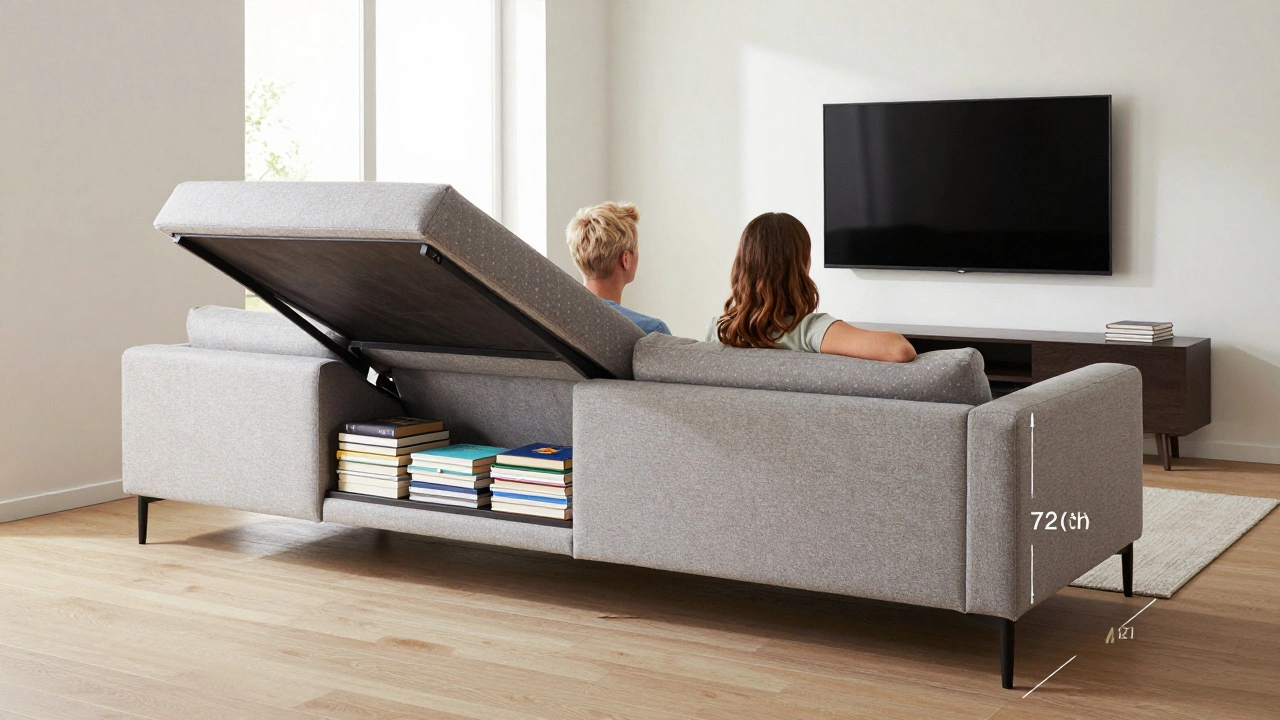
Many small-space corner sofas now come with hidden storage. Pull-out drawers under the seat, or lift-up lids on the chaise. These are gold for apartments. You can stash blankets, books, or seasonal clothes without needing a separate storage unit.
If you have guests often, consider a sleeper option. A pull-out mattress on the chaise side turns your sofa into a guest bed. No need for a fold-out couch in another room. It’s one piece that does two jobs. Just make sure the mattress is thick enough. Thin ones are uncomfortable and wear out fast.
Pair it with the right accessories
Once the sofa is in, what do you put around it?
Avoid large side tables. Use wall-mounted shelves or slim floating consoles. A small round ottoman can double as a footrest and a table. It tucks neatly beside the sofa and moves out of the way when needed.
Keep rugs small. A 5x7 rug under the front half of the sofa works better than a huge 8x10 that covers half the room. It defines the seating area without overwhelming the space.
Lighting matters too. A tall floor lamp in the corner opposite the sofa adds height and draws the eye upward. That makes the ceiling feel higher. Avoid heavy chandeliers or pendant lights that hang too low.
What doesn’t work
Here are the three biggest mistakes people make:
- Buying a sofa that’s too deep or too long just because it’s on sale
- Blocking windows or vents with the chaise side
- Putting a corner sofa in a room with no clear path to the door
If your room has a doorway right next to the corner, don’t place the sofa there. You’ll hit your head every time someone walks in. Leave at least 30 inches of clear walking space.
And never buy a corner sofa without testing it first. Sit on it. Lean back. Stretch your legs. If your feet dangle or your knees press into the armrest, it’s too small for you-even if it fits the room.
When it’s the right choice
Go for a corner sofa if:
- You need maximum seating with minimal footprint
- You want to create a defined lounge area without extra furniture
- You have a corner that’s currently empty and wasted
- You’re okay with a fixed layout (you can’t move it often)
Don’t get one if:
- You move furniture often
- You have a very narrow room (less than 8 feet wide)
- You need a clear path across the entire room
There’s no magic size. It’s about matching the sofa to your habits. If you watch TV every night with one other person, a compact corner sofa is perfect. If you host dinner parties with eight people, you’ll need more seating than a sofa can give you.
Real example: A 9x10 foot Wellington apartment
A client in Newtown had a studio apartment with one window and a narrow kitchen. The only open wall space was the corner between the living area and the bedroom alcove. They bought a 76-inch corner sofa in light gray with a 60-inch chaise and hidden storage. The sofa faced the TV mounted on the opposite wall. A 5x7 rug sat under the front two seats. A slim console table held their coffee maker and a small plant. The chaise side had room for a throw blanket and two books. They could sit two people comfortably, and the sofa tucked neatly into the corner without blocking the doorway. No one felt cramped. The room looked bigger because the sofa didn’t fight the shape of the space-it worked with it.
Final thought
A corner sofa in a small room isn’t a gamble. It’s a smart design choice-if you do it right. It’s not about how big the sofa is. It’s about how well it fits your life, your room, and your habits. Choose the right size, the right color, the right shape. Avoid the traps. And you’ll end up with a cozy, clutter-free space that feels bigger than it is.
Can a corner sofa make a small room feel bigger?
Yes, if it’s the right size and placed correctly. A corner sofa uses two walls, freeing up the center of the room. Light colors, low profiles, and minimal legs help it look less bulky. It doesn’t add square footage, but it makes better use of what you have.
What’s the smallest corner sofa that still works?
Look for models around 72 inches long on the main side and 60 inches on the chaise. Depths of 32 to 34 inches work best for small spaces. Some brands like IKEA, Article, and Burrow make compact versions under 80 inches total. Always check the exact dimensions before buying.
Should I get a corner sofa with storage?
If you live in a small space, yes. Hidden storage under the seat or chaise lets you store blankets, pillows, or even shoes without needing extra furniture. It reduces clutter and keeps the room looking clean. Just make sure the storage mechanism is sturdy and easy to open.
Can a corner sofa be a guest bed?
Many corner sofas now come with pull-out mattresses on the chaise side. These work well for occasional guests, but they’re not as comfortable as a real bed. Look for ones with at least a 4-inch thick mattress. Avoid thin foam options-they collapse quickly and aren’t supportive.
Is a 120-degree corner sofa better than a 90-degree one?
In narrow or awkwardly shaped rooms, yes. A 120-degree sofa opens up the space visually and creates a more relaxed seating angle. It’s less boxy and feels more like a lounge than a corner block. But in square rooms, a 90-degree sofa works fine and is more common. Try both in person if you can.