Curtain Color Advisor
Choose Your Room Parameters
Dark couch: Navy, charcoal, deep brown
Large: > 200 sq ft
Dim: Natural light < 2 hours
When you’re picking out curtains, it’s easy to get stuck on one question: should they be lighter or darker than your couch? There’s no single right answer-but there are clear rules that make the difference between a room that feels balanced and one that feels off. The truth is, your choice depends on what you want the room to feel like, not just what looks nice in a catalog.
Lighter Curtains Make a Room Feel Bigger and Brighter
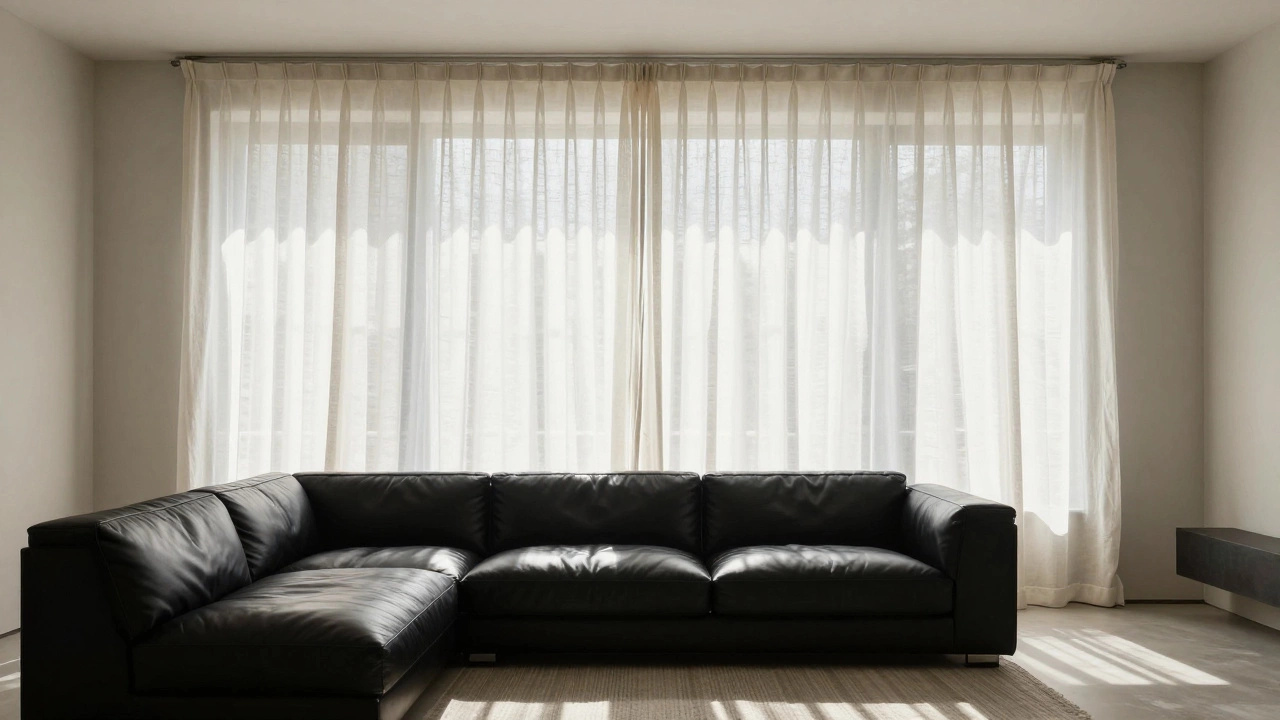
If your couch is dark-think charcoal, navy, or deep brown-going with lighter curtains (white, beige, soft gray) pulls the eye upward and lets natural light flow through the space. This is especially helpful in smaller rooms or spaces with limited windows. Light curtains act like a visual extension of the ceiling, making walls feel farther away and ceilings higher.
Real-world example: A client in Chicago had a small living room with a black leather sectional. She was worried light curtains would look cheap, but switching from heavy navy drapes to linen-white panels made the room feel 30% more open. The couch didn’t disappear-it became a grounded anchor in a lighter space.
Light curtains also work well if your couch has bold patterns. A busy floral or geometric sofa can easily overwhelm a room. Light, solid curtains give the eye a place to rest. They don’t compete. They calm.
Darker Curtains Add Depth and Sophistication
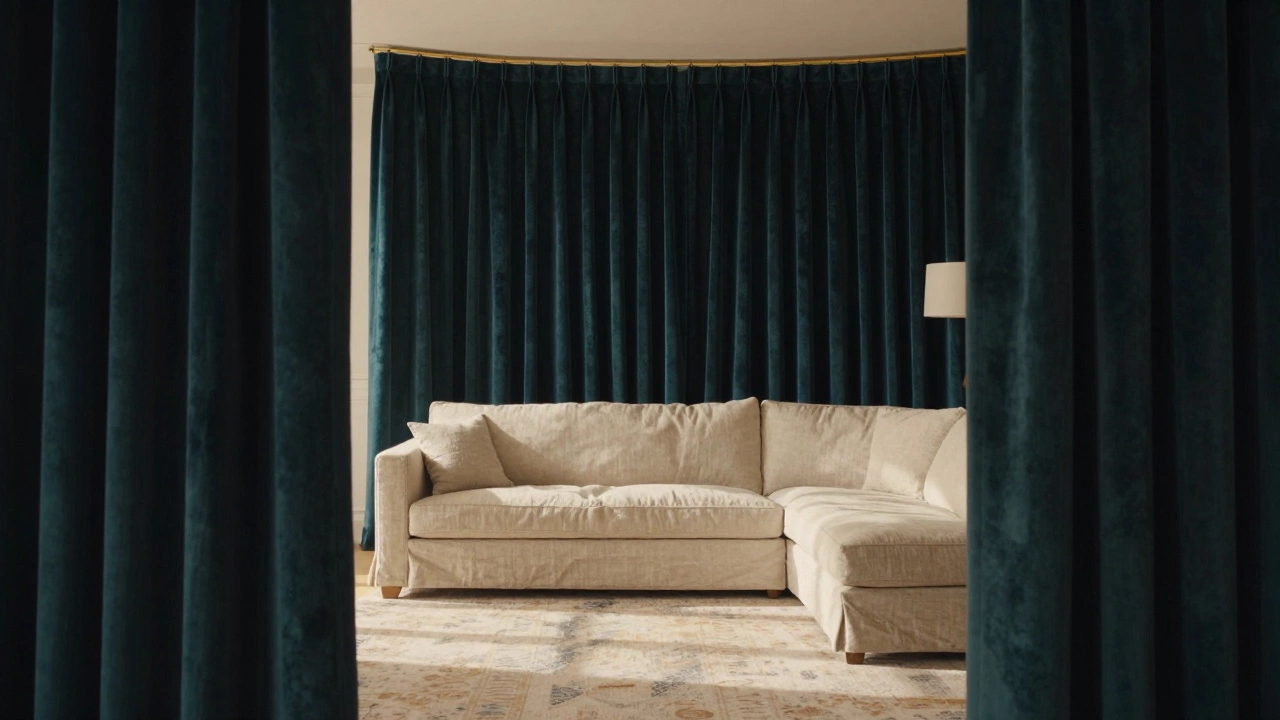
On the flip side, if your couch is light-cream, pale gray, or off-white-darker curtains (forest green, navy, charcoal) create a strong visual frame. They ground the space and give it a sense of richness. Think of them like a picture frame around your sofa: they don’t need to match, but they should support.
This approach works best in larger rooms or spaces with high ceilings. Dark curtains absorb light, which can make a big room feel cozier. They also hide dust and sunlight fading better than light fabrics, which is why many designers use them in sun-drenched living rooms.
One homeowner in Austin paired a white linen sofa with deep teal curtains. The result? The room felt like a high-end boutique hotel-calm, intentional, and layered. The dark curtains didn’t overpower the sofa; they made it look more expensive.
Match the Curtains to the Room’s Mood, Not Just the Couch
Don’t treat your couch as the only color reference. Look at the whole room. What’s the wall color? Are there rugs, accent chairs, or artwork that already carry color? Curtains should tie into the broader palette-not just the sofa.
For example: If your walls are warm beige and your rug has hints of rust and olive, then even a medium-toned curtain (like taupe or sage) can pull everything together, regardless of whether your couch is light or dark. The goal isn’t to match the couch-it’s to create harmony across all elements.
Another trick: If your couch is a neutral (gray, beige, white), you have more freedom. You can go bold with curtains-deep burgundy, navy, even a muted mustard-and the room will still feel intentional. But if your couch is already colorful (like a bright teal or burnt orange), stick to curtains in the same tone family. A red couch with purple curtains? Too much. A red couch with deep maroon curtains? That’s a layered, professional look.
Texture Matters More Than You Think
Color isn’t everything. The fabric you choose can change how the color reads. A light linen curtain in a sunlit room feels airy and casual. A light silk curtain in the same room feels luxe and formal. Same color. Different vibe.
Same goes for dark curtains. A heavy velvet in navy feels rich and dramatic. A dark cotton twill feels more relaxed and modern. If your couch is sleek and modern (think leather or metal legs), pair it with a clean, tailored curtain. If your couch is cozy and plush (like a sectional with lots of throw pillows), a slightly textured curtain-like a linen blend or woven jacquard-adds warmth without clutter.
Don’t forget the lining. Unlined curtains let in more light and feel airy. Lined curtains block light better and add weight, which helps them drape nicely. If you want privacy and a more formal look, go lined. If you want soft, flowing light, skip the lining.
What About Patterns?
Patterned curtains can work-but only if you’re careful. If your couch is solid, a subtle pattern (like a tonal stripe or small geometric) adds interest without chaos. But if your couch already has a pattern, skip the curtain pattern. Two busy elements in the same space create visual noise.
Here’s a safe rule: If your curtain has a pattern, make sure one of the colors in that pattern matches something else in the room-a pillow, a rug, or even the wall color. That’s how you tie it together without matching exactly.
For example: A gray sofa with a navy-and-cream striped curtain. The cream in the curtain echoes the throw blanket on the couch. The navy ties into the area rug. Suddenly, it’s not random-it’s connected.
Common Mistakes to Avoid
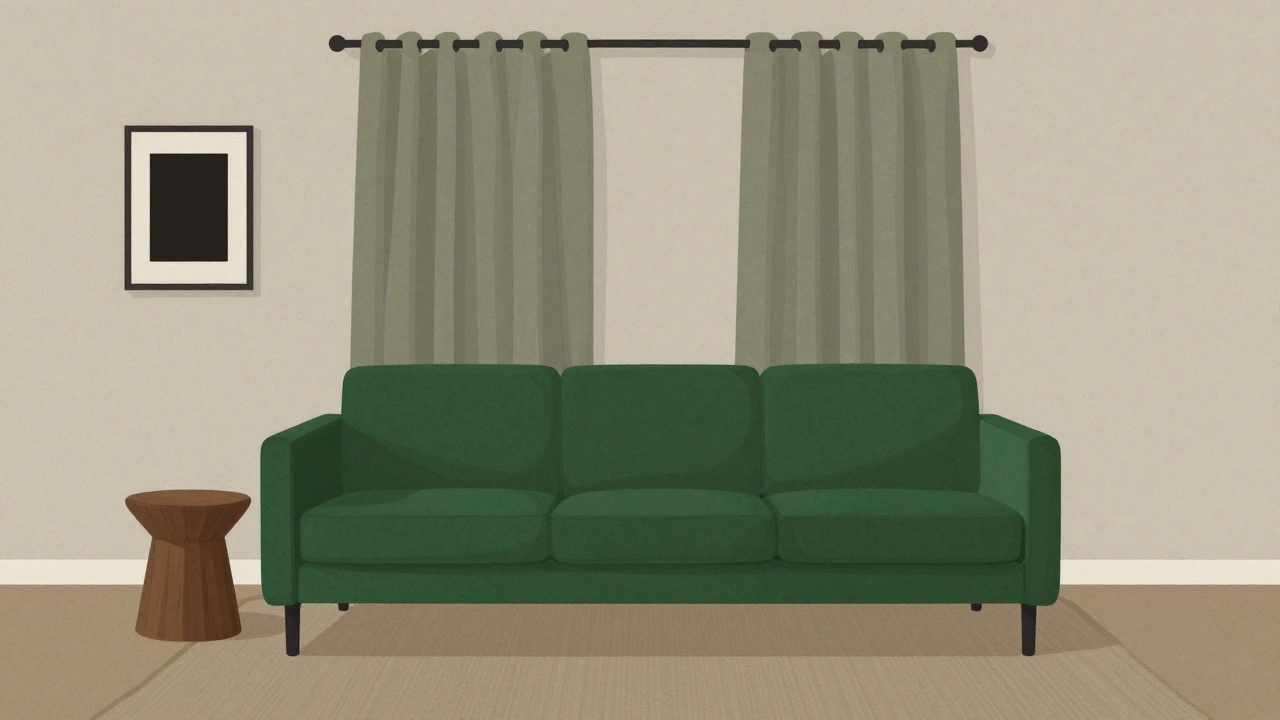
- Going too light if your room is already washed out. If your walls, floor, and couch are all pale, adding white curtains makes the space feel flat and lifeless. Add contrast somewhere-even if it’s just a dark lamp or a black picture frame.
- Going too dark if your room is small and dark. Dark curtains in a north-facing room with no sun can make the space feel like a cave. Use sheer liners or lighter panels underneath to let in light.
- Thinking you need to match exactly. Matching colors exactly is boring. Coordinating colors is powerful. A navy couch with charcoal curtains? That’s a shade too close. A navy couch with deep green curtains? That’s intentional.
- Ignoring the window size. If your window is small, avoid heavy, dark drapes that make it look even smaller. Go lighter and hang the curtain rod wider than the window to create the illusion of more glass.
Quick Decision Guide
Still unsure? Use this simple flow:
- Is your couch dark? → Try light curtains to lift the room.
- Is your couch light? → Try darker curtains to add depth.
- Is your room small or dim? → Go lighter on curtains, even if the couch is dark.
- Is your room large and bright? → Go darker for coziness and drama.
- Is your couch patterned? → Keep curtains solid and neutral.
- Is your couch solid? → You can play with color or texture in the curtains.
There’s no magic formula. But if you start with the mood you want-open and airy, or rich and intimate-you’ll make a choice that feels right, not just trendy.
What If You’re Still Not Sure?
Buy sample swatches. Most curtain companies offer free fabric samples. Hang them on your window with clips for a few days. Look at them in morning light, afternoon sun, and evening lamplight. See how they interact with your couch, walls, and floor.
Or try this: Take a photo of your living room. Use a free app like Canva or Adobe Color to desaturate it to black and white. If the couch and curtains look like they’re on the same tonal level, you’re probably good. If one disappears into the background, you might need more contrast.
Remember: Furniture lasts 10-15 years. Curtains last 3-5. You can change them easily. Don’t overthink it-but don’t ignore the rules either. A well-chosen curtain doesn’t just cover a window. It completes the room.
Should curtains be the same color as the walls?
No, curtains don’t need to match the walls. In fact, they often look better when they contrast slightly. If your walls are light beige, a soft gray curtain adds depth. If your walls are dark, a light curtain creates balance. The goal is layering, not matching.
Can I use black curtains with a light couch?
Yes, but only if your room has enough light and other dark elements to balance it. Black curtains with a cream couch can look dramatic and modern-especially if you have dark wood floors, a black coffee table, or metallic accents. Avoid black curtains in small, dim rooms-they’ll make the space feel smaller.
Do curtains have to match the sofa exactly?
No, and they shouldn’t. Matching exactly looks like a showroom, not a home. Instead, pick a color from your sofa’s undertones. If your sofa is gray with blue hints, choose a curtain with a hint of blue. That creates harmony without being boring.
What if my couch is a bold color?
Stick to neutral curtains. If your couch is emerald green, mustard yellow, or deep red, let it be the star. Choose curtains in white, beige, or charcoal. This keeps the focus on the sofa while still grounding the space. Don’t compete with it.
Are sheer curtains a good choice for a dark couch?
Sheer curtains alone won’t provide enough privacy or light control for a dark couch in a sunny room. But they work beautifully as a layer underneath heavier drapes. Use sheers to soften the light and let it glow around your dark sofa, then close the heavier curtains at night.