Cast Iron Skillet Finder
Not sure which skillet is right for you? Answer these three questions to get a personalized recommendation.
- Price Estimate:
- Best For:
- Maintenance:
You walk into a kitchen supply store or scroll through Amazon, and you are hit with a wall of black metal pans. Some cost twenty bucks. Others cost three hundred. Why? Is the expensive one actually better at searing a steak, or are you just paying for a brand name on the handle?
The truth is, there isn't one single "best" skillet for everyone. It depends on whether you want to cook with it every day, hang it on the wall as art, or pass it down to your grandchildren. But if we look at sales data, community consensus, and performance metrics in 2026, a few names dominate the conversation. Let's break down exactly what makes these pans sought after and which one deserves a spot in your kitchen.
Key Takeaways
- Lodge remains the undisputed king of value and accessibility for daily cooking.
- Le Creuset and Staub lead the premium enameled market for aesthetics and ease of use.
- Vintage Griswold and Wagner skillets are highly sought by collectors for their superior pre-seasoned surfaces.
- Field Company has emerged as a top modern choice for those wanting smooth, lightweight cast iron without the vintage price tag.
- Your choice should depend on maintenance willingness, not just brand prestige.
The Undisputed King of Value: Lodge
If you ask ten home cooks what they use, nine will point to a Lodge cast iron skillet manufactured in South Pittsburgh, Tennessee. Founded in 1896, Lodge revolutionized the industry by making cast iron affordable again. Before Lodge’s mass-production techniques took hold, cast iron was becoming a niche luxury item. Today, a standard 10-inch Lodge skillet costs around $15-$20.
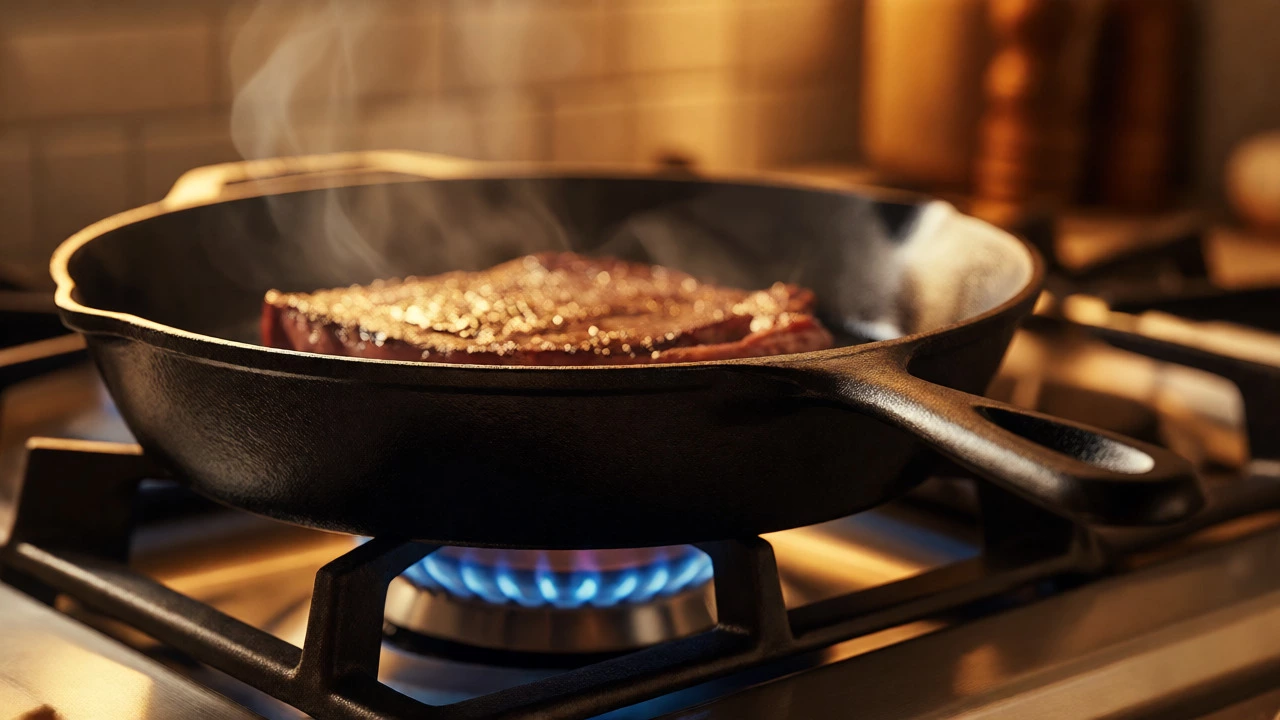
Why is it so popular? It works. The sand-cast texture provides excellent grip for food during the initial seasoning phase. Once seasoned, it becomes non-stick enough for eggs (if you’re patient). The heat retention is massive, allowing you to go from stovetop sear to oven bake without missing a beat. However, new Lodge pans come with a factory seasoning that many users find uneven or sticky. You will likely need to strip and re-season it yourself to get that glass-like surface. If you don’t mind a little elbow grease, Lodge is the most practical entry point into cast iron cooking.
Premium Enameled Options: Le Creuset vs. Staub
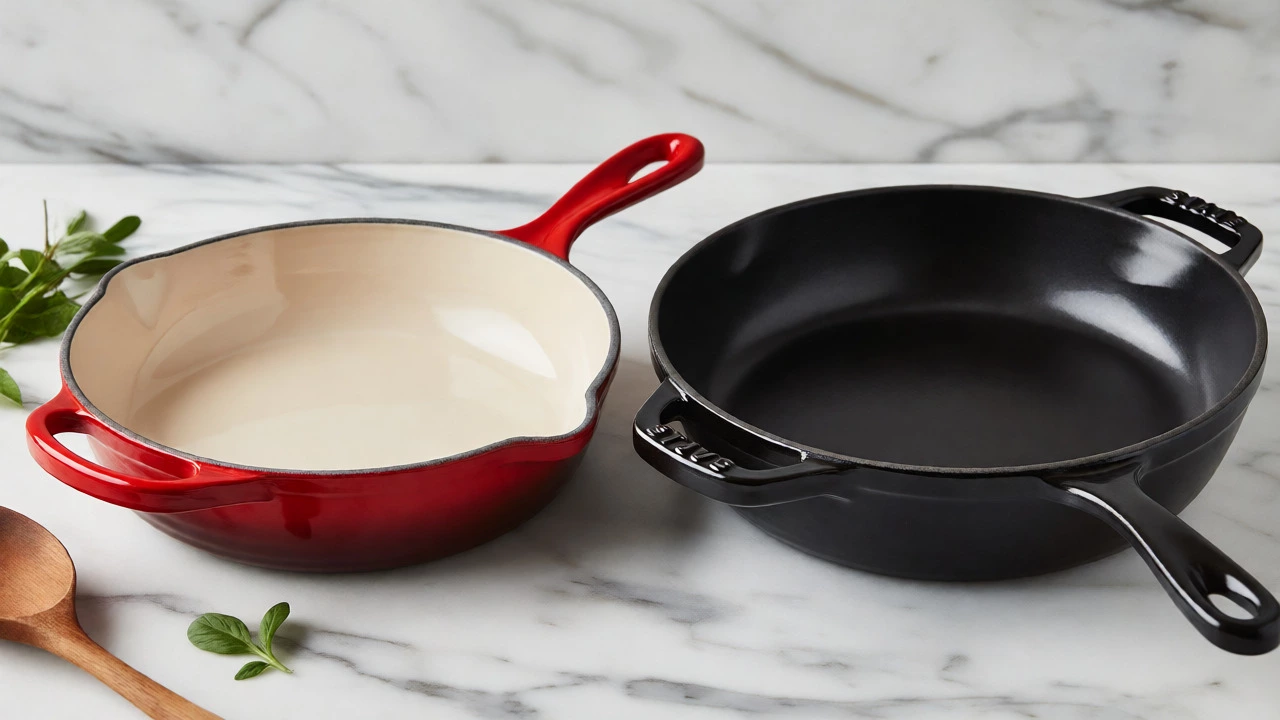
Not everyone wants to deal with bare metal. If you hate the idea of rust or the maintenance of seasoning, enameled cast iron is your solution. This brings us to the two heavyweights: Le Creuset a French manufacturer known for its vibrant enamel coatings and Staub another French brand famous for its matte black interior enamel.
Le Creuset is arguably the most recognized cookware brand globally. Their skillets feature a light-colored interior enamel, which makes it easy to monitor browning and fond development. They are lighter than Staub and have a more rounded shape, making them easier to toss vegetables in. But here is the catch: the light enamel can stain over time, and the exterior colors are purely aesthetic. You are paying a premium for the brand heritage and the color palette.
Staub takes a different approach. Their interiors are matte black enamel, designed to mimic the performance of bare cast iron while resisting sticking. This means you can sear meat at higher temperatures without worrying about enamel cracking or staining. Staub skillets also feature self-basting spikes under the lid (in Dutch ovens) and heavier construction. For serious cooks who want low maintenance but high performance, Staub often edges out Le Creuset in pure utility tests. Both brands offer lifetime warranties, which is rare in the cookware world.
| Brand | Type | Avg. Price (10") | Maintenance Level | Best For |
|---|---|---|---|---|
| Lodge | Bare Cast Iron | $15 - $20 | High (Seasoning required) | Daily cooking, budget-conscious buyers |
| Le Creuset | Enameled | $130 - $150 | Low (No seasoning) | Aesthetics, acidic foods, light browning |
| Staub | Enameled | $140 - $160 | Low (No seasoning) | Searing, durability, dark sauces |
| Griswold | Vintage Bare | $100 - $300+ | Medium (Pre-seasoned) | Collectors, smooth surface enthusiasts |
| Field Company | Modern Bare | $120 - $140 | Medium (Lighter weight) | Those wanting vintage feel without vintage cost |
The Collector’s Holy Grail: Vintage Griswold and Wagner
Walk into an antique shop, and you might see a skillet selling for $150. Why pay that much for old iron? Because vintage Griswold skillets produced between 1865 and 1957 and Wagner Ware skillets made before the mid-20th century were machined smoother than anything made today. Modern casting leaves a pebbly texture. Old casting methods, combined with decades of user care, result in a surface as slick as Teflon.
Griswold is particularly prized because of its logo placement and specific heat distribution patterns. Collectors look for the "block logo" or "script logo" variations. These pans are incredibly thin and lightweight compared to modern equivalents, making them easier to lift when full. But buying vintage is risky. You might get a pan with pitting, warping, or bad rust. Restoration requires lye tanks, wire brushes, and hours of work. Unless you enjoy the hunt and the restoration process, this route is frustrating. But if you find a clean, well-seasoned Griswold #8 skillet, you own a piece of culinary history that performs better than most new pans.
The Modern Challenger: Field Company
In recent years, a company called Field Company a Detroit-based startup aiming to recreate vintage cast iron quality has gained a cult following. They identified a gap in the market: people wanted the smooth, lightweight feel of vintage Griswold pans but didn’t want to scour eBay for rusty relics.
Field uses traditional sand casting but finishes the surface to be significantly smoother than Lodge. Their pans are thinner and lighter, addressing the common complaint that cast iron is too heavy to maneuver. They arrive pre-seasoned with a proprietary blend that holds up well. The trade-off? Price. A Field skillet costs nearly ten times more than a Lodge. Are they worth it? For people who struggle with wrist strength or simply appreciate fine craftsmanship, yes. They bridge the gap between industrial utility and artisanal quality.
How to Choose Your Skillet
Don’t buy based on hype. Buy based on how you cook. Here is a quick decision tree:
- Do you cook every day? Get a Lodge. It’s cheap, durable, and you won’t cry if you accidentally wash it with soap (which is fine, by the way).
- Do you hate maintenance? Get Staub or Le Creuset. The enamel means no rust, no seasoning, and dishwasher safety (though hand washing is still recommended for longevity).
- Do you have weak wrists? Look at Field Company or smaller vintage finds. Weight matters when flipping a full pan of hash browns.
- Are you a collector? Hunt for Griswold or Wagner. Check for flat bottoms and minimal pitting. Be prepared to restore.
Remember, the "most sought after" skillet is the one you will actually use. A dusty Le Creuset hanging on a wall serves no one. A scratched-up Lodge making perfect cornbread every Sunday is the true winner.
Frequently Asked Questions
Is cast iron really better than stainless steel?
It depends on the task. Cast iron excels at high-heat searing and baking due to superior heat retention. Stainless steel heats up faster and is more responsive to temperature changes, making it better for delicate sauces. Most kitchens benefit from having both.
Can I put my cast iron skillet in the dishwasher?
Bare cast iron should never go in the dishwasher; the detergent strips the seasoning and water causes rust. Enameled cast iron (like Le Creuset or Staub) is generally dishwasher safe, though frequent cycles can dull the finish over time.
Why does my new Lodge skillet feel sticky?
New Lodge pans come with a factory seasoning that is often applied thinly and unevenly. If it feels sticky, it hasn’t polymerized correctly. Scrub it off with steel wool and oil, then season it yourself in the oven at 450°F for an hour to fix the issue.
Are vintage cast iron skillets worth the money?
For casual cooks, usually no. A $20 Lodge performs 95% as well as a $150 Griswold. However, for enthusiasts who value the smooth machining and historical significance, the premium is justified by the superior cooking surface and collectible status.
What size skillet should I buy?
A 10-inch or 12-inch skillet is the most versatile. A 10-inch fits easily on most stovetops and ovens. A 12-inch allows for larger batches but can be heavy and difficult to store. Avoid 8-inch unless you only cook for one person, as it lacks thermal mass.