Mirror Value Estimator
Use this checklist to determine if a mirror is likely an expensive antique or designer piece, or a standard modern reproduction. Answer honestly for the best estimate.
Estimated Value Category
--Select options above and click evaluate.
You walk into an estate sale or scroll through an online marketplace and see a mirror that catches your eye. It looks solid, maybe even fancy, but the price tag makes you hesitate. Is it a hidden gem worth thousands, or just heavy glass with a nice coat of paint? Most people guess based on size or how shiny it is, but that’s a rookie mistake. Real value hides in the details-specifically in the glass, the backing, and the craftsmanship of the frame.
Figuring out if a mirror is expensive isn’t about knowing every historical period by heart. It’s about spotting specific physical traits that separate mass-produced items from high-quality antiques or designer pieces. Whether you are hunting for a bargain or trying to sell something from your attic, these checks will save you from overpaying or underselling.
Check the Glass Quality First
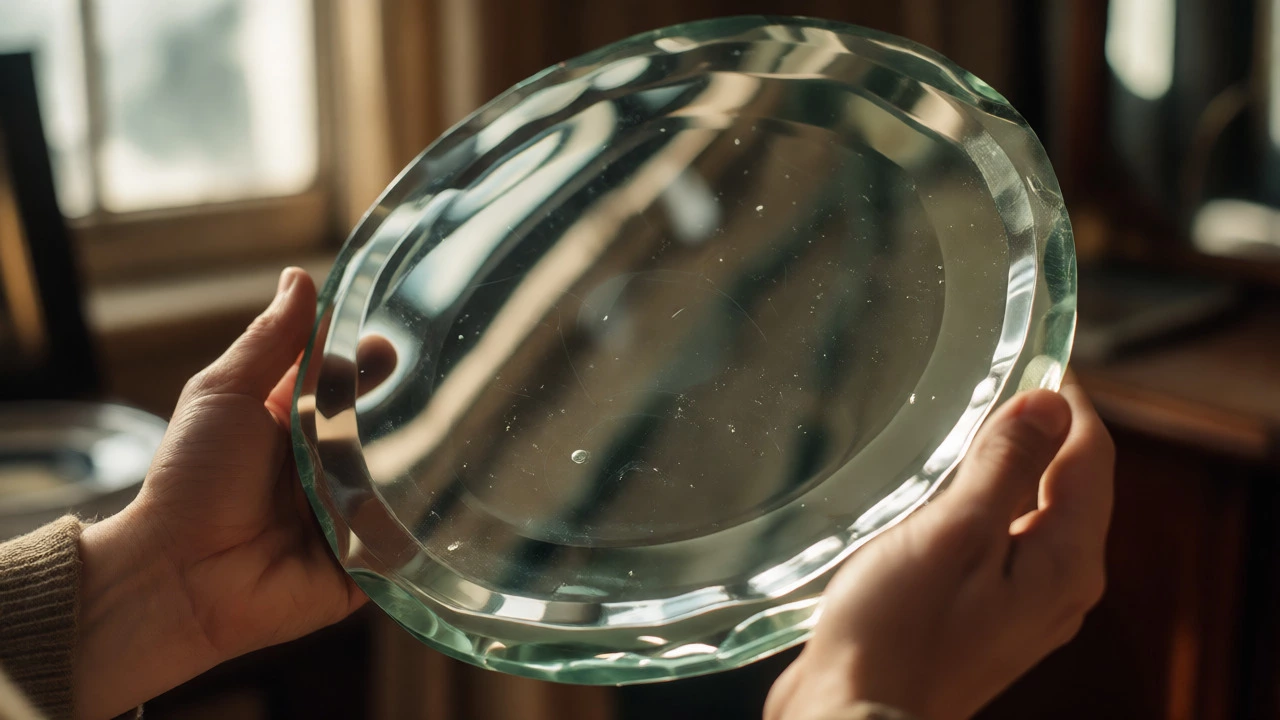
The glass itself tells you more than the frame does. Modern mirrors use float glass, which is perfectly flat and uniform. Older, higher-value mirrors often use cylinder glass or crown glass, which have distinct characteristics. Hold the mirror up to a straight edge, like a doorframe or a ruler. If the reflection wobbles slightly when you move your head, that’s a good sign. That slight distortion, known as "waviness," indicates hand-made glass from before the mid-19th century. Perfectly straight reflections usually mean modern manufacturing.
Look closely at the surface for imperfections. High-end antique mirrors might have tiny bubbles trapped inside the glass or minor scratches that don’t catch the light aggressively. These aren’t flaws; they’re fingerprints of age. However, be careful here. Some cheap reproductions artificially add these bubbles. The key difference is depth. In genuine old glass, the bubbles feel integrated into the material. In fakes, they often sit on the surface or look too perfect, like someone blew them in specifically for effect.
Color matters too. Clear, bright white glass is typical of modern production. Older mirrors, especially those from the Victorian era or earlier, often have a greenish or grayish tint due to iron impurities in the sand used for making glass. This patina can actually increase value if it’s authentic and not caused by damage. But if the glass looks yellowed or cloudy all over, check for delamination. Cloudiness can sometimes mean the silver backing is deteriorating, which lowers value unless it’s part of a specific rustic aesthetic trend.
Inspect the Backing and Construction
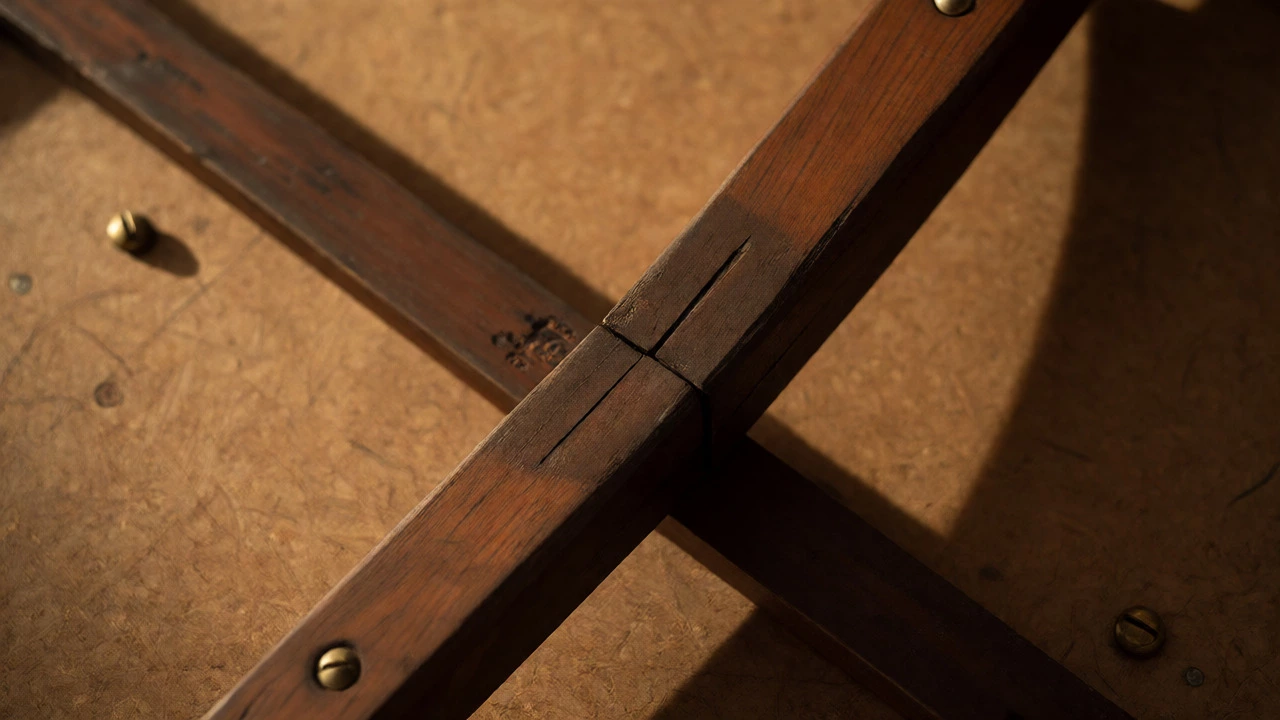
You can’t judge a mirror solely by its face. Flip it over. The back is where the truth lives. High-quality antique mirrors typically have a wooden backboard made of oak, mahogany, or walnut. You want to see natural wood grain, not particle board or MDF (medium-density fiberboard). Particle board feels spongy and has no real grain pattern. Solid wood feels dense and sturdy.
| Material | Characteristics | Value Implication |
|---|---|---|
| Solid Wood (Oak/Mahogany) | Natural grain, heavy, smells of wood polish | High potential value, indicates pre-1950s origin |
| MDF/Particle Board | Smooth, uniform texture, lightweight, may swell if wet | Low value, likely mass-produced after 1960s |
| Paper/Cardboard | Thin, tears easily, often printed with patterns | Very low value, common in budget decor |
| Lead-lined Backing | Dark, metallic appearance behind glass | Historically significant, very high value if intact |
Look for how the mirror is attached to the frame. In older, valuable pieces, the glass is often held in place by wooden clips or nails driven directly into the frame. You might see small brass screws or decorative rosettes. Modern mirrors frequently use glue or metal brackets screwed into the back. While functional, these methods lack the artisanal touch of traditional joinery. Also, check for maker’s marks. Sometimes you’ll find a stamp, label, or signature on the backboard. Brands like Baccarat, Saint-Gobain, or specific furniture makers like Chippendale reproductions can significantly boost value.
Pay attention to the edges. Are they polished smoothly? Cheap mirrors often have sharp, unpolished edges that feel rough to the touch. High-end pieces undergo extensive finishing work, including polishing the edges to a soft curve. Run your finger along the perimeter. If it feels safe and smooth, it was finished with care. If it bites back, it’s likely a factory-line product.
Evaluate the Frame Craftsmanship
The frame is the second most important factor after the glass. But don’t just look at the design; look at how it was made. Carved wood frames are a major indicator of expense. Hand-carved details show irregularities. If you run your hand over acanthus leaves or floral motifs, they should feel textured and varied. Machine-carved or molded plaster frames (often called composition or compo) feel smoother and more uniform. They can still be valuable, especially if gilded properly, but hand-carved hardwood commands higher prices.
Check the joints. Look at the corners where two pieces of wood meet. Do they fit tightly? Are there gaps? High-quality frames use mortise-and-tenon or dovetail joints. These are strong and durable. Poorer frames use simple butt joints glued together, which often crack or separate over time. If you see visible nails or staples holding the corner together, it’s a red flag for lower quality. Nails were used in cheaper construction because they’re faster than carving complex joints.
Gilding is another area where amateurs get fooled. Real gold leaf is thin, delicate, and has a warm, subtle glow. It doesn’t reflect light like plastic. Fake gold leaf, often called Dutch metal or aluminum powder, looks brighter and shinier. Over time, real gold leaf might wear away in high-touch areas, revealing a reddish clay base underneath. This wear is acceptable and even desirable in antiques. If the gold looks uniformly bright and pristine on an "old" mirror, it’s probably been re-gilded poorly or is a reproduction.
Assess Size and Proportions
Size plays a role, but not always in the way you think. Huge mirrors weren’t always possible in earlier centuries because making large sheets of clear glass was difficult and expensive. Therefore, a large antique mirror (over 3 feet wide) is rarer and more valuable than a small one from the same period. However, oversized modern mirrors are cheap to produce. So, context matters. A massive mirror from the 1980s isn’t necessarily worth more than a smaller, finely crafted piece from the 1800s.
Proportions also hint at intent. Designer mirrors often follow specific aesthetic ratios, like the golden ratio. They feel balanced and intentional. Mass-produced items often have awkward proportions-too thick a frame for the glass size, or handles placed symmetrically without regard for visual weight. Stand back and look at the whole object. Does it feel harmonious? Good design sells.
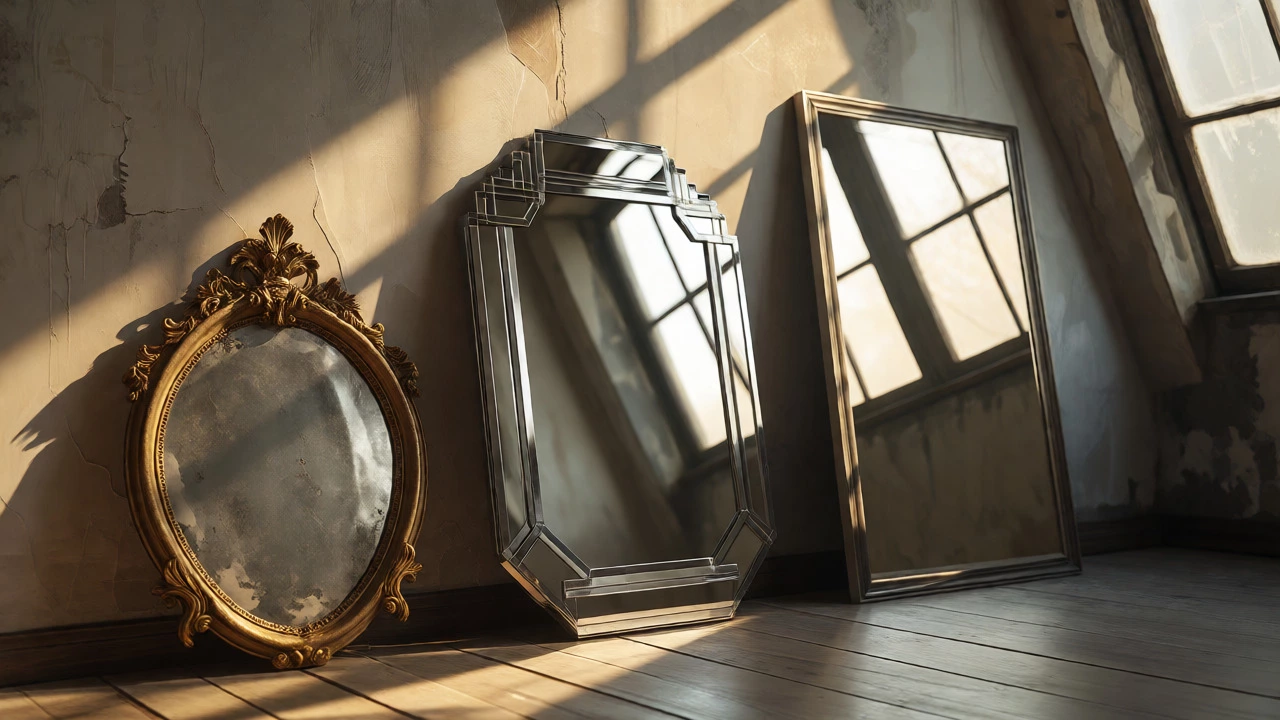
Consider the shape. Round and oval mirrors were harder to cut historically, so antique examples command premiums. Rectangular mirrors are more common. Irregular shapes, like octagons or asymmetrical designs, can indicate custom work or specific artistic movements, such as Art Deco or Mid-Century Modern, both of which have strong collector markets.
Identify Style and Era Clues
You don’t need to be a historian, but recognizing broad styles helps. Here are quick visual cues:
- Victorian (1837-1901): Heavy, ornate, dark woods, elaborate carvings, often with crest rails at the top. Look for deep patina.
- Art Deco (1920s-1930s): Geometric shapes, sunburst designs, chrome or nickel plating, sleek lines. Less ornamentation, more bold forms.
- Mid-Century Modern (1940s-1960s): Organic shapes, teak or rosewood frames, minimal hardware. Think clean lines and tapered legs if it’s a floor mirror.
- Baroque/Rococo: Extremely detailed, curvy, lots of gold leaf, cherubs or shells. Very fragile and rare.
If the style clashes with the materials, be suspicious. For example, a "Victorian" mirror with a plastic-looking finish and particle board back is a fake. Authenticity requires consistency between style, materials, and construction techniques.
Test for Damage and Restoration
Condition affects value heavily. Small cracks in the glass reduce value, but not as much as missing pieces. Check for "foxing"-black spots on the back of the glass. This is oxidation of the silver backing. While some collectors love the look, extensive foxing reduces functionality and value. However, light foxing adds character and authenticity.
Restoration can help or hurt. Professional restoration that preserves original materials is fine. DIY fixes are risky. Did someone repaint the frame? Did they replace the glass? Original glass is preferred. If the glass looks brand new but the frame is old, the value drops. Ask sellers directly: "Has this been restored?" Get specifics. Vague answers suggest they don’t know, which means you should assume the worst.
Smell the mirror. Old wood and varnish have a distinct scent. Mold or dampness smells bad and indicates storage issues, which can warp the wood or ruin the backing. Fresh paint smells chemical, suggesting recent, possibly poor-quality, refurbishment.
When to Walk Away
Not every pretty mirror is expensive. Avoid these traps:
- The "Too Good to Be True" Price: If a massive, ornate mirror costs $50, it’s likely a replica or damaged beyond repair.
- Heavy Wear on Moving Parts: If it’s a tilt-mirror, check the hinges. Rusted or broken mechanisms cost money to fix.
- Water Damage: Warped frames or peeling veneer are hard to fix well. Unless you’re a pro, skip it.
- No Maker’s Mark + Generic Design: If it looks like something from a big-box store in 1995, it probably is.
Ultimately, telling if a mirror is expensive comes down to combining evidence. One clue alone isn’t enough. Wavy glass plus solid wood backing plus hand-carved frame equals a winner. Shiny glass plus particle board plus molded frame equals a wall-hanger from IKEA. Trust your hands and eyes more than the seller’s story.
Does a signed mirror always mean it's expensive?
No. Many mass-produced mirrors had stickers or stamps applied to the back that indicated the manufacturer, not necessarily a high-value artisan. However, a signature from a known designer (like John Caudle or Paul Frankl) on a high-quality piece does increase value. Always verify the signature against known records.
Is cloudiness in an old mirror bad?
It depends. Light cloudiness or foxing is often considered desirable patina in antiques and adds character. Heavy cloudiness that obscures your reflection suggests severe backing deterioration, which lowers value unless the mirror is being sold for parts or restoration projects.
Can I clean an antique mirror myself?
Be very careful. Never spray cleaner directly onto the glass, as liquid can seep behind the frame and damage the backing. Use a damp microfiber cloth with mild soap and water, then dry immediately. For valuable pieces, consult a professional conservator first.
What is the most valuable type of mirror glass?
Venetian glass, particularly from Murano, Italy, is highly prized. Early American cylinder glass is also valuable. Generally, hand-made glass with slight distortions and natural tints is valued higher than modern float glass in antique contexts.
Do frames affect value more than glass?
In many cases, yes. If the glass is replaced, the frame determines the remaining value. A rare, hand-carved frame can make a mirror valuable even if the glass is new. Conversely, a plain frame with original glass is less impressive. Both matter, but the frame often carries the artistic and historical weight.