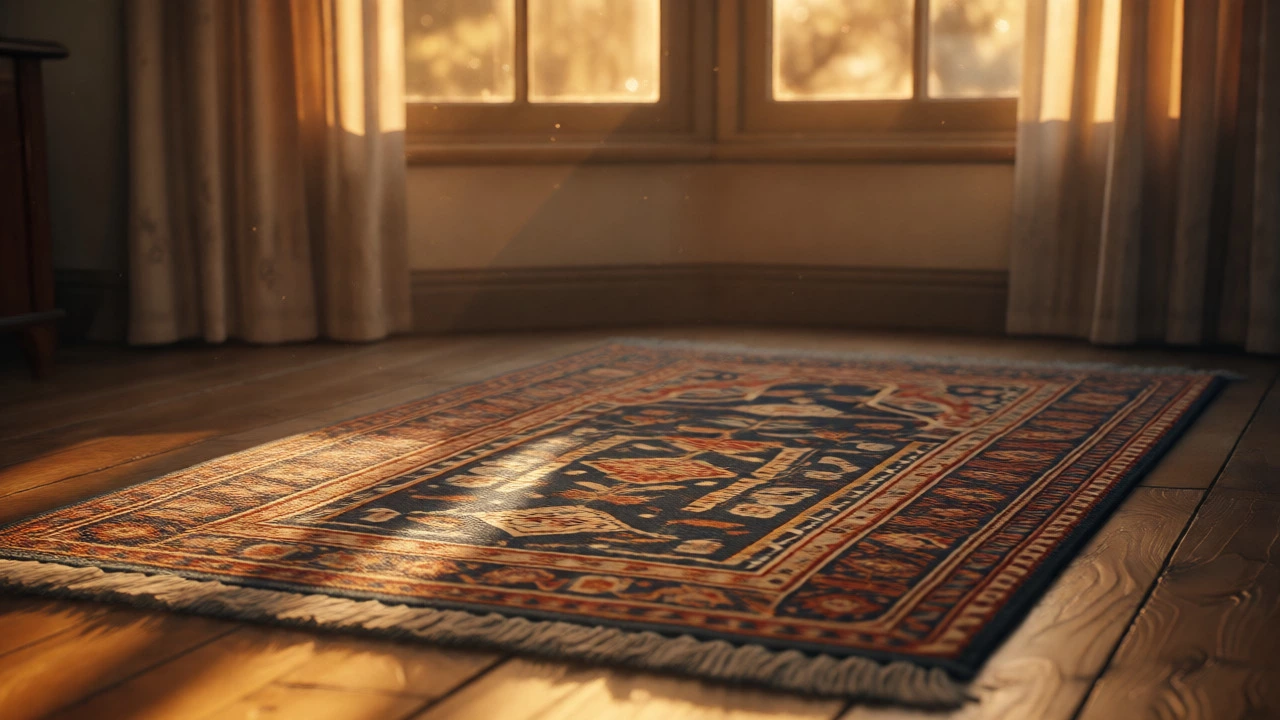
Prayer Rug Usage Checker for Christians
Use this tool to assess if a prayer rug is a helpful addition to your Christian devotional life. Answer the questions below to receive personalized guidance based on biblical principles of conscience, wisdom, and respect.
Your Intent & Context
Conscience & Community
Recommendation
You’re walking through a market in Istanbul or scrolling through an online shop and you see it: a beautiful, intricate prayer rug, with its distinctive mihrab design pointing toward Mecca. You love the craftsmanship. You love the symbolism of a dedicated space for connection with the divine. But a question nags at you: Is it okay for a Christian to use one?
This isn’t just about aesthetics. It’s about theology, cultural respect, and personal conviction. Some Christians worry they’re borrowing something too sacred from Islam. Others feel that any tool helping them focus on God is fair game. The truth? There’s no single "yes" or "no" that applies to every believer. It depends entirely on your intent, your understanding of the object, and how you integrate it into your faith practice.
Understanding the Object: What Is a Prayer Rug?
To make a decision, you first need to know what you’re looking at. A prayer rug (or sajjadah) is a small mat used by Muslims during Salah (ritual prayer). Its primary function is to provide a clean surface between the worshipper and the ground. Unlike regular floor rugs, prayer rugs are portable and often feature a mihrab-an arch-shaped design at one end indicating the Qibla (direction of Mecca).
Here’s the critical distinction: The rug itself is not an idol. In Islamic tradition, the rug is a tool, not a deity. However, the design carries specific religious weight. If you buy a rug with Arabic calligraphy quoting the Quran, you’re bringing Islamic scripture into your Christian home. If you buy a rug with geometric patterns and no text, you’re buying a piece of textile art inspired by Islamic traditions.
The Theological Perspective: Idolatry vs. Utility
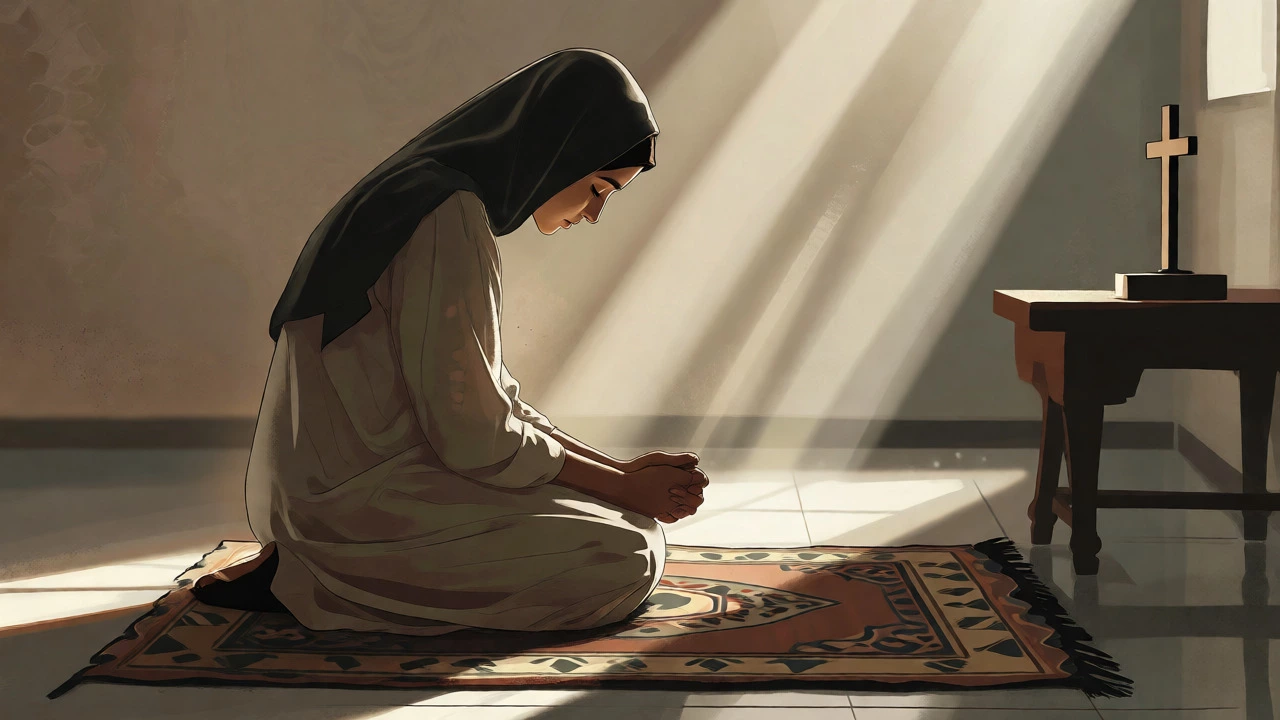
Many Christians hesitate because of Exodus 20:4-5, which warns against making graven images. Does using a rug with a mihrab count as bowing to another god? Most theologians argue no. Why? Because the rug doesn’t change who you pray to. When you kneel on a prayer rug, you aren’t praying to the rug; you are praying on the rug.
Consider this analogy: Many churches use stained glass windows depicting biblical scenes. These are visual aids. They aren’t worshipped. Similarly, a prayer rug can be viewed as a physical cue-a tactile signal that says, "It’s time to stop working and start talking to God." If your heart remains directed toward Jesus Christ, the fabric beneath your knees is neutral matter.
However, context matters. If you place a prayer rug with the Shahada (the Islamic declaration of faith) written on it in your living room, visitors might assume you are Muslim. Misunderstandings happen. Are you comfortable with that assumption? Or does it bother you? This isn’t a sin issue; it’s a wisdom issue.
Cultural Sensitivity and Respect
If you decide to use one, how you treat it matters more than whether you own it. In many Middle Eastern and South Asian cultures, feet are considered unclean. Placing a prayer rug on the floor where people walk over it casually can be seen as disrespectful by those who know its original purpose.
- Placement: Keep it in a quiet corner, not in a high-traffic hallway.
- Cleanliness: Ensure the area is vacuumed regularly. Dirt on a "sacred" mat feels wrong, even if you don’t view it as sacred.
- Orientation: Do you face East? Do you face Jerusalem? Do you face nothing? Traditional prayer rugs point to Mecca. As a Christian, you might choose to ignore the direction or repurpose the arrow to point toward a cross or simply "forward."
Respect also means acknowledging the origin. Don’t claim the rug is "Christian." Call it what it is: a beautifully woven textile adapted for your devotion. Honesty prevents cultural appropriation accusations and keeps your conscience clear.
Practical Ways to Incorporate It Into Christian Worship
So, you’ve bought the rug. Now what? Here are three ways believers actually use these mats without compromising their faith.
1. The Dedicated Quiet Time Spot
We all struggle with distraction. Phones buzz, kids scream, thoughts wander. A prayer rug creates a psychological boundary. When you step onto that specific patch of wool, your brain switches modes. It’s similar to putting on noise-canceling headphones. The rug becomes a ritual trigger for silence. You can read Scripture, journal, or simply sit in stillness before God.
2. Intercessory Prayer Stations
Some charismatic churches have adopted the concept of "prayer stations." Instead of sitting in pews, members move around the room, kneeling on different mats to pray for different topics. Using a prayer rug here emphasizes humility. Kneeling is a powerful posture of surrender in Christianity, just as it is in Islam. The rug facilitates the physical act of bowing down.
3. Aesthetic Appreciation and Hospitality
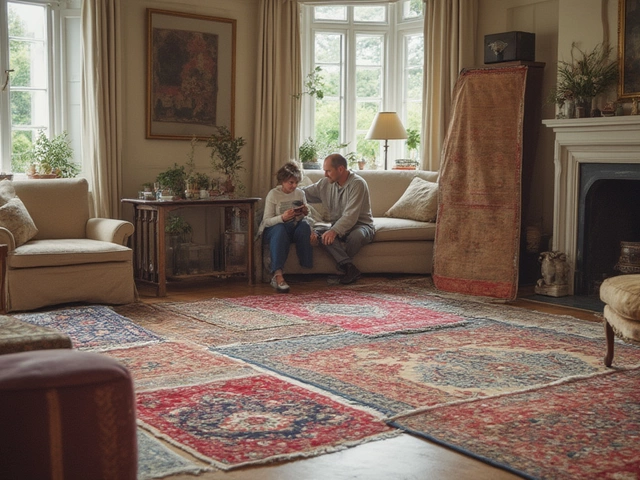
Sometimes, it’s just decor. A hand-knotted Persian rug adds warmth and history to a study. If you explain to guests, "I like the pattern," there’s no theological baggage. Just be prepared for questions. Having a ready answer helps avoid awkwardness.
| Feature | Traditional Islamic Use | Christian Adaptation | Secular/Decorative Use |
|---|---|---|---|
| Purpose | Ritual purity and direction (Qibla) | Focusing mind, marking sacred time | Aesthetics, comfort, insulation |
| Direction | Mandatory (Mecca) | Optional (East/Jerusalem/None) | Irrelevant |
| Text/Calligraphy | Quranic verses common | Avoid if unfamiliar; prefer abstract | Any design acceptable |
| Cleanliness | Strict hygiene required | General household cleanliness | Standard cleaning |
When to Avoid Using a Prayer Rug
Not everyone should run out and buy one. There are scenarios where it might cause more harm than good.
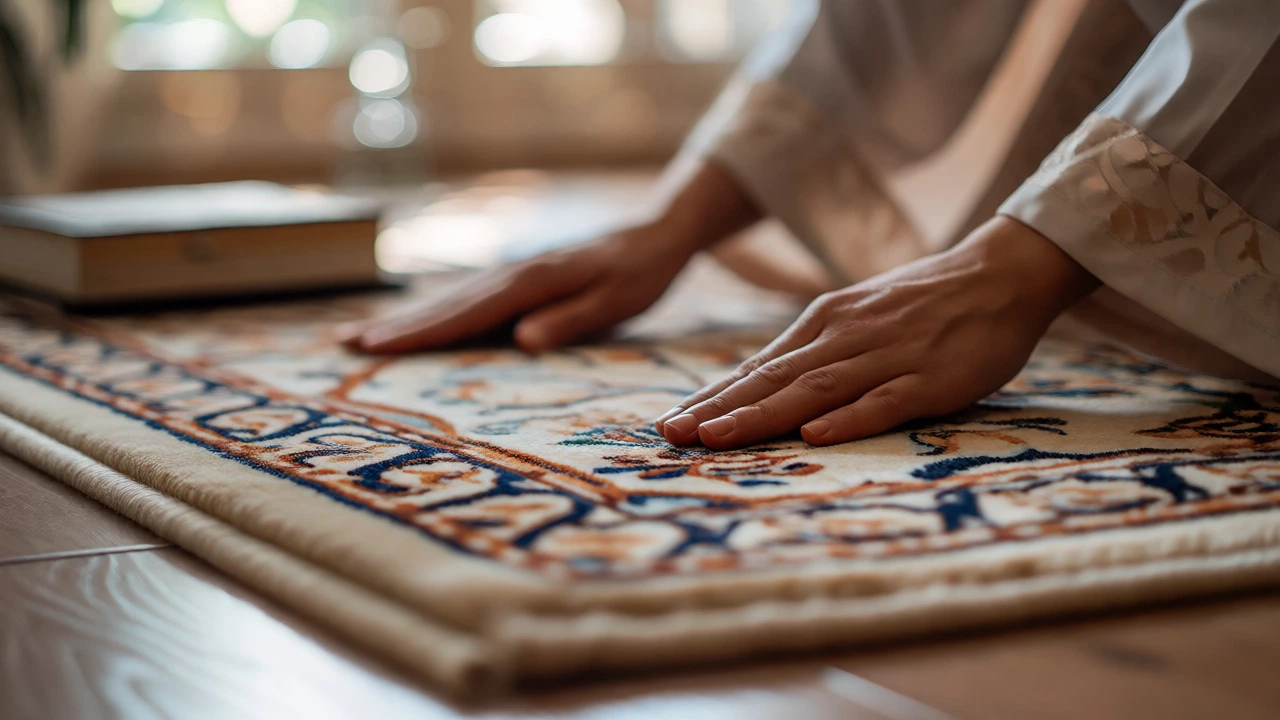
If you lack knowledge: Buying a rug with random Arabic script because it looks cool can backfire. You might accidentally display a verse about judgment or hell in your bedroom. Always check the translation if text is present. If you can’t verify it, stick to geometric or floral patterns.
If it causes stumbling blocks: Romans 14 talks about weaker brothers. If your non-Christian neighbors think you’re converting to Islam, or if your conservative church family thinks you’re syncretizing (mixing religions), consider the cost. Is the aesthetic benefit worth the social friction? Sometimes, a simple cushion serves the same purpose without the confusion.
If it replaces prayer: Never let the prop become the priority. If you spend more time dusting the rug than talking to God, you’ve missed the point. The rug is a servant, not the master.
Alternatives for Christian Devotion
If the idea of a prayer rug still feels off, there are other options that offer similar benefits without the cultural overlap.
- Devotional Cushions: Simple velvet or linen cushions placed in a corner. No directional markers, no foreign script.
- Prayer Shawls: Often made of soft knit, these wrap around the shoulders, providing warmth and a sense of being held while praying.
- Bible Study Mats: Specifically designed for open-air worship or camping, these are usually secular in design but functional in purpose.
Ultimately, freedom is yours. Paul wrote, "All things are lawful for me, but not all things are helpful" (1 Corinthians 6:12). Ask yourself: Does this rug help me draw closer to Jesus? Does it honor my neighbor? If yes, lay it down and kneel.
Is it sinful to use a prayer rug?
No, it is generally not considered sinful. Sin involves the heart's intent. If you use the rug merely as a comfortable place to kneel and focus on Christ, without worshipping the object itself, it is permissible. However, if you believe the rug has inherent spiritual power independent of God, that could border on superstition.
Do I have to face Mecca when using a prayer rug?
No. Facing Mecca is a requirement in Islamic prayer (Salah). For Christians, direction is symbolic rather than mandatory. Many Christians face East (symbolizing the return of Christ) or Jerusalem, while others simply face forward. You can rotate the rug so the mihrab points in whatever direction feels spiritually significant to you.
What if the rug has Arabic writing on it?
Be cautious. Arabic text on prayer rugs often includes verses from the Quran. While not inherently offensive, having Islamic scripture in a Christian home might confuse guests or contradict your beliefs depending on the verse. If you cannot translate the text, choose a rug with only geometric patterns or floral designs to avoid unintended messages.
Can I use a prayer rug for meditation?
Yes. Many Christians practice contemplative prayer or Lectio Divina, which shares similarities with meditative postures. A prayer rug provides a stable, clean, and psychologically distinct space for this kind of silent reflection on God's word.
Where can I buy a prayer rug suitable for Christians?
You can find them in Islamic bookstores, global online retailers like Amazon or Etsy, and specialty rug shops. Look for keywords like "hand-knotted," "wool," and "geometric pattern" to avoid heavy religious iconography if you prefer a neutral look.