Mirror Honesty Checker
Adjust the settings below to simulate different mirror environments and see how they impact your visual perception based on optical science.
You walk into a friend’s bathroom, glance at the mirror, and panic. Is that really you? The skin looks tired, the face seems wider, or maybe your eyes look smaller than they do at home. Then you get back to your own hallway mirror, and suddenly, you look fine again. What is going on here? Are you actually changing shape every time you cross a threshold? No. You are falling victim to one of the most common optical illusions in daily life: inconsistent mirror reflection conditions.
It feels personal, but it is purely physics and biology. Your brain has a specific image of what you look like, built from years of seeing yourself in specific lights and angles. When a new environment disrupts those variables, your perception crashes. Let’s break down exactly why some mirrors make you look worse, so you can stop trusting the bad ones and start using them as data points instead.
The Lighting Trap: Shadows vs. Flatness
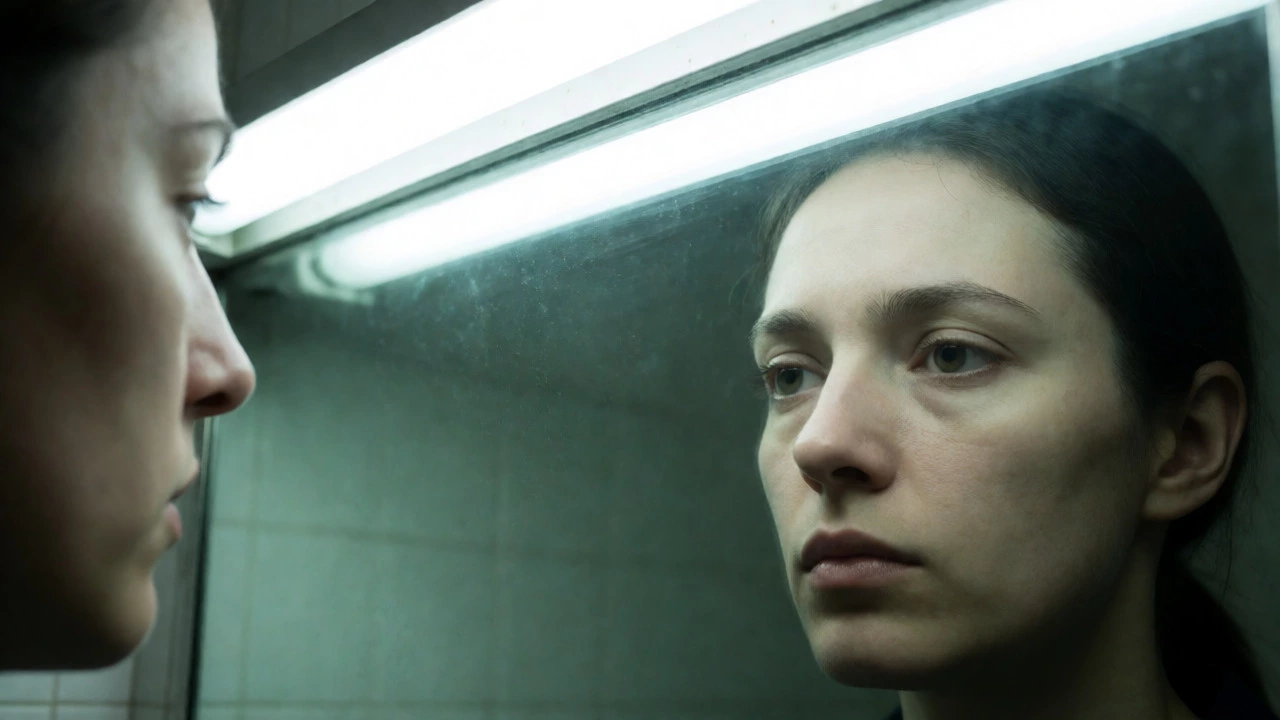
The biggest culprit isn’t the glass; it’s the light hitting it. Most people don’t realize how much lighting dictates our appearance. Think about the last time you looked terrible in a public restroom. Chances are, there was a single fluorescent tube directly above your head. This creates harsh downward shadows that hollow out your eye sockets, emphasize nasolabial folds (those lines running from nose to mouth), and cast dark patches under your cheekbones. It makes everyone look gaunt and aged.
Compare this to natural daylight coming from a window in front of you. Frontal lighting fills in shadows, softens texture, and gives skin a more even tone. If you want to know if a mirror is lying to you, check the light source first. If the light is behind you, casting your shadow onto the glass, you will see less detail and often look better because imperfections are hidden in the dark. If the light is overhead, you are getting an unflattering, high-contrast view that rarely matches reality.
Mirror Curvature and Distortion
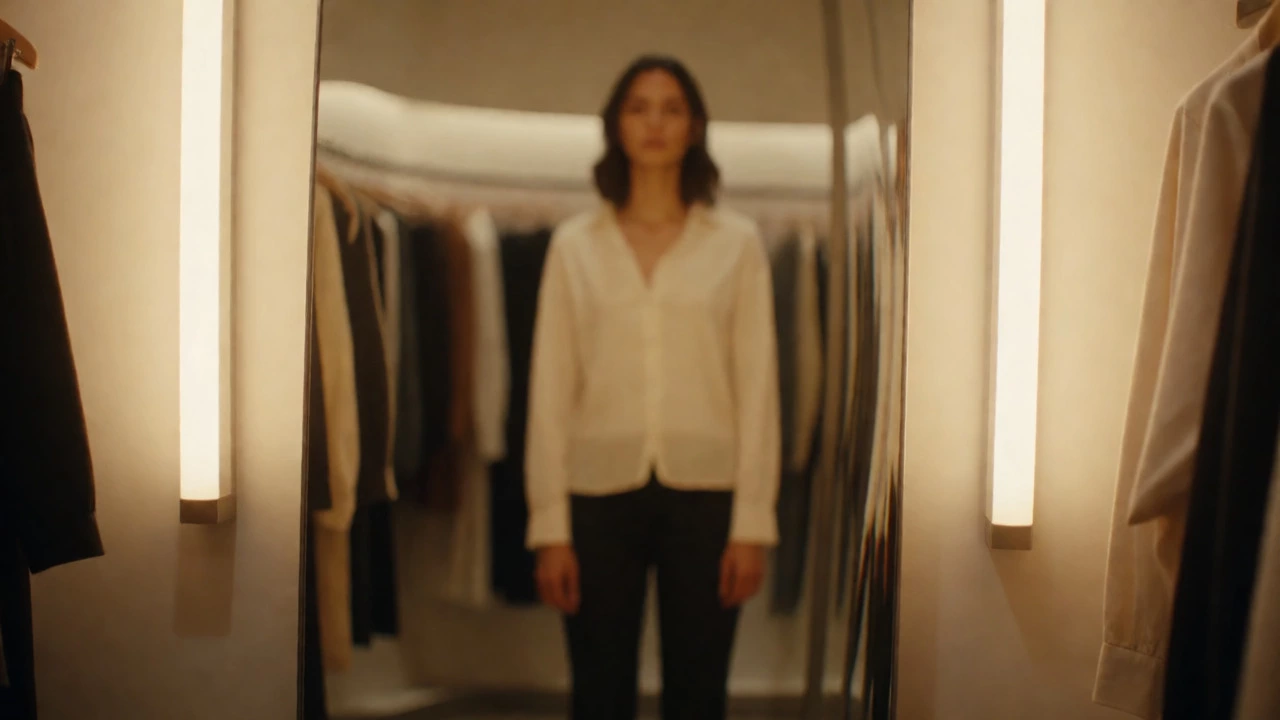
Not all mirrors are flat. In fact, many cheap or decorative mirrors have slight curves, known as cylindrical distortion. A mirror that curves slightly inward (concave) acts like a magnifying glass. It stretches your vertical dimensions, making you look taller and thinner. This is why dressing rooms in clothing stores are notorious for making people feel great. The mirrors are often tilted slightly forward and curved to elongate the torso.
Conversely, a convex mirror bulges outward. This pushes your face closer to the viewer visually, widening features. Security mirrors in shops use this principle to show a wide angle, but if you stand too close to a slightly convex bathroom mirror, your nose might look larger, and your cheeks broader. Even a tiny deviation from perfect flatness-just a few millimeters over a meter-can distort facial proportions enough to trigger that "something looks off" feeling. High-quality silvered glass is essential for true-to-life reflections, but budget options often skip the precision grinding process.
The Mere Exposure Effect and Familiarity
Here is where psychology kicks in. You spend more time looking at yourself in your own bathroom mirror than anywhere else. That mirror likely has specific lighting, a specific height, and a specific distance. Your brain has memorized this version of you. This is called the mere-exposure effect, a psychological phenomenon where people tend to develop a preference for things merely because they are familiar with them.
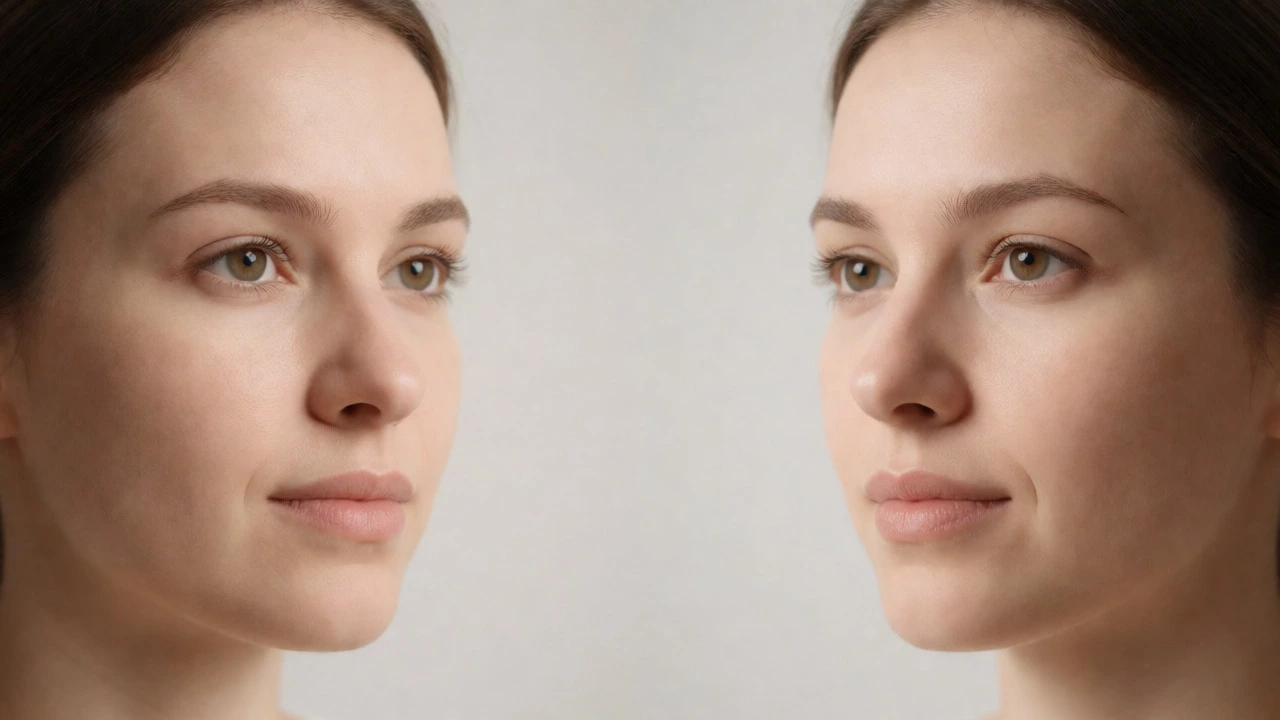
When you encounter a different mirror, especially one that flips your image horizontally (which all plane mirrors do relative to how others see you), your brain flags it as "wrong." We are not perfectly symmetrical. One eyebrow might be higher, or one side of the jaw stronger. You are used to seeing your asymmetry reversed. Seeing it corrected (as it appears in photos taken by others) can feel jarring and unattractive because it breaks your internal model. It’s not that you look worse; it’s that you look unfamiliar.
Glass Quality and Tint
Have you ever noticed that some mirrors give everything a greenish hue? That is due to the iron content in standard float glass. Cheaper mirrors reflect light through layers of silver and paint, filtering out red wavelengths and boosting green/blue tones. This cool tint can wash out warm skin tones, making you look pale or sickly.
High-end mirrors use low-iron glass, which is clearer and reflects colors more accurately. If you have fair skin with warm undertones, a low-iron mirror will make you look healthy. A standard iron-rich mirror might make you look gray. This subtle color shift affects how we perceive vitality. We associate ruddy, warm tones with health, so when a mirror strips that warmth away, we interpret the result as "looking bad," even though our actual complexion hasn’t changed.
Distance and Perspective
Where you stand matters more than you think. Optical perspective changes how facial features appear based on distance. Stand very close to a mirror, and your nose-the part closest to the glass-appears disproportionately large compared to your ears and forehead. This is called foreshortening. Step back two meters, and your face flattens out, looking more proportional.
Most people brush their teeth standing about 30-50 centimeters from the sink. At this range, any lens distortion or curvature is exaggerated. Public restrooms often require you to stand further back, changing the perspective entirely. If you compare a close-up selfie-style view to a mid-range view, they are fundamentally different images. Trusting the close-up view as the "real" you is a mistake; it is just a distorted macro shot.
How to Test Your Mirror’s Honesty
If you are worried that your daily mirror is lying to you, run these quick checks:
- The Straight Line Test: Place a straight ruler against the mirror surface. Look at the reflection of the ruler. If it bends or wavers, the glass is warped.
- The Light Check: Turn off overhead lights and rely solely on frontal natural light. Does your face still look the same? If yes, your issue was lighting, not the mirror.
- The Photo Comparison: Take a photo in the mirror using your phone’s rear camera (not the selfie camera). Compare this to a photo taken by someone else facing you. If they look radically different, the mirror’s angle or curvature is skewing your self-image.
| Variable | Common Scenario | Visual Result | Perception Bias |
|---|---|---|---|
| Lighting Angle | Overhead Fluorescent | Deep shadows, hollow eyes | Aging/Fatigue |
| Lighting Angle | Frontal Natural Daylight | Even tone, minimal shadows | Accuracy/Vitality |
| Glass Type | Standard Float Glass | Slight green tint | Pale/Sickly Appearance |
| Glass Type | Low-Iron Glass | True color reflection | Natural Skin Tone |
| Curvature | Concave (Dressing Room) | Vertical stretch | Taller/Thinner Illusion |
| Distance | < 50cm | Nose enlargement | Feature Distortion |
Related Concepts: Understanding Perception
To fully grasp why mirrors confuse us, it helps to understand related concepts in optics and psychology. Facial symmetry plays a huge role in attractiveness ratings, yet no human face is perfectly symmetrical. Mirrors flip left and right, presenting a mirrored asymmetry that differs from the asymmetry others see. This mismatch causes cognitive dissonance.
Additionally, color temperature (measured in Kelvin) affects how skin reads. Warm light (2700K-3000K) flatters most skin tones by adding golden hues. Cool light (4000K-6000K) can be clinical and harsh. Knowing this allows you to curate your own space. If you install a mirror with integrated LED lighting set to 3000K, you create a consistent, flattering baseline that reduces the shock of external environments.
Frequently Asked Questions
Why do I look thinner in dressing room mirrors?
Dressing room mirrors are often slightly concave and tilted backward. This geometry stretches your vertical image, making you appear taller and leaner. Combined with flattering, diffuse lighting that hides body contours, it creates an idealized version of your physique that doesn't match reality.
Is my reflection in the mirror what others see?
No. A mirror reverses your image horizontally. Since human faces are not perfectly symmetrical, the version of you that others see is actually the reverse of what you are accustomed to seeing. This is why photos of yourself often feel "off"-they show your true orientation, which is unfamiliar to your brain.
Does mirror quality affect how old I look?
Yes. Poor quality mirrors with waviness can exaggerate skin texture and wrinkles. Additionally, harsh overhead lighting combined with a clear but unforgiving mirror will highlight pores and fine lines that softer, lower-resolution reflections might blur out.
What is the best lighting for a vanity mirror?
The best setup involves vertical lights on both sides of the mirror at eye level. This provides even, frontal illumination that eliminates harsh shadows under the eyes and chin. Aim for a color temperature between 2700K and 3000K for a warm, flattering glow.
Why do I look good in some photos but bad in mirrors?
Photos capture a frozen moment from a third-person perspective, often using lenses that flatten facial features depending on focal length. Mirrors provide dynamic feedback. Sometimes, the static nature of a photo hides micro-expressions or awkward angles that you catch in real-time while moving in a mirror.