When you’re shopping for a new sofa, one of the first questions you’ll ask is: what is the most popular sofa size? It’s not just about style or fabric-it’s about fitting your space, your lifestyle, and your daily routines. The truth is, there’s no single answer that works for everyone, but there’s one size that dominates homes across North America, Europe, and Australasia. And it’s not the giant sectional you see in showrooms.
The Standard Three-Seater Is the Winner
The most popular sofa size is the standard three-seater, typically measuring between 78 and 90 inches (200-230 cm) wide. This size shows up in about 65% of living rooms in the U.S., Canada, the UK, and Australia, according to furniture sales data from 2024. Why? Because it strikes the perfect balance. It’s big enough to seat three adults comfortably, but small enough to leave room for movement, side tables, and a coffee table without crowding the space.
Most manufacturers design their entry-level and mid-range sofas around this dimension. Brands like IKEA, Ashley Furniture, and West Elm all list their best-selling models in this range. For example, IKEA’s KIVIK sofa is 86 inches wide. Ashley’s Clive collection tops out at 88 inches. These aren’t accidents-they’re calculated choices based on real-world usage.
Why This Size Works for Most Homes
Modern homes aren’t getting bigger. In fact, the average new home in the U.S. shrank by 5% between 2019 and 2024. The same trend is true in New Zealand, the UK, and parts of Australia. People are choosing smaller, more efficient layouts. That means furniture has to adapt.
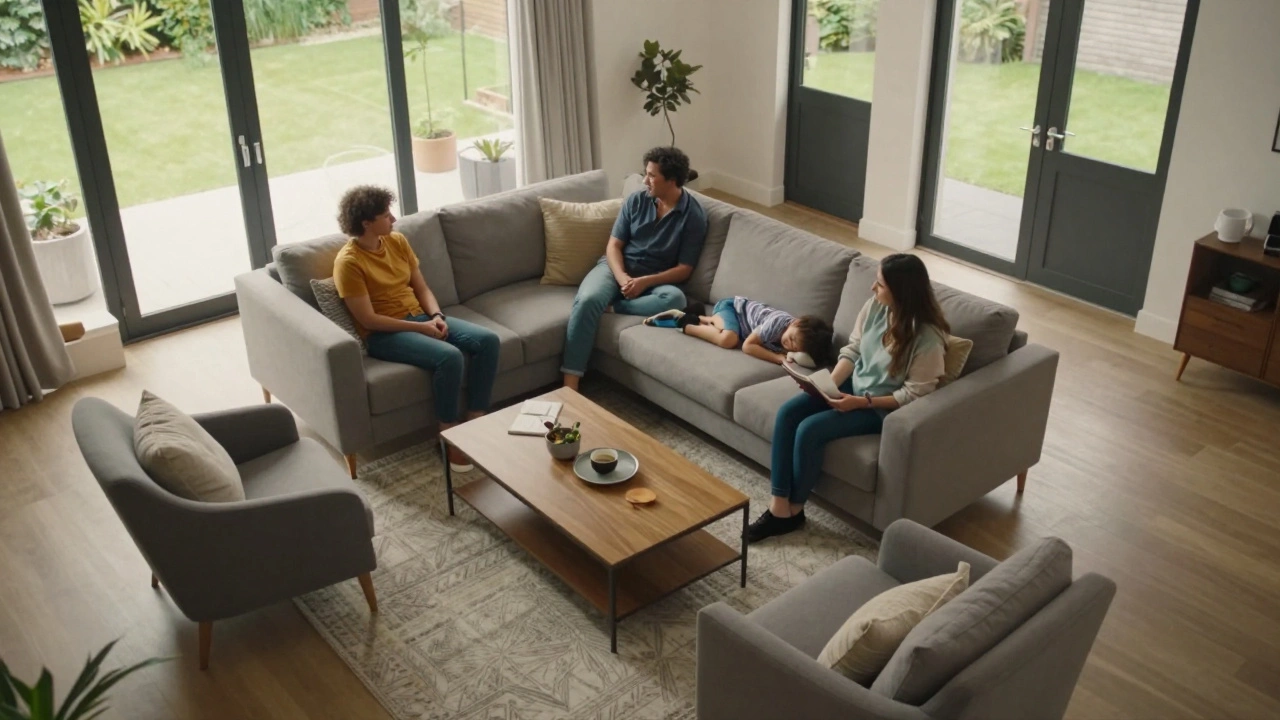
A 78-90 inch sofa fits well in rooms that are 12x14 feet or larger. It leaves 24-30 inches of walking space on either side, which is the minimum recommended by interior designers. That space lets you pull out chairs, walk to the kitchen, or open a door without bumping into the sofa. It also leaves room for a rug that extends under the front legs-something that visually anchors the space.
It’s also the right size for families. Two adults and one child can sit together without feeling squished. A teenager can stretch out with a blanket. A pet can curl up at the end. And if you have guests, you can still tuck in two more on armchairs or a loveseat without turning your living room into a packed subway car.
What About Larger Sofas?
You’ll see plenty of 96-inch or even 108-inch sofas advertised as “luxury” or “sectional.” But these aren’t the most popular-they’re the most visible. They dominate Instagram feeds and showroom floors because they look impressive. In reality, they’re harder to move, harder to clean, and often too big for the average living room.
A 96-inch sofa needs at least a 14x16 foot room to feel comfortable. That’s not common in older homes or urban apartments. In Wellington, where many homes were built in the 1970s and 80s, a sofa longer than 88 inches often blocks doorways or forces you to remove a window seat or fireplace surround. And if you live in a rental? Moving a 120-pound sectional up three flights of stairs isn’t worth the hassle.
Also, bigger doesn’t mean better. A 96-inch sofa might have three deep cushions, but if you’re only using the middle third, you’re paying for wasted space. And those extra cushions? They collect crumbs, socks, and dog hair like a magnet.
What About Smaller Sofas?
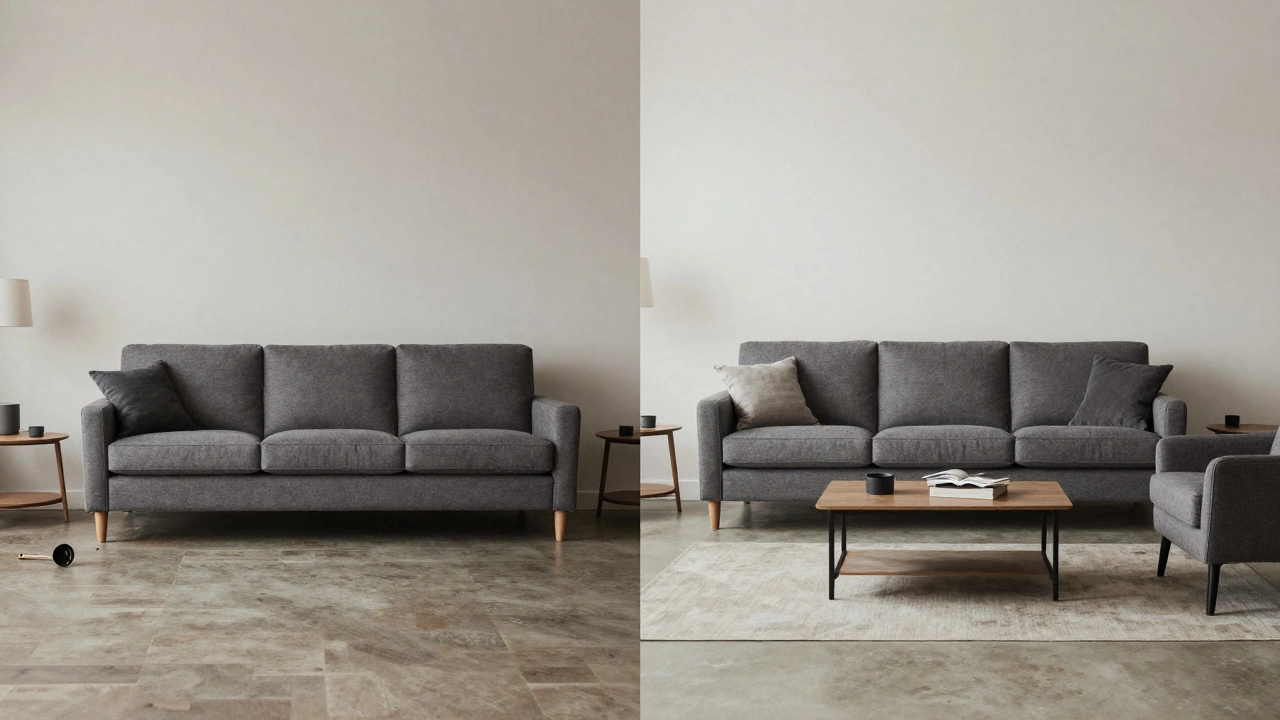
Then there’s the loveseat. Usually 48-64 inches wide. It’s popular in studios, tiny homes, and second living rooms. But it’s not the most popular overall. It’s the *second* most popular. In fact, in cities like Auckland, Wellington, and Christchurch, about 18% of sofa buyers choose a loveseat. That’s a solid chunk-but still less than half the number of people who pick the three-seater.
Why? Because most people don’t just want to sit. They want to host. They want to watch movies with friends. They want space for a guest to crash on a weekend. A loveseat works great if you’re single, or if you’re pairing it with a recliner or two armchairs. But as a standalone piece? It often feels empty, underused, or just… small.
Depth Matters Too
Width isn’t the only thing that counts. Depth-the measurement from the front edge to the back-plays a huge role in comfort. The most popular depth for standard three-seaters is between 35 and 38 inches. Anything under 32 inches feels too upright, like a chair you can’t sink into. Anything over 40 inches is great for lounging… if you’re tall. For shorter people, it’s like sitting in a trench.
Look for sofas with a seat height of 17-19 inches. That’s the sweet spot for getting in and out without straining your knees. And if you’re buying online? Check the arm height. If it’s lower than 22 inches, you’ll struggle to rest your arms comfortably. Most people don’t think about this until they’re sitting on it, then realize their elbows are dangling in midair.
How to Measure Your Space
Before you buy anything, measure your doorways, hallways, and stairwells. A sofa that fits perfectly in your living room might get stuck in your hallway. Many people don’t realize this until they’ve already paid for delivery.
Here’s a simple rule: your sofa should be at least 6 inches shorter than the narrowest doorway. That’s because you’ll need to tilt it, and sometimes turn it sideways. Also, measure the diagonal depth. A sofa might be 88 inches wide, but if the back is 40 inches deep, the diagonal could be over 95 inches. That’s too big for many staircases.
Use a tape measure. Take photos. Bring a friend. Don’t guess. If you’re buying from a local store, ask if they offer a delivery measurement check. Many do-for free.
What’s the Best Sofa Size for You?
Here’s a quick guide:
- Small space (under 12x12 ft): Go with a 60-72 inch sofa. Pair it with a floor lamp and a side table. Avoid deep cushions.
- Standard living room (12x14 ft to 14x18 ft): Stick with 78-90 inches. This is the sweet spot for most families.
- Large open-plan space (16x20 ft or more): You can go bigger. But consider two smaller sofas or a modular setup instead of one giant piece.
- Studio or apartment: A 64-inch sofa with a chaise or ottoman gives you flexibility without taking over the room.
Also think about your habits. Do you nap on the couch? Then prioritize depth over width. Do you have kids or pets? Then go for stain-resistant fabric and a lower backrest so you can easily reach things. Do you host movie nights? Then make sure the sofa isn’t too deep-otherwise, you’ll be leaning forward the whole time.
Final Takeaway
The most popular sofa size isn’t the biggest, the flashiest, or the most expensive. It’s the one that just works. The 78-90 inch three-seater. It’s the quiet hero of living rooms everywhere. It’s not about trends. It’s about function. About comfort. About not having to rearrange your whole house just to fit in a couch.
If you’re unsure, start here: measure your space. Know your doorways. Think about how you live. And choose the size that fits your life-not your Pinterest board.
Is a 78-inch sofa too small for a family of four?
No, a 78-inch sofa is perfectly fine for a family of four. Most families don’t sit on the sofa all at once. Typically, two adults sit on the sofa, and two children sit on the floor, on a rug, or on a nearby chair. The sofa’s job isn’t to seat everyone-it’s to be the central seating spot. Add two armchairs or a loveseat, and you’ve got plenty of room.
Can I fit a 90-inch sofa in a 10x12 foot room?
Technically, yes-but it will feel cramped. A 10x12 foot room is 120 square feet. A 90-inch sofa takes up nearly 7.5 feet of wall space. That leaves only 2.5 feet on each side for walking space, which is below the recommended 3 feet. You’ll likely need to remove side tables or a lamp. If you’re okay with a tight, cozy feel, it works. If you want breathing room, go with a 78-inch sofa instead.
What’s the difference between a sofa and a couch?
There’s no technical difference. The terms are used interchangeably. Some people use “sofa” to describe more formal, structured seating, and “couch” for casual, relaxed styles-but that’s not a rule. When shopping, focus on dimensions and comfort, not the label.
Should I buy a sofa with a chaise?
Only if you have the space and the need. A chaise adds 24-36 inches to the total length, which can make it harder to fit in smaller rooms. But if you’re tall, love to stretch out, or have a long, narrow living area, a chaise can be ideal. Just make sure you can still walk around it and open doors.
Are sectional sofas popular?
Sectionals are popular in large homes and open-plan living areas, but they’re not the most popular overall. They’re harder to move, harder to clean, and often don’t fit well in older homes. Most buyers who start with a sectional end up replacing it within 3-5 years because it doesn’t suit their actual lifestyle. Stick with a standard three-seater unless you have a very large, open space.