Sofa Comfort Estimator
Enter your details to see your personalized sofa recommendations.
You’ve probably had that moment. You walk into a showroom, spot a gorgeous sofa a upholstered furniture piece for multiple people to sit on, and think, "That’s the one." But five minutes later, your lower back is screaming, or you’re sliding off because the seat is too shallow. Comfort isn’t just about looks; it’s engineering. It’s the sweet spot between cushion density, frame rigidity, and how your body actually fits into the space. If you’re hunting for the most comfortable sofa, stop looking at photos and start thinking about physics.
The Myth of One-Size-Fits-All Comfort
Here’s the hard truth: there is no single "most comfortable" sofa in existence. Why? Because human bodies vary wildly. A 5’2” person with short legs needs different support than a 6’4” person with long limbs. Comfort is subjective, but it’s also predictable if you know what to look for. Think of it like buying shoes. You wouldn’t buy running sneakers for hiking, right? Same logic applies here. The most comfortable sofa is the one that aligns with your specific posture habits, sitting duration, and body mechanics.
Most people confuse "soft" with "comfortable." They aren’t the same thing. A cloud-like couch feels great for ten minutes, then sinks so deep you can’t get up without help. That’s not comfort; that’s quicksand. True comfort provides support while allowing relaxation. It keeps your spine aligned whether you’re reading, watching TV, or napping. To find it, you need to dissect the three main components: the seat depth, the cushion firmness, and the back support.
Seat Depth: The Hidden Dealbreaker
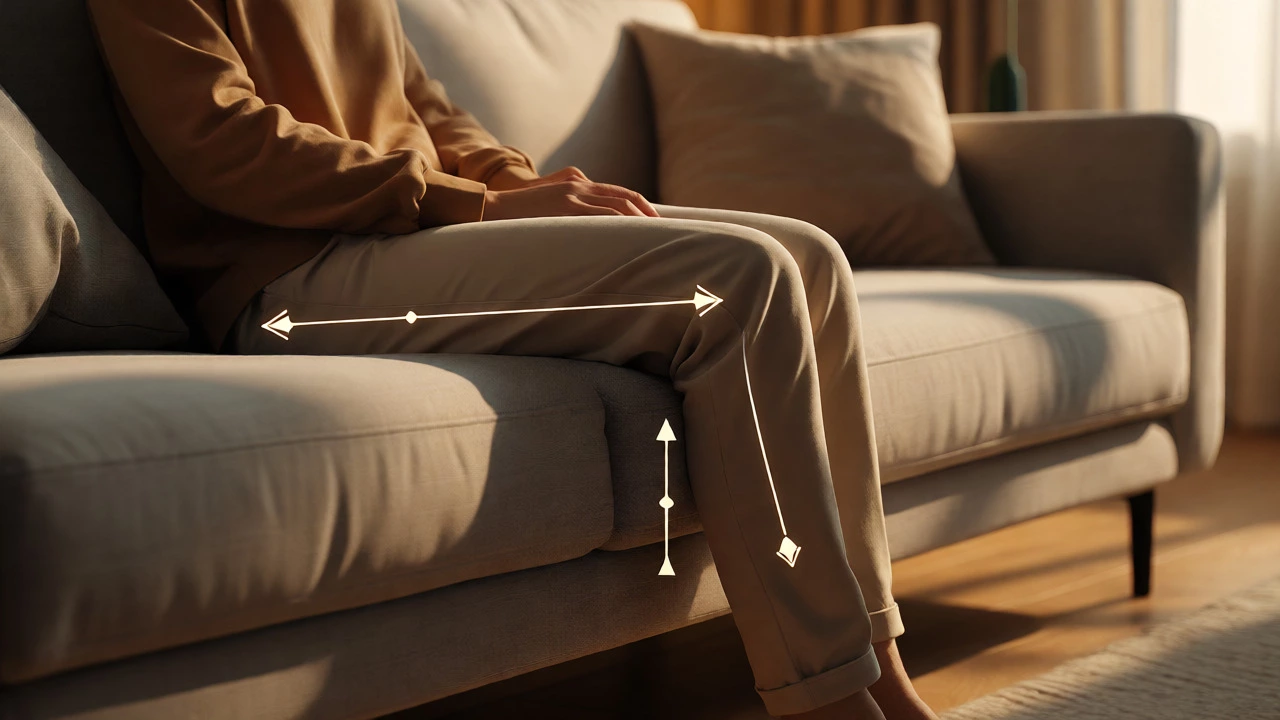
If you only check one measurement, make it this one. Seat depth is the distance from the front edge of the cushion to the backrest. Standard sofas usually range from 21 to 24 inches. Does that sound arbitrary? It shouldn’t be. If the depth is too shallow (under 20 inches), your knees will hit the backrest, forcing you to sit upright like you’re at a dinner party. Uncomfortable for lounging. If it’s too deep (over 25 inches), you’ll have to slouch or lean forward to keep your head against the pillow, straining your neck.
How do you measure yours? Sit in your current chair or bed. Measure from the front of your knee to the back of your calf. Add about 2-3 inches for clearance. That’s your ideal seat depth. For example, I’m 5’7” with average leg length. My sweet spot is 22 inches. Anything deeper makes me feel like I’m sinking into a hole. If you’re taller, you might need 24-26 inches. Some manufacturers offer "deep-seat" models specifically for taller frames. Don’t guess-measure.
| Person's Height | Ideal Seat Depth | Sitting Style |
|---|---|---|
| Under 5'4" | 20-21 inches | Upright, feet flat on floor |
| 5'4" - 5'9" | 22-23 inches | Relaxed, slight recline |
| Over 5'9" | 24-26 inches | Lounged, legs extended |
Cushion Fill: Density Over Softness
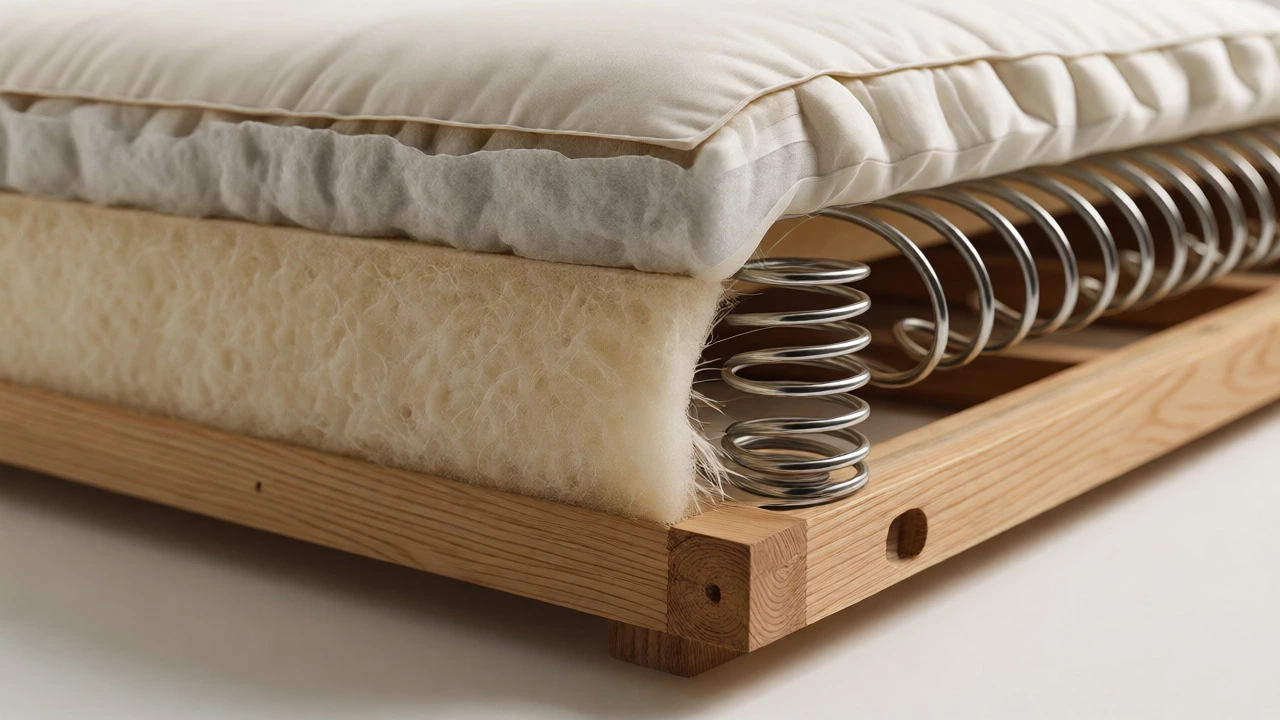
Once you’ve nailed the dimensions, look inside the cushions. This is where most budget sofas fail. Cheap foam breaks down within two years, turning into lumpy rocks. High-density foam lasts longer and holds its shape. When shopping, ask about the foam density rating. It’s measured in pounds per cubic foot. For seat cushions, you want at least 1.8 lbs/ft³. Below that, you’re asking for trouble. Back cushions can be softer, around 1.5 lbs/ft³, because they don’t bear as much weight.
Then there’s the wrapping material. Pure foam can feel clinical and stiff. Manufacturers often wrap foam in feather, down, or polyester fiber to add a layer of plushness. Here’s the trade-off: feather-wrapped cushions feel luxurious initially but require constant fluffing. If you hate maintenance, go for high-resilience foam with a thin polyester wrap. It stays plump without daily intervention. Down-alternative fibers are a good middle ground-they mimic the softness of feathers without the allergy risks or the collapse factor.
Back Support and Ergonomics
Your lumbar region-the small of your back-is the engine room of comfort. If a sofa doesn’t support your lower spine, you’ll end up shifting positions every five minutes. Look for sofas with adjustable headrests or built-in lumbar pillows. These aren’t just decorative; they fill the gap between your back and the frame. Without that support, your pelvis tilts backward, rounding your spine into a C-shape. Bad news for your discs.
Consider how you use the sofa. Do you watch movies with friends? You need consistent back height across all seats. Do you read alone? A chaise lounge with an angled back might suit you better. Sectionals often have varied depths, which can be a pro or a con depending on your flexibility. Test the angle. A slight recline of 10-15 degrees is generally more relaxing than a rigid 90-degree upright position. It reduces pressure on your hips and allows your muscles to relax naturally.
Frame Construction: The Silent Hero
You can’t see the frame, but you can feel it. A wobbly frame ruins even the best cushions. Hardwood frames (oak, maple, ash) are the gold standard. They resist warping and last decades. Particleboard or plywood frames are cheaper but sag over time, especially under heavy use. Check the joinery. Staples and glue are weak points. Look for dowels, screws, and corner blocks glued and screwed together. This ensures the sofa doesn’t creak when you shift your weight.
Suspension systems matter too. Traditional eight-way hand-tied springs provide excellent bounce and durability but are expensive. Sinuous springs (S-shaped metal wires) are common in mid-range sofas. They work well if spaced correctly (no more than 6 inches apart). Webbing is the cheapest option-it’s just fabric stretched across the frame. It sags quickly unless reinforced with high-quality elastic. If you plan to use the sofa daily, skip webbing. Your back will thank you.

Testing Like a Pro: What to Do in the Store
Don’t just sit politely. Get on the sofa. Lie down. Cross your legs. Slouch. Spend at least 15 minutes in each position. Bring a friend if possible-they can spot issues you miss, like a visible dip in the cushion or a loose joint. Ask yourself these questions:
- Can I stand up easily without using my hands?
- Does my lower back feel supported when I lean back?
- Are my feet flat on the floor, or are they dangling?
- Do the arms interfere with my ability to lie down fully?
If the answer to any of these is "no," move on. Discomfort won’t improve with break-in time. In fact, many materials degrade, making things worse. Remember, you’re investing in thousands of hours of sitting. A few minutes of rigorous testing now saves years of regret later.
Fabric Choice: Texture and Temperature
Comfort isn’t just structural; it’s tactile. Fabric affects how hot or cool you feel. Leather is durable and easy to clean but can feel sticky in summer and cold in winter. Microfiber is soft and pet-friendly but traps heat. Linen breathes well and feels cool but wrinkles easily and stains faster. Velvet is lush and cozy but shows fingerprints and requires careful cleaning.
If you live in a warm climate, opt for natural fibers like cotton or linen blends. They allow air circulation. In colder regions, wool or heavy velvet adds warmth. Consider performance fabrics if you have kids or pets. Brands like Crypton or Sunbrella offer stain-resistant options that don’t compromise texture. Touch the fabric. Rub it against your skin. Does it itch? Is it too rough? Trust your fingers. They’ll tell you more than any spec sheet.
Budget vs. Longevity: Where to Spend
You don’t need to spend $5,000 to get comfort. But you do need to spend wisely. Allocate your budget strategically. Prioritize the frame and suspension system. Those are the hardest to fix later. Cushions can be replaced or topped up with inserts. Upholstery can be changed. But a broken frame means a new sofa. Aim for mid-range pricing ($1,500-$3,000) for the best balance of quality and value. Luxury brands often charge for design heritage, not necessarily superior ergonomics.
Watch out for "display model" discounts. Sometimes, the savings aren’t worth the wear. However, open-box deals from reputable retailers can be gems. Just inspect them thoroughly. Check for sagging, loose stitching, or odor. If the price is too good to be true, it usually is. Invest in quality where it counts, and save on decorative elements like throw pillows.
Is a firm sofa more comfortable than a soft one?
Not necessarily. Firm sofas provide better spinal support and last longer, but they can feel harsh if you prefer lounging. Soft sofas feel cozy initially but may lack support, leading to back pain over time. The ideal choice depends on your body type and usage. People with back issues often benefit from firmer seating, while those who nap frequently might prefer softer cushions. Look for a medium-firm balance with high-density foam.
How long should a comfortable sofa last?
A high-quality sofa with a hardwood frame and high-density foam should last 7-10 years with regular use. Cheaper models with particleboard frames and low-density foam may sag within 2-3 years. Maintenance plays a huge role; rotating cushions and vacuuming regularly extends lifespan. If you notice permanent indentations or creaking, it’s time for replacement or repair.
Can I make my existing sofa more comfortable?
Yes. Start by adding lumbar support pillows to fill the lower back gap. Replace old cushions with higher-density foam inserts. Use a non-slip mat under cushions to prevent sliding. Add a throw blanket for extra padding. If the frame is solid but the seat is sagging, consider professional reupholstering or adding a supportive board underneath the cushions. These tweaks cost far less than buying a new sofa.
What is the best sofa style for small apartments?
Loveseats and apartment-sized sofas (typically 60-70 inches wide) are ideal. Look for raised legs to create a sense of openness. Modular sectionals offer flexibility-you can configure them to fit odd corners. Avoid bulky arms; track arms or exposed wood frames take up less visual space. Ensure the depth still meets your ergonomic needs, even if the width is reduced.
Do leather sofas get uncomfortable?
Leather can feel sticky in humid weather and cold in winter. However, high-quality top-grain leather softens with age and adapts to body temperature. To mitigate discomfort, use breathable throws or choose perforated leather styles. Regular conditioning prevents cracking and maintains suppleness. If you dislike the temperature sensitivity, faux leather or microfiber offers similar aesthetics with better thermal regulation.