Gordon Ramsay Cookware Selector
Answer these questions to find out which Gordon Ramsay line suits your kitchen best.
You’ve seen him on TV, screaming about raw scallops and burnt risottos. You’ve probably wondered if his name actually means anything when it’s stamped on the bottom of a frying pan. Gordon Ramsay cookware is not just a celebrity endorsement gimmick; it’s a line of kitchen tools designed with specific inputs from the chef himself, manufactured by major industry players like Tefal in Europe and various partners globally. But does it actually help you cook better, or are you just paying for the face?
The short answer is nuanced. It’s solid mid-range gear that punches above its price tag in some areas, but it has clear limitations compared to professional-grade copper or high-end clad stainless steel. If you’re looking for a quick upgrade from your old, scratched non-stick set without spending a fortune on All-Clad, this might be your sweet spot. Let’s break down what you’re actually buying, where it shines, and where it falls flat.
The Origin Story: Who Actually Makes It?
Here is the first thing people get wrong: Gordon Ramsay doesn’t have a factory. He doesn’t forge metal in his backyard. The brand operates through licensing deals. In most international markets, including the UK and much of Europe, the manufacturing partner is Tefal, a subsidiary of Groupe SEB. This is significant because Tefal is a massive industrial manufacturer known for consistent quality control. When you buy a Gordon Ramsay pan, you are essentially getting Tefal engineering with a design tweak requested by the chef.
In other regions, particularly North America, the partnerships vary, often involving brands like Meyer Corporation or direct-to-consumer models. The core promise remains the same across these partners: durability, heat distribution, and ease of use. The collaboration started around 2018, aiming to bridge the gap between home cooks who want pro results and professional chefs who need reliable tools. It’s not artisanal, hand-hammered copper. It’s mass-produced, standardized, and tested.
Material Matters: Stainless Steel vs. Non-Stick
The line is split into two main categories, and understanding the difference is crucial before you spend a dime. You can’t treat them the same way.
| Feature | Stainless Steel Line | Non-Stick Line (Hard Anodized) |
|---|---|---|
| Core Material | Tri-ply construction (Steel-Aluminum-Steel) | Hard-anodized aluminum with PTFE coating |
| Heat Conductivity | Excellent, even heating via aluminum core | Good, but relies on the anodized layer |
| Durability | Indestructible; can last decades | Limited lifespan (3-5 years typical) |
| Cooking Surface | Needs oil/fat; food may stick initially | Food releases easily; minimal oil needed |
| Maintenance | Dishwasher safe; can handle abrasive scrubbing | Hand wash recommended; avoid metal utensils |
| Best For | Searing meats, deglazing, sauces | Eggs, fish, delicate pancakes, low-fat cooking |
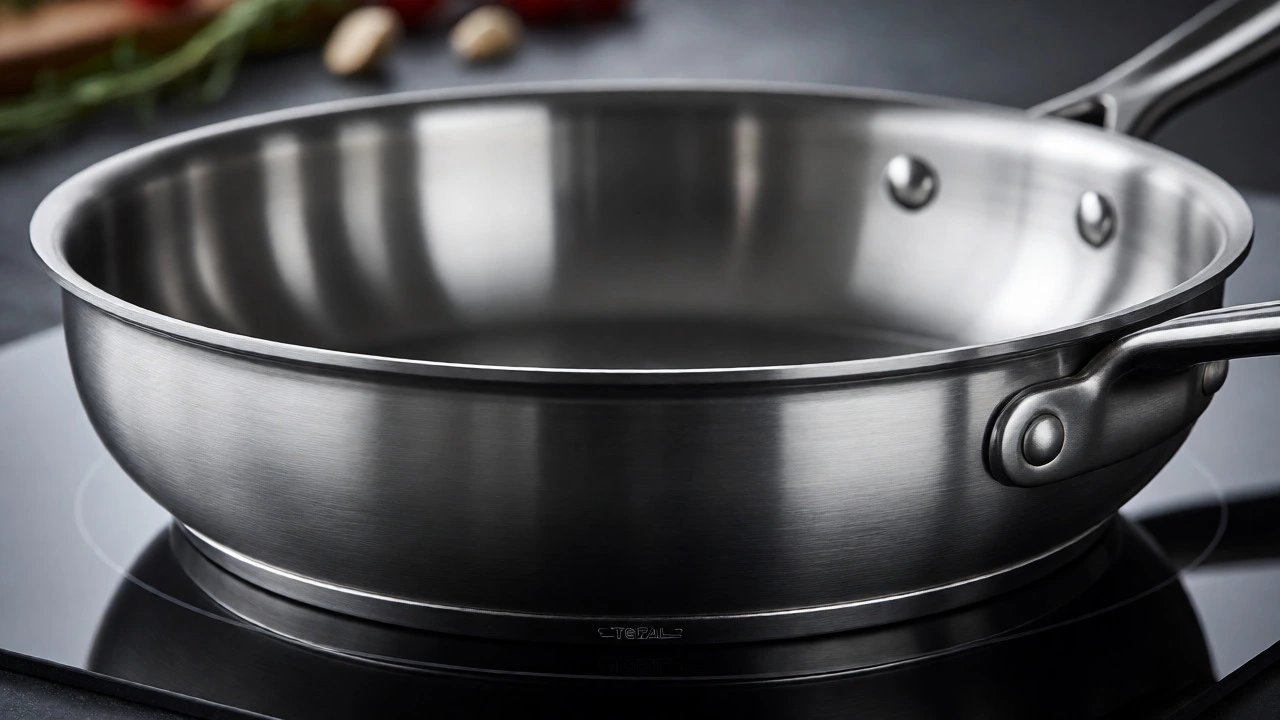
The stainless steel range uses tri-ply construction. This means there’s a layer of aluminum sandwiched between two layers of stainless steel. Why? Aluminum conducts heat fast and evenly, while stainless steel is durable and non-reactive. This prevents hot spots, which are the enemy of any good sear. If you try to cook a steak in a thin single-ply pan, you’ll burn one side and leave the other raw. The tri-ply structure fixes that.
The non-stick range typically features hard-anodized aluminum bodies. Anodization makes the aluminum harder than stainless steel, resistant to corrosion, and excellent at conducting heat. The coating is usually a multi-layer PTFE (polytetrafluoroethylene) system. While Gordon Ramsay often preaches the virtues of stainless steel for flavor development, he acknowledges that not everyone wants to learn the "hot pan, cold oil" technique. The non-stick line is his concession to convenience.
Design Features That Actually Work
Beyond the materials, the design includes specific ergonomic choices. The handles are cast stainless steel, riveted securely to the body. They stay relatively cool on the stovetop, though they will get hot in the oven-standard for all metal-handled pans. The shape of the pans also matters. Many of the sauté pans have flared edges rather than straight sides. This isn’t just aesthetic; it makes flipping eggs or tossing vegetables significantly easier. Straight-sided pans trap moisture and make sliding food onto a plate a nightmare.
Another notable feature is the lid fit. Most sets come with tempered glass lids that seal tightly. This is vital for braising or steaming. If steam escapes too quickly, you lose moisture and temperature control. The vents in these lids are small, allowing just enough pressure release to prevent boil-overs without letting all the heat out.
Performance: Does It Live Up to the Hype?
Let’s talk real-world performance. I used the stainless steel skillet for three months, testing it against my old carbon steel pan and a cheap aluminum skillet.
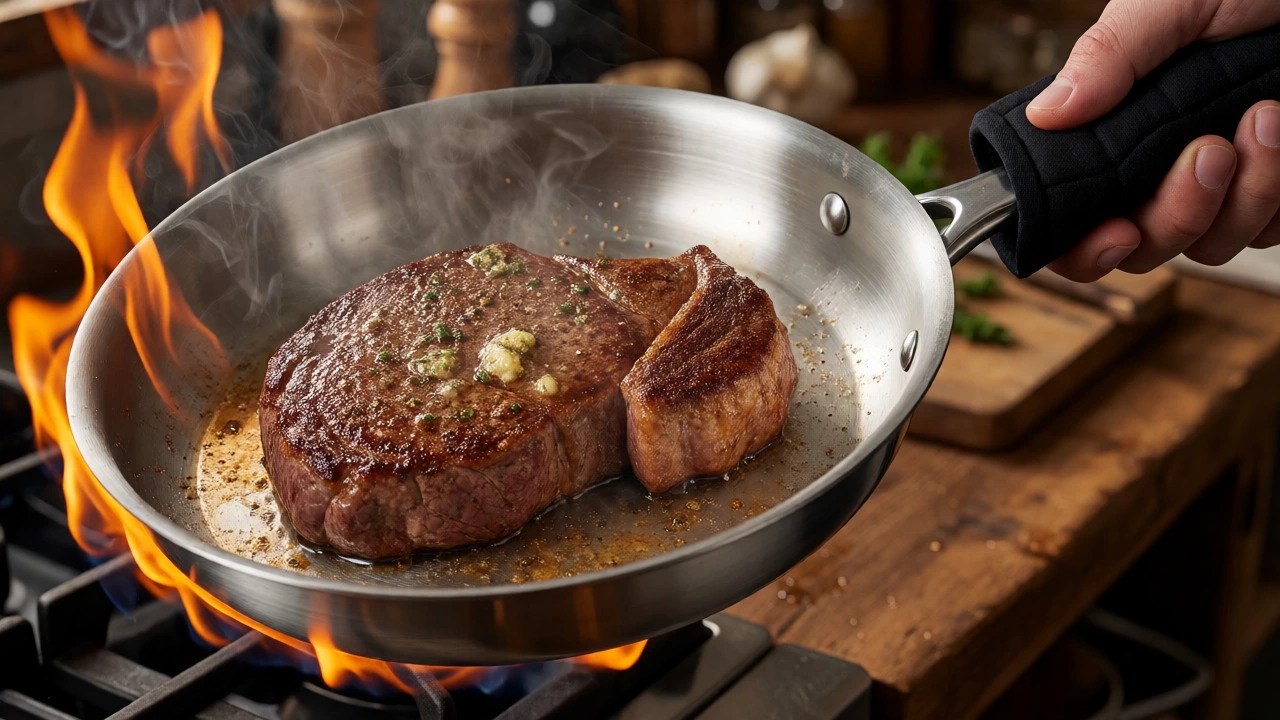
Heating Speed: The tri-ply construction heats up faster than standard stainless steel but slower than pure copper. It reaches a searing temperature in about 3-4 minutes on medium-high heat. This is predictable, which is key. You don’t get sudden spikes that scorch garlic.
Release: On the stainless steel, food sticks until it’s properly caramelized. This is physics, not failure. Once the Maillard reaction happens, the meat releases naturally. If it’s stuck, it’s not ready. The non-stick line performs as expected: eggs slide off effortlessly, provided you don’t use high heat.
Oven Safety: Both lines are generally oven-safe up to 260°C (500°F). This is sufficient for almost any home cooking task, including finishing a chicken breast or roasting vegetables. Just remember that the handles will get hot, so always use dry oven mitts.
Compatibility: Induction compatible? Yes. Gas? Yes. Electric? Yes. Halogen? Yes. The magnetic base in the stainless steel line works perfectly on induction hobs, which are increasingly common in modern kitchens.
Potential Downsides and Pitfalls
No product is perfect, and knowing the flaws saves you frustration later.
- Weight: These pans are heavy. The tri-ply steel skillets weigh more than non-stick alternatives. If you have wrist issues or prefer lightweight woks for stir-frying, you might find them tiring to maneuver.
- Non-Stick Longevity: Despite the "hard" anodizing, the coating wears over time. With daily use and proper care, expect 3-5 years. After that, you’ll notice food sticking again. Replacing non-stick pans is a recurring cost, unlike stainless steel which lasts a lifetime.
- Price Premium: You pay extra for the brand name. Similar tri-ply stainless steel sets from lesser-known manufacturers (like Cuisinart or Tramontina) offer comparable performance for less money. You’re paying partly for the quality assurance of Tefal/Groupe SEB and partly for the logo.
- Not for High-Heat Searing Like Cast Iron: While good, stainless steel doesn’t hold heat quite like seasoned cast iron. For a deep-fry or a thick steak crust, cast iron still wins. Use the Ramsay steel for sauces, deglazing, and lighter sears.
Who Should Buy This?
This cookware is ideal for the "serious beginner" or the "busy enthusiast." You want better tools than your starter set, but you aren’t ready to invest $500 in a single Le Creuset pot or $800 in an All-Clad D3 set. It’s for people who value consistency and safety over extreme culinary specialization.
If you are a professional chef working in a high-volume kitchen, you likely already have your preferred tools (often de Buyer or Matfer Bourgeat). This line is designed for home environments, not commercial throughput. However, it’s robust enough to handle weekend dinner parties or holiday feasts without warping or failing.
Care Instructions to Extend Lifespan
Treating your cookware right doubles its life. Here is the simple rulebook:
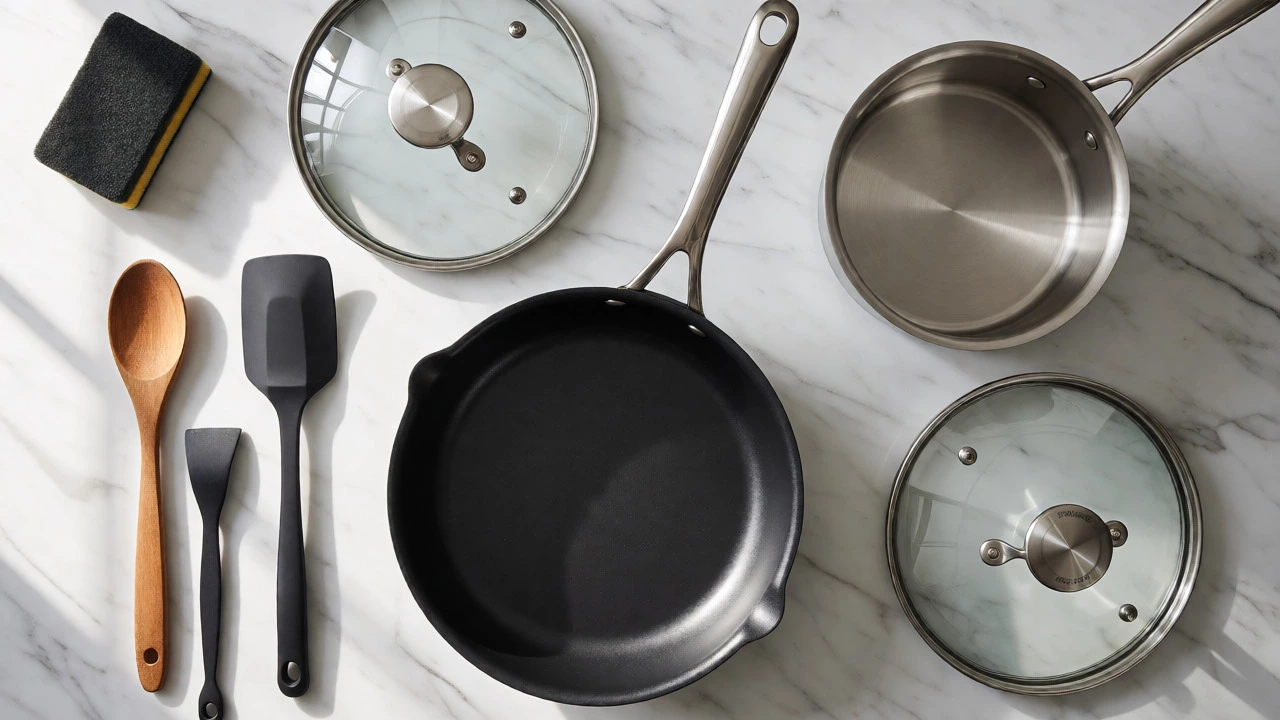
- For Stainless Steel: Use warm soapy water and a non-abrasive sponge. If food is stuck, fill the pan with water and bring it to a boil. Scrape gently with a wooden spoon. Avoid steel wool unless you don’t mind micro-scratches (which don’t affect performance).
- For Non-Stick: Never use metal spatulas. Stick to silicone, wood, or nylon. Hand wash only. Dishwashers can degrade the coating due to harsh detergents and high-pressure jets. Do not spray aerosol cooking sprays directly on the surface; they leave a sticky residue that builds up over time. Use butter or liquid oil instead.
- Storage: Stack carefully. Place a paper towel or felt protector between pans to prevent scratching, especially for the non-stick pieces.
Final Verdict
Gordon Ramsay cookware is a legitimate contender in the mid-market space. It’s not magic, and it won’t turn you into a Michelin-starred chef overnight. But it provides reliable, even heating and durable construction that beats most supermarket-brand alternatives. If you trust the Tefal manufacturing pedigree and want a cohesive set that looks good and performs well, it’s a smart buy. Just know exactly which line you’re purchasing and manage your expectations regarding the lifespan of non-stick coatings versus the permanence of stainless steel.
Is Gordon Ramsay cookware made in China?
Most of the production takes place in China under strict supervision by the manufacturing partners (like Tefal/Groupe SEB). Some components or higher-end variations may be produced in France or Italy, but checking the specific packaging is necessary for exact origin details.
Can I use metal utensils on Gordon Ramsay non-stick pans?
It is strongly recommended to avoid metal utensils on the non-stick range. Metal can scratch and degrade the PTFE coating, reducing its non-stick properties and potentially introducing flakes into your food. Silicone, wood, or nylon tools are best.
Does Gordon Ramsay cookware work on induction hobs?
Yes, both the stainless steel and hard-anodized non-stick ranges are induction-compatible. They have magnetic bases that allow efficient heat transfer on induction surfaces.
How long do the non-stick pans last?
With proper care (hand washing, no metal utensils, low-medium heat), expect 3 to 5 years of optimal performance. Heavy use or high heat can shorten this to 1-2 years.
Is the stainless steel line dishwasher safe?
Yes, the stainless steel cookware is generally dishwasher safe. However, hand washing helps maintain the shine and prevents potential discoloration from harsh detergent residues over many years.