Victorian Bedding Simulator
Select your hypothetical social status and preferred materials to see what your night's sleep would have looked like in the 1800s.
1. Choose Your Social Status
2. Select Mattress Filling
3. Select Sheet Fabric
Select options and click "Simulate" to view your Victorian sleeping conditions.
You might think your current struggle with a tangled duvet cover is bad. But imagine waking up in an 1800s bedroom where the bed frame was barely visible under layers of horsehair, wool, and feathers. For most of the 19th century, sleeping wasn't just about rest; it was a complex ritual involving heavy fabrics, strict hygiene rules, and materials that would make a modern allergist faint.
If you've ever looked at a museum exhibit of Victorian linens and wondered, "How did anyone actually sleep on this?", you're not alone. The answer lies in understanding the massive class divide of the era. What a factory worker slept on differed wildly from what a wealthy merchant used. This guide breaks down exactly what bedding looked like, how it was made, and why the aesthetics of the 1800s still influence our bedrooms today.
The Class Divide: Straw vs. Feathers
Before we talk about patterns or colors, we have to talk about money. In the 1800s, your mattress told everyone who you were. There was no middle ground for the average person-you either had straw, or you had feathers.
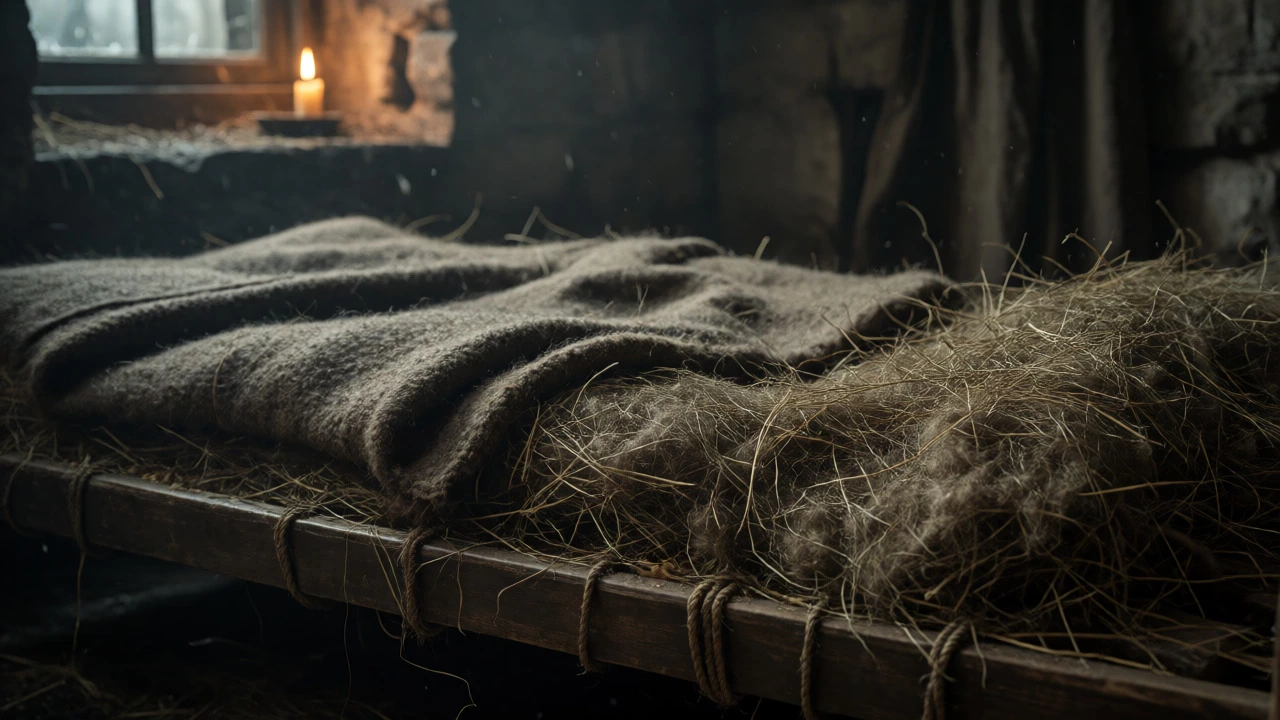
For the working class, including farmers, laborers, and servants, the bed base was often a simple wooden trundle or a rope-tied slat frame. On top of that went a tick-a cloth bag stuffed with cheap materials. Common fillings included:
- Straw or Hay: Cheap, noisy (it rustled when you moved), and prone to attracting mice.
- Horsehair: More durable than straw but stiff and uncomfortable unless layered heavily.
- Corn Husks: Popular in rural areas, though they broke down quickly into dust.
Wealthier households upgraded to feather mattresses. These were typically filled with goose down or duck feathers. They were soft, luxurious, and expensive. But here’s the catch: they required constant maintenance. You couldn’t just wash them. Every few weeks, someone had to take the ticking off, shake out the feathers, sun-dry them, and re-fluff the mattress. If you didn’t do this, the feathers clumped, creating lumps that felt like rocks after a few months.
This isn't just trivia. It explains why antique beds are so tall. To fit all these layers-straw tick, wool blanket, feather mattress, and more-the bed frames grew higher off the ground. This also helped keep sleepers away from cold floors and drafts, which were common in poorly insulated homes.
The Layers: Why Beds Were So Heavy
Modern bedding is light. We use a fitted sheet, maybe a thin blanket, and a comforter. In the 1800s, a bed was a fortress of fabric. The goal was warmth, because central heating didn't exist until the very end of the century. Radiators were rare luxuries.
A typical upper-middle-class bed setup involved five distinct layers, each with a specific job:
- The Bottom Sheet: Usually coarse linen or hemp. This layer protected the mattress from sweat and skin oils. Since washing was difficult, this sheet was changed less frequently than you’d expect.
- The Blankets: Multiple layers of wool blankets. Wool was preferred because it retained heat even when damp from sweat. Cotton blankets existed but were less effective in cold, damp climates like those in Northern Europe or New Zealand’s early colonial settlements.
- The Top Sheet: Made of finer linen or cotton. This was the layer closest to the body. Hygiene standards dictated that this sheet be changed weekly, if not daily, for the wealthy.
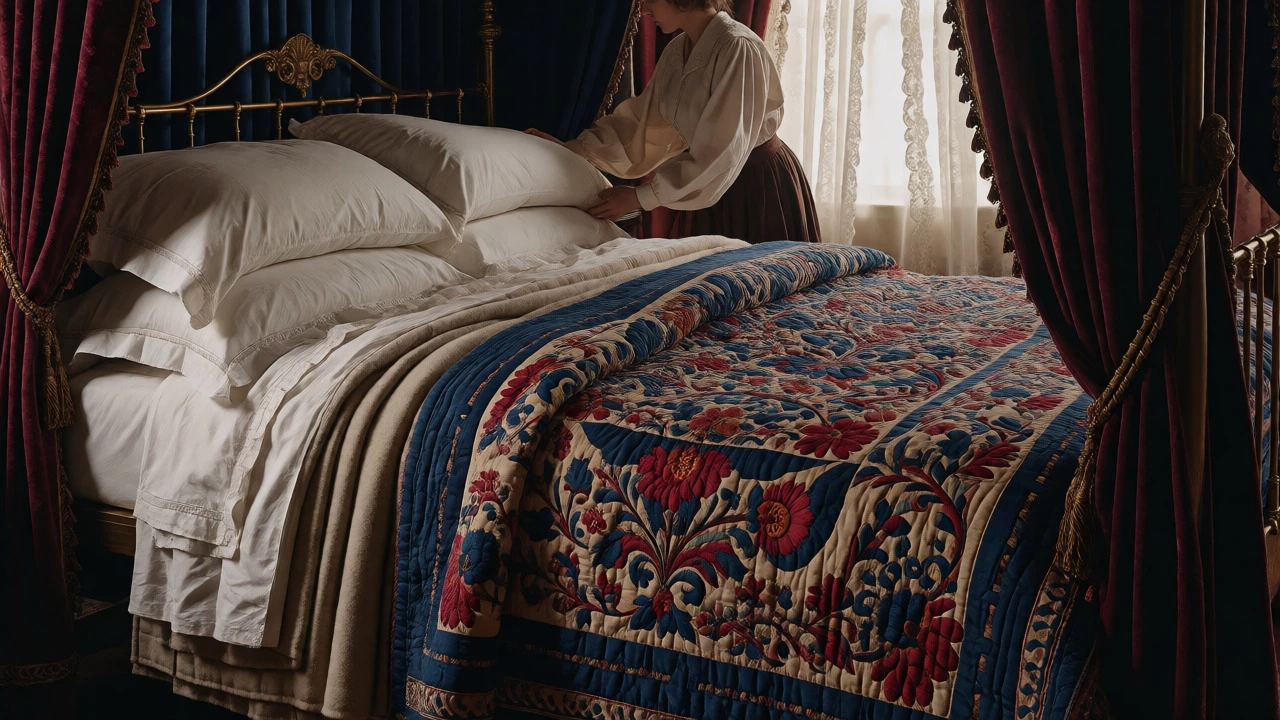
- The Counterpane: This is the decorative layer. Often a quilted coverlet, it hid the messy blankets underneath. It was usually folded back during the day to show off the white sheets beneath.
- The Coverlet or Quilt: The final visual element. This could be a hand-stitched quilt, a woven coverlet, or a purchased printed cotton spread.
Why so many layers? Because removing one layer let in cold air. If you got too hot, you didn't unzip a duvet; you pulled back the top quilt. If you were cold, you added another wool blanket. It was a manual thermostat system.
Materials: Linen, Cotton, and the Rise of Calico
The fabric itself tells a story of industrialization. At the start of the 1800s, linen was king. Made from flax, linen was cool, breathable, and durable. However, it wrinkled terribly and was hard to bleach pure white without expensive chemicals. Most working people used unbleached linen, which was greyish-brown and rough.
As the century progressed, cotton took over. Thanks to the cotton gin and steam-powered looms, cotton became cheaper and more accessible. By the mid-1800s, calico-a plain-woven cotton fabric-was everywhere. It was affordable, easy to print, and easier to wash than linen. This shift democratized clean bedding. Suddenly, even modest households could afford white sheets, which became a symbol of moral purity and cleanliness.
Here is a quick comparison of common bedding materials in the 1800s:
| Material | Common Users | Pros | Cons |
|---|---|---|---|
| Linen | Wealthy & Middle Class | Durable, cool, hygienic | Expensive, wrinkles easily, hard to bleach |
| Cotton (Calico) | Middle & Working Class | Cheap, printable, washable | Less durable than linen, can shrink |
| Wool | All Classes (Blankets) | Warm, fire-resistant, moisture-wicking | Heavy, itchy, attracts moths |
| Silk | Elite Only | Soft, luxurious, temperature-regulating | Extremely expensive, delicate, stains easily |
Design and Decoration: The Art of the Quilt
If you visit an antique store today, you’ll see lots of patchwork quilts. In the 1800s, quilting wasn't just a hobby; it was economic necessity. Fabric scraps were precious. Women saved every scrap of old clothing to piece together bedcovers.
Two main styles dominated:
- Patchwork Quilts: Made from irregular scraps sewn into geometric patterns like "Log Cabin" or "Nine Patch." These were functional warmers for winter.
- Wholecloth Quilts: Made from a single piece of fabric, decorated with intricate stitching. These were status symbols. A beautifully stitched wholecloth quilt showed that the household had enough spare time and money to hire a quilter or spend hours doing fine needlework.
Colors were muted by modern standards. Without synthetic dyes (which arrived in the 1850s), colors came from plants and minerals. Expect to see indigo blues, madder reds, ochre yellows, and natural whites. Bright, neon colors didn't exist. As synthetic dyes became available later in the century, patterns became bolder, leading to the busy floral prints we associate with Victorian parlors.
It’s worth noting that men rarely participated in making bedding. This was strictly women's work. The quality of a woman's sewing reflected her suitability as a wife. A messy hem meant a messy home, according to societal expectations of the time.
Hygiene and Maintenance: The Smell of Sleep
Let’s address the elephant in the room: smell. Modern plumbing and laundry machines didn't exist. Washing a full set of bedding was a two-day event. You had to boil water, scrub by hand, wring out heavy wet linen, and hang it outside to dry. If it rained, the bedding stayed damp, developing a musty odor.
Because of this effort, people washed their sheets less often than you might think. Wealthy families might change sheets weekly. Poorer families might go a month or longer. To combat odors and pests, people relied on:
- Ventilation: Opening windows whenever possible, even in winter.
- Sunlight: UV rays killed bacteria and bleached fabrics naturally.
- Herbs: Lavender, rosemary, and dried flowers were tucked into pillows and mattress ticks to mask smells and repel insects.
Bugs were a real threat. Bedbugs, fleas, and lice were common. Mattresses were inspected regularly. Some wealthy households used metal bedframes instead of wood because wood harbored bugs in its grain. This is why many surviving antique beds are brass or iron-they were easier to clean and disinfect.
The Pillows and Canopies: More Than Just Decor
Today, we use pillows for neck support. In the 1800s, pillows were mostly for head elevation. People slept propped up high, sometimes with three or four stacked pillows. Medical advice of the era claimed that lying flat caused congestion and poor digestion. Sitting up slightly while sleeping was considered healthier.
Canopy beds weren't just fancy hotel features. In drafty houses, curtains around the bed created a microclimate. You closed the curtains at night to trap body heat and open them in the morning for light. The canopy also provided privacy in shared rooms, which was common in large families or boarding houses.
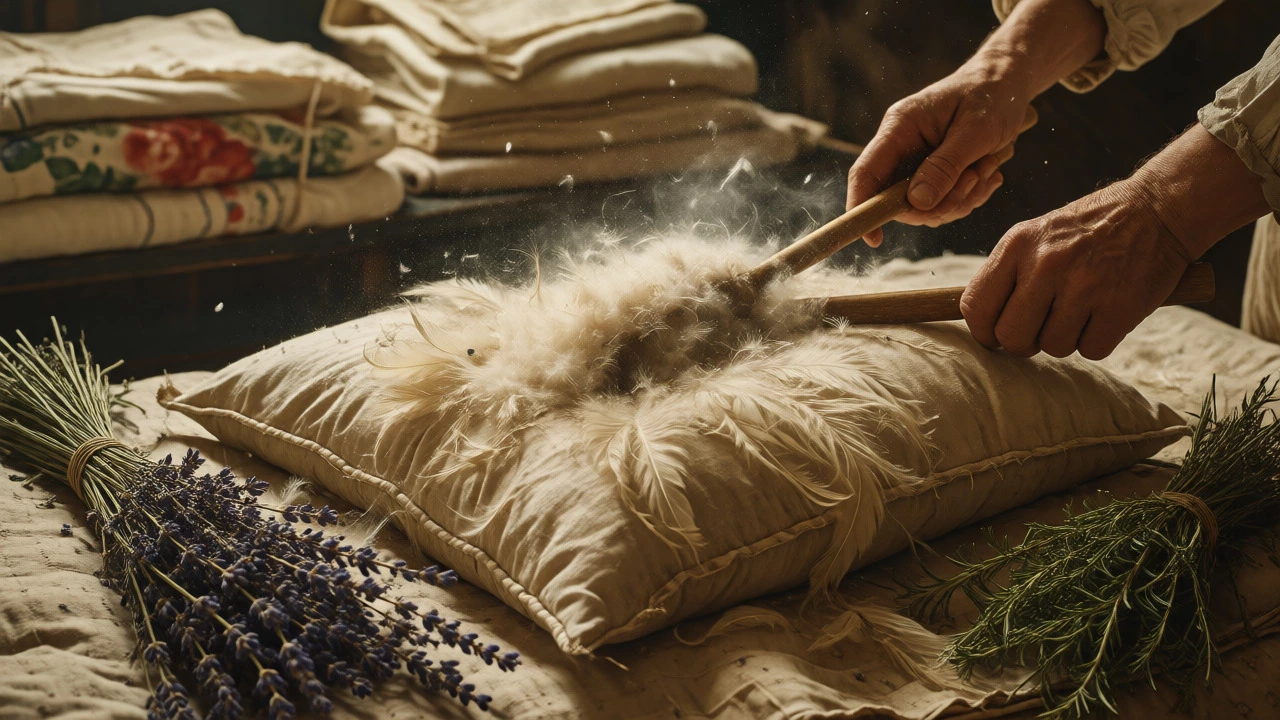
Filling for pillows varied by wealth. Down and feathers were standard for the rich. The poor used straw, chaff, or even dried corn husks. Feather pillows needed constant plumping. If you slept on a flattened pillow, your neck hurt. So, part of the morning routine was beating the pillows with a stick to restore their shape.
How the 1800s Changed Our Modern Bedroom
So, why does this history matter? Because the 1800s established the concept of the bedroom as a private, sanitary sanctuary. Before this era, beds were often multi-purpose furniture used for sitting, eating, and socializing. The Victorians pushed the idea that sleep required a dedicated, clean space.
The obsession with white linens started then. White symbolized purity and health. Even if you couldn't afford silk, you aimed for clean white cotton. This tradition persists today. When you buy "hotel-style" white sheets, you're buying into a marketing narrative that began in the 19th century.
Also, the quilt revival of recent years is a direct nod to 1800s craftsmanship. People are tired of mass-produced polyester. They want the texture and history of hand-stitched cotton. Understanding the origins helps you appreciate why certain designs feel cozy and authentic.
Did people in the 1800s sleep naked?
No, most people slept in nightclothes. Men wore long shirts or pajamas, and women wore nightgowns, often made of cotton or flannel. Nightcaps were also common to retain heat, as a significant amount of body heat escapes through the head.
Why were Victorian beds so high off the ground?
Height served multiple purposes. It kept sleepers above cold floors and drafts. It also accommodated the thick layers of mattresses, blankets, and quilts required for warmth before central heating. Additionally, taller beds were a status symbol, indicating wealth and grandeur.
How often did people wash their bedding in the 1800s?
Frequency depended on class. Wealthy households might wash sheets weekly. Working-class families often washed them monthly or seasonally due to the immense labor involved. Daily airing and shaking of linens were common practices to maintain some level of hygiene between washes.
What was the most common color for bedding?
White was the ideal, especially for sheets, symbolizing cleanliness. However, actual bedding often featured natural undyed linen tones, indigo blues, madder reds, and earthy greens derived from plant-based dyes. Synthetic dyes introduced brighter colors only in the latter half of the century.
Were there allergies to 1800s bedding?
Yes, but they weren't diagnosed as such. Dust mites thrived in unwashed wool and feather mattresses. Many people suffered from respiratory issues, likely exacerbated by mold in damp linens and dust from straw fillings. Doctors blamed "bad air" rather than allergens.