Cushion & Curtain Harmony Checker
How Your Colors Work Together
Enter your curtain and cushion colors to see how they harmonize based on design principles from the article. The goal is harmony, not matching!
Your Harmony Score
You’ve bought new curtains-maybe soft linen in a warm sage green, or bold navy with white stripes. Now you’re staring at your sofa, wondering: should the cushions match? The answer isn’t yes or no. It’s about balance, rhythm, and breathing room.
Matching isn’t the goal-harmony is
Too many people think matching means identical colors. That’s not design. That’s a costume. If your curtains are charcoal gray and you grab four identical charcoal gray cushions, your sofa looks like a brick wall with pillows. It feels heavy, flat, and lifeless.
Real harmony comes from relationship, not repetition. Think of it like music. A song doesn’t repeat the same note over and over-it builds layers. One note leads to another. A chord supports the melody. That’s what you want with cushions and curtains.
Start with the curtain color as your anchor. Then pull out one or two shades from it to use in your cushions. If your curtains have a hint of mustard yellow woven through, pick a cushion with that same mustard. Not the whole cushion-just a stripe, a pattern edge, or the stitching. It creates a quiet connection that the eye notices without being told.
Texture matters more than you think
Color gets all the attention, but texture is the secret weapon. If your curtains are smooth and flowing-like silk or polyester-try cushions with something tactile: bouclé, linen, or even a knitted wool. The contrast adds depth. It makes the space feel lived-in, not staged.
On the flip side, if your curtains are heavy and textured-think velvet or woven jacquard-go for smoother cushions. A simple cotton or velvet with a tight weave balances the visual weight. You’re not matching. You’re balancing.
In Wellington, where rain and wind shape how we use our homes, texture becomes even more important. Soft, cozy cushions against crisp, light-filtering curtains make a room feel like a warm hug after a wet afternoon. That’s the feeling you’re after-not a showroom.
Patterns? Go slow
Patterned curtains and patterned cushions? That’s a minefield. But it’s not impossible.
If your curtains are a large-scale floral, pick cushions with small geometric shapes-dots, stripes, or tiny checks. The scale difference keeps things from clashing. The eye moves from big to small and back again, which feels intentional.
If your curtains are stripes, avoid repeating the same stripe pattern on cushions. Instead, use a solid that pulls from the stripe’s color. A navy-and-white striped curtain? Try a cushion in navy with white piping. Or a soft cream with a single navy thread woven through the edge.
One rule: never match pattern to pattern. Match pattern to solid. That’s the golden rule of mixing patterns in home decor.
What about neutrals?
Neutral curtains-beige, gray, white-don’t mean you have to go boring with cushions. In fact, they’re your best friend.
Neutrals act like a canvas. That’s when you can play. A set of cushions in burnt orange, deep teal, or even mustard yellow can pop beautifully against a light gray curtain. You’re not matching. You’re adding energy.
But here’s the catch: keep the cushion colors within the same warmth or coolness family. If your curtains are cool gray, avoid warm reds or oranges unless you’re using them as a single accent. Stick to cooler tones like olive, slate, or dusty blue. If your curtains are warm beige, go for terracotta, rust, or cream with a golden undertone.
And don’t forget the edges. A cushion with a contrasting welt-like a dark gray trim on a cream cushion-can echo the shadow line between curtain and wall. It’s subtle, but it ties everything together.
What to avoid
Here’s what most people get wrong:
- Matching everything exactly. It looks like a catalog photo, not a home.
- Using too many colors. More than three main colors in the curtain-cushion combo feels chaotic. Stick to one anchor color, one supporting color, and one accent.
- Ignoring the room’s lighting. Natural light changes everything. A cushion that looks perfect under store lights might look muddy in your afternoon sun. Test them by the window before you buy.
- Forgetting scale. Oversized cushions on a small sofa? Tiny cushions on a deep sectional? They throw off the balance. Cushions should fill about 60-70% of the sofa seat width.
Real-life examples that work
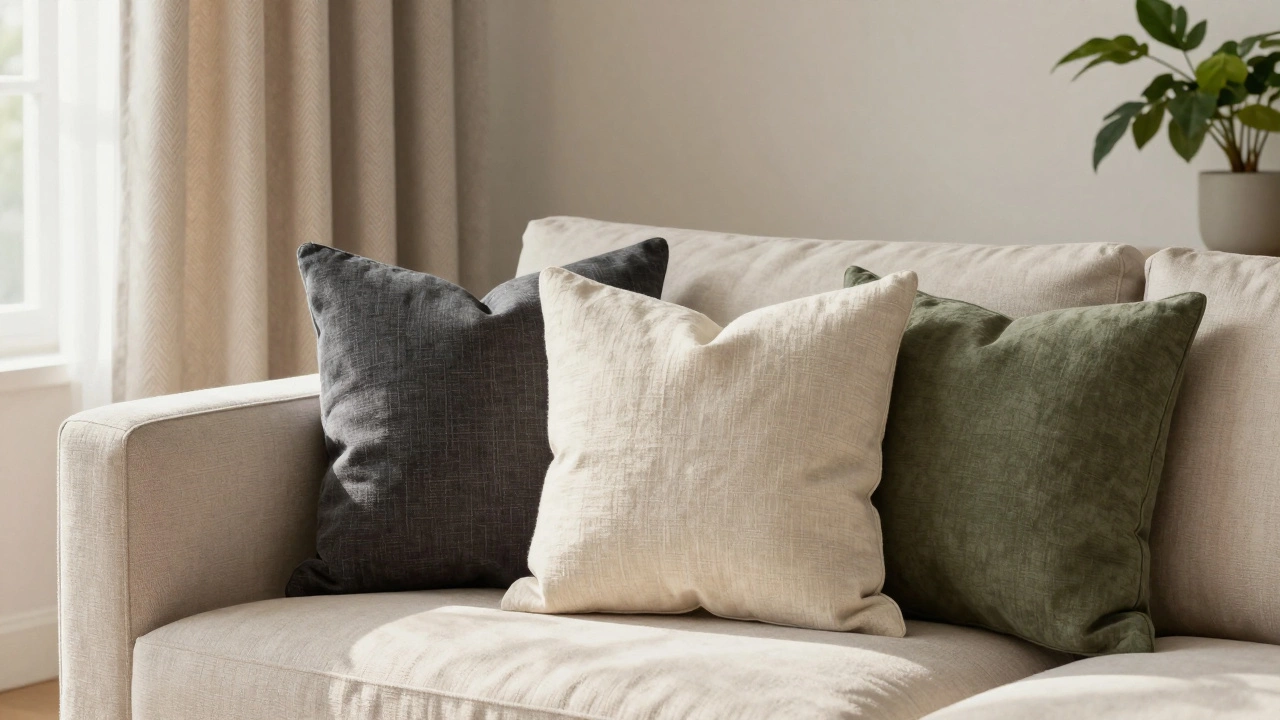
Let’s say your curtains are a soft oatmeal with a subtle herringbone weave. You want cushions that feel cozy but not matchy-matchy.
Try this combo:
- One cushion in deep charcoal (pulls from the shadow in the weave)
- One cushion in cream with a linen texture
- One cushion in muted olive green (a nod to the green tones in your nearby plants)
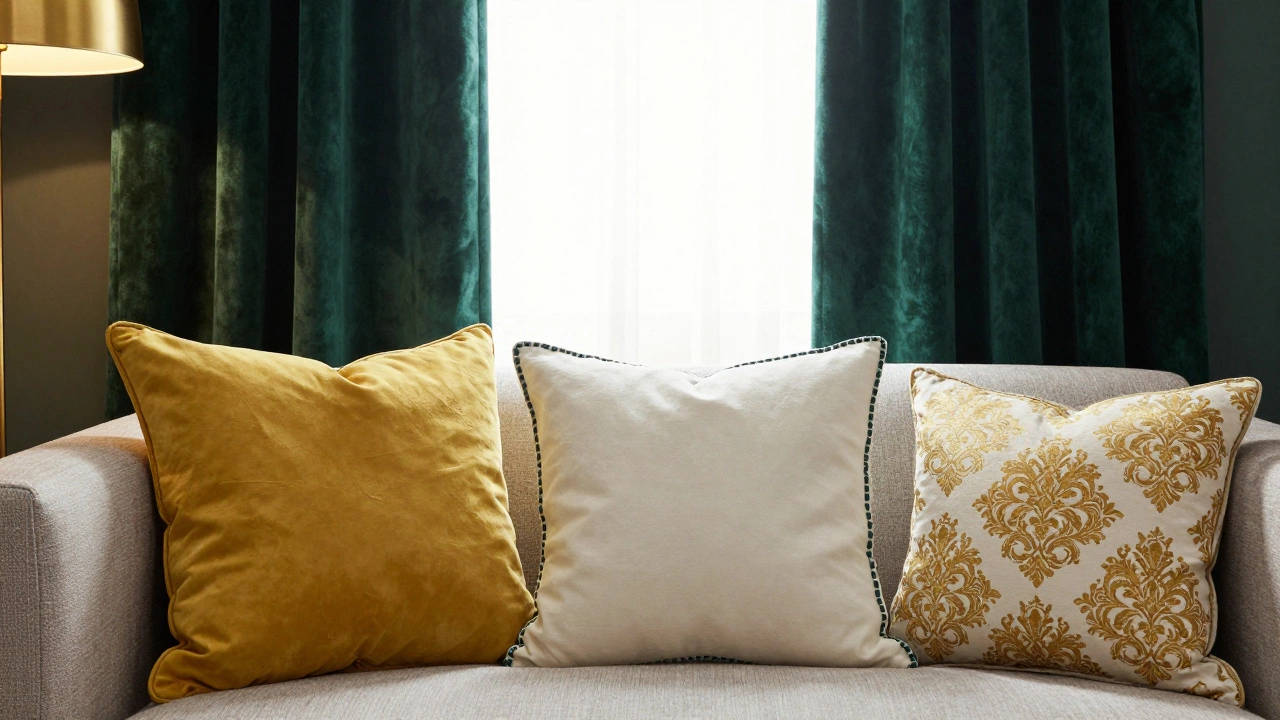
Or another: your curtains are a deep emerald with a slight sheen. Now pick:
- One cushion in matte mustard yellow (complementary, not matching)
- One cushion in off-white with a dark green stitch
- One cushion in a small-scale damask pattern with gold threads (echoes the curtain’s sheen without repeating it)
Neither set matches the curtains. But both feel like they belong.
Seasonal shifts? Yes, please
Your cushions don’t have to stay the same forever. In fact, switching them with the seasons is one of the easiest and cheapest ways to refresh a room.
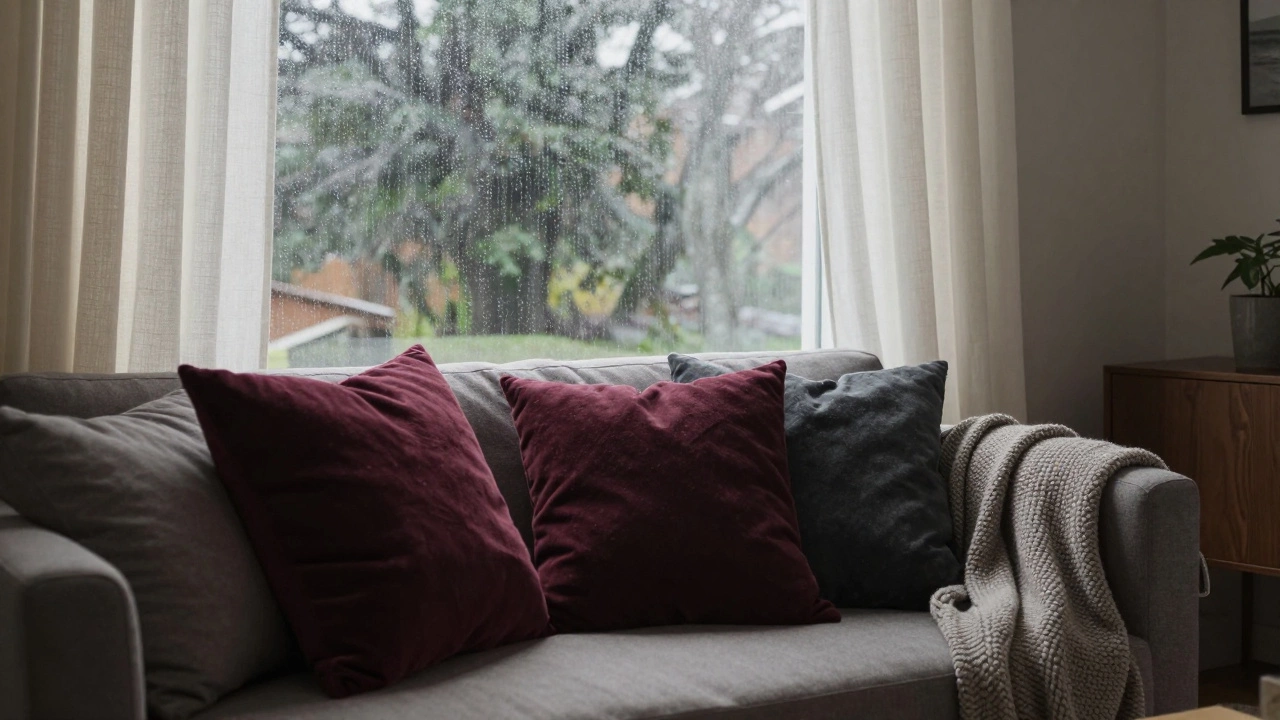
In winter, swap in heavier fabrics-wool, velvet, corduroy-in deeper tones. Think burgundy, forest green, charcoal. Let your curtains stay the same. The contrast makes the room feel cozier.
In summer, go lighter. Linen, cotton, even bamboo blends in pale blues, creams, or soft yellows. Let the curtains do the heavy lifting. The cushions become airy accents.
People in Wellington do this naturally. We don’t wait for spring to feel like spring. We change the pillows. It’s small, but it works.
Final tip: Step back and squint
Stand across the room. Squint your eyes. What do you see?
If everything blends into one muddy blob, you’ve overdone it. If there’s a clear rhythm-color moving from curtain to cushion to rug to artwork-you’ve nailed it.
Design isn’t about rules. It’s about feeling. If the space feels calm, warm, and like it belongs to you? Then your cushions and curtains are working together. You didn’t need to match them. You just needed to listen.
Do cushions and curtains have to be the same color?
No, they don’t. Matching colors exactly often looks stiff or dated. Instead, pick one or two colors from your curtains to use in your cushions-either as the main shade, an accent, or in the stitching. This creates harmony without repetition.
Can I mix patterned cushions with patterned curtains?
Yes, but carefully. Never match pattern to pattern. If your curtains have a large floral, choose cushions with small geometric shapes like dots or stripes. The key is scale difference: one large, one small. And always include at least one solid-colored cushion to break up the patterns.
What if my curtains are neutral?
Neutral curtains are a gift. They give you freedom to experiment. Use cushions to add color and personality. Choose one bold accent color-like mustard, teal, or rust-and repeat it in small doses across two or three cushions. Keep the rest in neutral tones to ground the look.
Should I match my cushions to my sofa instead of my curtains?
Your sofa is the biggest surface, so it’s often the anchor. But curtains frame the room and control light and mood. If your sofa is neutral, let the curtains guide your cushion colors. If your sofa is bold, use cushions to echo the curtains. The goal is to connect all elements-not force one to dominate.
How many cushions should I use with my curtains?
Three to five cushions on a standard sofa works best. Use a mix: two solids, one pattern, and maybe one textured or shaped cushion. Don’t overcrowd. Leave space for movement. The curtains don’t need to compete-they’re the backdrop. Let the cushions breathe.
When you’re done, walk into the room without thinking about design. Does it feel right? Does it feel like you? That’s the only test that matters.