Clutter Organization Time Estimator
Your Decluttering Plan
Get a realistic timeline for organizing your home based on your available time.
How it works
Based on your article research: Most people see a big difference in 2-3 weekends with consistent sessions.
"Progress beats perfection." Start small. The article recommends 15-30 minutes daily.
Your Estimated Timeline
This estimate is based on:
- 1 room per session
- Based on your daily commitment
- Your chosen decluttering speed
Imagine walking into your living room and not knowing where to sit because the couch is buried under laundry, mail, and that one box you swore you’d open last summer. You’re not alone. Most homes in New Zealand-especially in places like Wellington where space is tight-end up feeling like storage units with a sofa. The problem isn’t that you own too much. It’s that you don’t have a system to handle what you already have.
Start with the one room that makes you sigh
Don’t try to tackle the whole house at once. That’s how people quit. Pick the room that stresses you out the most. For most people, it’s the kitchen, the hallway, or the bedroom closet. That’s your starting point. Why? Because you’ll see results fast, and that momentum keeps you going.Close the door. Put on a podcast or your favorite playlist. Set a timer for 30 minutes. No phone. No distractions. Just you and the mess. You’re not cleaning. You’re sorting. Put everything into three piles: Keep, Donate/Sell, Trash. No thinking. No justifying. If you haven’t used it in 12 months, and it doesn’t spark joy or serve a real purpose, it’s going out. That’s the rule.
Sort by category, not by location
You’ve probably tried organizing by room: “I’ll tidy the living room,” then “Now the garage.” That doesn’t work. Clutter doesn’t care about room boundaries. Your socks are in the kitchen drawer. Your tools are under the bed. Your kid’s art is in the hallway.Instead, gather everything of one type from every room. Get all the clothes from every closet, drawer, and laundry basket. Put them in one big pile on the floor. Do the same with books, papers, kitchen gadgets, toys, and cables. Now you can actually see how much you have.
Here’s what happens when you do this: You realize you own six pairs of jeans you never wear. You find three coffee makers you forgot about. You see that you have 27 pens, but only two work. That’s the moment you stop buying more and start letting go. This is where real change begins.
Use the 80/20 rule: 20% of your stuff gets 80% of your use
Look at that pile of clothes. How many do you actually wear? Probably 20%. The rest? They’re taking up space, making your closet look messy, and making it harder to find what you need.The same goes for kitchen tools. Do you really need seven spatulas? One good one is enough. Do you need five mugs you only use on holidays? Keep one. The rest go. This isn’t about being minimal. It’s about making your life easier. Less stuff means less decision fatigue. Less time searching. Less stress.
Ask yourself: “If I lost this right now, would I buy it again?” If the answer is no, it’s time to let it go. Be honest. You’re not hoarding. You’re just holding on to things out of guilt or habit.

Storage isn’t about buying bins-it’s about design
You don’t need more boxes. You need better systems. The goal isn’t to hide clutter-it’s to make it easy to put things back where they belong.Here’s what works in real homes:
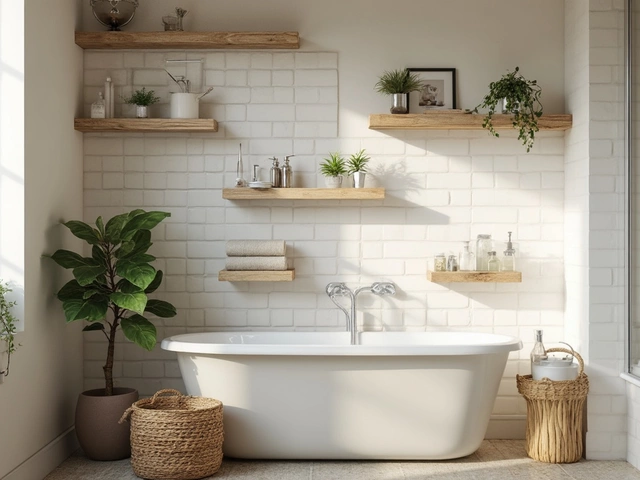
- Vertical space is your friend. Use wall shelves, pegboards, or hanging racks. In the garage, hang bikes, tools, and garden hoses. In the kitchen, hang pots and mugs. In the hallway, add a slim wall rack for bags and keys.
- Use clear bins. If you need to store things under the bed or in the cupboard, use transparent containers. You won’t forget what’s inside. Label them with masking tape and a marker. No fancy labels needed.
- Group like with like. Keep all batteries in one spot. All office supplies in another. All cleaning tools in one basket. This isn’t just tidy-it’s functional. You’ll find what you need in seconds.
- Don’t overfill drawers. If you can’t close a drawer without forcing it, you have too much. Limit each drawer to one category. Socks in one, underwear in another. Use dividers if needed. You’ll be surprised how much space you gain.
Build habits, not just systems
Organizing your house isn’t a one-time job. It’s like brushing your teeth. You do it every day, or it falls apart.Here are three tiny habits that make a huge difference:
- One in, one out. Every time you bring something new into the house, let go of something old. It keeps your stuff from creeping back.
- Five-minute reset before bed. Spend five minutes putting things back where they belong. Keys on the hook. Shoes by the door. Books on the shelf. It takes less time than you think-and it makes mornings so much calmer.
- Mail right away. Open mail as soon as you get it. Junk? Trash. Bills? Pay or file. Letters? Reply or toss. Don’t let it pile up on the counter. That one habit alone stops half the clutter in most homes.

What to do with the stuff you’re letting go
You’ve sorted. You’ve decluttered. Now what? Don’t just throw it all in the bin. There are better options.- Donate to local charities. In Wellington, places like The Salvation Army, Goodwill, and local community centers take clothes, books, and small appliances. Some even offer free pickup.
- Sell online. Use Facebook Marketplace or Trade Me. You don’t need to be a pro. Take a photo, write a short description, and set a fair price. Even old toys or kitchen gadgets can find new homes.
- Recycle right. Electronics? Take them to a certified e-waste drop-off. Bulky items? Check with your city council for free collection days. In Wellington, you can book a free bulky waste pickup twice a year.
Don’t let guilt keep you holding on. That sweater you haven’t worn in five years? Someone else needs it. That broken toaster? It can be recycled. You’re not being wasteful by letting go-you’re making room for what matters.
Keep it simple. Keep it going.
You don’t need to be perfect. You don’t need a Pinterest-worthy closet. You just need a home that feels calm. A home where you can find your keys. Where you can sit on the couch without moving three things first. Where you don’t feel guilty every time you open a cupboard.Organizing your house isn’t about having less. It’s about having more space-for peace, for time, for life. Start small. Stick with the habits. And remember: progress beats perfection every time.
How long does it take to organize a cluttered house?
It doesn’t have to take weeks. Most people see a big difference in 2-3 weekends if they focus on one room at a time. The key isn’t speed-it’s consistency. Spending 30 minutes a day, five days a week, will clear more clutter than a 10-hour marathon once a month.
What if I can’t decide what to keep?
Ask yourself: ‘Would I buy this again if I lost it today?’ If you’re unsure, put it in a ‘maybe’ box and seal it. Give yourself 30 days. If you haven’t opened it by then, donate it. Most things you forget about aren’t needed.
Is it okay to use plastic bins for storage?
Yes-especially if they’re clear and labeled. Plastic bins are durable, stackable, and affordable. The goal isn’t to use only wooden crates or woven baskets. It’s to have a system that works. If plastic bins help you find your winter boots in June, they’re doing their job.
How do I stop clutter from coming back?
Adopt the one-in, one-out rule. Every new item means one old item goes. Also, avoid impulse buys. Wait 48 hours before purchasing non-essentials. Most of the time, you’ll realize you didn’t need it. And always put things back immediately after using them.
What’s the most common mistake people make when decluttering?
Trying to organize before decluttering. You can’t store clutter-you can only contain it. If you buy fancy organizers before letting go of what you don’t need, you’re just hiding the problem. Always sort first. Then store.
Next steps: Pick your starting point
You don’t need a perfect plan. You just need to begin. Right now, pick one room. One drawer. One shelf. Open it. Look inside. Don’t think. Just sort. Put things into three piles: Keep, Donate, Trash.Set a timer for 15 minutes. When it goes off, stop. You’ve done enough. Tomorrow, do it again. That’s how you build a clutter-free home-not with grand gestures, but with small, consistent actions.
Your house doesn’t need to be Instagram-perfect. It just needs to feel like yours again.