Interactive Comparison: Prayer Practices
Islamic Tradition
Focuses on ritual purity of the surface.
Prayer Rug (Sajjada)
PurposeBarrier for cleanliness during prostration.
Physical ActionKneeling, bowing, touching forehead to ground.
Cleanliness FocusThe floor/surface beneath the body.
Jewish Tradition
Focuses on intention and verbal liturgy.
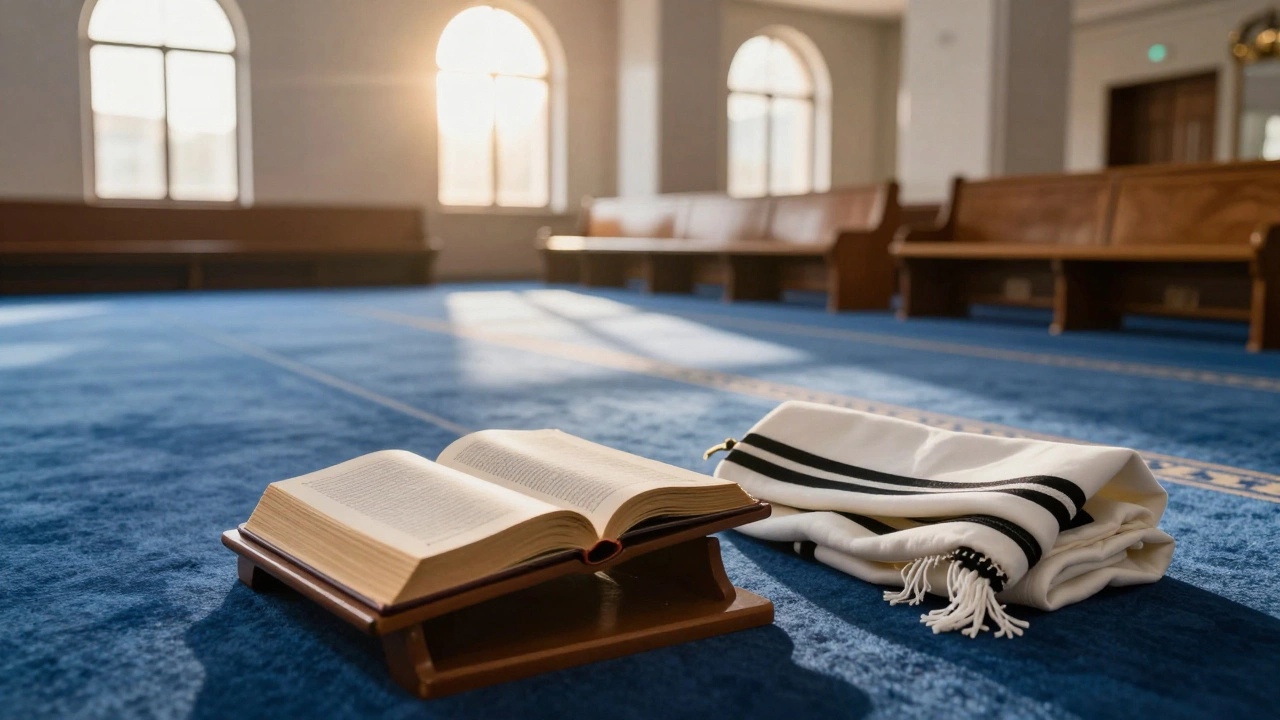
Siddur (Book) & Tallit (Shawl)
PurposeGuiding voice and reminding of commandments.
Physical ActionStanding, slight bowing, swaying.
Cleanliness FocusWashing hands before praying.
You’ve probably seen them in movies or travel photos: a person kneeling on an ornate, patterned rug, facing Mecca. It’s iconic. But what if I told you that image has nothing to do with Judaism? If you’re wondering whether Jews use similar prayer rugs, the short answer is no. There is no traditional "Jewish prayer rug" equivalent to the Islamic *salat* mat.
However, the floor of a synagogue is rarely bare wood. So, what are those carpets doing there? And how do Jewish worshippers handle the physical act of praying? Let’s clear up the confusion between cultural symbols and religious requirements.
The Short Answer: No Ritual Requirement
In Islam, the prayer rug (*sajjada*) serves a specific functional purpose. Because Muslims perform *prostration* (touching their forehead to the ground) during daily prayers, they need a clean surface to ensure ritual purity. The rug acts as a barrier between the worshipper and potentially dirty ground.
Judaism does not have this requirement. Jewish prayer involves standing, bowing slightly, or sometimes prostrating (though full prostration is rare in modern practice). More importantly, Jewish law (*Halakha*) does not mandate a specific object for the floor. You can pray in a field, on a sidewalk, or in your living room without any special equipment under your feet. The focus is on the heart and the words, not the surface beneath you.
This distinction is crucial. While an Islamic prayer rug is a tool for ritual cleanliness, a Jewish "prayer setup" relies on different items entirely-items you wear or hold, rather than stand on.
What Jews Actually Use Instead of Prayer Rugs
If you walk into a traditional Jewish home or synagogue, you won’t find a small, portable rug rolled out for individual use. Instead, you’ll see three key items that serve as the true markers of Jewish prayer:
- The Siddur: This is the prayer book. Just as Christians might use a Bible or hymnal, Jews follow a structured liturgy found in the *Siddur*. It contains the blessings, psalms, and responses needed for Shabbat, holidays, and daily services.
- The Tallit: Often called a prayer shawl, this is a fringed garment worn over the shoulders during morning prayers. The fringes (*tzitzit*) serve as a visual reminder of God’s commandments. Unlike a rug, this is worn on the body.
- The Kippah (Yarmulke): A skullcap worn by men (and increasingly by women in non-Orthodox movements) to show reverence. It covers the head, symbolizing humility before the Divine.
Notice the pattern? These items cover the body and guide the voice. They don’t cover the floor. If you’re looking for the Jewish equivalent of a "prayer accessory," look at the hands and the head, not the feet.
Why Synagogues Have Carpets
If Jews don’t need prayer rugs, why are almost all synagogues carpeted from wall to wall? Isn’t that contradictory?
It’s not about ritual purity. It’s about acoustics and atmosphere.
Synagogue services involve communal chanting, singing, and reading. Hardwood floors create echoes that can make it difficult to hear the cantor or the Torah reader. Wall-to-wall carpeting dampens sound, creating a warmer, more intimate acoustic environment. Think of it like a recording studio or a theater-the carpet is there for audio quality, not spiritual necessity.
Additionally, carpets provide comfort. Services can last hours, especially on Yom Kippur (the Day of Atonement), which includes five prayer services. Standing on hard tile for eight hours is exhausting. Carpet offers cushioning for tired feet. In this sense, the synagogue carpet is a practical amenity, not a sacred object.
The Role of Cleanliness in Jewish Prayer
While Jews don’t need a clean *surface* to touch their faces to, cleanliness still matters in Jewish tradition. However, it focuses on the body and the mind, not the floor.
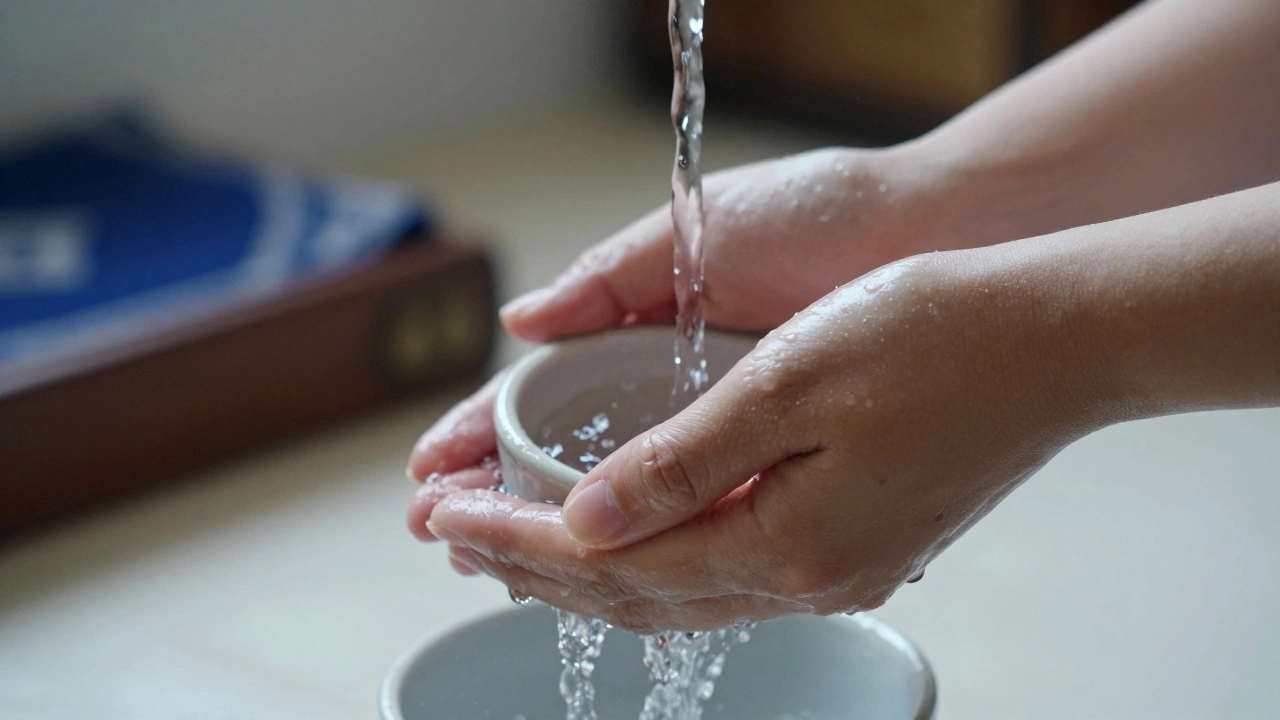
Before praying, many Jews wash their hands (*netilat yadayim*). This isn’t because the floor is dirty; it’s a ritual act of purification to prepare oneself for speaking to God. Water is poured over the hands from a cup, often while reciting a blessing. This mirrors the priestly washing in the ancient Temple but is performed today by anyone praying.
Mental preparation is equally important. The concept of *kavanah* (intention) is central. You can be physically clean, but if your mind is wandering, the prayer lacks value. This internal focus replaces the external need for a designated "clean zone" on the ground.
Can You Buy a "Jewish Prayer Rug"?
Here’s where things get interesting. If you search online for "Jewish prayer rug," you will find products. What are they?
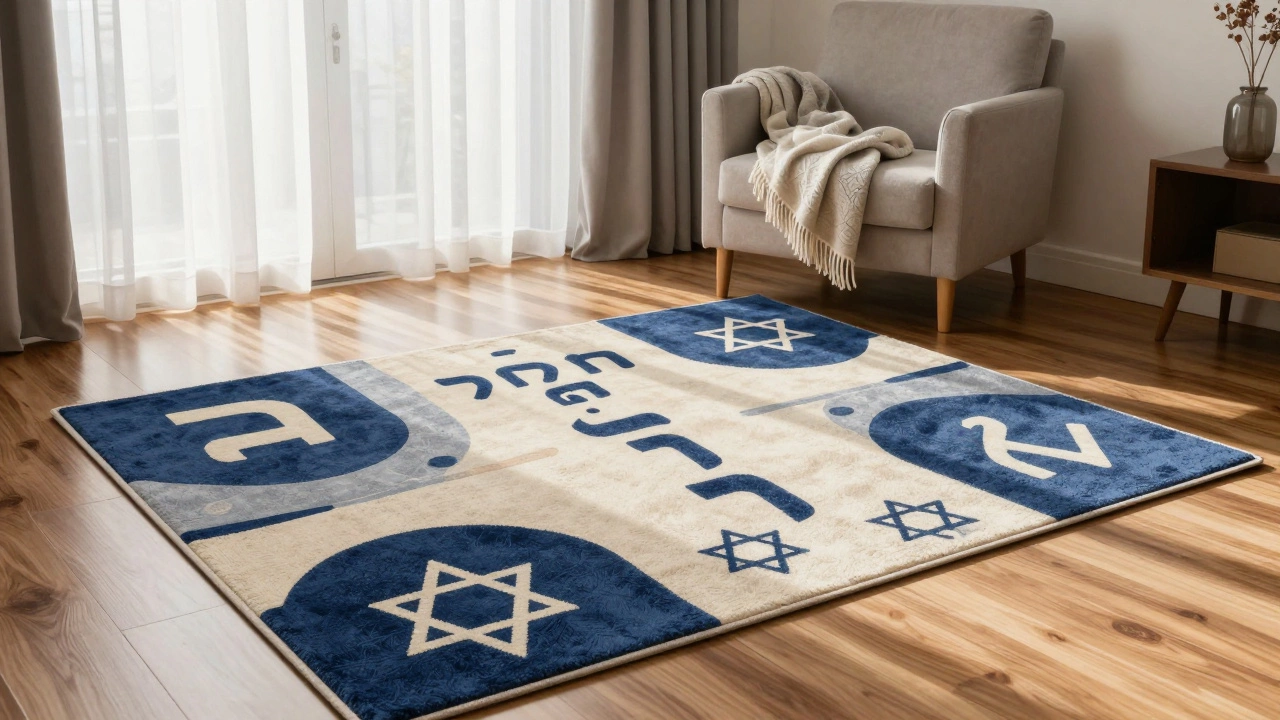
Most of these are decorative area rugs featuring Jewish motifs: Stars of David, menorahs, Hebrew letters, or scenes from Jerusalem. They are sold as home decor items for synagogues, mikvahs (ritual baths), or Jewish homes. They are not used for the act of prayer itself. You might place one in a study hall (*beit midrash*) to define a space, but you wouldn’t roll it out specifically to say the *Shema*.
Some companies market "portable prayer mats" for travelers, claiming they are for Jewish use. These are usually thin, foldable mats with generic designs. While nothing forbids a Jew from using one for comfort, it holds no religious significance. It’s essentially a yoga mat with a Star of David printed on it.
| Feature | Islamic Prayer Rug | Jewish Prayer Context |
|---|---|---|
| Purpose | Ritual cleanliness for prostration | No specific floor requirement |
| Physical Action | Kneeling, bowing, prostrating | Standing, slight bowing, swaying |
| Key Item | Rug/Mat | Siddur (book), Tallit (shawl) |
| Location | Anywhere (home, street, mosque) | Anywhere (home, street, synagogue) |
| Cleanliness Focus | Surface under forehead | Hands washed before prayer |
Historical Context: Did Ancient Jews Use Rugs?
To understand current practices, we have to look back. In the time of the Second Temple (516 BCE - 70 CE), priests wore linen garments and walked on stone floors. There was no concept of a personal prayer rug.
After the Temple’s destruction, prayer replaced sacrifice. Communities gathered in houses of study and prayer. These spaces were simple. Floors were often dirt, stone, or wood. Textiles were expensive and fragile. A dedicated "prayer rug" would have been impractical for most people.
In medieval Europe, Jews lived in cramped quarters. Space was limited. A large rug was a luxury item, not a religious tool. When carpets did appear in Jewish homes, they were status symbols, imported from Persia or Turkey, used to decorate dining rooms or bedrooms-not to mark a prayer spot.
Modern Variations and Cultural Blending
Today, boundaries blur. In interfaith households or culturally diverse communities, you might see a Jew using a prayer rug simply because it’s comfortable. Or, you might see a Muslim respecting Jewish customs by removing shoes before entering a synagogue, just as they would in a mosque.
Some contemporary Jewish artists create rugs inspired by Kabbalistic diagrams or Hebrew calligraphy. These are works of art. They invite contemplation but don’t dictate posture. You might sit on them to read the *Siddur*, but you aren’t performing a ritual by doing so.
It’s also worth noting that in some Hasidic communities, men may stand on a small piece of cloth or paper when praying in public spaces. This is a custom (*minhag*), not a law. It stems from a desire for modesty or separation from impure surfaces, but it’s not universal. Most Jews, including Orthodox ones, pray directly on the floor or carpet without any intermediary.
How to Decorate a Jewish Home with Rugs
If you’re decorating a home and want to honor Jewish traditions through textiles, focus on symbolism rather than function. Here are some ideas:
- Menorah Motifs: Choose a rug with a subtle Hanukkah menorah design for the entryway. It welcomes guests with a holiday spirit.
- Hebrew Letters: Modern abstract rugs featuring the letters *Aleph-Bet* add a scholarly, artistic touch to a study or library.
- Natural Materials: Wool or cotton rugs reflect the natural world, aligning with the Jewish value of stewardship (*bal tashchit*).
- Color Symbolism: Blue and white are traditional colors associated with Israel and Jewish identity. A blue-patterned rug can evoke this connection without being overtly religious.
Remember, the goal is beauty and comfort. A rug in a Jewish home is a piece of furniture, not a liturgical instrument. Treat it as such.
Common Misconceptions Debunked
Misconception 1: "Jews face Jerusalem when praying."
Partially true. Jews do try to face Jerusalem (and the site of the Holy Temple within it) when possible. However, this doesn’t require a rug. You just turn your body. No marker is needed.
Misconception 2: "You must remove shoes in a synagogue."
Not always. In Orthodox synagogues, shoes are often removed to keep the carpet clean and maintain a sense of reverence. In Reform or Conservative synagogues, shoes are usually kept on. Check the local custom.
Misconception 3: "Prayer rugs are only for men."
In Islam, both men and women use prayer rugs. In Judaism, since there’s no prayer rug, this question doesn’t apply. Both men and women use *Siddurim* and *Tallitot* (in many denominations).
Do Jews use prayer mats like Muslims?
No. Jews do not use prayer mats or rugs as part of their religious ritual. While synagogues are carpeted for comfort and acoustics, individual worshippers do not bring personal prayer rugs. Jewish prayer focuses on standing, reciting texts from a Siddur, and wearing a Tallit, rather than prostrating on a clean surface.
What is the Jewish equivalent of a prayer rug?
There is no direct equivalent. The closest items are the Siddur (prayer book) and the Tallit (prayer shawl). These objects guide the prayer through text and tactile reminders, whereas a prayer rug provides a physical space for prostration.
Why are synagogues carpeted?
Synagogues are carpeted primarily for acoustic reasons-to reduce echo during chanting-and for comfort, as services can last several hours. It is not a religious requirement for ritual purity.
Can I buy a Jewish-themed prayer rug?
Yes, you can buy rugs with Jewish symbols like the Star of David or Hebrew letters. However, these are decorative home accessories, not religious tools. They are not used for the act of prayer in a ritual sense.
Do Jews wash their feet before praying?
No. Jews typically wash their hands (*netilat yadayim*) before prayer as a sign of respect and preparation. Washing feet is not a standard practice in Jewish prayer rituals.
Is it disrespectful to use an Islamic prayer rug in a Jewish home?
Not necessarily. Many people appreciate the craftsmanship of Islamic prayer rugs. As long as it is used as a decorative rug or for general seating, it is not inherently disrespectful. However, it should not be used for Jewish religious rituals, as it carries different symbolic meanings.