Curtain Length Visualizer & Calculator
Why this choice?
Select a style to see advice.
Visual Simulation
You’ve picked the perfect fabric. You’ve measured the width correctly so there’s no awkward gap at the sides. But then you hit the wall-or rather, the floor-with the length. Do they graze the sill? Pool on the ground like a puddle of expensive silk? Or hover just above the skirting board? Getting curtain length wrong is the fastest way to make a room look either dated or unfinished. It’s not just about aesthetics; it affects how much light gets in, how easy they are to clean, and whether they actually function as privacy screens.
The short answer? There isn’t one single "correct" length. It depends entirely on your window type, your flooring, and the vibe you’re going for. But there are three standard drops that cover 95% of situations. Let’s break down exactly where your hem should land, why it matters, and how to avoid the most common mistakes people make when hanging drapes.
The Three Standard Curtain Drops
When you walk into a curtain shop or browse online, you’ll mostly see three categories of length. Understanding these helps you decide what fits your specific scenario.
| Drop Type | Distance from Floor/Sill | Best For | Maintenance Level |
|---|---|---|---|
| Sill Length | 1-2 cm below the sill | Kitchens, bathrooms, small windows | Low (easy to clean) |
| Apron Length | 15-30 cm below the sill | Windows with radiators underneath | Medium |
| Floor Length | Touches floor or pools slightly | Living rooms, bedrooms, formal spaces | High (needs regular vacuuming) |
Sill Length: The Practical Choice
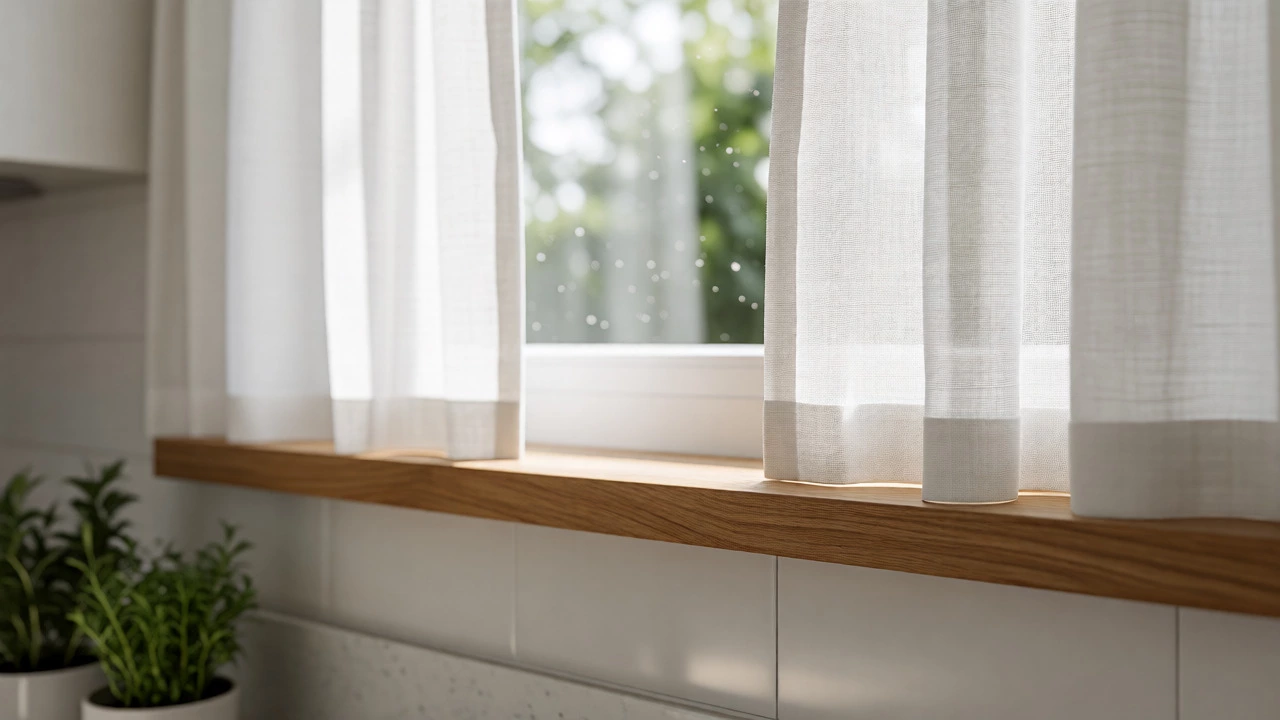
If your window has a deep sill, or if it’s in a kitchen or bathroom, sill-length curtains are usually the smartest move. These hang just below the window sill-typically 1 to 2 centimeters past it. Why not right on top? Because if they sit directly on the sill, they collect dust, crumbs, and moisture. Plus, opening and closing them becomes a hassle because they catch on the edge.
This length works best when:
- The window is above a counter or sink.
- You have pets or kids who might trip over long hems.
- The room is small, and you want to maximize natural light without visual clutter.
In Wellington, where dampness can be an issue in older homes, keeping curtains off the wet sills prevents mold and mildew buildup. If you’re dealing with a narrow window frame, this length also keeps the focus on the view rather than the fabric.
Floor Length: The Designer Favorite
For living rooms and master bedrooms, you almost always want floor-length curtains. This creates a sense of height and luxury. But here’s the tricky part: "floor length" doesn’t mean one thing. It comes in three subtle variations, and getting the measurement wrong by even 2 centimeters changes the whole look.
1. Just Grazing the Floor
This is the cleanest, most modern look. The curtain hem touches the floor but doesn’t bunch up. It looks intentional and sharp. To achieve this, measure from the bottom of your curtain heading (the part that goes on the track) to the floor, then subtract 1-2 cm. This accounts for any slight unevenness in your floorboards.
2. Breaking the Floor
Think of this like tailored trousers. The fabric touches the floor and creates a small fold or "break." It adds softness and movement. Add 5-10 cm to your floor-to-rod measurement. This is great for heavy fabrics like velvet or thick cotton linen, which hold their shape well.
3. Puddling
This is where the fabric extends beyond the floor, creating a pool of material around the base. It’s dramatic, romantic, and very French. You’d add 15-30 cm extra length. However, in a high-traffic family home, this is a nightmare. It collects dust bunnies, pet hair, and mud. Unless you’re styling a formal dining room that rarely sees shoes, skip the puddle.

Radiator Problems: The Apron Solution
Here’s a classic dilemma: You want floor-length elegance, but you have a radiator under the window. If you let long curtains hang over a hot radiator, two bad things happen. First, the heat rises and yellows the fabric over time. Second, the heat escapes through the window instead of warming the room, making your heating bill skyrocket.
In this case, go for apron length. This hangs 15-30 cm below the sill, clearing the radiator but still covering the lower part of the window. It’s a compromise, but it’s practical. Alternatively, mount your curtain rod higher and wider so the curtains stack back completely clear of the radiator when open. Then, use a shorter drop that ends just above the radiator fins.
How to Measure Correctly
Most people measure from the ceiling to the floor. That’s wrong. You need to measure from the point where the curtain will actually hang. Here’s the step-by-step process that professionals use:
- Install the rod first. Don’t buy curtains before you know exactly where the hardware sits. The height of the bracket dictates everything.
- Measure the drop. Use a steel tape measure (fabric ones stretch). Start at the bottom of the ring, eyelet, or pleat hook-the actual attachment point-and go down to the floor or sill.
- Check for obstructions. Look for door handles, vents, or uneven floorboards. If your floor slopes, measure at both ends and take the average, or adjust per side.
- Add allowance. If you’re buying ready-made, round up. If you’re having them made, specify the exact finish (e.g., "grazing").
A pro tip: Always measure three times-at the left, center, and right of the window. Floors are rarely perfectly level. Using the shortest measurement ensures you don’t end up with one side dragging while the other floats.
Curtain Length vs. Room Size
Your choice of length should also respond to the scale of your room. In a tiny apartment with low ceilings, full floor-pooling curtains can overwhelm the space. They draw the eye downward, making the ceiling feel lower. Instead, opt for sill length or a crisp grazing length. This keeps the lines vertical and clean.
Conversely, in a large, double-height loft, short curtains look cheap and disconnected. You need the weight and volume of floor-length drapes to anchor the space. If your windows are unusually tall (over 2.4 meters), consider using two panels stacked vertically or extending the rod all the way to the ceiling to elongate the window visually.

Common Mistakes to Avoid
I’ve seen countless homes ruined by these simple errors. Check your setup against this list:
- Hanging rods too low. Mounting the rod right above the window frame makes windows look stubby. Raise it 10-15 cm above the frame to create the illusion of height. This also gives you more flexibility with length.
- Ignoring the skirting board. If you have chunky skirting boards, do you hang behind them or in front? Behind looks cleaner but requires precise measuring. In front is easier but can look bulky. Decide early.
- Buying off-the-shelf without checking. Standard lengths are often 84", 96", or 108". If your ceiling is 2.7m (common in NZ villas), 96" might be too short, and 108" too long. Custom orders are worth the investment if you want a perfect fit.
- Forgetting shrinkage. Cotton and linen shrink. Wash and iron your fabric before finalizing the length if you’re DIY-ing. Ready-mades are usually pre-washed, but check the label.
Special Cases: Bay Windows and Doors
Bay windows are tricky because the sections aren’t uniform. You generally want the same length throughout for continuity. If one section hits a bench seat, shorten that panel to sill length, but keep the others floor length? No-that looks messy. Better to raise the rod higher so all panels clear the seats, or accept that the middle panel will be shorter.
For patio doors, safety is key. Floor-length curtains can get caught in sliding tracks. Use tie-backs to keep them clear during the day, or choose a lightweight fabric that slides easily. Ensure the hem doesn’t drag across the threshold, which can wear out the fabric quickly.
Final Thoughts on Style
There’s no hard rule that says "must." Design is subjective. If you love the look of a 5cm puddle, go for it. But understand the trade-offs. A grazing hem is low-maintenance and timeless. A puddle is high-maintenance and trendy. Sill length is functional and casual.
When in doubt, err on the side of longer. You can always pin up a long curtain temporarily, but you can’t magically add length to a short one. And remember, the quality of the hang matters more than the exact millimeter. Good headings, proper weights, and a sturdy rod will make any length look better than cheap flimsy hardware ever could.
Should curtains touch the floor?
In formal living areas and bedrooms, yes, they should touch the floor or break slightly. In kitchens, bathrooms, and children's rooms, they should stop at the sill to avoid dirt and damage.
How far below the window sill should curtains hang?
For sill-length curtains, hang them 1-2 cm below the sill. This prevents them from resting on the surface, which collects dust and blocks operation.
Do curtains need to match the wall color?
No. Contrast creates drama, while matching tones creates serenity. Lighter colors make rooms feel larger; darker colors add coziness. Choose based on the mood you want, not strict matching rules.
What is the best curtain length for small rooms?
Sill length or a crisp grazing length works best. Avoid puddling, which adds visual clutter. Hanging the rod close to the ceiling can also help elongate the walls.
Can I wash curtains with floor-length hems?
Yes, but check the care label. Heavy linings may require dry cleaning. Vacuum floor-length curtains regularly with an upholstery attachment to prevent dust accumulation at the hem.