Home Storage Calculator
Calculate Your Extra Storage
Your Storage Potential
Estimated space gained: cubic feet
Estimated cost:
Most homes feel cramped not because they’re too small, but because they’re cluttered. You don’t need to move or build an extension to fix that. Real extra storage isn’t about buying fancy cabinets - it’s about using what’s already there in smarter ways. In Wellington, where space is tight and weather keeps gear in constant rotation, people have learned to stack, hang, slide, and hide storage without sacrificing style. Here’s how you can do the same.
Start with the walls
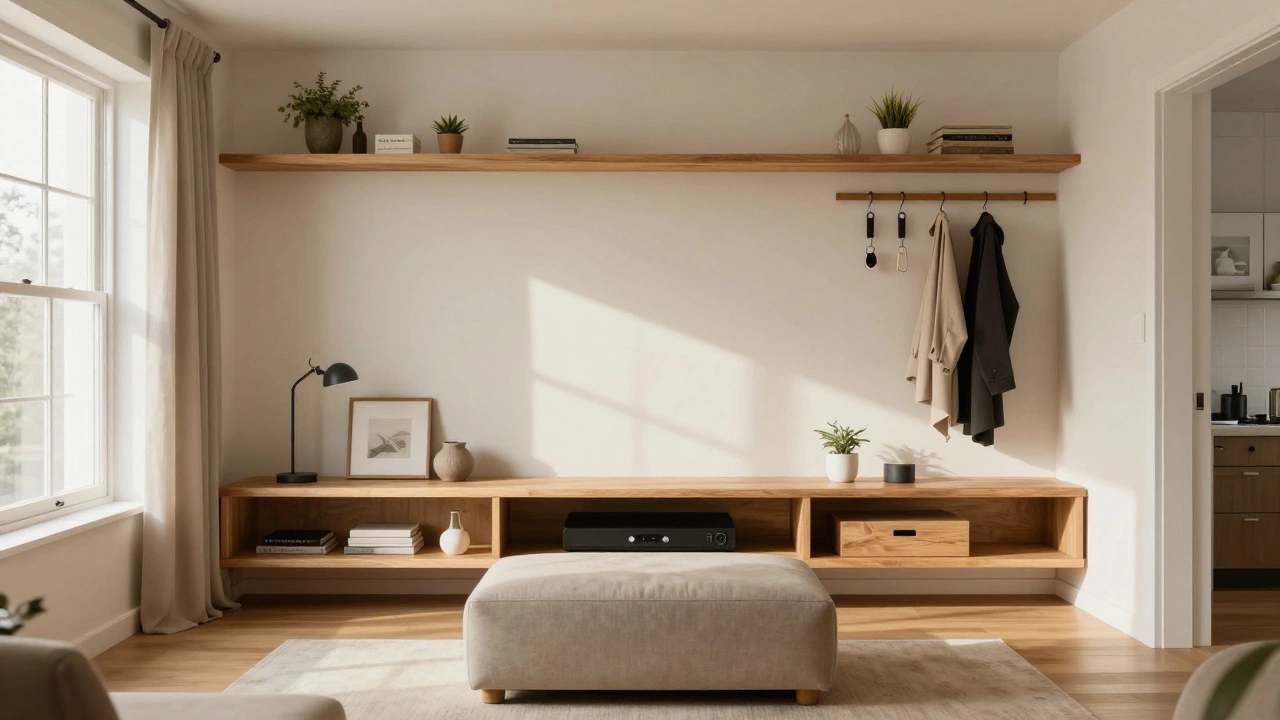
Walls are the most underused real estate in any home. Flat surfaces aren’t just for pictures - they’re for shelves, hooks, and rails. Install floating shelves in the living room to replace bulky media consoles. Use narrow wall-mounted racks in the hallway for coats, bags, and keys. In the garage, add pegboards to hang tools. A single 6-foot wall shelf can hold as much as a medium closet, and it costs less than $50 to install. Don’t forget vertical storage in the bathroom: tall, slim cabinets beside the vanity or over the toilet add storage without eating up floor space.
Use the space under beds
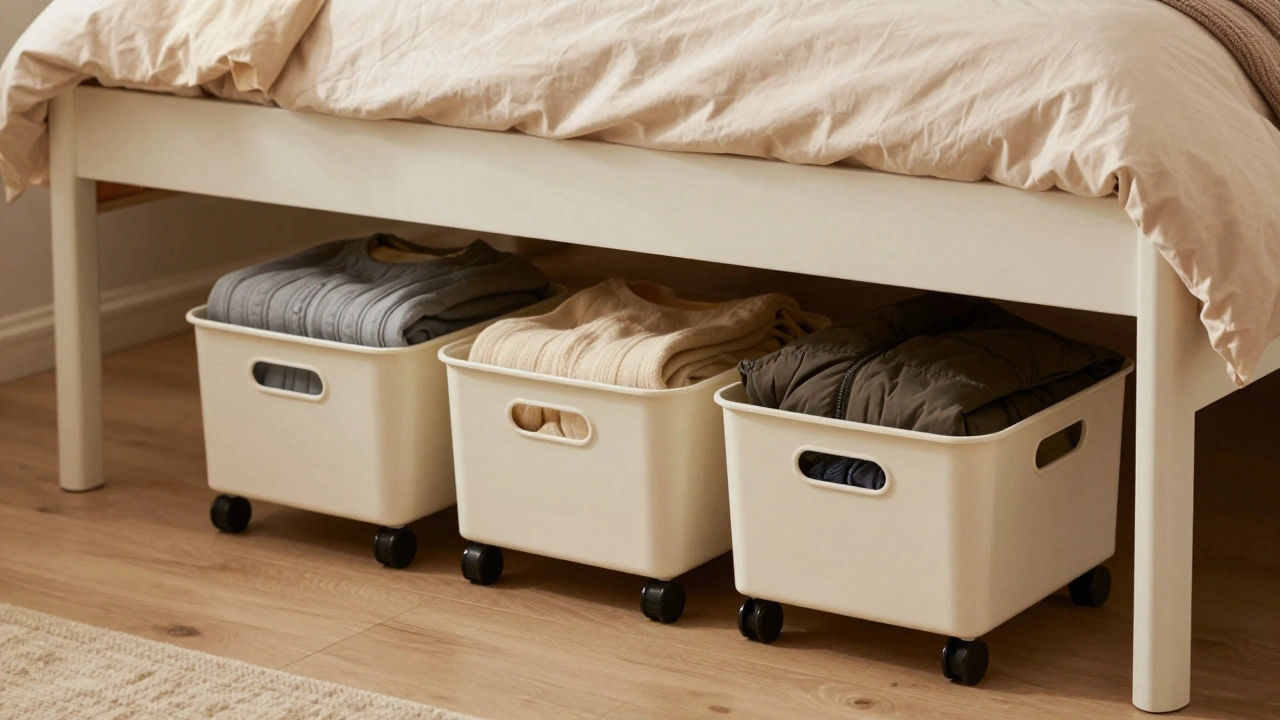
If your bed sits on legs, you’ve got a hidden drawer. Even if it doesn’t, sliding bins under the frame work wonders. Choose low-profile, wheeled bins with handles - they slide out smoothly and don’t require lifting. In a kid’s room, these hold toys, shoes, or seasonal clothes. In the master bedroom, they store off-season bedding or bulky winter coats. A 12-inch clearance is enough for most bins. If your bed is too low, raise it with bed risers. A set of four plastic risers costs under $20 and lifts the frame by 6 inches. Suddenly, you’ve added 20 cubic feet of storage.
Turn closets into storage systems
A walk-in closet isn’t magic - it’s just organized. Start by removing one shelf and replacing it with a hanging rod for folded sweaters or jeans. Add double rods: one high for shirts and blouses, one low for pants. Use slim, non-slip hangers to save space. Install pull-out baskets on the floor for shoes or linens. In a narrow closet, add a tension rod between the side wall and the door to hang scarves or belts. Don’t forget the back of the door: a clear pocket organizer holds accessories, toiletries, or cleaning supplies. A well-organized closet doesn’t just store more - it makes everything easier to find.
Repurpose furniture with hidden storage
Every piece of furniture you own can do double duty. A bench at the end of the bed? Choose one with a lift-top lid - it stores blankets, pillows, or board games. A coffee table with drawers? Perfect for remote controls, chargers, or craft supplies. Even a TV stand can hold baskets for cables and remote batteries. Look for pieces with built-in compartments: ottomans with hidden lids, storage beds with drawers, or side tables with lift-up tops. You don’t need to buy new furniture - just rethink what you already have. A simple storage ottoman costs less than $100 and replaces three separate items: a footrest, a side table, and a storage bin.
Maximize kitchen and pantry corners
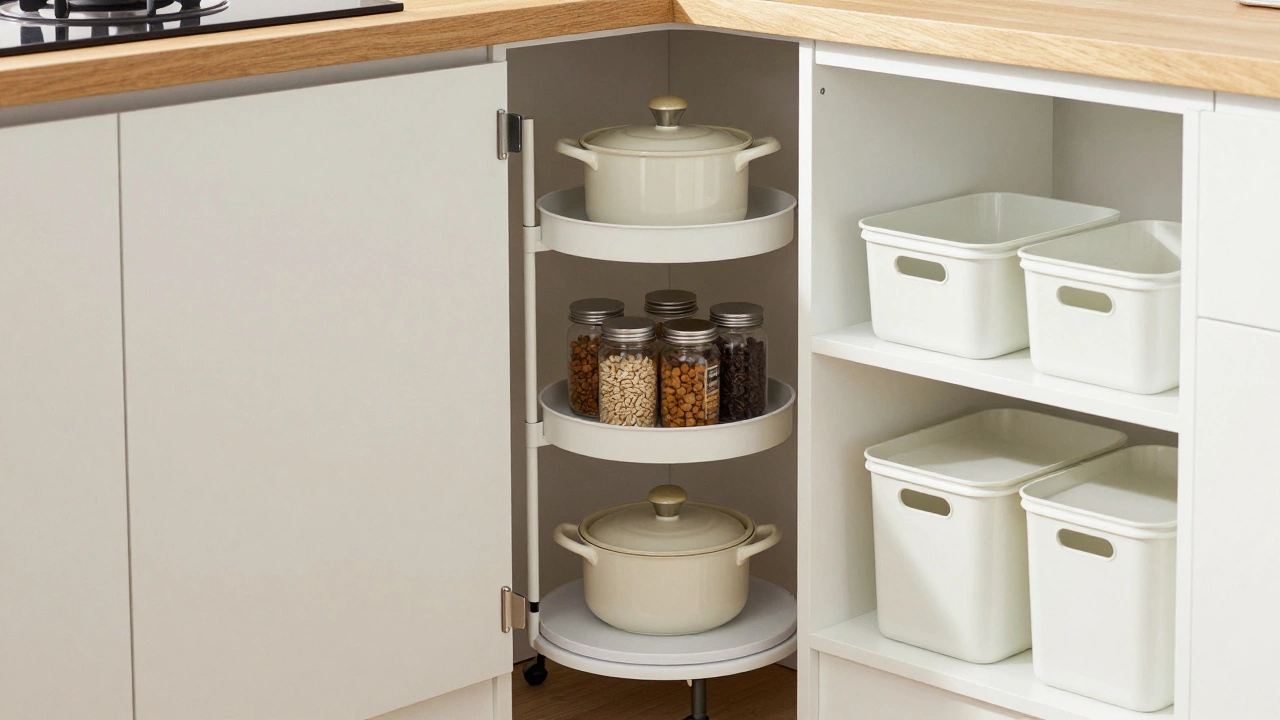
Kitchens are storage nightmares because corners go unused. Install a lazy Susan in the corner cabinet - it spins and gives access to pots, pans, or spices that were buried before. Use tiered shelving inside deep cabinets so you can see everything at a glance. Hang pots from a ceiling rack or wall-mounted rail. In the pantry, use stackable bins with labels. A clear plastic bin on a shelf holds cereal, snacks, or rice. Add a magnetic strip inside a cabinet door to hold knives, spice tins, or measuring spoons. A 12-inch deep shelf with bins can hold twice as much as a shallow one with no organization.
Use doorways and narrow gaps
That 3-inch gap between the fridge and the wall? Slide in a narrow cart for canned goods. The space beside the toilet? A tall, slim cabinet fits perfectly. Doorways aren’t just for swinging - they’re for hanging. Over-the-door shoe organizers work in laundry rooms, mudrooms, or even offices. In a home office, a hanging file pocket on the back of the door holds folders, notebooks, or printer paper. Even a narrow hallway can hold a slim console table with drawers. These gaps aren’t dead space - they’re storage waiting to be claimed.
Store seasonally - and forget it
You don’t need to keep everything visible. Rotate items by season. Store winter coats, heavy blankets, and holiday decorations in labeled bins under the bed, in the attic, or in a closet corner. Use vacuum-sealed bags for bulky items like quilts - they shrink to a fraction of their size. Keep a few bins on a high shelf, out of daily reach. Label them clearly: "Winter Gear - 2026," "Summer Toys - 2025." This isn’t just storage - it’s mental decluttering. When you need something, you know exactly where to look.
Build storage into stairs
If your home has stairs, the space underneath is a goldmine. In older homes, this area is often left empty. Turn it into drawers, cabinets, or pull-out bins. A staircase with 10 steps can hide over 100 cubic feet of storage. In a small home, this might hold tools, sports gear, or extra linens. Install sliding doors or lift-up lids so it looks clean. If you can’t build into the structure, use stackable bins on the landing. A few sturdy plastic bins under the stairs look intentional - not cluttered.
Think vertical, not horizontal
Most people think storage means more floor space. That’s backwards. The best storage goes up, not out. Tall bookshelves, ceiling-high cabinets, and wall-mounted racks use vertical space efficiently. In a laundry room, stack the washer and dryer and add shelves on top for detergent and folding bins. In the garage, install tall shelving units that reach the ceiling. Use step stools to reach the top - it’s safer than climbing on boxes. Vertical storage keeps floors clear, makes rooms feel bigger, and reduces clutter.
What not to do
Don’t buy storage bins without measuring. A bin that’s too wide won’t fit under the bed. A shelf that’s too deep will block light. Always check dimensions before you buy. Don’t overload shelves - they can sag or break. Keep heavy items on lower shelves. Don’t ignore lighting. A dark closet or under-bed area is useless if you can’t see what’s inside. Add battery-powered LED strips or motion-sensor lights. And don’t forget maintenance. Storage only works if you put things back. Make it easy: label everything, keep bins uniform, and clean out once a season.
| Room | Best Storage Idea | Space Gained | Cost |
|---|---|---|---|
| Bathroom | Tall cabinet beside vanity | 1.5 cubic feet | $40-$80 |
| Bedroom | Under-bed storage bins | 2-3 cubic feet per bin | $25-$60 |
| Kitchen | Lazy Susan in corner | 1 cubic foot | $30 |
| Garage | Wall-mounted pegboard | Up to 5 cubic feet | $20-$50 |
| Living Room | Storage ottoman | 2-4 cubic feet | $70-$120 |
Small changes, big results
You don’t need to renovate to find extra storage. Start with one room. Pick one spot - under the bed, the back of the door, a corner shelf - and fix it. Do it today. In a week, you’ll notice how much easier it is to find things. In a month, your home will feel bigger. Storage isn’t about having more stuff - it’s about having space for what matters.
What’s the cheapest way to add storage to a house?
The cheapest way is to use existing furniture differently. Sliding bins under the bed cost under $20. Installing a tension rod in a closet is $5. A set of wall shelves can be built for under $30. Most of the time, you’re not buying storage - you’re reorganizing what you already own.
Can I add storage without drilling holes?
Yes. Use adhesive hooks, tension rods, over-the-door organizers, and freestanding shelves. Magnetic strips stick to metal without nails. Under-bed bins slide in without installation. Even heavy items like a storage ottoman don’t need mounting. These solutions are ideal for renters or anyone who wants to avoid damage.
How do I keep storage organized long-term?
Label everything. Use uniform bins so they stack neatly. Put like items together - all cleaning supplies in one bin, all kids’ art supplies in another. Set a rule: if you don’t use it in six months, donate or store it elsewhere. Clean out storage areas every season. The goal isn’t perfection - it’s predictability. You should know exactly where to find your winter gloves without searching.
What’s the best storage for small apartments?
Vertical space is king. Install floor-to-ceiling shelves. Use multi-functional furniture - a bed with drawers, a sofa with hidden storage. Hang hooks on walls for bags and coats. Store seasonal items in vacuum bags under the bed. Avoid bulky furniture. Choose slim, tall pieces over wide ones. In small spaces, storage isn’t about quantity - it’s about smart use of every inch.
Should I buy storage bins or make my own?
Buy bins if you want durability and a clean look - plastic or fabric bins with handles are designed for stacking and sliding. But if you’re on a budget, repurpose cardboard boxes, shoeboxes, or baskets. Cover them with contact paper or fabric for a uniform look. The goal isn’t the container - it’s the system. A labeled shoebox under the bed works just as well as a $40 bin.