
Curtain Rod Height & Gap Calculator
Input Your Measurements
Your Recommended Setup
Visual Guide:
Suitable Curtain Lengths:
Picture this: you’ve bought beautiful drapes, mounted the brackets, and stepped back. The fabric pools on the floor in a messy heap because the rod is sitting right on top of your baseboards. It’s a frustrating mistake that ruins an otherwise perfect room. So, can curtains hang above baseboards? Technically, yes-they physically will if you install the rod too low. But aesthetically? No. You should never let your curtains touch or rest on the baseboard.
The short answer is that there needs to be a specific gap between the bottom of your curtain and the baseboard. This small space prevents tripping hazards, keeps the fabric clean, and creates a polished look. Getting this measurement right transforms a DIY project from amateur to professional. Let’s break down exactly how high to hang your rods and why that little bit of air matters so much.
Why the Gap Between Curtain and Baseboard Matters
You might think letting the curtain brush the floor looks dramatic, but in practice, it usually looks sloppy. There are three main reasons to keep your curtains clear of the baseboards.
- Cleanliness: Floors get dirty. Every time you vacuum, mop, or sweep, the bristles hit the baseboard. If your curtain is touching it, those dirt particles transfer directly onto your expensive fabric. Over time, the bottom hem becomes a magnet for dust, pet hair, and grime.
- Movement and Airflow: Curtains need to move. When you open them, they should glide smoothly along the rod. If the bottom is caught against the baseboard or the floor, it creates drag. This friction can strain your hardware and make opening and closing the windows feel like a chore.
- Visual Proportion: Interior design relies on negative space. A small gap allows the eye to travel from the ceiling to the floor without interruption. It makes the window-and by extension, the room-feel taller and more open. A curtain that hugs the baseboard cuts off that vertical line, making the ceiling feel lower than it actually is.
The Golden Rule: How High Should the Rod Be?
To avoid the baseboard problem, you need to start at the top. Most people make the mistake of placing the rod just above the window frame. This is the number one reason curtains end up looking short and awkward. Instead, follow the "higher is better" rule.
Aim to place the curtain rod approximately 4 to 6 inches above the top of the window frame. In some cases, especially in rooms with standard 8-foot ceilings, you might even mount the rod closer to the ceiling itself. By raising the mounting point, you increase the total length of the drape. This extra length ensures that when you buy standard-length curtains (usually 84 inches or 96 inches), they will reach near the floor without needing custom alterations.
| Ceiling Height | Rod Placement Strategy | Expected Curtain Length |
|---|---|---|
| Standard (8 ft) | 4-6 inches above window frame OR as close to ceiling as possible | 84 inches (standard) or 96 inches (floor grazing) |
| Tall (9-10 ft) | Close to the ceiling | Custom lengths or 96-inch panels doubled up |
| Vaulted/Cathedral | At the peak of the arch or highest practical point | Custom tailored lengths required |
Determining the Perfect Hemline: The Three Styles
Once the rod is high enough, you have to decide where the bottom of the curtain stops relative to the baseboard. There are three accepted styles, each with a different relationship to the floor and the molding below it.
- Floating (or Hovering): This style leaves a gap of about half an inch to one inch above the floor. It’s the safest bet for high-traffic areas or homes with pets and kids. Because the curtain doesn’t touch the ground, it stays cleaner and doesn’t trip anyone. It sits clearly above the baseboard, creating a light, airy feel.
- Grazing: Here, the curtain barely kisses the floor. It touches the surface but doesn’t pool. This is the most common choice for modern interiors. It looks intentional and crisp. However, you must ensure the floor is perfectly level; otherwise, the curtain might drag in spots and catch on the baseboard corners.
- Puddling: This involves allowing several inches of fabric to pool on the floor. While luxurious, this style is high-maintenance. It collects dirt quickly and requires careful tailoring to ensure the puddle looks uniform. Even with pooling, the fabric should rest *on* the floor, not bunched up against the vertical face of the baseboard.
Regardless of which style you choose, the key is consistency. Measure the distance from the rod bracket to the floor at multiple points across the window. Floors are rarely perfectly level. If one side is longer, tailor the curtain to the shortest side to prevent dragging.
Working Around Obstacles: Radiators and Deep Windows
Sometimes, architecture gets in the way. What happens if you have a radiator behind the window or a deep recessed window well? These features complicate the relationship between the curtain and the baseboard.
If you have a radiator located under the window, you cannot let the curtain hang freely against it. Heat rises, and trapping it behind heavy fabric reduces efficiency and can damage the textile over time due to moisture buildup. In this case, you need a curtain pole that extends further out from the wall, or you should opt for a shorter, floating hem that clears the radiator entirely. This often means the curtain will stop significantly higher than the baseboard, which is perfectly acceptable functionally.
For deep window wells, you might consider using two sets of curtains: one inside the well and one outside. The inner set handles privacy and light blocking, while the outer set provides decoration. Ensure the outer set hangs high enough to clear any ledges or baseboards within the well structure. Using a tension rod for the inner layer and a sturdy bracket system for the outer layer helps manage these depths effectively.

Installation Tips to Avoid Common Mistakes
Even with the right measurements, installation errors can ruin the look. Here are a few pro tips to ensure your curtains hang correctly above the baseboards.
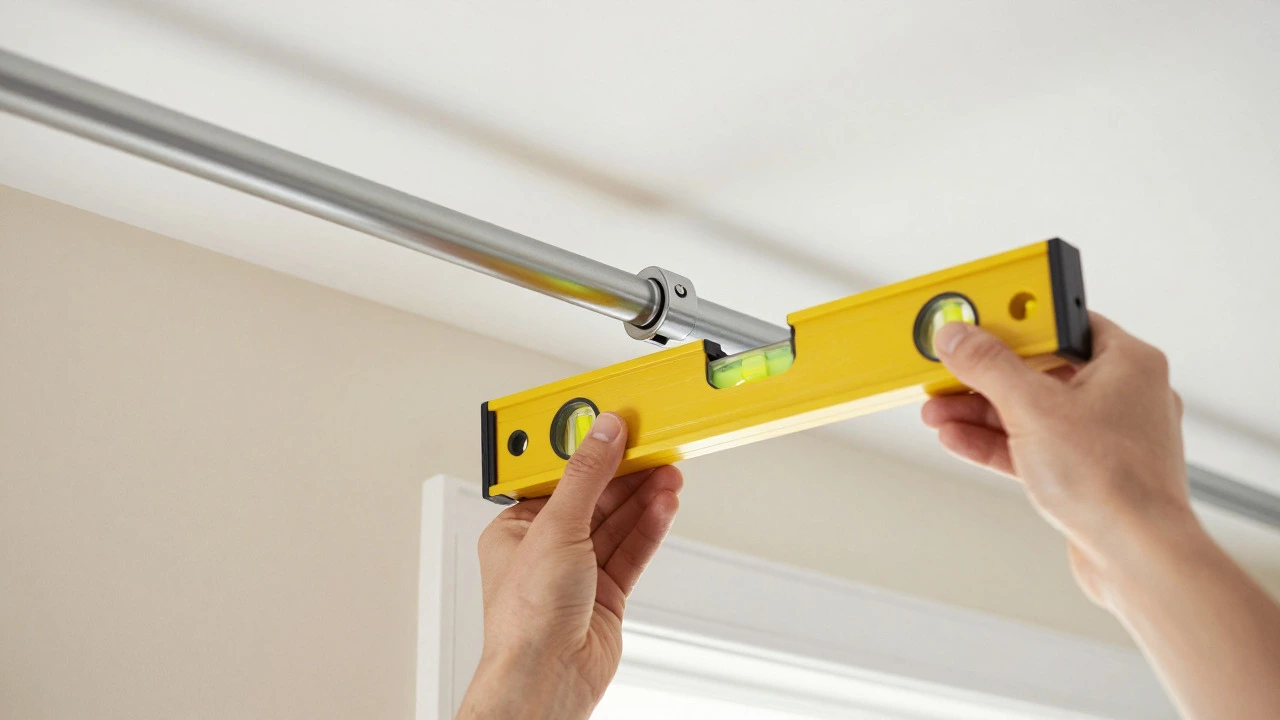
- Use a Level: Never guess. Use a spirit level to mark your bracket holes. A crooked rod causes curtains to slide to one side, potentially causing one edge to drag on the baseboard while the other floats.
- Check Wall Material: Are you drilling into drywall or plaster? Drywall anchors are essential for holding the weight of heavy drapes. If the brackets pull away from the wall, the entire alignment shifts, and your carefully measured hemline becomes irrelevant.
- Test Before Drilling: Hold the rod up at your desired height before making any holes. Stand back and visualize the drop. Does it look balanced? Does it clear the baseboard comfortably? Adjust as needed.
- Consider the Hardware Weight: Heavy velvet curtains require heavier-duty rods and brackets. Lighter linen or cotton fabrics can work with simpler tension rods or lightweight aluminum poles. Matching the hardware to the fabric weight prevents sagging, which could cause the center of the curtain to dip and touch the baseboard.
When Custom Tailoring is Worth It
If you have non-standard ceiling heights or unique window placements, off-the-shelf curtains might not give you that perfect gap above the baseboard. In these cases, custom tailoring is a worthwhile investment. A tailor can adjust the hem to ensure it floats exactly half an inch above the floor, regardless of minor unevenness in your flooring.
Additionally, custom curtains allow you to add weights to the hem. Small magnetic weights or lead chains sewn into the bottom edge help the curtain hang straight and resist drafts. This is particularly useful for large sliding glass doors where wind might blow the fabric against the baseboard or furniture.
How many inches above the floor should curtains hang?
Ideally, curtains should hang either grazing the floor (touching lightly) or floating ½ to 1 inch above it. Avoid having them sit directly on the baseboard or pile excessively unless you specifically want a puddled look, which requires regular cleaning.
Should curtain rods go all the way to the ceiling?
In rooms with standard 8-foot ceilings, mounting the rod 4-6 inches above the window frame is standard. However, mounting it closer to the ceiling creates the illusion of height and ensures the curtains are long enough to clear the baseboards properly without looking short.
What if my floor is uneven?
If your floor slopes, measure the distance from the rod to the floor at both ends and the center. Trim or hem the curtains based on the shortest measurement to prevent dragging. Alternatively, use a floating hem that clears the highest point of the floor variation.
Do curtains need to cover the baseboard completely?
No, curtains do not need to cover the baseboard. In fact, it is better if they don't. Covering the baseboard can trap heat from radiators and collect dust. The goal is to frame the window, not hide the architectural details of the wall's lower section.
Can I use tension rods for heavy curtains?
Tension rods are best for lightweight sheers or cafe-style curtains. For heavier drapes that need to hang straight and clear the baseboard consistently, fixed brackets screwed into studs or solid wall anchors provide better support and stability.