Mirror Space Calculator
How Mirrors Transform Your Space
The TikTok mirror trend uses physics to make rooms feel bigger and brighter. Calculate your optimal mirror setup based on room dimensions and light sources.
Ever scrolled through TikTok and seen a room that looks like it’s glowing-no lights, just pure, shimmering reflection? That’s the TikTok mirror trend, and it’s not just a filter. It’s real. People are covering entire walls in mirrors, stacking them like art, or placing one behind a lamp and suddenly, their tiny apartment looks like a high-end boutique hotel. But why now? And is it just for looks, or does it actually change how you live in your space?
What Exactly Is the TikTok Mirror Trend?
The TikTok mirror trend is the use of large, frameless, or minimally framed mirrors to transform small or dim rooms into something airy, bright, and visually expansive. It’s not about vanity mirrors or bathroom ones. These are full-wall installations, sometimes multiple mirrors arranged in staggered rows, or single oversized panels placed to catch natural light. The videos show before-and-afters: a dark corner becomes a glowing hallway. A cramped bedroom feels like a studio loft. It’s hypnotic.
The trend exploded in late 2024 after a video from a designer in Toronto showed how one 8-foot-tall mirror placed opposite a window doubled the natural light in her 500-square-foot apartment. That clip got over 12 million views. Since then, hashtags like #MirrorWall and #TikTokMirrorTrend have racked up more than 4.7 billion views. People aren’t just watching-they’re buying. Mirror sales jumped 210% in the U.S. and 185% in the UK in the first two months of 2025, according to home goods retailer reports.
Why Does It Work So Well?
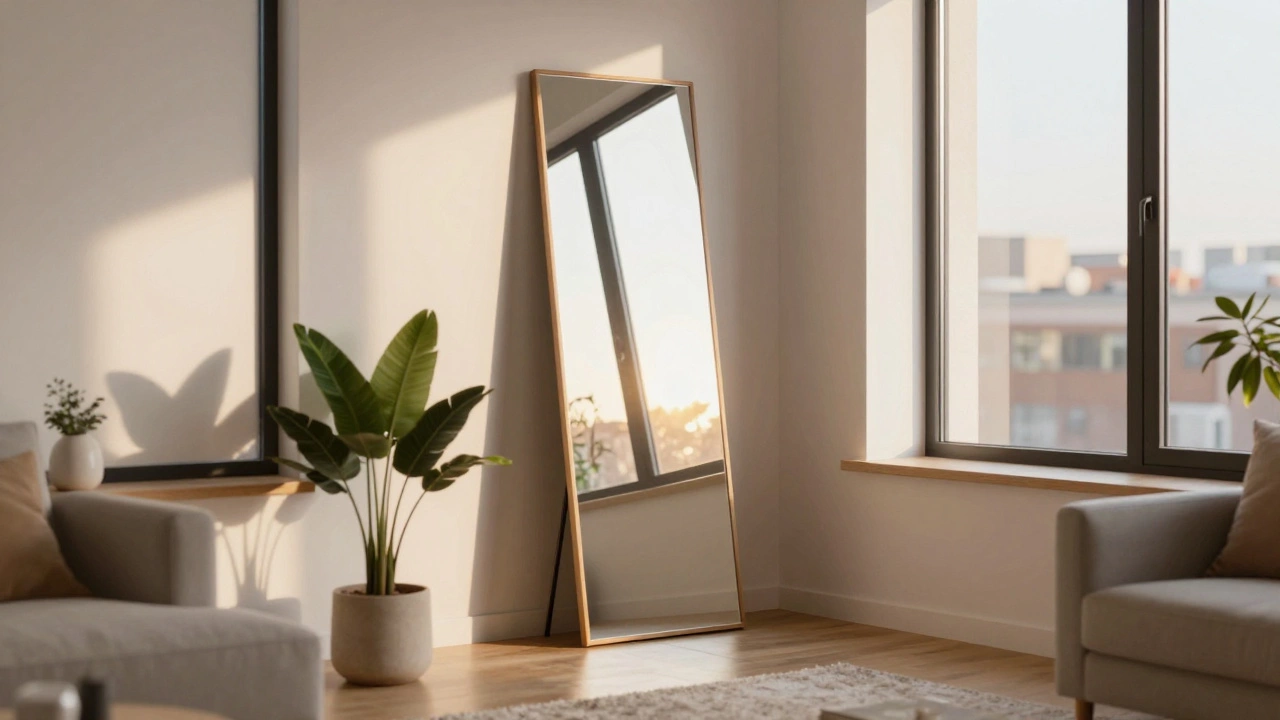
It’s physics, not magic. Mirrors don’t create light-they bounce it. When you place a mirror directly across from a window, it reflects sunlight deeper into the room. That means even a north-facing space gets usable brightness for hours longer than before. In cities like Wellington, where winter days are short and gray, this isn’t just aesthetic-it’s functional.
But there’s more. Humans naturally perceive space based on visual cues. A mirror tricks your brain into thinking there’s another room behind it. That’s why small apartments feel larger. A 2023 study from the University of Auckland’s Interior Design Lab found that rooms with strategically placed mirrors were perceived as 23% bigger by participants, even when the actual square footage didn’t change.
And then there’s the mood factor. Reflective surfaces create a sense of calm. Light bouncing around reduces harsh shadows and glare. In spaces where people work from home or struggle with seasonal low mood, this soft, even glow can make a real difference. One user in Christchurch told a local news outlet, “I didn’t realize how much I hated the dark corner of my living room until I put a mirror there. Now I sit there every morning with my coffee. It’s like the room finally breathed.”
How People Are Doing It
The trend isn’t one-size-fits-all. There are three main ways people are applying it:
- Full-wall mirrors - Typically 4 to 8 feet tall, mounted floor to ceiling. Often used behind sofas, beds, or in entryways. These are the most dramatic and require professional installation due to weight.
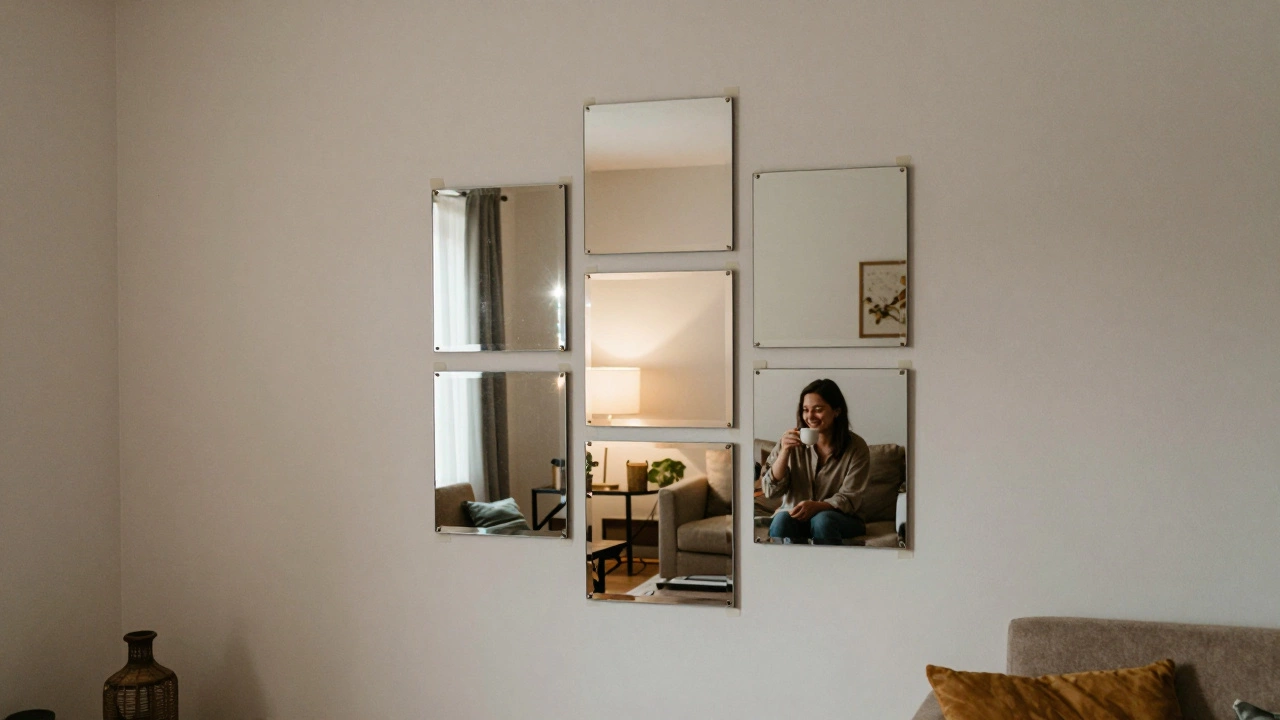
- Mirror clusters - Multiple smaller mirrors (24” to 36”) arranged in geometric patterns-hexagons, chevrons, or even random shapes. These are DIY-friendly and popular for renters who can’t drill into walls.
- Strategic accent mirrors - One mirror placed to reflect a specific feature: a plant, a lamp, a piece of art. This is the subtlest version and works best in rooms with limited space or budget.
Some users are even combining mirrors with LED strips behind the edges, creating a halo effect that turns the mirror into a soft light source. It’s not just reflecting light anymore-it’s generating ambient glow.
What You Need to Know Before Trying It
It sounds simple, but there are pitfalls. A poorly placed mirror can make a room feel like a funhouse. Here’s what actually works:
- Match the light source - Place the mirror directly across from a window or lamp. If the light comes from the side, the mirror will just reflect a wall, not brightness.
- Don’t overdo it - One large mirror or three small ones in a cluster is enough. Too many reflections can feel chaotic, especially in small spaces.
- Watch the height - Floor-to-ceiling mirrors work best in rooms over 8 feet tall. In lower ceilings, mount the mirror at eye level to avoid reflecting the ceiling.
- Consider safety - Large mirrors are heavy. Use wall anchors rated for at least 100 lbs. Never rely on adhesive strips alone. If you’re renting, check with your landlord first.
- Think about what’s reflected - A mirror facing a messy closet? That’s not a vibe. A mirror facing a plant, a curated shelf, or a clean wall? That’s the aesthetic.
One common mistake? Placing a mirror directly across from a TV. The glare makes it impossible to watch anything after sunset. Another? Putting it where pets or kids can easily bump into it. Mirrors aren’t fragile, but the people around them are.
Is It Just a Trend-or Here to Stay?
Interior designers are split. Some call it a flash-in-the-pan TikTok gimmick. Others say it’s the logical next step in small-space living. With urban housing shrinking and remote work making home environments more important, people are looking for affordable, non-permanent ways to upgrade their spaces. Mirrors cost less than new lighting, don’t need wiring, and can be moved if you relocate.
Real estate agents are noticing it too. Homes with one well-placed mirror in the living area or entryway are selling 18% faster than similar ones without, according to a survey of 500 listings in New Zealand and Australia in early 2025. Buyers describe the effect as “welcoming” and “open.”
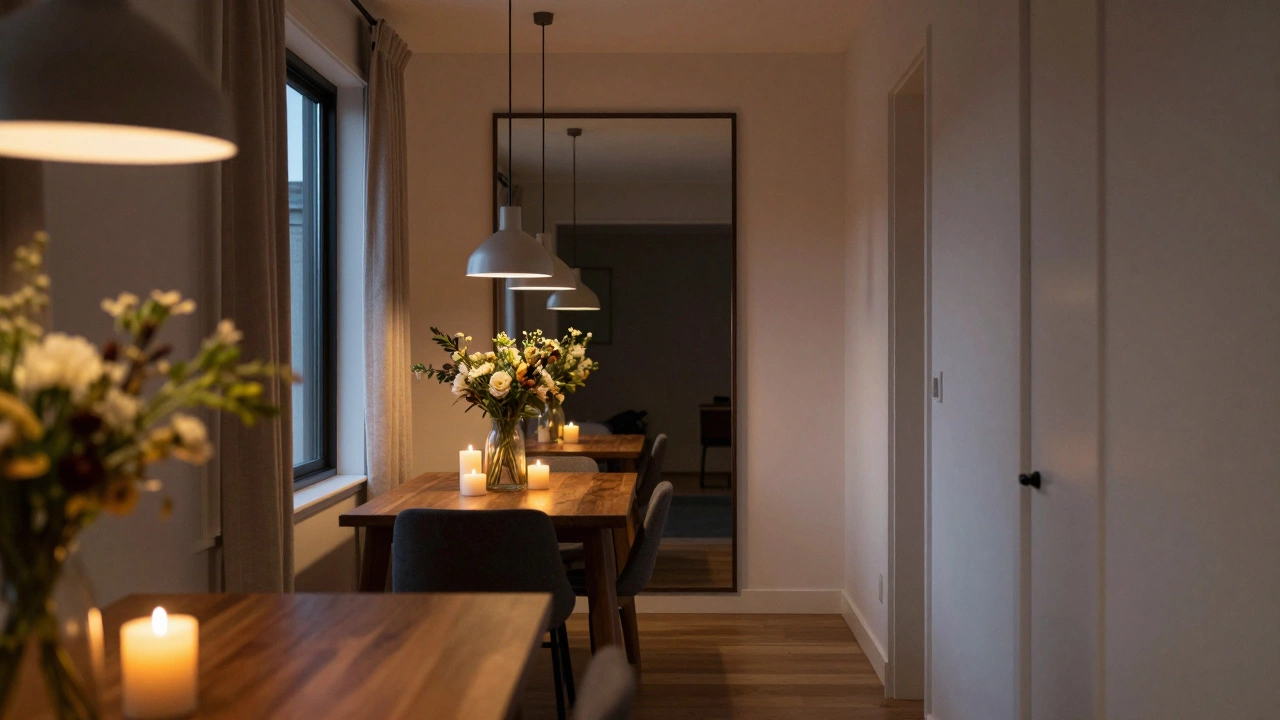
And it’s not just for apartments. Even homes with high ceilings are using mirrors in stairwells, hallways, and behind dining tables to create depth. It’s becoming a staple in modern minimalist design-not because it’s trendy, but because it works.
Where to Find the Right Mirror
You don’t need to buy from a luxury brand. Many affordable options exist:
- IKEA - The VYSSA mirror (79” tall) is a top seller. It’s frameless, lightweight, and ships flat.
- Amazon - Look for mirrors with wall-mounting hardware included. Avoid ones with cheap plastic frames that warp.
- Local thrift stores or Facebook Marketplace - Vintage mirrors often have character and are cheaper. Just check for cracks and tarnish.
- Custom glass shops - If you want a unique shape or size, local glass fabricators can cut a mirror to fit your wall. Prices start around $150 for a 4x6 foot panel.
Pro tip: Always measure twice. A mirror that’s 2 inches too wide won’t fit. And if you’re unsure, take a photo of your wall with a tape measure next to it. Many online retailers let you upload photos to check sizing.
What It Doesn’t Do
It won’t fix bad lighting. If your room has zero natural light, a mirror won’t turn it into daylight. It amplifies what’s already there. So if your only light source is a single 40-watt bulb, you’ll need to add a lamp too.
It won’t hide clutter. In fact, it’ll highlight it. That’s why many people pair the mirror trend with minimalism. It’s not about decoration-it’s about editing. The mirror shows you what’s worth keeping in view.
And it’s not for everyone. If you hate seeing your reflection constantly, or if you live in a high-traffic area where people keep bumping into it, this might not be your style. It’s not a universal solution. It’s a tool-one that works brilliantly when used with intention.
Can I use a mirror in a bathroom with the TikTok trend?
Yes, but with limits. Bathroom mirrors are usually small and meant for grooming. The TikTok trend works best in living rooms, entryways, or bedrooms where you want to expand space or boost light. In bathrooms, a large mirror can work if it’s mounted above the vanity and reflects a window. But don’t expect it to replace proper lighting-moisture and steam can fog mirrors, reducing their effect.
Do mirrors make a room feel colder?
Not if you balance them right. Mirrors themselves don’t change temperature, but they can make a room feel more “clinical” if everything is shiny and bare. To soften it, pair your mirror with warm wood tones, textured rugs, or fabric curtains. A mirror reflecting a wool blanket or a plant looks inviting. One reflecting metal and concrete? That’s a different vibe.
Is the TikTok mirror trend safe for renters?
Absolutely, if you choose the right mirror. Lightweight, frameless mirrors with adhesive mounting kits are available. Brands like IKEA and Wayfair offer options that hold up to 30 lbs with damage-free hooks. Just avoid drilling into walls if your lease forbids it. You can also lean a large mirror against the wall-it still reflects light and looks intentional. Many renters are using this as a temporary upgrade.
Can I use more than one mirror in a room?
Yes, but keep it simple. Two mirrors work well if they’re placed on opposite walls to bounce light back and forth. Three or more should be arranged in a pattern, not randomly. Too many scattered mirrors create visual noise. Think of it like music: a single note can be beautiful. A whole orchestra? Only if it’s in tune.
Why do some mirrors look green or blurry?
Low-quality mirrors use silver or aluminum coatings that degrade over time. They can develop a greenish tint, especially around the edges, or become cloudy. Look for mirrors labeled “low-iron glass” or “high-purity reflective coating.” These stay clear longer. A good mirror should reflect colors accurately-no yellowing, no green. If it looks off, it’s cheap.
If you’ve been stuck in a dark room, wondering how to make it feel bigger without spending thousands, the TikTok mirror trend offers a real, measurable solution. It’s not about following a trend. It’s about using light, space, and reflection to turn a space you live in into a space you love.