Bedding Recommender Tool
Find the best bedding material for your needs based on your sleep habits, skin type, and health priorities.
Your Sleep Profile
Your Preferences
Your personalized bedding recommendation will appear here based on your answers.
Most people spend a third of their lives in bed. But how often do you think about what your bedding is actually doing to your skin, your breathing, and your sleep quality? The truth is, not all bedding is created equal. Some materials trap heat, harbor dust mites, or irritate sensitive skin-while others help you sleep deeper, wake up refreshed, and even reduce allergies. If you’re tired of waking up itchy, sweaty, or congested, it’s time to look at what’s really under your sheets.
Why Bedding Matters More Than You Think
Your bedding touches your skin for hours every night. That means it’s not just about comfort-it’s about exposure. Dust mites thrive in warm, humid environments like mattresses and pillows, feeding on dead skin cells. Synthetic fabrics like polyester trap moisture, creating the perfect breeding ground. Meanwhile, natural fibers breathe better, wick away sweat, and resist allergens naturally.
A 2023 study from the Journal of Allergy and Clinical Immunology found that people who switched from synthetic to natural fiber bedding reported a 40% reduction in nighttime allergy symptoms within four weeks. That’s not just anecdotal. It’s measurable. And it starts with choosing the right material.
Organic Cotton: The Gold Standard for Sensitive Skin
If you’ve ever woken up with red, itchy patches on your arms or face, you might be reacting to chemicals left in conventional cotton. Regular cotton is one of the most pesticide-heavy crops in the world. Even after washing, residues can linger-and they don’t just wash off your skin. They stay in your bedding, slowly releasing over time.
Organic cotton changes that. Grown without synthetic pesticides, herbicides, or genetically modified seeds, it’s processed without chlorine bleach or formaldehyde finishes. The result? Softer, cleaner fabric that’s gentler on eczema-prone skin, asthma triggers, and babies.
Look for GOTS (Global Organic Textile Standard) certification. That means the entire supply chain-from farm to finished product-meets strict environmental and social criteria. Brands like Coyuchi, Boll & Branch, and Parachute offer GOTS-certified sets in 200-400 thread count. Don’t chase high thread counts above 500; they’re often achieved by twisting multiple thin threads together, which makes fabric less durable and more prone to pilling.
Bamboo: The Cooling Alternative That’s Actually Sustainable
Bamboo bedding has exploded in popularity, but not all bamboo is the same. There’s a big difference between bamboo viscose (the most common type) and mechanically processed bamboo lyocell.
Bamboo viscose is made by chemically breaking down bamboo pulp. While the final fabric feels silky and cool, the process can involve toxic solvents like carbon disulfide. If a brand doesn’t mention closed-loop processing or TENCEL™ certification, it’s likely using outdated methods.
Bamboo lyocell, on the other hand, is made using a non-toxic solvent in a closed-loop system where 99% of chemicals are recycled. The result? A fabric that’s naturally antimicrobial, 50% more absorbent than cotton, and ideal for hot sleepers. It regulates temperature better than any synthetic blend.
Brands like Cariloha and Luxome use TENCEL™ branded bamboo lyocell. These sheets stay cool even when the room hits 78°F (25.5°C)-something cotton can’t always do. And because bamboo grows fast without needing pesticides or much water, it’s one of the most sustainable options on the market.
Hypoallergenic Bedding: What Really Works
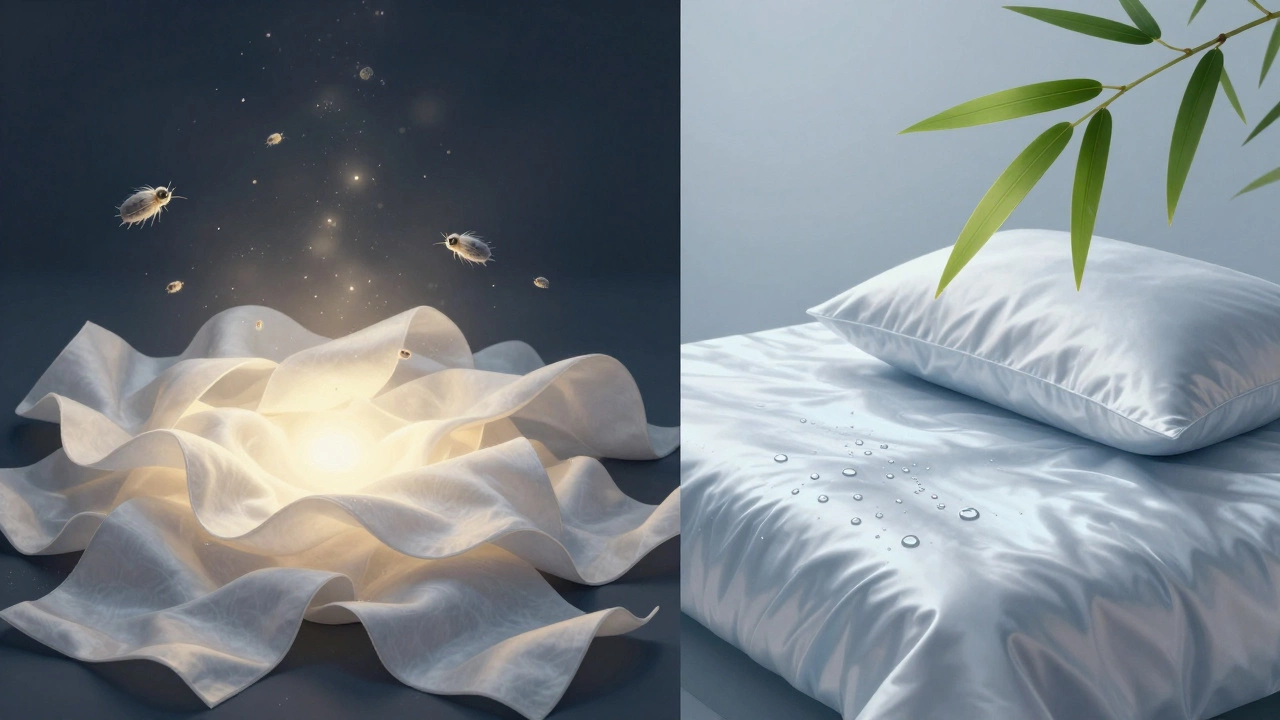
"Hypoallergenic" is a marketing term that means almost nothing unless it’s backed by real testing. The only reliable certifications are from organizations like Asthma and Allergy Foundation of America (AAFA) or Allergy UK. These test products for dust mite resistance, low chemical emissions, and skin compatibility.
True hypoallergenic bedding doesn’t rely on chemical sprays. Instead, it uses tight weaves that physically block dust mites. Look for a weave density of at least 200 threads per inch. Microfiber polyester might claim to be hypoallergenic, but it’s still a synthetic that traps heat and moisture-making it worse for night sweats and skin irritation.
For allergy sufferers, the best combo is organic cotton or bamboo lyocell with a tightly woven weave, paired with a certified allergen-proof mattress cover. You don’t need expensive anti-allergy sprays. Just clean your bedding weekly in hot water (at least 130°F/54°C) to kill dust mites.
What to Avoid: Synthetic Blends and Cheap Linens
Don’t be fooled by the low price tag on a 300-thread-count polyester blend from a big-box store. Polyester is petroleum-based. It doesn’t breathe. It holds onto sweat, bacteria, and body oils. Over time, it turns your bed into a petri dish.
Rayon and modal sound natural but are often chemically processed. Even some "natural" blends labeled as "cotton-polyester" can contain up to 60% synthetic fiber. Always check the label. If it doesn’t list 100% cotton or 100% bamboo lyocell, it’s not truly natural.
Also avoid fabric softeners and dryer sheets. They coat fibers with chemicals that reduce breathability and can trigger skin reactions. Use white vinegar in the rinse cycle instead-it naturally softens fabric and removes detergent residue.
Thread Count, Weave, and Fit: The Hidden Details
Thread count isn’t useless-it’s just often misused. A 200-thread-count organic cotton sateen will feel smoother and last longer than a 600-thread-count blend with twisted threads. For breathability, choose percale weave. It’s crisp, cool, and has a matte finish. Sateen is softer and slightly warmer, great for cooler climates.
Fit matters too. Sheets that are too loose bunch up and pull at night. Too tight, and they stretch out fast. Measure your mattress depth (including toppers) and choose sheets with deep pockets-14 to 18 inches is ideal for modern mattresses.
Don’t forget pillowcases. The same rules apply. Silk pillowcases reduce friction on hair and skin, but they’re expensive and require hand-washing. For most people, bamboo lyocell pillowcases offer similar benefits at a fraction of the cost.
Real-Life Results: What People Actually Experience
One woman in Wellington, Sarah T., switched from a 300-thread-count cotton-polyester blend to organic cotton percale after years of chronic eczema flare-ups. Within three weeks, her nighttime itching dropped off. "I didn’t realize how much my sheets were making me sick," she said. "Now I sleep through the night without scratching."
A 58-year-old man with sleep apnea switched to bamboo lyocell after his CPAP mask kept slipping because his face was sweaty. "The sheets stayed dry. My mask stayed in place. My sleep score on my Apple Watch improved by 22% in a month."
These aren’t outliers. They’re people who made one simple change and noticed real, daily improvements.
How to Make the Switch Without Breaking the Bank
You don’t need to replace everything at once. Start with your pillowcases-they’re the most exposed part of your bedding. Swap them out for organic cotton or bamboo lyocell. Then move to your top sheet. After that, your fitted sheet. Within three months, you’ll have a full set without a big upfront cost.
Look for sales around seasonal changes-October and April are good times. Many ethical brands offer payment plans or bundle deals. And remember: durable natural bedding lasts longer. A good set of organic cotton sheets can last 5-7 years with proper care. A cheap synthetic set starts pilling after six months.
Final Checklist: What to Look For
- Material: 100% GOTS-certified organic cotton or 100% TENCEL™ bamboo lyocell
- Weave: Percale for cool sleepers, sateen for warmth
- Thread count: 200-400 (higher isn’t better)
- Fit: Deep pockets (14-18 inches)
- Certifications: GOTS, OEKO-TEX Standard 100, or AAFA-approved
- Wash care: Machine washable in cold or warm water, tumble dry low
- Avoid: Polyester blends, fabric softeners, synthetic dyes, and unverified "hypoallergenic" claims
Your bed should be a sanctuary-not a source of irritation. The healthiest bedding isn’t the fanciest or the most expensive. It’s the one that lets you breathe, stay cool, and wake up feeling like yourself.
Is bamboo bedding really better than cotton?
It depends on what you need. Bamboo lyocell cools better and wicks moisture faster, making it ideal for hot sleepers or humid climates. Organic cotton is more breathable over time, easier to care for, and holds up better through years of washing. Both are healthier than synthetics. If you prioritize temperature control, go with bamboo. If you want durability and simplicity, choose organic cotton.
Can bedding cause skin problems?
Yes. Synthetic fabrics like polyester trap sweat and heat, which can clog pores and trigger acne or eczema flare-ups. Chemical residues from dyes and finishes in conventional cotton can also irritate sensitive skin. Dust mites in old or poorly washed bedding are another major cause of nighttime itching and redness. Switching to natural, certified fibers often leads to noticeable improvements in skin health within weeks.
How often should I replace my bedding?
High-quality organic cotton or bamboo lyocell sheets last 5-7 years with proper care. Signs it’s time to replace them: pilling, thinning fabric, fading colors, or a loss of softness. Cheap synthetic sheets may need replacing every 6-12 months. Wash bedding weekly in hot water to extend its life and reduce allergens.
Do I need special detergents for natural bedding?
Not necessarily. Use a gentle, fragrance-free detergent without optical brighteners or enzymes that can break down natural fibers. Brands like Molly’s Suds, Ecos, or All Free & Clear work well. Avoid bleach and fabric softeners-they coat fibers and reduce breathability. A cup of white vinegar in the rinse cycle helps remove residue and soften fabric naturally.
Is silk bedding worth the cost?
Silk is great for reducing hair friction and minimizing fine lines, but it’s high-maintenance and expensive. For most people, bamboo lyocell offers similar smoothness and temperature control at 1/3 the price. Unless you have very specific skin or hair concerns, bamboo or organic cotton will give you 90% of the benefits without the upkeep.