Rug Value Calculator
See how much you're really paying for your rug over time. Compare expensive versus cheap rugs based on expected lifespan, usage, and maintenance costs.
Results will appear here after calculation.
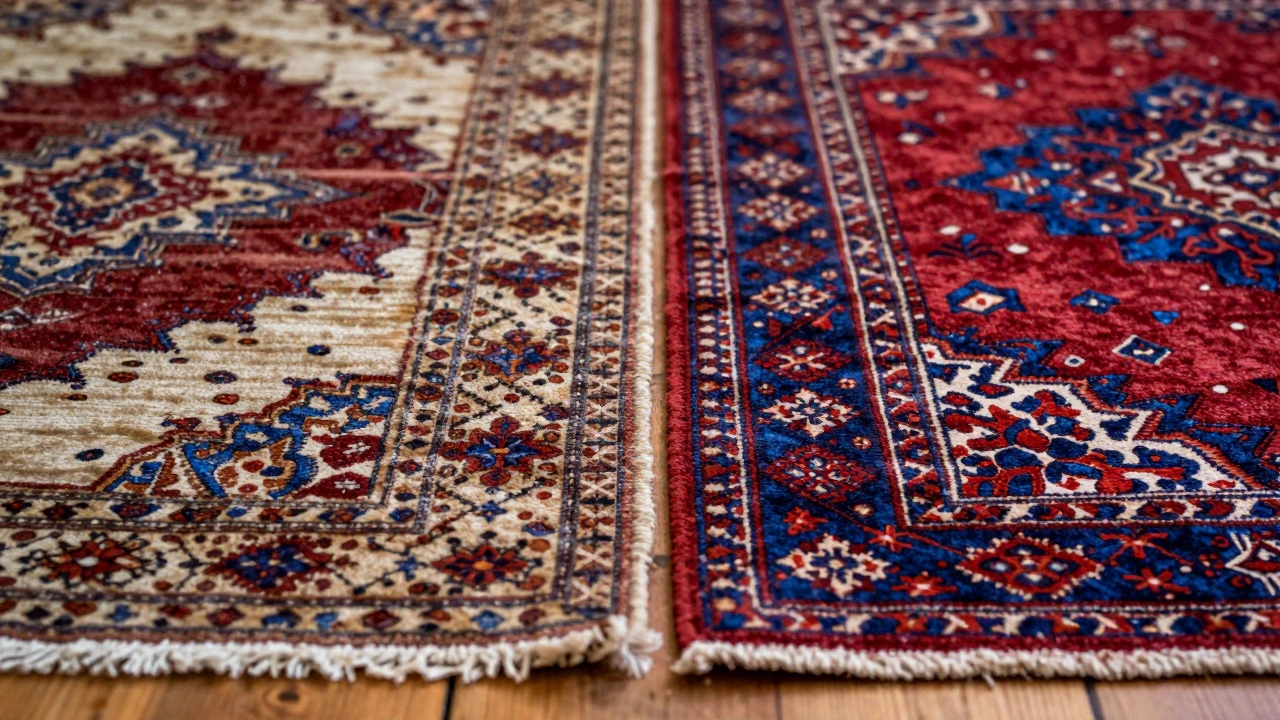
Ever walked into a store and seen two rugs that look almost identical-one for $50, another for $500-and wondered why the price jumps so high? It’s not just the brand. It’s not just the name on the tag. The difference between a cheap rug and an expensive rug is in the details you can’t see at first glance. And those details make all the difference in how long it lasts, how it feels underfoot, and how it ages over time.
Materials Matter More Than You Think
Cheap rugs are often made from synthetic fibers like polypropylene, polyester, or nylon. These materials are cheap to produce, easy to mass-manufacture, and hold color well-until they don’t. After a year or two of foot traffic, sunlight, or spills, they start to look faded, flattened, or even fuzzy. They don’t breathe. They trap dust and odors. And if you spill coffee or wine on them, the stain often sets permanently because the fibers aren’t designed to be cleaned deeply.
Expensive rugs, on the other hand, are usually made from natural fibers: wool, silk, cotton, or jute. Wool is the gold standard. It’s naturally stain-resistant, fire-retardant, and resilient. A high-quality wool rug can bounce back from footprints and last 20, 30, even 50 years. Silk adds a luxurious sheen and fine detail, often used in intricate patterns. Cotton is common in flat-weave rugs and holds up well in high-traffic areas. Jute gives a rustic, earthy feel and is biodegradable. These materials age gracefully. They soften over time, not wear out.
Construction: Handmade vs. Machine-Made
If you flip a cheap rug over, you’ll likely see a plain, glued backing with loose threads and uneven stitching. It was made on a machine in a factory, sometimes in under an hour. The pattern is printed or stamped, not woven. These rugs are designed for one thing: to be replaced.
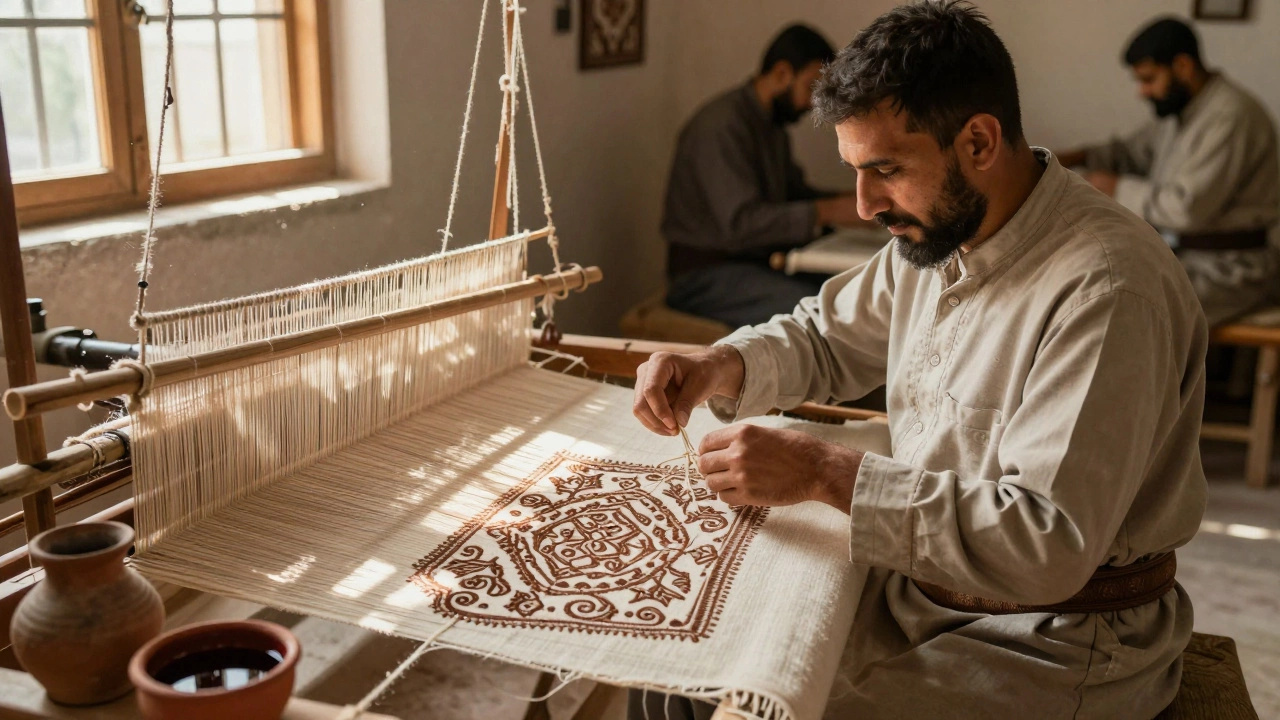
Expensive rugs are often hand-knotted, hand-tufted, or hand-woven. A single hand-knotted Persian rug can take months-or even years-to complete. Each knot is tied by hand, sometimes over 100 knots per square inch. The more knots, the finer the design and the more durable the rug. You can tell the difference by looking at the back: a hand-knotted rug will show the same pattern on both sides, like a mirror image. A machine-made rug will have a solid, uniform backing with no visible knots.
Hand-tufted rugs are faster to make but still involve skilled labor. They’re punched with a tufting gun and then backed with latex and a secondary fabric. They’re durable, but not as long-lasting as hand-knotted ones. Still, they’re a solid middle ground between price and quality.
Color and Dye: Fading or Lasting?
Cheap rugs use chemical dyes-fast, cheap, and bright. But these dyes fade quickly under sunlight. You’ve probably seen a rug in a sunny room where the center is bright, but the edges are washed out. That’s chemical dye at work. They also bleed when wet. A spill can turn your white carpet pink.
Expensive rugs use natural dyes made from plants, insects, and minerals: indigo, madder root, cochineal, walnut shells. These dyes are slower to apply and more expensive, but they age beautifully. They develop a patina-a soft, subtle shift in tone over time. That’s not a flaw. It’s character. A 30-year-old wool rug with natural dyes looks richer, deeper, and more valuable than the day it was made.
Thickness and Density: It’s Not Just About Fluff
A thick rug doesn’t always mean better. A cheap rug might be thick because it’s stuffed with cheap foam padding underneath. That padding crushes after a few months, leaving you with a lumpy, uneven surface.
Expensive rugs are dense-not necessarily thick. Density is measured in knots per square inch (KPSI) or pile height and weight. A high-density rug has tightly packed fibers that resist flattening. You can test this by bending the rug back: if you can see the backing clearly, it’s low density. If the fibers are so tight you can barely see through, it’s high quality. High-density rugs feel solid underfoot, not squishy or flimsy.
Backing and Finish: The Hidden Details
Most cheap rugs have a synthetic latex backing glued on to hold the fibers in place. Over time, that glue breaks down. The rug curls at the edges. It starts to smell like plastic. It can even crack and fall apart.
Expensive rugs use natural materials for backing: cotton, jute, or wool. Some are even finished with a protective coating made from beeswax or natural resins. These materials breathe, don’t degrade, and help the rug stay flat on the floor. You’ll rarely see curling edges on a well-made rug unless it’s been poorly stored.
Where It’s Made: Skill vs. Speed
Many cheap rugs come from countries with low labor costs and little regulation. Workers may be paid pennies per hour. Quality control is minimal. You might get a rug that looks fine in the store but sheds fibers for months or has mismatched patterns.
Expensive rugs often come from regions with centuries of rug-making tradition: Iran, India, Turkey, Afghanistan, Nepal. These places have master weavers who learn the craft from their parents. Families pass down patterns and techniques. The rug you buy might be made by a single artisan, or a small team working over months. You’re not just buying a rug-you’re buying a piece of cultural heritage.
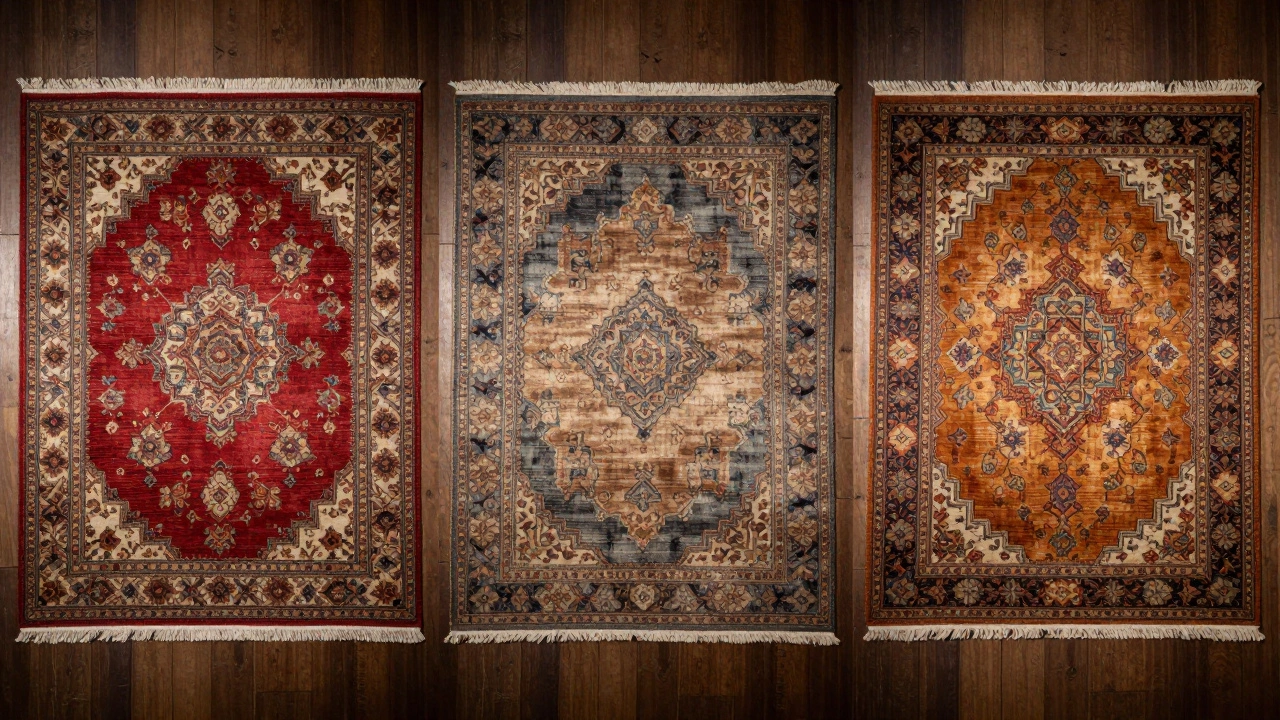
Price Isn’t Just a Number-It’s an Investment
A $50 rug might seem like a bargain. But if it wears out in two years, you’ve spent $25 a year on it. A $600 rug that lasts 25 years? That’s $24 a year. And it looks better every year. Plus, high-quality rugs can be passed down, resold, or even become family heirlooms.
Think of it like buying shoes. You wouldn’t buy $20 sneakers for daily hiking. You wouldn’t buy $300 hiking boots for walking to the mailbox. Rugs are the same. Match the price to the use. A high-end rug in a living room where people sit and walk every day? Worth it. A cheap rug in a child’s playroom? Maybe fine. But don’t expect it to last.
How to Spot a Good Rug (Even If You’re Not an Expert)
- Check the back. If you can see the pattern clearly and the fibers are tight, it’s likely hand-made.
- Rub your hand over the pile. If it feels soft, springy, and dense, it’s good wool. If it feels plastic-y or brittle, it’s synthetic.
- Smell it. A natural fiber rug smells like wool or cotton. A cheap rug smells like chemicals or glue.
- Ask about the dye. If they say “colorfast” or “fade-resistant,” it’s probably synthetic. If they mention “natural dyes” or “vegetable dyes,” that’s a good sign.
- Look for slight imperfections. Handmade rugs have tiny variations in color or pattern. That’s not a defect-it’s proof it’s not machine-made.
What You’re Really Paying For
You’re not paying for the size. You’re not paying for the color. You’re paying for time, skill, material quality, and durability. A cheap rug is disposable. An expensive rug is designed to be part of your home for decades. It’s the difference between buying a paper plate and a porcelain one. One holds your food for one meal. The other holds memories.
Choose based on where it’s going, how much traffic it’ll see, and how long you want it to last. If you’re putting it in a high-use area, spend the money. If it’s a temporary space, a cheaper option might make sense. But never assume a rug is just a rug. The best ones tell a story-and they outlive trends, renovations, and even owners.
Are expensive rugs worth the money?
Yes-if you plan to keep it for more than a few years. Expensive rugs made from natural fibers and handcrafted techniques last decades, retain value, and often improve with age. A $500 rug that lasts 30 years costs less per year than a $100 rug you replace every 3 years. Plus, they add warmth, texture, and character that cheap rugs can’t match.
Can you clean an expensive rug at home?
You can spot-clean with mild soap and cold water, but deep cleaning should be left to professionals. Hand-knotted wool or silk rugs can shrink or lose color if washed incorrectly. Professional rug cleaners use pH-balanced solutions and air-dry methods designed for natural fibers. Never use a steam cleaner or harsh chemicals on an expensive rug.
Do cheap rugs shed a lot?
Yes, especially synthetic ones. Cheap rugs made from polypropylene or low-grade polyester often shed fibers for months after purchase. This isn’t normal wear-it’s a sign of poor construction. High-quality wool rugs may shed slightly at first, but it stops after a few vacuumings. If shedding continues past three months, the rug is likely low quality.
Is a rug pad necessary for expensive rugs?
Absolutely. A good rug pad protects the back of the rug from abrasion, prevents slipping, and adds cushioning. For expensive rugs, use a natural fiber pad like felt or rubber-backed cotton. Avoid plastic or vinyl pads-they trap moisture and can damage the rug’s backing over time.
How do I know if a rug is hand-knotted?
Flip the rug over. If the pattern looks identical on both sides and you can see individual knots, it’s hand-knotted. Machine-made rugs have a uniform, solid backing with no visible knots. Also, hand-knotted rugs often have slight irregularities in the pattern or color-these are signs of human craftsmanship, not defects.