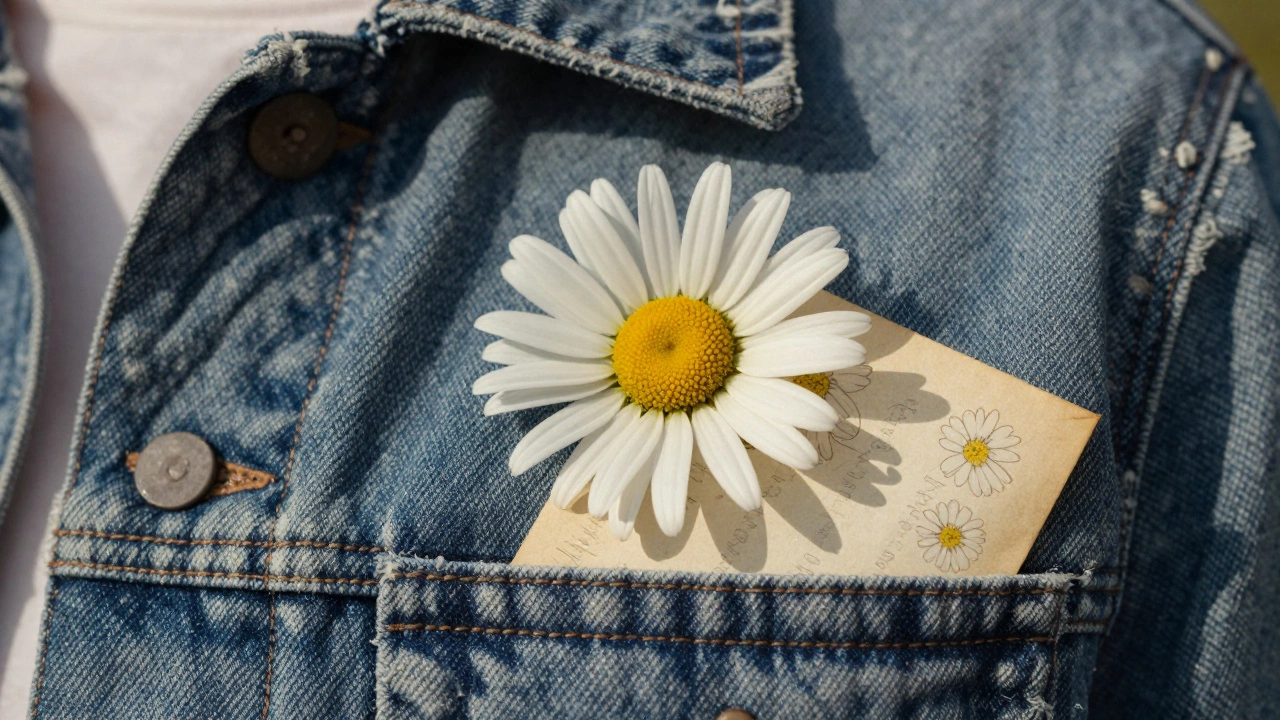
Queer Daisy Symbol Recognition Quiz
How to Recognize Queer Daisies
Test your understanding of when and how daisies are used as symbols in queer culture. Based on the article "What Does Daisy Mean in Queer Culture?".
Question 1
Results
You scored 0 out of 0 questions.
When you hear the word "daisy," you might picture a bright yellow center surrounded by white petals - simple, cheerful, and common in gardens. But in queer spaces, the daisy carries a different kind of beauty. It’s not just a flower. It’s a quiet symbol, a coded message, and sometimes, a declaration.
Why a Daisy? The Quiet Power of Subtlety
In the 1970s and 1980s, when being openly LGBTQ+ could mean losing your job, your family, or even your safety, people developed ways to signal identity without saying a word. Symbols became lifelines. The daisy, with its innocent appearance, slipped under the radar. It wasn’t a rainbow flag. It wasn’t a pink triangle. It was something softer, harder to censor. Women in particular used daisies to signal connection. A daisy pinned to a lapel. A daisy drawn in the corner of a letter. A bouquet left on a doorstep. These weren’t random acts of gardening. They were whispers in a world that demanded silence. It wasn’t just about romance. The daisy stood for purity - not in the religious sense, but in the sense of being true to yourself, even when the world told you to hide. It represented resilience. A flower that grows in cracks in sidewalks, in neglected fields, in places no one expected beauty to survive.The Daisy and Lesbian Identity
The daisy became especially tied to lesbian identity in the early feminist and lesbian separatist movements. In women’s collectives, daisies were used in newsletters, on protest signs, and even in embroidery on handmade quilts. They appeared in zines like Off Our Backs and The Ladder, often paired with phrases like "grow wild" or "roots and petals." One reason it stuck? The daisy’s structure. Unlike roses or lilies - flowers often tied to femininity in a traditional, heteronormative way - the daisy has no clear gendered history. It doesn’t scream "bride." It doesn’t whisper "funeral." It just is. And that neutrality made it perfect for reclaiming. In the 1990s, lesbian artists like Judy Chicago and Harmony Hammond incorporated daisies into their work. Not as decoration, but as resistance. A daisy in a ceramic sculpture wasn’t pretty - it was political. It said: "I am here. I am not asking permission. I am not apologizing."Modern Use: From Niche Symbol to Mainstream Nod
Today, you’ll still see daisies in queer spaces - but they’ve changed. On TikTok, daisy stickers appear in videos about coming out. On Instagram, queer artists sell daisy-shaped earrings with the caption: "I’m not a flower. I’m the whole damn garden." The daisy is no longer just for lesbians. It’s become a broader symbol of queer authenticity. People of all genders and orientations use it to say: "I don’t need a label to be valid. I don’t need a parade to be seen." Some wear daisy tattoos. Others use daisy emojis (🌼) as a quiet way to signal solidarity. In online queer communities, replying to a post with just a daisy means: "I get it. I’m here. You’re not alone." It’s not as loud as the rainbow flag. But sometimes, quiet is louder.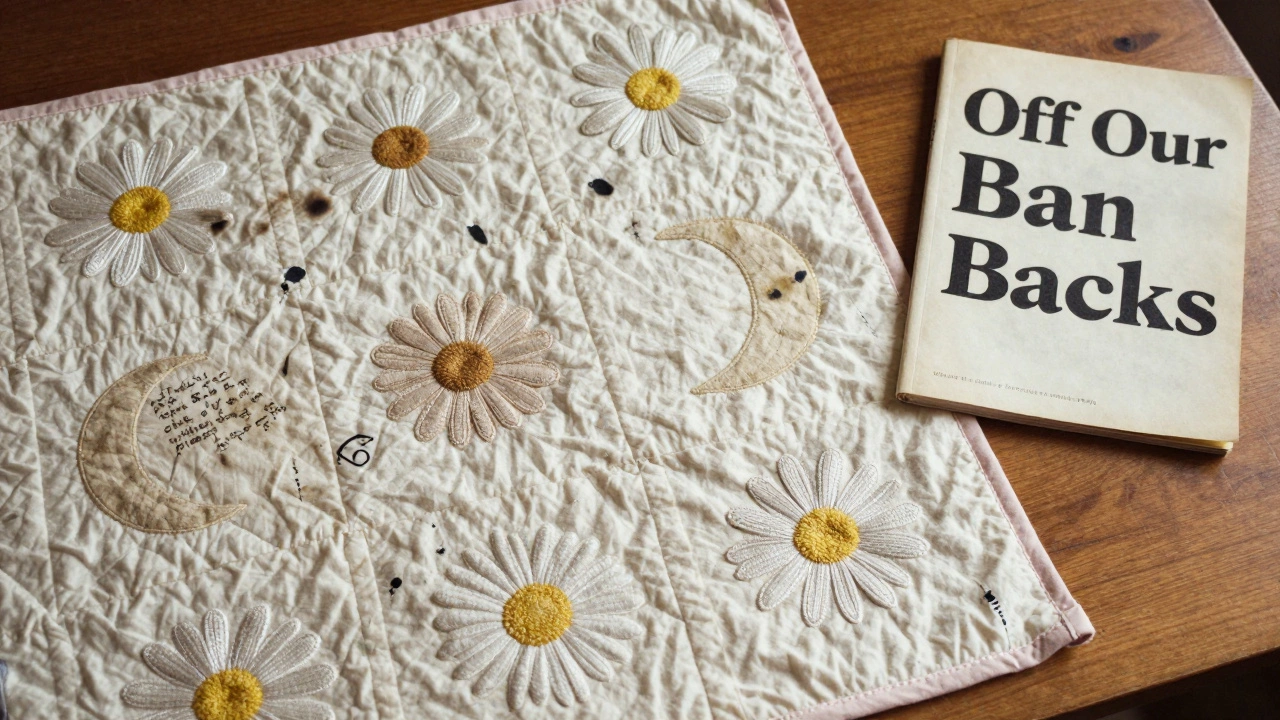
How to Recognize a Daisy as a Queer Symbol
If you’re wondering whether someone is using a daisy to signal queer identity, look at context:- Is it paired with other queer symbols? (like a crescent moon, a cat, or a book with a rainbow spine?)
- Is it in a space where queer people gather? (a zine, a pride event, a queer-owned café?)
- Is it being used in a way that feels intentional? (e.g., on a handmade pin, not just as part of a generic floral pattern?)
What It’s Not
The daisy doesn’t mean "I’m straight but I like flowers." It doesn’t mean "I’m in love with my gardener." It doesn’t mean "I’m into gardening." If someone uses a daisy in a way that feels performative - like a brand logo or a trend on a fast-fashion shirt - it’s likely not queer coding. Real queer daisy symbolism is personal. It’s quiet. It’s rooted in history.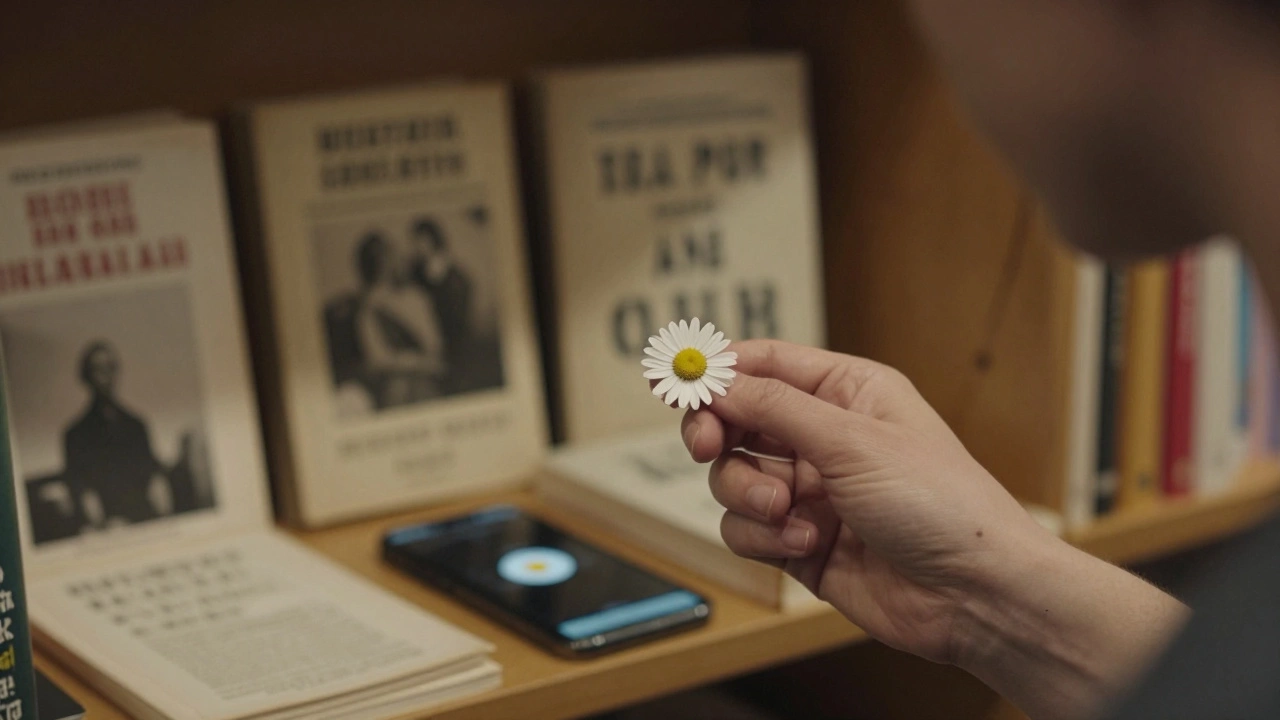
Why This Matters Today
In a world where rainbow merch is everywhere, from soda cans to sneakers, the daisy reminds us that queer identity isn’t just about visibility - it’s about depth. It’s about the people who held on when the world turned away. It’s about the quiet courage it took to grow anyway. The daisy doesn’t need a hashtag. It doesn’t need a sponsor. It just needs someone to notice it - and understand what it’s been through.Where to See It Now
Look for daisies in:- Queer-owned bookstores, especially in the poetry or feminist sections
- DIY zines from the 1980s and 1990s (many are archived online)
- Art galleries featuring LGBTQ+ artists from the 1970s-1990s
- Handmade jewelry by queer artisans on Etsy or at local craft fairs
- Online queer communities where people use the 🌼 emoji to respond to vulnerable posts
Is the daisy a recognized symbol in official LGBTQ+ organizations?
No, the daisy is not an official symbol like the rainbow flag or the pink triangle. It doesn’t appear on the logos of major LGBTQ+ nonprofits. But that’s part of its power. It’s a grassroots, community-made symbol - born from necessity, not marketing. Its meaning comes from lived experience, not corporate campaigns.
Can straight people use the daisy as a symbol?
Yes - but with awareness. If a straight person wears a daisy because they love flowers, that’s fine. But if they wear it to signal allyship or queer identity without understanding its history, it risks becoming a hollow trend. The daisy’s meaning is tied to queer survival. To honor it, you don’t just wear it - you learn why it matters.
Are there other flowers with queer meanings?
Absolutely. The violet was used by Sappho and later by lesbians in the 1920s as a sign of same-sex love. The orchid became a symbol of queer elegance in drag culture. The sunflower represents resilience and queer joy. Each flower carries its own story - but the daisy stands out because it’s ordinary. That’s what makes it revolutionary.
Why not just use the rainbow flag instead?
The rainbow flag is powerful - but it’s also loud, commercialized, and sometimes overwhelming. The daisy offers something quieter: intimacy. It’s personal. It’s subtle. It’s for the moments when you need to say "I’m queer" without shouting it. Sometimes, the softest signals are the ones that last.
Can the daisy mean something different in other cultures?
Yes. In Japan, daisies symbolize purity and innocence. In Victorian England, they meant "I love you." In Russian folklore, they’re linked to sun gods. But the queer meaning - as a quiet act of self-affirmation - is uniquely rooted in Western LGBTQ+ history, especially among women and nonbinary people in the 20th century. Context changes everything.