Mirror Placement & Scale Simulator
Adjust Settings
Design Analysis
- ✓ Scale is proportional.
- ✓ Gap size is appropriate.
- ✓ Lighting supports function.
Have you ever walked into a room that felt cramped and dark, only to realize the issue wasn't the furniture-it was the lack of reflection? Or perhaps you placed a beautiful mirror in your hallway, but instead of making the space feel grand, it made you feel like you were being watched from every angle. Mirrors are powerful tools in interior design. They can double the visual space, bounce light around a dim corner, or create an artistic focal point. But they can also disrupt the flow of a room if used incorrectly.
There is no single scientific lawbook for mirrors, but professional designers and spatial experts agree on three fundamental rules that dictate how mirrors should be used to enhance a living space. These rules cover where you put them (placement), how they interact with illumination (lighting), and their physical relationship to the room (scale). Ignoring these principles often leads to cluttered, confusing, or cold-feeling environments. Getting them right transforms a house into a home.
Rule 1: Strategic Placement Over Decoration
The first rule is that mirrors must serve a functional purpose beyond just looking good on the wall. A mirror is not merely a decorative object; it is an optical device that captures and reflects its surroundings. If you hang a mirror facing a blank white wall, a messy pile of laundry, or a dull corner, you are essentially doubling the blandness of that area. The reflection becomes part of the room's aesthetic.
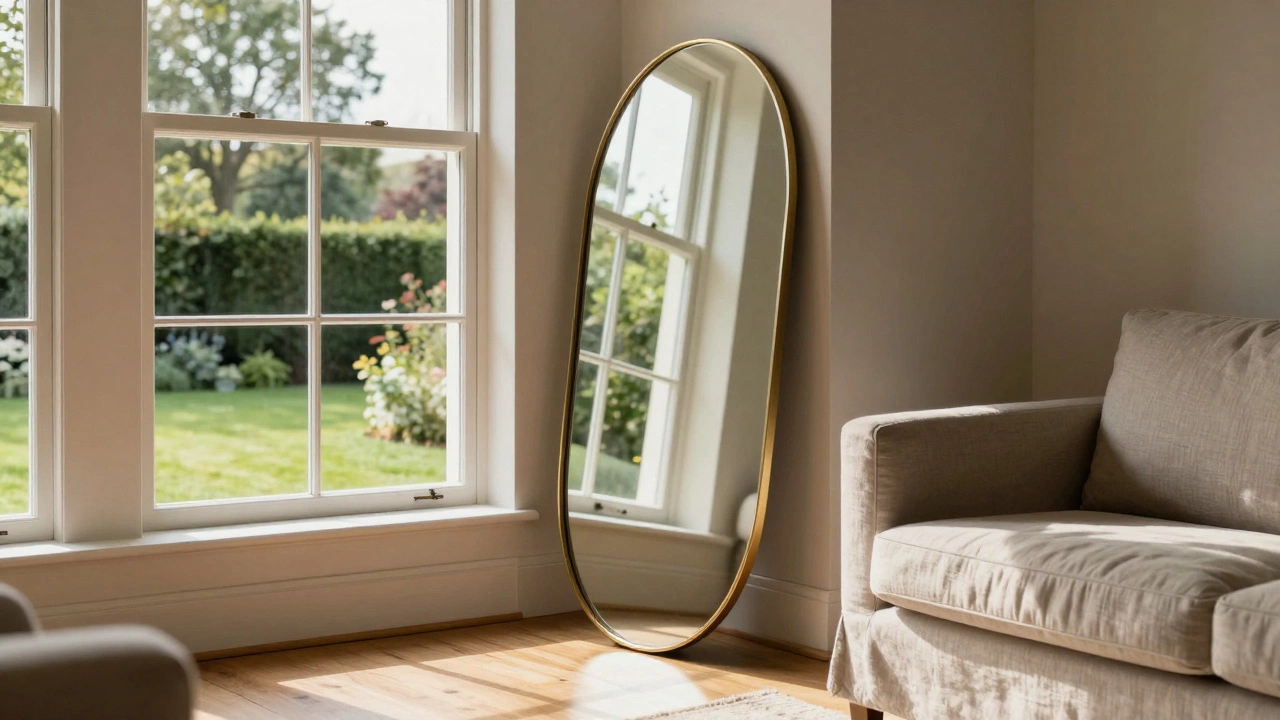
To apply this rule effectively, look at what you want to emphasize. In many homes, the most impactful placement is opposite a window. This setup captures natural daylight and throws it back into the room, making the space feel brighter and more open. It’s a classic trick for small apartments or rooms with limited sunlight. However, avoid placing mirrors directly across from another mirror unless you intend to create an infinite tunnel effect, which can be visually disorienting and dizzying for some people.
Consider the traffic flow as well. In entryways, mirrors are essential for checking your appearance before leaving, but they should be positioned so they don’t reflect the front door directly if that makes you uncomfortable. Some traditions, including Feng Shui, suggest that reflecting the main entrance immediately can push energy out of the home too quickly. While you may not believe in energy flows, psychologically, seeing the street or driveway every time you walk in can feel exposing rather than welcoming. Instead, angle the mirror to reflect a pleasant view inside the house, like a piece of art or a plant.
- Do: Place mirrors opposite windows to maximize natural light.
- Do: Use mirrors to reflect attractive views, such as gardens or artwork.
- Don't: Hang mirrors facing cluttered areas or bare walls.
- Don't: Create direct mirror-to-mirror reflections that cause visual fatigue.
Rule 2: Lighting Defines Clarity and Mood
The second rule states that a mirror is only as good as the light hitting it. Without proper illumination, a mirror can appear murky, shadowy, or even eerie. This is especially critical in bathrooms and dressing areas where functionality matters. You need clear, distortion-free visibility. Relying solely on overhead lighting often casts unflattering shadows under the eyes and nose, creating a "cave" effect when you look into the glass.
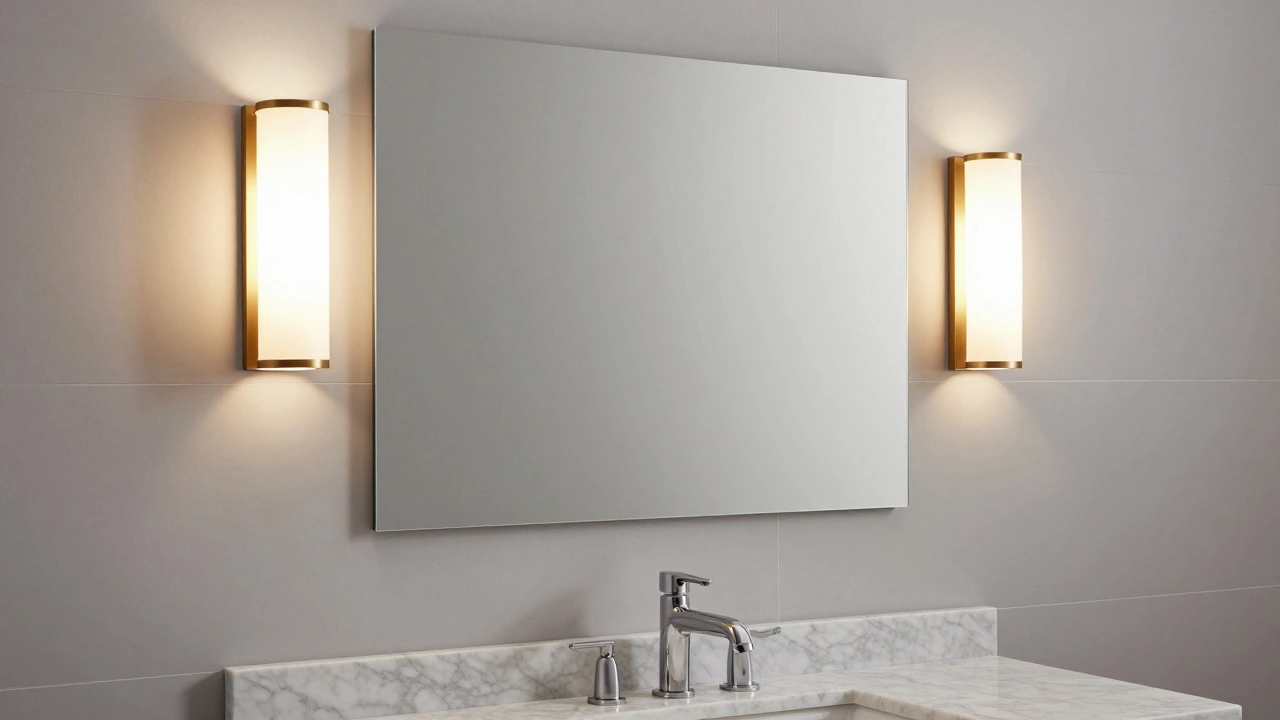
The best practice is to use layered lighting. Ambient light sets the general mood, but task lighting-specifically designed for the mirror-is crucial. For bathroom vanity mirrors, place lights on both sides of the frame at eye level. This horizontal lighting minimizes shadows and provides even illumination across the face. If side lighting isn't possible due to space constraints, a well-placed sconce above the mirror can work, provided it is angled downward slightly to avoid glare in your eyes.
In living spaces, lighting affects the atmosphere. A mirror placed near a warm-toned lamp will reflect that cozy glow, extending the warmth of the light source further into the room. Conversely, a mirror near a cool, blue-tinted LED strip might make a room feel sterile. Think about the color temperature of your bulbs. Warm white (2700K-3000K) creates a relaxing environment, while bright white (4000K+) is better for tasks. Match the mirror's role to the light type. If it's for makeup application, go bright and neutral. If it's for ambiance, go warm and soft.
| Mirror Location | Ideal Light Source | Color Temperature | Purpose |
|---|---|---|---|
| Bathroom Vanity | Sconces on both sides | 3000K - 4000K (Neutral) | Clear visibility, no shadows |
| Living Room | Floor lamps or ceiling spots | 2700K (Warm White) | Ambiance, depth, coziness |
| Entryway | Wall-mounted fixture above | 3000K (Soft White) | Quick check, welcoming feel |
| Dressing Area | Ring light or side panels | 4000K (Daylight) | True color representation |
Rule 3: Scale and Proportion Balance
The third rule is about size. A common mistake is choosing a mirror that is too small for the wall or the furniture beneath it. A tiny mirror on a large expanse of wall looks lost and insignificant, failing to add any visual weight or interest. On the other hand, a massive floor-to-ceiling mirror in a tiny closet can overwhelm the space, making it feel claustrophobic despite the reflective surface.
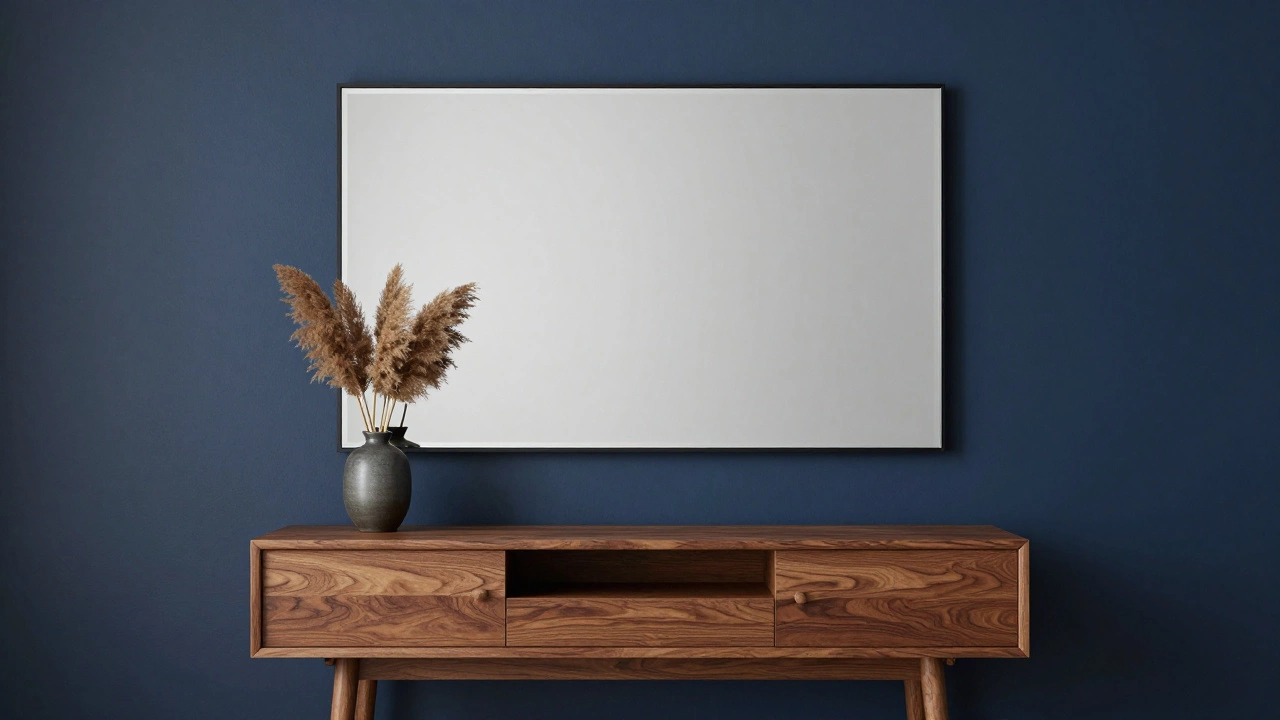
A good heuristic for sizing is the "two-thirds rule." When hanging a mirror above a console table, sofa, or bed, the width of the mirror should be approximately two-thirds the width of the furniture piece below it. This creates a balanced, anchored look. If the mirror is wider than the furniture, it can feel top-heavy. If it’s much narrower, it feels disconnected.
Height also matters. In high-ceilinged rooms, tall vertical mirrors can help bring the eye down and make the space feel cozier. In low-ceilinged rooms, wide horizontal mirrors can expand the sense of width without drawing attention upward. Don't forget about the height of the mirror itself relative to the viewer. For full-length mirrors, ensure the bottom edge is close enough to the floor to show shoes, but not so low that it gets scuffed easily. For wall mirrors, the center of the mirror should generally be at eye level for the average adult, which is roughly 57 to 60 inches from the floor.
Shape plays a role in scale perception too. Round mirrors soften sharp angles in modern, boxy rooms. Rectangular mirrors reinforce structure and order. Irregular or organic shapes add whimsy but require careful placement to avoid looking chaotic. Always step back and assess the balance. Does the mirror feel like it belongs to the wall, or does it look like an afterthought?
Common Mistakes to Avoid
Even with these three rules, pitfalls exist. One frequent error is ignoring the condition of the glass. Old mirrors often have silvering issues along the edges, creating black borders that look dirty rather than vintage. If buying second-hand, inspect the edges closely. Another mistake is using mirrors in rooms where privacy is paramount. Placing a mirror in a bedroom that reflects the bed can be unsettling for some sleepers, disrupting rest by creating a sense of movement in the dark.
Also, consider the material of the frame. Heavy, ornate frames suit traditional spaces, while sleek, frameless designs fit minimalist aesthetics. A mismatched frame can distract from the mirror's function. Finally, don't overcrowd a wall. Sometimes one large statement mirror is better than a cluster of small ones, which can look busy and cluttered if not arranged with precision.
Practical Application Checklist
Before hanging your next mirror, run through this quick checklist to ensure you're following the core principles:
- Check the View: What does the mirror reflect? Is it something pleasant or useful?
- Assess the Light: Is there adequate, shadow-free lighting directed at the mirror?
- Measure the Space: Does the mirror's size relate proportionally to the wall and nearby furniture?
- Test the Height: Is the center at eye level (for wall mirrors) or is the full length accessible (for standing mirrors)?
- Evaluate the Vibe: Does the style of the frame complement the room's decor?
Can I put a mirror opposite my bed?
It depends on personal comfort. While some find it convenient for checking outfits, others feel uneasy seeing themselves reflected while half-asleep. If you choose to do this, ensure the mirror doesn't reflect the entire bed directly into your line of sight upon waking. Alternatively, place the mirror on a sliding wardrobe door so you can close it off at night.
How high should I hang a mirror above a sofa?
Aim to leave about 8 to 10 inches between the top of the sofa and the bottom of the mirror frame. This gap ensures the mirror feels connected to the furniture without appearing crowded. Adjust based on the height of the sofa back; taller sofas may need less gap space.
Are convex mirrors better for hallways?
Convex mirrors, which curve outward, provide a wider field of view and are excellent for narrow hallways or corners where safety is a concern. However, they distort images, making them less suitable for grooming. For decorative purposes in hallways, flat mirrors are preferred to maintain accurate proportions and aesthetics.
Does mirror placement affect Feng Shui?
Yes, in Feng Shui, mirrors are believed to influence the flow of Chi (energy). Key guidelines include avoiding mirrors facing the front door (to prevent energy loss), not placing them directly opposite beds (to reduce restlessness), and using them to expand positive views. While subjective, these practices can help create a more harmonious and intentional living space.
What is the best type of mirror for a small bathroom?
For small bathrooms, a frameless rectangular mirror or a round mirror with integrated lighting works best. Frameless designs reduce visual bulk, making the space feel larger. Integrated lighting saves counter space and ensures proper illumination. Avoid heavy, ornate frames that can make the room feel cramped.