Sofa Durability Score Calculator
Select the specifications of your current or prospective sofa to calculate its estimated longevity and identify weak points.
Buying a sofa is one of the biggest furniture investments you’ll make, but how long it lasts depends entirely on what’s inside. Most people focus on the color or the shape, yet the true determinant of longevity lies in the frame, the cushioning density, and the fabric’s ability to withstand daily wear. If you want a piece that survives pets, kids, and heavy use for a decade or more, you need to look past the showroom gloss and inspect the structural components.
This guide breaks down exactly which materials hold up best under pressure. We will look at specific frame woods, foam densities, and fabric types that have proven track records in high-traffic households. You will learn how to identify cheap shortcuts before they become expensive regrets.
Quick Summary / Key Takeaways
- Kiln-dried hardwood frames are significantly more stable than softwoods like pine or particle board.
- High-density foam (1.8 lbs/ft³ or higher) resists sagging far better than standard comfort foam.
- Aniline leather ages gracefully but requires maintenance; performance fabrics offer superior stain resistance with less care.
- Corner-to-corner webbing or spring systems provide better support than basic elastic straps.
- A double-stitched seam increases the lifespan of the upholstery by reducing stress points.
The Foundation: Frame Materials That Last
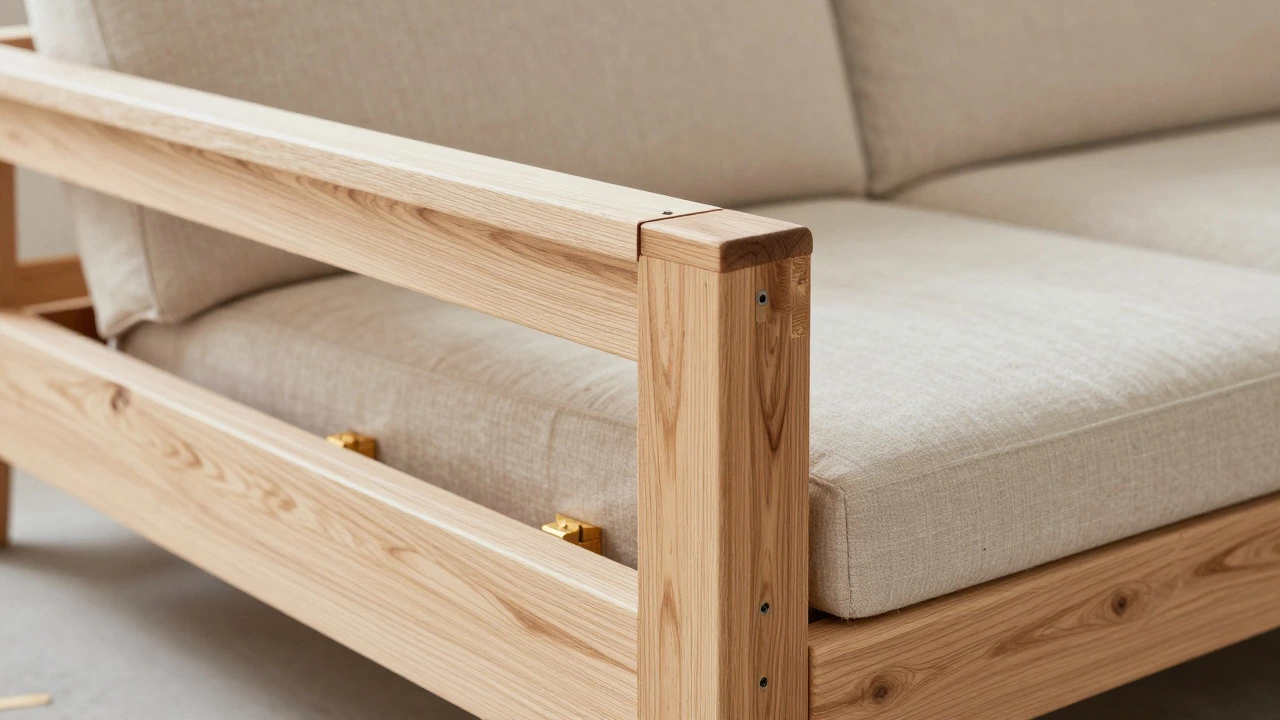
The skeleton of your sofa dictates its maximum lifespan. A beautiful cover cannot save a weak frame. The gold standard for durability is Kiln-Dried Hardwood, which is lumber that has been dried in a kiln to reduce moisture content, preventing warping and cracking over time. Woods like oak, maple, and beech are dense and resistant to splitting. When you buy a sofa, ask specifically if the frame is made from solid hardwood rather than mixed wood or plywood alone.
In contrast, avoid frames constructed primarily from Plywood or Particle Board unless they are only used as secondary supports. These materials can absorb humidity from the air, especially in coastal areas like Wellington, leading to swelling and joint failure within a few years. Softwoods like pine are also risky because they are softer and more prone to denting where screws are inserted repeatedly during assembly or repair.
| Material | Durability Rating | Key Weakness | Ideal For |
|---|---|---|---|
| Solid Hardwood (Oak/Maple) | 9/10 | Higher cost | Long-term investment, heavy use |
| Kiln-Dried Pine | 6/10 | Softer, dents easily | Budget options, light use |
| Plywood | 7/10 | Can delaminate if wet | Secondary structure, not main frame |
| Metal | 8/10 | Can rust, feels cold | Industrial styles, outdoor covered areas |
Cushioning: Density Matters More Than Thickness
You might think thicker cushions mean better quality, but that is a common misconception. What actually prevents a sofa from looking deflated after two years is the Foam Density, measured in pounds per cubic foot (lbs/ft³). Standard commercial foams often range from 1.2 to 1.5 lbs/ft³. This material compresses quickly under body weight, losing its bounce and shape. For a durable seat, look for High-Density Polyurethane Foam rated at 1.8 lbs/ft³ or higher. Some premium brands even use 2.5 lbs/ft³ for base layers.
Another critical component is the top layer of the cushion. Many modern sofas use a blend of foam and Down Feather Fill. While this provides a luxurious, hotel-like feel, it requires frequent fluffing and tends to flatten unevenly over time. If you prefer a structured, supportive seat that holds its shape without daily maintenance, stick to all-foam constructions with a firm core and a softer, lower-density layer on top for comfort.
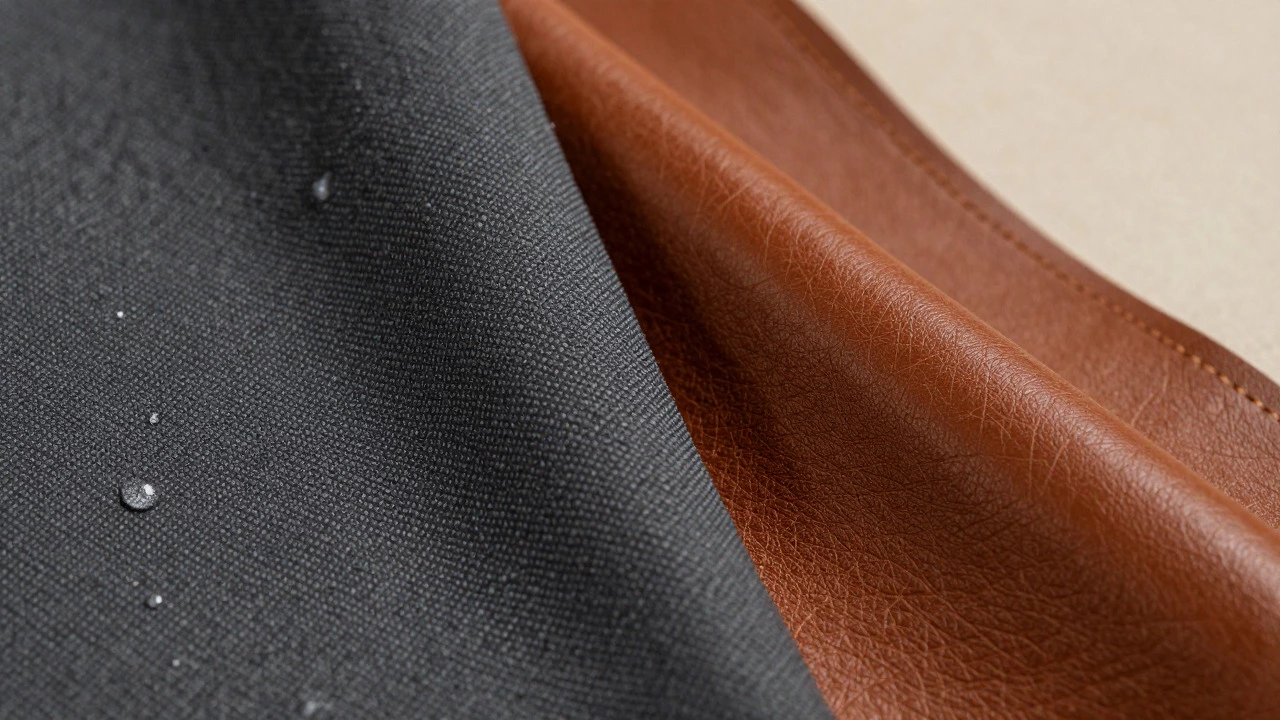
Upholstery Fabrics: Resisting Abrasion and Stains
The face fabric is what takes the physical hit from legs, elbows, and pets. Durability here is measured by the Martin-Dale Rub Count, which simulates the friction of sitting and standing. A count of 15,000 rubs is considered acceptable for average household use. However, for high-traffic living rooms, aim for fabrics with a rub count of 30,000 or more.
Performance Fabrics, such as those made from solution-dyed acrylic or polyester blends, are engineered for durability. These materials are hydrophobic, meaning liquids bead up on the surface rather than soaking in. Brands like Sunbrella or Crypton often use these technologies. They are excellent for homes with children or pets because spills can usually be wiped away before they set.
On the other hand, Aniline Leather is the most natural option. It is undyed or lightly dyed, allowing the full grain of the hide to show. Aniline leather is incredibly strong and becomes softer and richer in color as it ages. It does not peel or crack like cheaper bonded leathers. However, it is porous, so it requires regular conditioning and immediate blotting of spills. If you want zero-maintenance durability, choose performance fabric. If you want heirloom-quality aging, choose aniline leather.
Construction Details That Signal Quality
Even with great materials, poor construction can ruin a sofa. Look closely at the seams. Double-Stitched Seams are a hallmark of quality manufacturing. A single stitch line creates a weak point where the fabric can tear under tension. Double stitching distributes the stress across two rows of thread, doubling the strength of the join.
Check the corners and edges. High-quality sofas use Burlap Wrapping or reinforced tape on the internal corners to prevent the foam from poking through the outer fabric. If you see raw foam exposed at the edges of a new sofa, expect it to degrade quickly. Additionally, examine the armrests. They should be sturdy enough to hold a person’s weight without wobbling. If the arms feel loose or creaky when you press on them, the internal joinery is likely inadequate.
Maintenance Habits That Extend Lifespan
No matter how durable the materials are, neglect shortens their life. For fabric sofas, vacuum regularly using the upholstery attachment to remove dust and grit that act like sandpaper against the fibers. Rotate your cushions every month to ensure even wear. For leather, apply a conditioner twice a year to keep the oils intact and prevent drying out. Avoid placing your sofa in direct sunlight for extended periods, as UV rays break down both synthetic fibers and natural tannins in leather, causing fading and brittleness.
If you live in a humid climate, consider using dehumidifiers in your living space. Excess moisture can weaken glue joints in the frame and promote mold growth in the foam cores. Simple environmental control is just as important as buying the right materials.
Frequently Asked Questions
What is the strongest fabric for a sofa?
Solution-dyed acrylics and high-performance polyesters are generally the strongest for everyday use due to their high rub counts and stain resistance. Aniline leather is structurally very strong but requires more care to maintain its appearance.
How do I check if a sofa frame is made of hardwood?
Ask the retailer for specifications stating "solid hardwood" or "kiln-dried hardwood." Avoid vague terms like "wood frame." If possible, lift the corner of the sofa to peek at the back or bottom rails. Hardwood looks denser and has tighter grain patterns compared to the lighter, wider grain of softwoods like pine.
Is memory foam good for sofa cushions?
Memory foam is comfortable but not ideal for primary sofa cushions because it is temperature-sensitive and can lose its shape faster than high-density polyurethane foam. It works well as a thin top layer for extra contouring but should not be the main support structure.
Which is more durable: leather or fabric?
Aniline leather is typically more durable in terms of structural integrity and aging, lasting 15+ years with care. Performance fabrics are more durable against stains and tears but may fade or pill over time. Leather wins for longevity; fabric wins for low maintenance.
How long should a quality sofa last?
A well-constructed sofa with hardwood frames and high-density foam should last between 10 to 15 years. Premium leather pieces can last 20 years or more. Cheaper models with particle board and low-density foam often fail within 3 to 5 years.