Bedroom Storage Calculator
Measure Your Space
Enter your bedroom dimensions to calculate hidden storage potential
Your Hidden Storage Potential
Recommendation
Most bedrooms feel cramped, not because they’re small, but because stuff is everywhere. Clothes pile up on chairs. Shoes take over the floor. Boxes of seasonal items sit in corners like forgotten relics. The solution isn’t buying more furniture. It’s using the space you already have-smartly, invisibly.
Under-Bed Storage Isn’t Just for Boxes
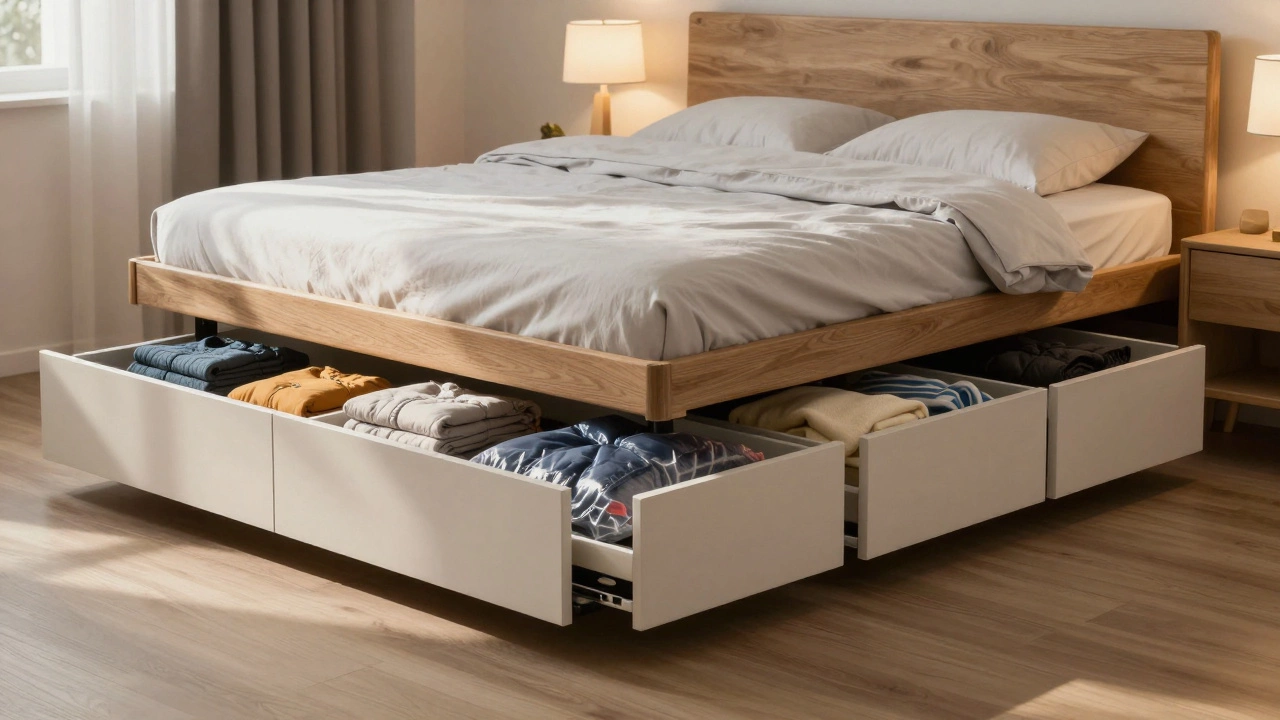
The space under your bed is the largest unused area in your room. Most people think of sliding bins, but those look clunky and still take up visual space. Try this instead: lift your bed frame with sturdy risers and install pull-out drawers underneath. Choose drawers with low profiles so they don’t stick out when pulled out. You can buy ready-made under-bed storage systems, or build your own using wooden crates and casters. A 12-inch clearance gives you room for six deep bins. Store off-season clothes, extra linens, or even shoes. No one sees them. No one needs to know they’re there.
Pro tip: Use vacuum-sealed bags for bulky items like winter coats. They shrink down to the size of a textbook and slide right under. A good set of drawers can hold 200+ pounds if built with 3/4-inch plywood and metal runners. Don’t cheap out on the hardware-this isn’t a temporary fix.
Headboard Hides More Than You Think
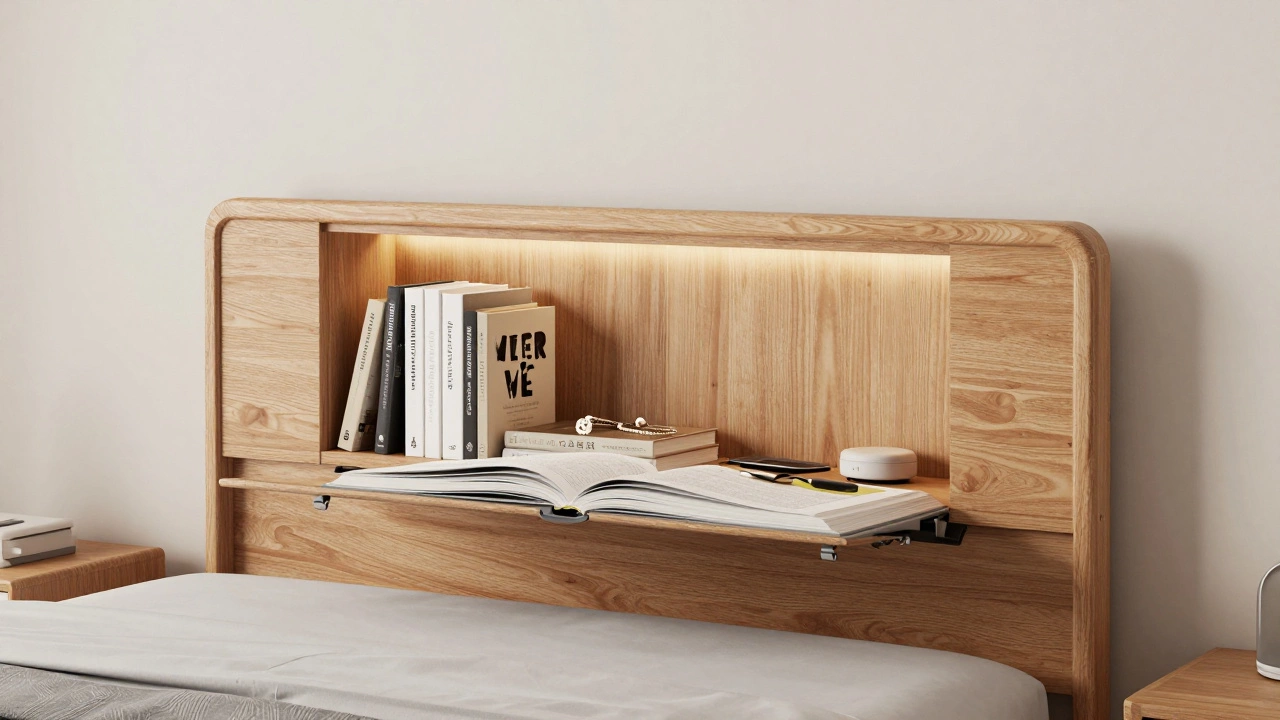
Your headboard doesn’t have to be just a decorative piece. Build one with hidden compartments. A solid wood headboard with a hinged panel on top can open like a book to reveal a shelf inside. Install LED strip lighting so you can see what’s stored without turning on the room light. Store books, small electronics, or even jewelry in here. Some designs include a lockable compartment for valuables.
Not handy with tools? Get a floating headboard with built-in cubbies. These attach to the wall and leave a gap behind them. Slide in narrow bins or baskets. You can store chargers, reading glasses, or bedtime snacks without cluttering your nightstand. The key is depth-aim for at least 4 inches. Anything shallower won’t hold anything useful.
Wardrobe Interior Makeover
Your closet is already a storage zone. But most people just hang clothes and call it done. That’s leaving 60% of the space unused. Start by adding pull-down rods for short items like shirts and pants. Then install adjustable shelves above. Use clear plastic bins with labels on the front so you don’t have to dig through everything.
Here’s what most miss: the back of the door. Mount a double-tiered organizer. One side holds scarves and belts. The other holds socks and underwear. Add a shoe pocket on the bottom. You’ve just added 30% more storage without touching the walls.
For extra space, install a sliding rod below the main one. Hang long dresses or coats on hangers that slide sideways. This keeps them from crowding the main area. A well-organized closet can hold 30% more clothes than a messy one. It’s not magic-it’s geometry.
Use the Walls You’re Not Using
Bedroom walls often go unused beyond hanging a picture. But every inch counts. Install floating shelves above the dresser or beside the bed. They look like decor, but you can use them to store folded sweaters, books, or decorative boxes that double as bins.
Want invisible storage? Try recessed wall panels. These are built into the drywall like a niche, then covered with a panel that matches the wall paint. The panel swings open on hidden hinges. Inside, you get a 6-inch-deep cavity perfect for storing documents, spare keys, or even a small safe. Install one behind your dresser or next to your window. It’s undetectable unless you know where to look.
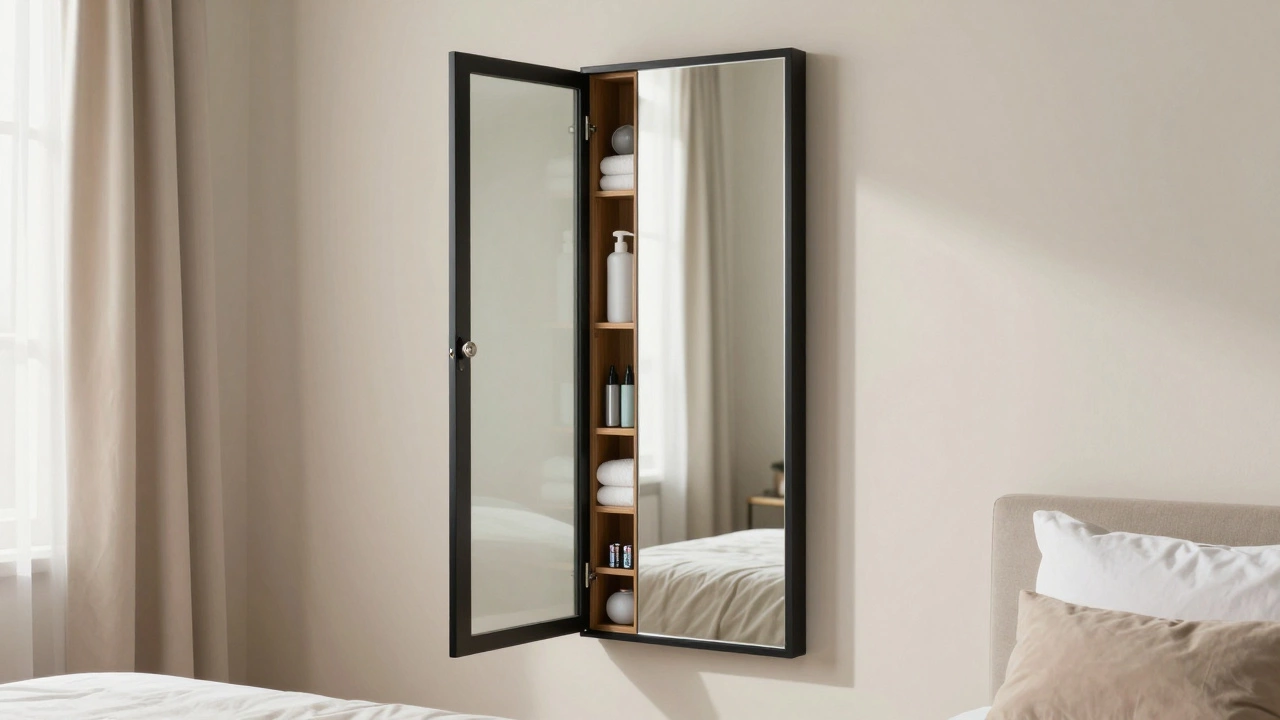
Another trick: use a mirror with storage behind it. Buy a full-length mirror with a frame that opens like a cabinet. Store towels, toiletries, or spare batteries inside. It’s practical, stylish, and doesn’t look like storage at all.
Staircase? No Staircase? Use the Corners
If your bedroom has an angled ceiling or awkward corner, don’t ignore it. Build a corner cabinet that follows the slope. It looks like built-in furniture. Inside, it’s a deep storage zone for blankets, suitcases, or holiday decorations. Use sliding doors instead of swing doors to save space.
No corner? No problem. Use the space beside your window. Install a narrow bench with a lift-top lid. Slide out drawers underneath. Use the bench as seating, and store shoes, linens, or gym clothes inside. Add cushions that match your bedding to make it look like part of the decor.
Why This Works Better Than Buying More Furniture
Most people solve clutter by buying more storage units. But each new shelf, bin, or cabinet adds bulk. It makes the room feel smaller. Hidden storage doesn’t add visual weight. It doesn’t compete with your style. It works silently.
Think about it: a drawer under your bed doesn’t change the look of the room. A hidden compartment in your headboard looks like part of the design. A mirror with storage doesn’t scream “I need to organize.” It just looks like a mirror.
Studies show that people who use hidden storage feel less stressed and more in control of their space. A 2024 survey of 1,200 homeowners found that 78% reported better sleep after reducing visible clutter-even without changing their bed or lighting.
The goal isn’t to hide everything. It’s to hide what doesn’t need to be seen. Clothes you wear once a year? Under the bed. Extra pillows? Behind the mirror. Old photo albums? In the headboard. What’s left out? The things you use daily. That’s the sweet spot.
What Not to Do
Don’t install hidden storage where you can’t reach it. A shelf too high or a drawer too deep is useless. Measure twice. Test the access before building.
Don’t use flimsy materials. Particleboard warps. Thin metal bends. Use solid wood, plywood, or heavy-duty plastic. If you’re storing heavy items, the structure needs to handle weight.
Don’t forget ventilation. Clothes stored in sealed spaces can mildew. Use breathable fabric bins or add silica gel packs. Keep moisture out.
Start Small. Then Scale Up
You don’t need to overhaul your whole room tomorrow. Pick one spot. Under the bed. The back of the door. The space beside the window. Do one thing well. Then notice how much calmer the room feels. That’s your signal to move to the next spot.
Hidden storage isn’t about perfection. It’s about reclaiming space without the mess. It’s about making your bedroom feel like a sanctuary again-not a warehouse.