Rug Negotiation Calculator
Calculate your ideal negotiation offer based on the rug's asking price. Learn what range you should suggest for maximum savings while maintaining a fair deal.
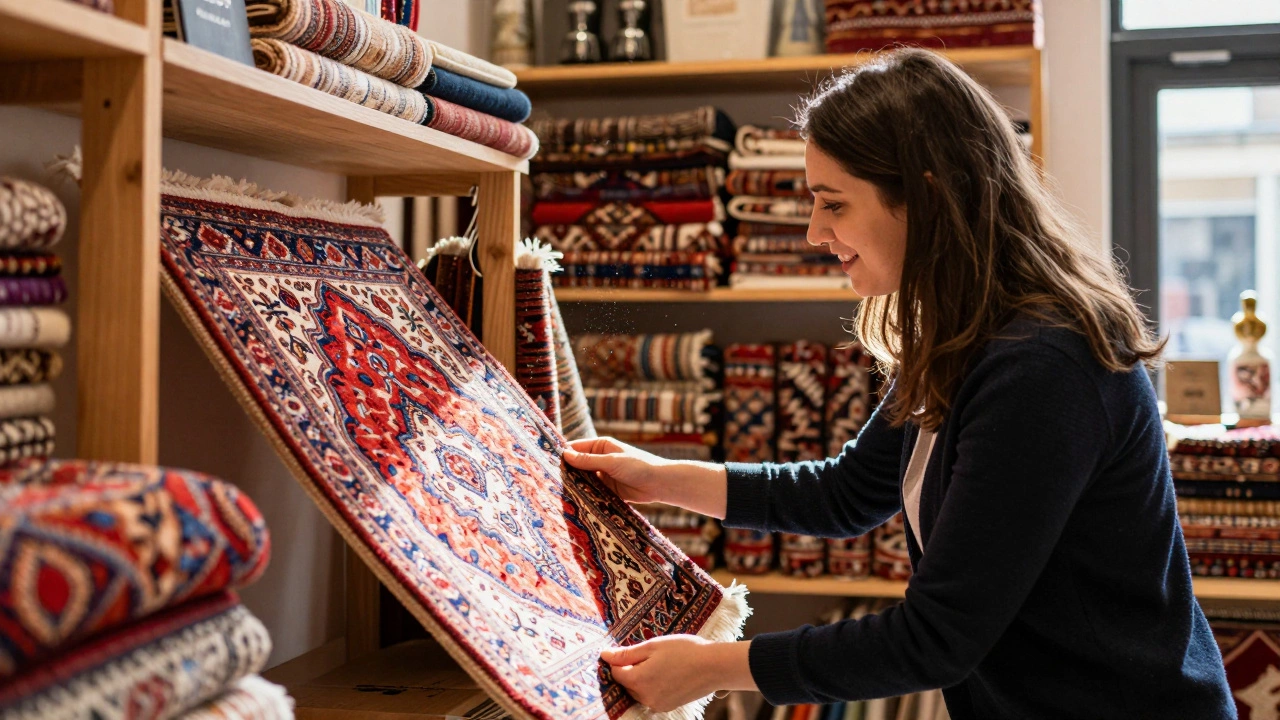
Ever walked into a rug store, fell in love with a handwoven Persian or a chunky wool area rug, and then froze when you saw the price? You’re not alone. Most people assume rug prices are fixed - especially if the store looks fancy or the tag says "artisan-crafted" or "imported from Turkey." But here’s the truth: rug prices are almost always negotiable. Whether you’re shopping at a small boutique, a big-box retailer, or even a local market, you can save anywhere from 15% to 50% if you know how to ask.
Why Rug Prices Are Flexible
Rugs are one of the few home goods where the markup is wildly inconsistent. A $1,200 rug might have cost the store $300 to source. That’s a 300% markup. Why? Because rug pricing isn’t based on cost alone - it’s based on perception. Factors like origin, material, age, and craftsmanship are used to justify high prices, but many sellers don’t have exact cost data. They’re guessing what customers will pay. That’s your opening.Unlike a coffee maker with a fixed MSRP, rugs rarely have standardized pricing. Even big chains like IKEA or Wayfair often let you haggle if you’re buying multiple items or if the rug has been sitting for months. Independent rug dealers? They live on relationships. They’d rather sell you a rug for $800 than let it sit on the floor for another six weeks.
When to Negotiate (and When Not To)
Timing matters. Don’t walk in on a Monday morning when the owner’s just opening up. Go on a slow day - Tuesday through Thursday, especially late afternoon. Weekends are busy, and staff are focused on moving foot traffic, not haggling.Also, look for signs the rug isn’t selling fast:
- It’s covered in dust or has a "sold" tag that’s been there for weeks
- The store has three similar rugs - you’re the first person to ask about that one
- The salesperson seems distracted or eager to close a deal
On the flip side, don’t try to negotiate on rare, museum-grade rugs or pieces labeled "antique" with provenance documentation. Those are priced based on auction records, not store markup. But if it’s a new machine-made rug or a fairly common handwoven piece from Morocco or Afghanistan? Go for it.
How to Start the Conversation
The key isn’t being aggressive - it’s being curious. Start with questions, not demands.Instead of saying, "I’ll give you $500," try:
- "I really love this rug, but it’s a bit above my budget. Is there any flexibility?"
- "Have you had any interest in this one lately?"
- "If I bought two rugs today, would you do anything special?"
These open the door without putting the seller on the defensive. People respond better to collaboration than confrontation.
Another smart move: Mention a competitor. Not to insult them, but to show you’ve done your homework. Say something like, "I saw a similar size and style at ABC Rugs for $900 - do you match or beat that?" Most stores will, especially if they’re local and trying to build loyalty.
What to Say When They Say No
You’ll hear "That’s our lowest price" more times than you’d expect. But here’s the secret: that’s rarely true. The real answer is usually, "I’m not allowed to go lower without approval."Here’s how to respond:
- "I understand - could you check with the manager? I’m serious about buying today."
- "If you can get it down to $X, I’ll take it right now."
- "I’ll take it if you throw in free shipping or a rug pad."
Many stores have hidden inventory - rugs they’ve had for over a year and don’t want to return to the wholesaler. They’d rather clear them at a loss than keep them. Your offer might be exactly what they need.
What You Can Ask For Beyond Price
Sometimes the seller can’t lower the price - but they can add value. And that’s often more useful than a few dollars off.Ask for:
- Free rug pad (a $50-$100 value)
- Free delivery or installation
- Extended return window (60 days instead of 30)
- Free cleaning or stain protection treatment
- Bundle discount (buy two rugs, get 15% off the second)
One customer in Portland saved $180 by asking for a free rug pad and cleaning - the store had extra pads in stock and a partner cleaner on retainer. They didn’t lose money; they just moved inventory faster.
Where to Shop for the Best Negotiation Odds
Not all rug sellers are equal. Here’s where your bargaining power is strongest:- Local rug boutiques - Owners often set prices and have authority to adjust them. They want repeat customers.
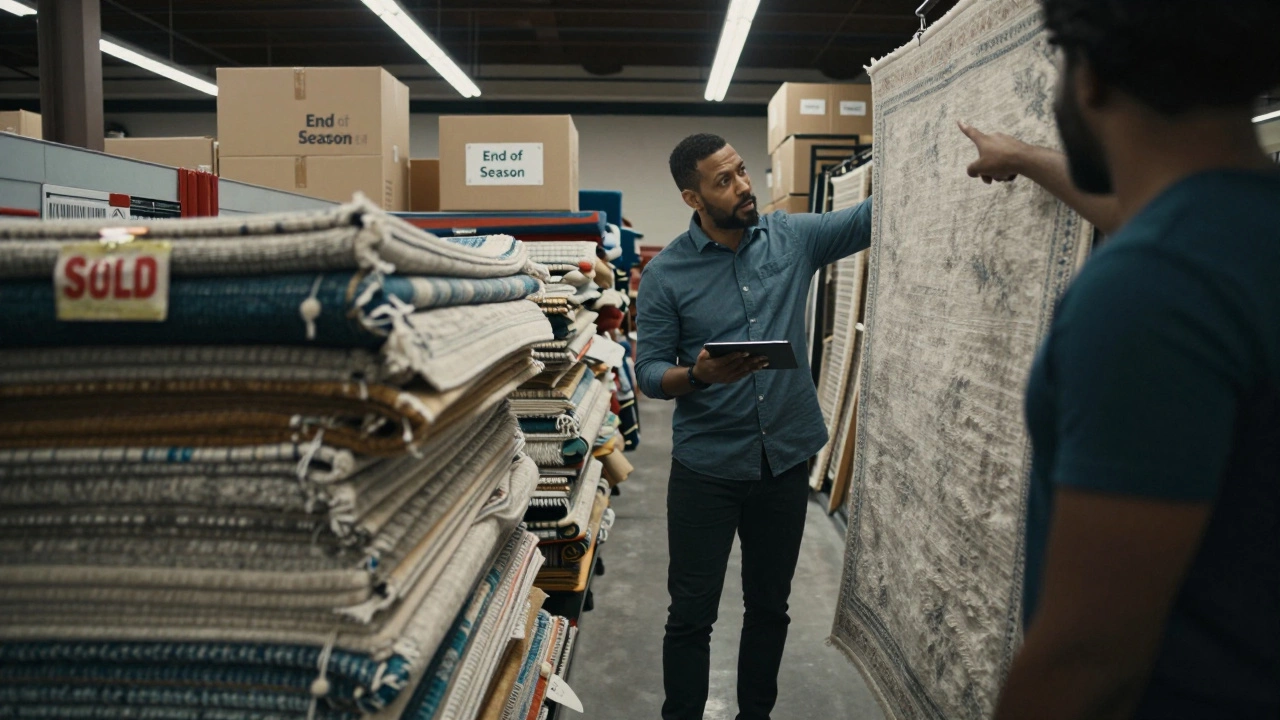
- Warehouse sales or end-of-season clearance - Inventory is piling up. Prices are already marked down - but you can often get another 10-20% off.
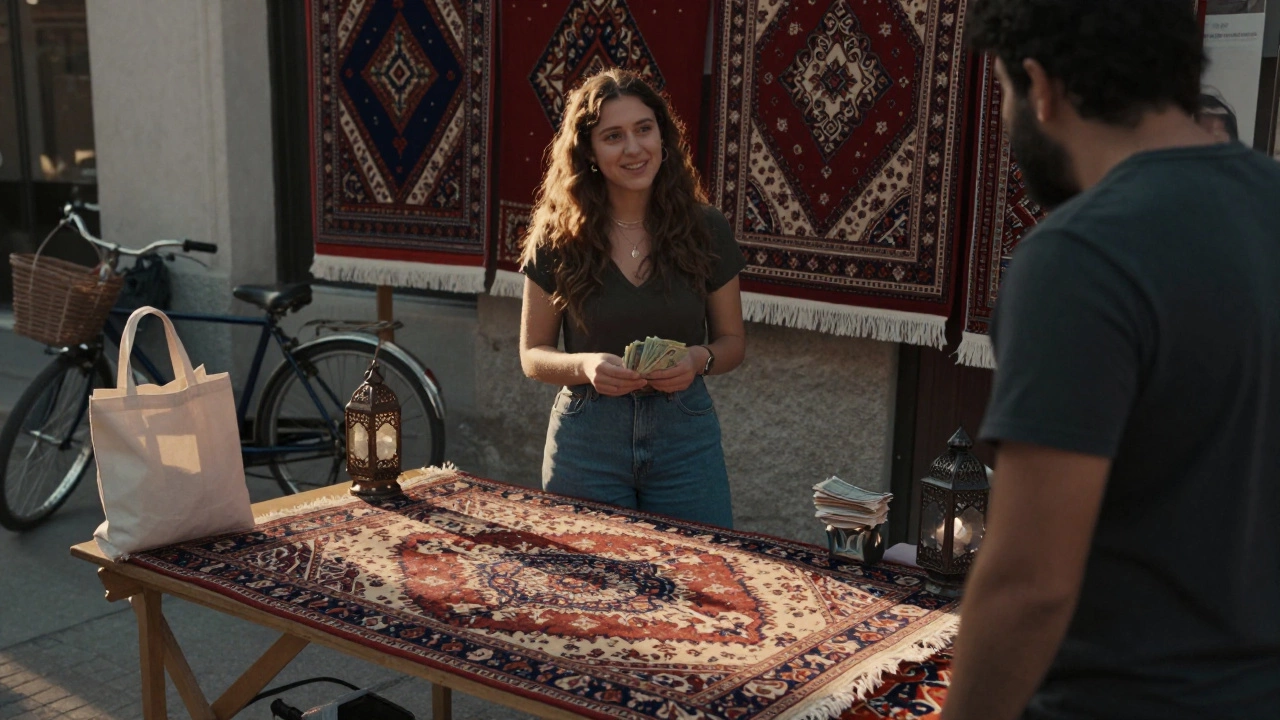
- Flea markets and local artisan fairs - Vendors are selling their own goods. They’re used to haggling.
- Online marketplaces with local pickup - Facebook Marketplace, Craigslist, or OfferUp. You can often meet the seller, inspect the rug in person, and negotiate on the spot.
Avoid negotiating at high-end department stores like Bloomingdale’s or Neiman Marcus unless you’re buying multiple items. Their pricing systems are locked in, and staff don’t have discretion.
Real Examples of What People Actually Saved
A couple in Austin bought a 9x12 kilim rug listed at $1,800. They asked if there was any room to move. The owner said no - but offered a free rug pad and free delivery. They left paying $1,600. That’s a $200 savings - and they got $120 in added value.A student in Chicago found a vintage Turkish rug on Facebook Marketplace for $650. She showed up with cash and said, "I’ll take it for $450 if you help me carry it to my car." The seller agreed. She saved $200 and got free labor.
A homeowner in Portland bought three rugs at a local shop. She asked for a bundle discount. The store gave her 20% off the total - saving her $480 on a $2,400 purchase.
What Not to Do
Don’t walk in with a printed price from another store and demand they match it. That feels like a trap. Don’t insult the rug’s quality - "This looks cheap" is a conversation killer. Don’t bluff. If you say you’ll walk away, be ready to actually leave. Most sellers will call your bluff.Also, avoid negotiating in front of other customers. It puts the salesperson on the spot. Ask to speak privately if possible.
Final Tip: Bring Cash
Cash still works wonders. Many small rug dealers prefer cash because it avoids credit card fees (which can be 3-4%). If you show up with $1,000 in bills and say, "I can pay today," you’re suddenly a low-risk, high-value customer. That gives you serious leverage.Even if you’re paying with a card, mention you could pay cash. It opens the door for a discount. One dealer in Santa Fe told me, "I give 5% off for cash because I don’t have to wait three days to get paid. That’s money in my pocket right now."
Is it rude to negotiate rug prices?
No, it’s not rude - it’s expected in many cultures and markets. In places like Turkey, Morocco, or Iran, haggling is part of the buying process. Even in the U.S., small rug shops and flea markets treat negotiation as normal. The key is to be polite, respectful, and ready to walk away if needed. Most sellers appreciate a fair buyer more than someone who pays full price without asking.
Can you negotiate online rug prices?
It’s harder, but not impossible. Some online retailers like Rugs USA or Overstock have live chat or customer service lines. If you find a rug you love and it’s been in stock for over 60 days, email or chat and say: "I love this rug but noticed it’s been listed for a while. Do you have any current promotions or discounts I can apply?" Some will offer a coupon code or free shipping as a goodwill gesture. For marketplace sites like Facebook or eBay, direct negotiation is standard.
How much should I offer below the asking price?
Start with 15-25% below the listed price. For example, if a rug is $1,200, offer $900-$1,000. This gives you room to meet in the middle. If the seller counters at $1,100, you can meet at $1,000. Don’t start too low - it can make you seem insincere. The goal isn’t to win, it’s to get a fair deal.
Are handmade rugs more negotiable than machine-made ones?
Yes, often more so. Handmade rugs take weeks or months to make, so sellers don’t have large inventories. They’re eager to move them. Machine-made rugs are mass-produced and often have fixed pricing, especially from big brands. But if a handmade rug has been sitting for months, even a $3,000 piece might be open to negotiation. Look for signs of age, like fading or wear - those can be leverage points.
What’s the best time of year to buy a rug to get a discount?
Late winter (January-February) and early fall (September-October) are prime times. Stores are clearing out last season’s inventory before new collections arrive. Holiday sales (like Black Friday) are good too, but those are usually advertised discounts, not negotiable ones. The real savings come when you negotiate outside of big sales - when the store needs to move stock, not just run a promotion.
Next Steps: What to Do After You Negotiate
Once you agree on a price, ask for a written receipt that includes the final price and any added perks (free pad, delivery, etc.). Don’t rely on a verbal promise. If the store offers a warranty or cleaning service, get it in writing too.Then, take your time getting the rug home. Make sure it’s rolled properly and protected during transport. If you’re picking it up yourself, bring a friend - rugs are heavier than they look.
Finally, give your new rug time to settle. Unroll it in the room and let it breathe for 48 hours. The fibers will relax, and the smell (if any) will fade. Then enjoy the fact that you didn’t overpay - and you got exactly what you wanted.